In this article
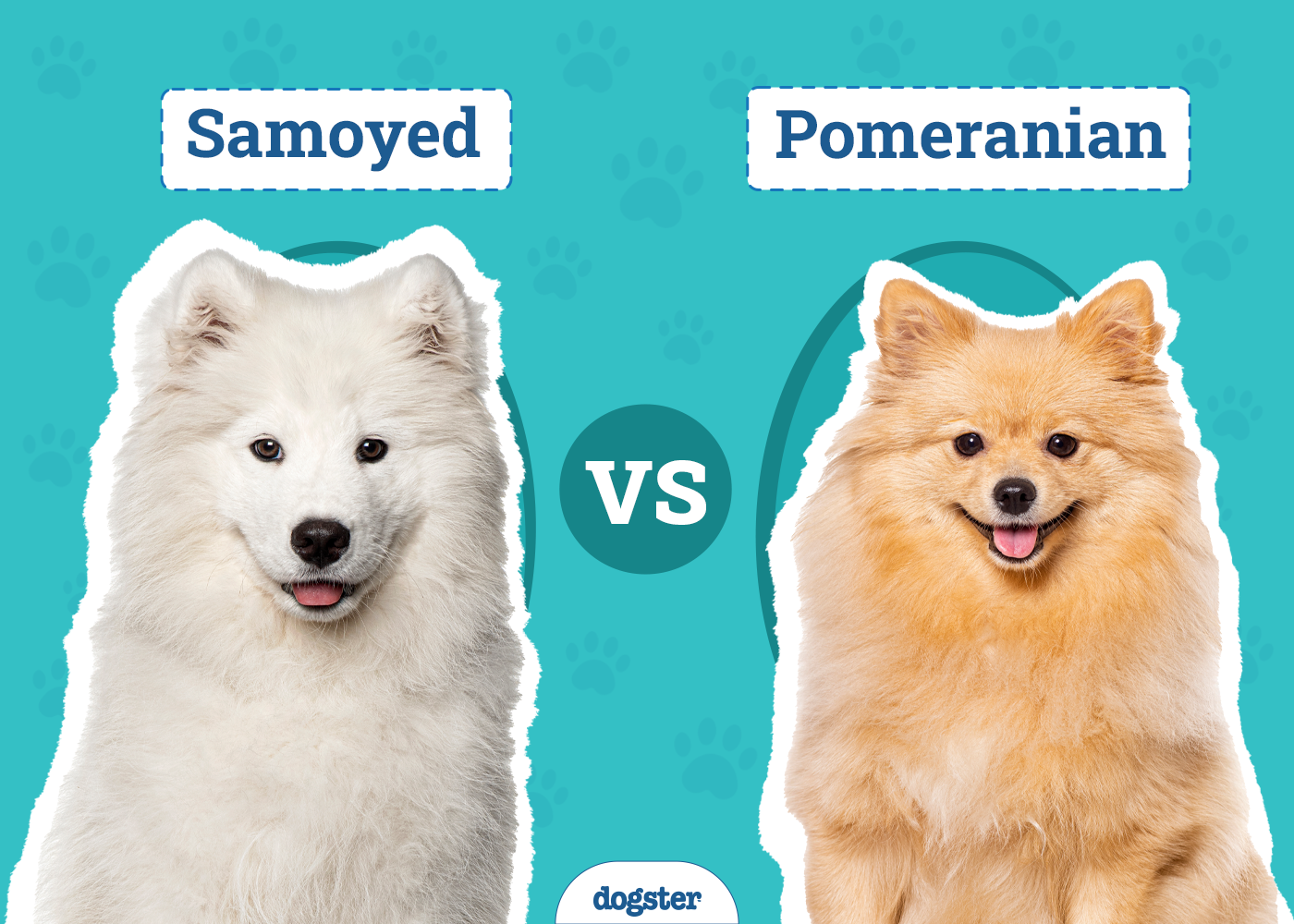
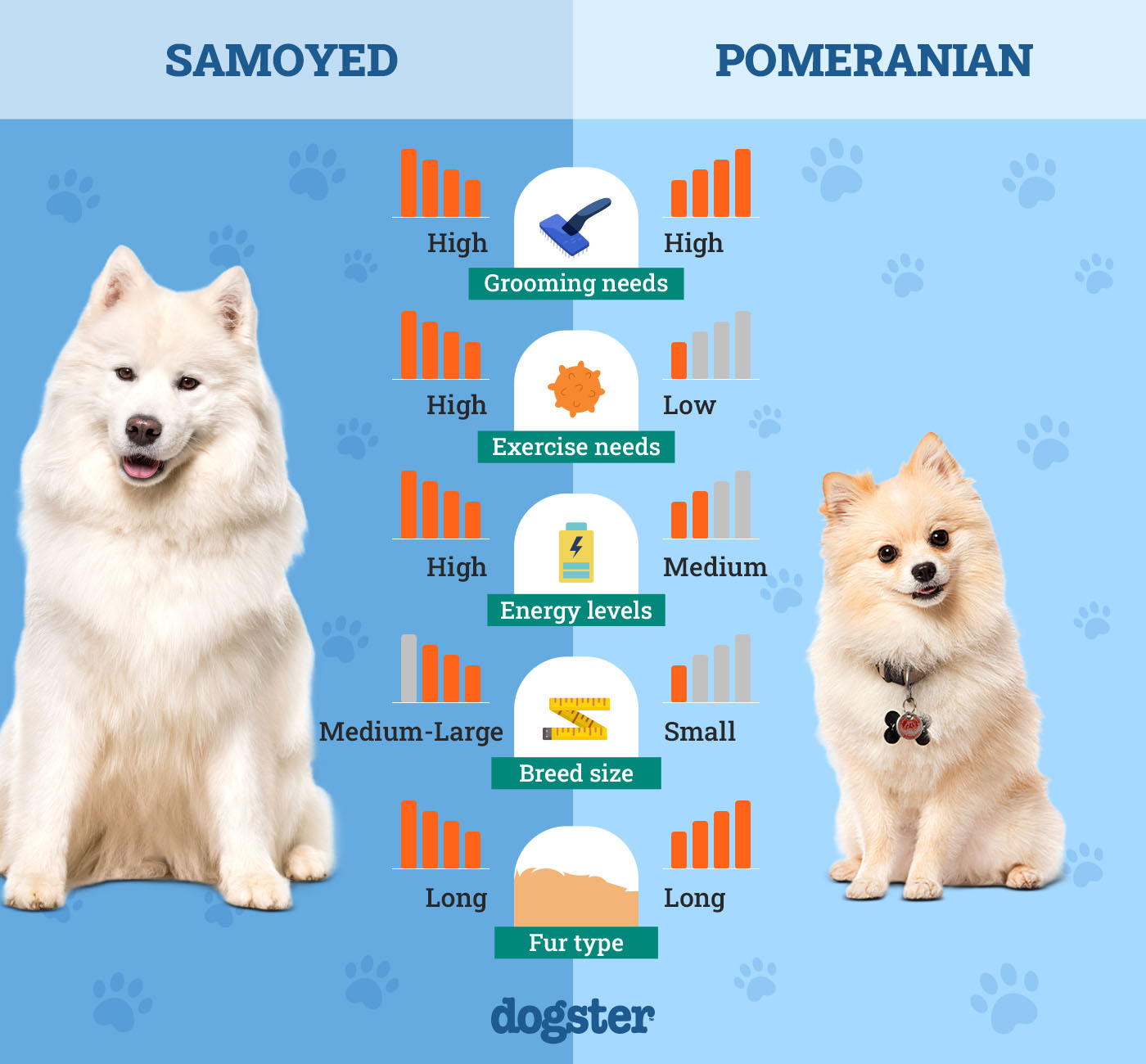
View 3 More +Samoyeds and Pomeranians are both breathtakingly gorgeous dogs with thick coats. While some people confuse these two breeds, they have many fundamental differences. Samoyeds are around 14 inches taller than Pomeranians, making them primarily suitable for bigger homes with yards. Due to their convenient size, Poms are easily adaptable to nearly any scenario and location.
To learn more critical differences between these breeds, read on! If you’re keen on one of these dogs, you’ll hopefully be able to make a final decision.

Visual Differences
At a Glance
- Average height (adult): 19–23½ inches
- Average weight (adult): 35–65 pounds
- Lifespan: 12–14 years
- Exercise: 2+ hours a day
- Grooming needs: Regular grooming
- Family-friendly: Yes
- Other pet-friendly: Moderately friendly
- Trainability: Adaptable, intelligent, eager to please
- Average height (adult): 6–7 inches
- Average weight (adult): 3–7 pounds
- Lifespan: 12–16 years
- Exercise: 30 minutes a day
- Grooming needs: Regular grooming
- Family-friendly: Yes
- Other pet-friendly: Moderately friendly
- Trainability: Intelligent, alert, highly adaptable

Samoyed Overview

Personality
Samoyeds are incredibly friendly and outgoing and enjoy living in a family environment. They require plenty of love and affection, but they need firm training, as they can sometimes be mischievous. They are open to new friendships with other animals and humans, so you don’t have to worry about them making friends at the dog park.
Training
Training your Samoyed must be done in a safe and loving environment. This breed has a strong connection to humans, and you can teach them anything with the right approach. If you neglect your Samoyed’s needs by leaving them in confinement, though, they can become depressed and destructive. When training them, stay loving while having a firm and strict approach.
Grooming
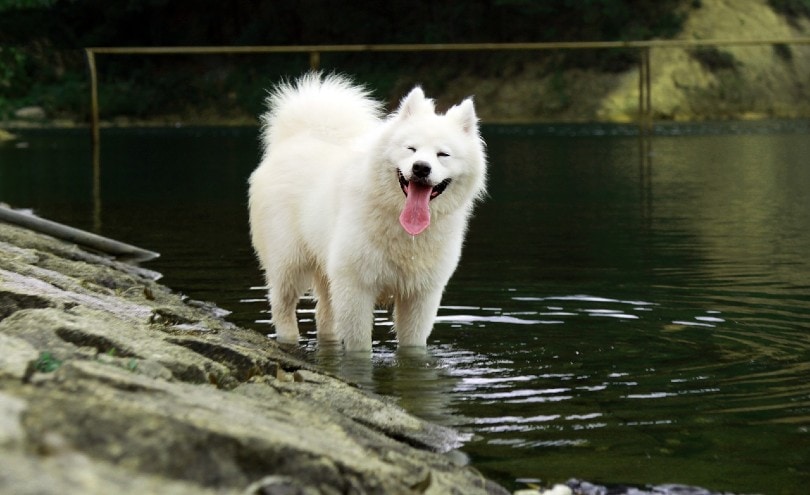
Samoyeds have unique, double coats and shed almost all the time. This breed requires daily brushing to remove dead hairs and reduce shedding to a minimum. Make sure to trim your dog’s nails once a month.
Health
Samoyeds are susceptible to conditions like eye problems, hip dysplasia, and diabetes. These issues can be avoided by finding a reputable breeder to perform tests for these diseases. You can also ensure that the puppy’s parents have relevant health screenings, which will significantly reduce the chance of your pup developing these conditions. Regular check-ups at the vet are a must to ensure that your Samoyed has a long and healthy life.

Suitable For:
Samoyeds are perfect companions for larger families and preferably, people with large backyards. These dogs need plenty of physical and mental stimulation throughout the day. They will need more than 2 hours of exercise daily, which is why a backyard is recommended. If they stay in a confined space for too long, they can become destructive and miserable, so small apartments are not ideal living conditions for Samoyeds.
- Breathtaking appearance
- Energetic
- Affectionate and amazing with children
- Outgoing and friendly with other dogs
- Intelligent and easy to train
- Require regular grooming
- Can be stubborn at times
- High shedding
- Vocal

Pomeranian Overview

Personality
The Pomeranian is an exceptionally friendly and outgoing breed. Their sassy attitude is what gives this dog their unique charm. They are excellent with children who are old enough to not treat them like a toy. While they are gentle and affectionate with humans, they tend to have an attitude toward larger dogs and even challenge them at times!
Exercise
Pomeranians are energetic little dogs and need to have at least 30 minutes of outdoor playtime every day. They are also intelligent, so unless you provide them with plenty of mental stimulation, they can become depressed.
Training
This breed is smart and easy to train, which is why they were used as guard dogs in the past. Since Poms tend to be excessively vocal and bark often, they are excellent at alerting.
Due to their sassy temper, they need to be trained with a firm hand that will provide them with love and strict learning conditions.

Grooming
Pomeranians have a gorgeous double coat that needs to be brushed at least three times a week. During summer, bath times should be a regular habit, while during the winter, they can be reduced to once every couple of months.
Health
Pomeranians are generally healthy dogs, but they are susceptible to hypothyroidism, alopecia X, luxating patella, and collapsing tracheas. These conditions are usually nothing to worry about because most reputable breeders will screen their stock for them Getting your Pom from a reputable breeder is important for having a healthy dog.
Suitable For:
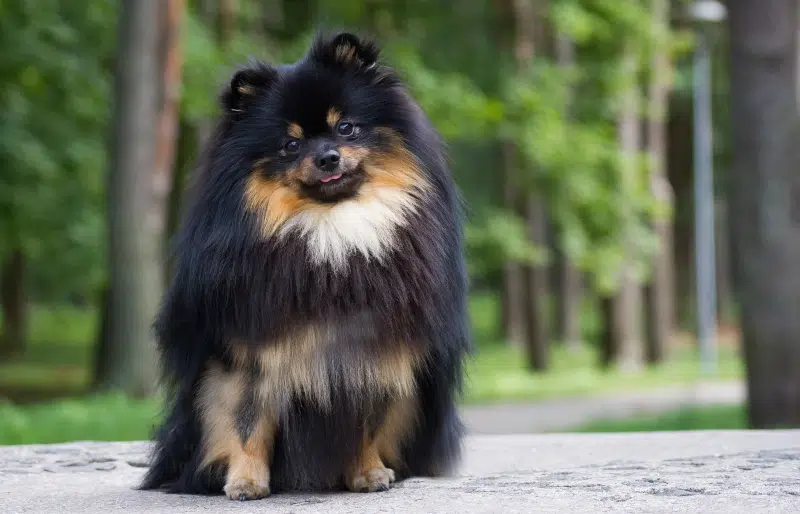
Due to their size, Pomeranians are excellent for small houses and apartments. They also make wonderful companions for older people because of their small size and alertness. They are fantastic with children, so don’t hesitate to have your Pom play with an old enough child (and your supervision). Due to their intelligence and energy, they can also make an amazing watchdog.
- Adorable appearance
- Convenient size
- Amazing with children
- Friendly and outgoing with other dogs (for the most part)
- Easy to train
- Excessively vocal
- Require regular grooming
- Sassy temper
Which Breed Is Right for You?
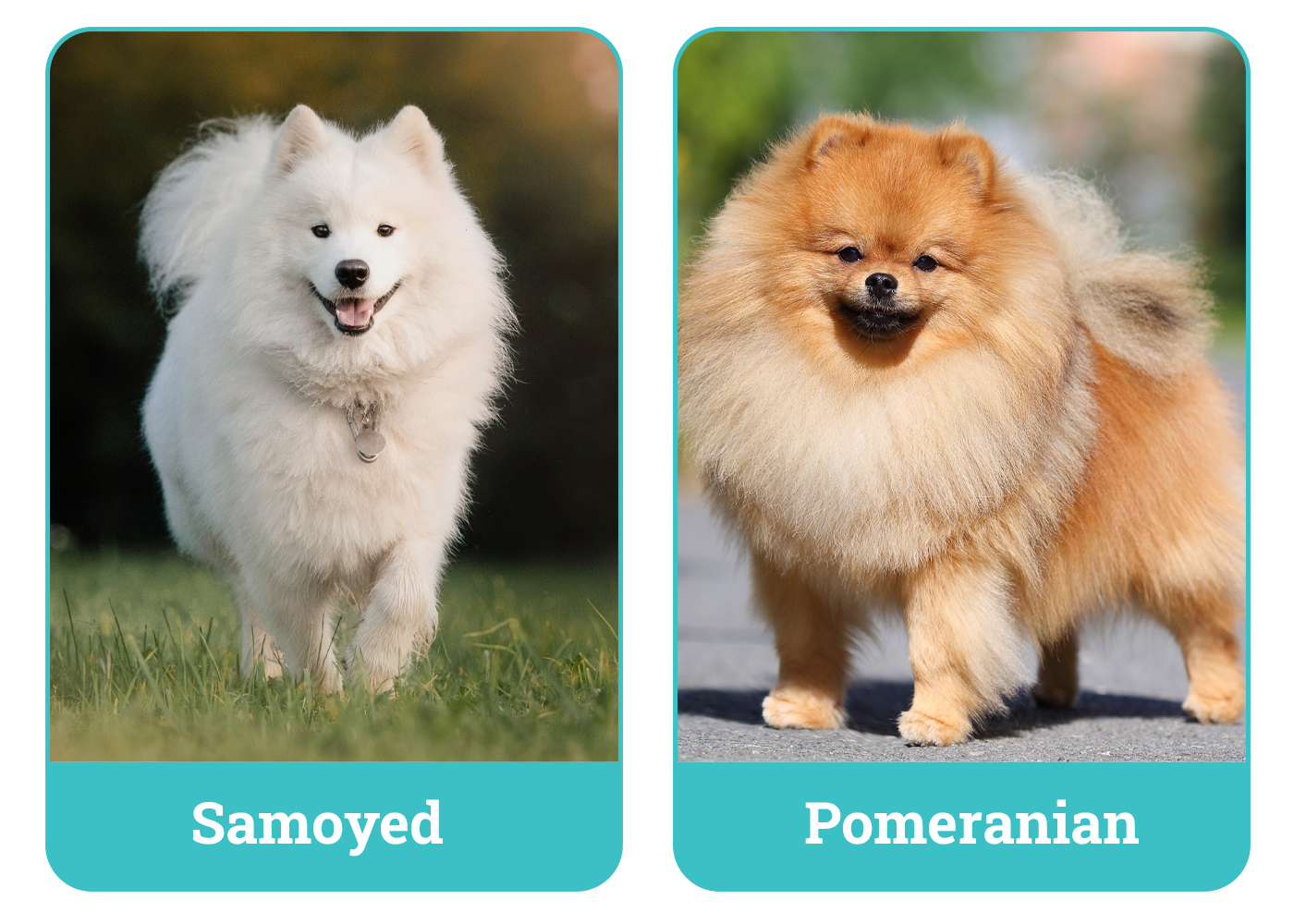
After learning about each of these amazing and adorable breeds, you should be able to make an informed decision about which dog is perfect for you. Depending on your location and living conditions, you may want to acquire a Pomeranian that can adapt to any living scenario, as a Samoyed is best suited for houses with large backyards.
That said, both breeds are incredibly intelligent and affectionate, excellent for small and big families, and easy to train. Both have sassy tempers, though Pomeranians tend to be more so and will even go after bigger dogs.
No matter which choice you make, you won’t regret your decision!
See Also:
Featured Image Credit: (L) Galy Jonathan, Shutterstock | (R) Jumpstory