In this article
The Rhodesian Ridgeback joined the ranks of the American Kennel Club in 1955, and it was the same year that the Federation Cynologique Internationale (FCI) recognized the breed. This dog hails from South Africa, and their origins begin with the indigenous Khoekhoe (Khoikhoi) people of that area.
The Rhodesian Ridgeback is an intelligent animal but not necessarily always easy to train. They do best with experienced dog owners who can calm their prey drive, and they are moderately tolerant of extreme weather conditions. However, this pet is highly energetic and needs room to roam. What else is there to learn about this unique breed? Check out some of the most interesting facts about the Rhodesian Ridgeback below.

The 15 Interesting Rhodesian Ridgeback Facts
1. The Breed’s History Dates Back to the 16th Century
The Khoekhoe people likely bred the Rhodesian Ridgeback for hundreds of years. In the 16th century the first Europeans discovered them living alongside a semi-domesticated dog with hair growing backwards along the spine (what we now refer to as the “ridge”).
2. The Rhodesian Ridgeback Is About as Tough as a Dog Can Be
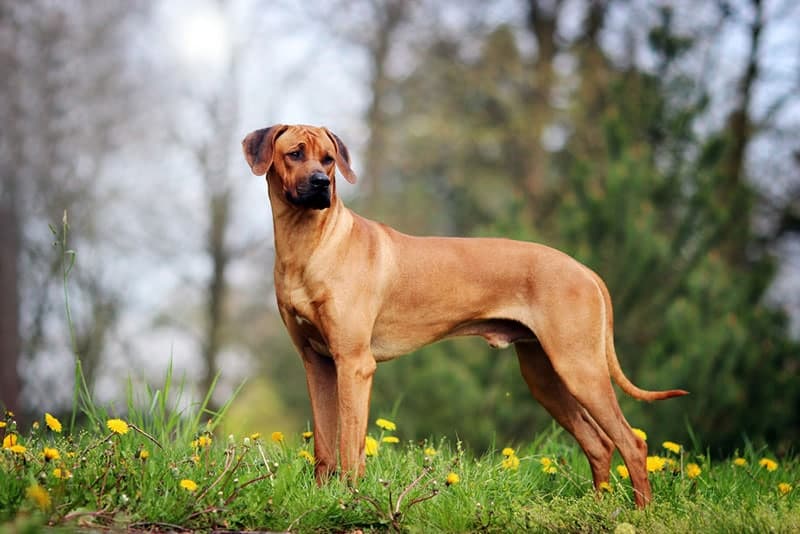
The name of the breed doesn’t reveal much about their history. However, the origins provide a clue. People used this dog to hunt big game, namely, lions. They would find the felines while hunters followed on horseback and eventually killed the animals. Think about that job. A male Rhodesian Ridgeback can weigh up to 85 pounds, and an African Lion can be over seven times that size. Talk about a fighter!
3. The Rhodesian Ridgeback Excels as a Guardian
It makes sense that the Rhodesian Ridgeback would be protective of their owners. Fending off lions and leopards fanned that flame. This pup is an excellent guardian and is even good with children. However, they are also wary of strangers. Even the official standard for the breed mentions this trait of being reserved with strangers and their dignified and even tempered temperament.
4. If a Rhodesian Ridgeback Barks, You Better Listen
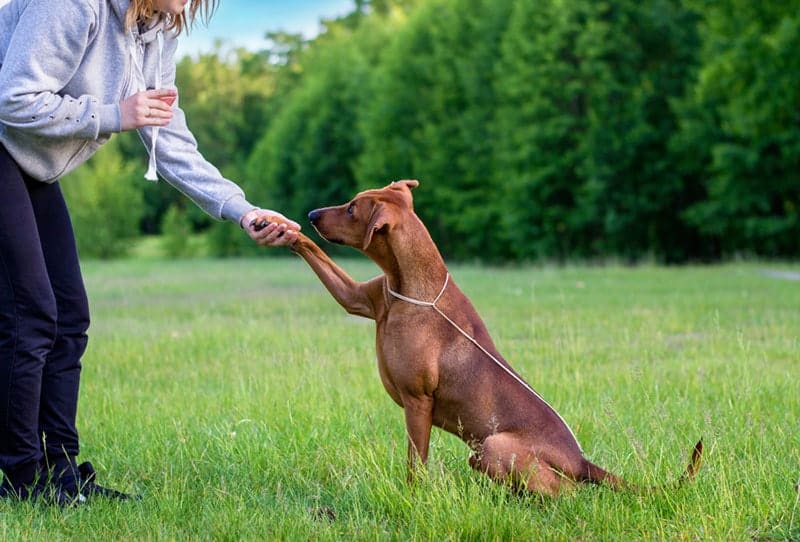
A guardian isn’t doing their job well if they bark at every little thing. They must be judicious with sounding the alarm. That describes the Rhodesian Ridgeback to a tee. It helps with this role, but it also allows them to hunt stealthily. While they find the prey in the field, they may also take down smaller game, making a quiet approach necessary.
5. The Rhodesian Ridgeback Is a Softie at Heart
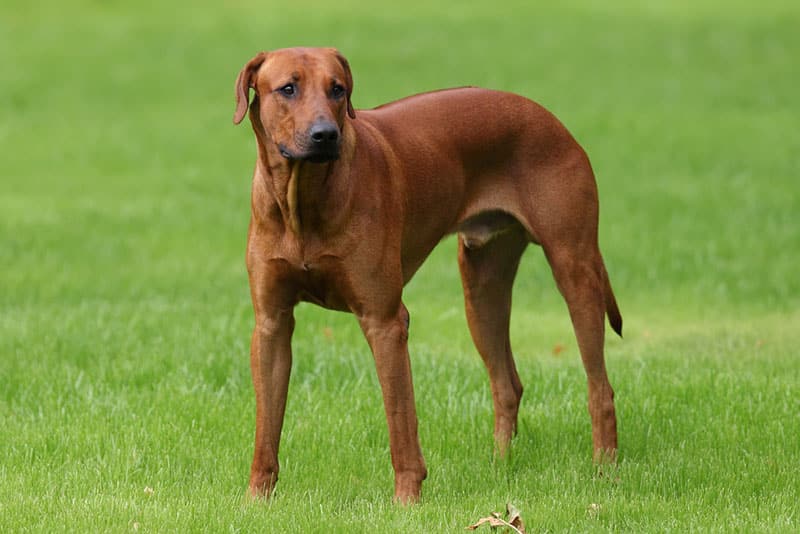
The Rhodesian Ridgeback is a formidable-looking dog. Males stand up to 27 inches at the withers. They are also muscular with a large chest. For all of this might, though, this dog is a sweetheart when it comes to their family. They are loving animals that enjoy playing. However, woe to anyone who threatens their caregivers.
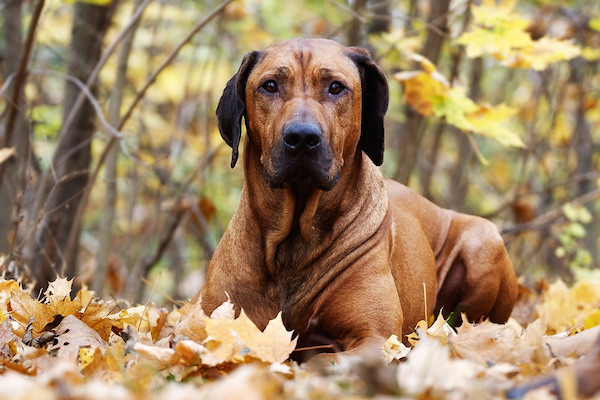
Many dogs are the result of selectively breeding other pups to bring out certain traits. That speaks to a genetic relationship between the animals. The Rhodesian Ridgeback shares such a bond with one other canine breed. A study on the genetics of breed development found similarities between the Rhodesian Ridgeback’s genome and that of the Great Dane, the only two members of that cluster.
7. Enthusiasts Selectively Bred Several Breeds to Develop the Dog We Know Today
Europeans had been selectively breeding dogs before they encountered the Rhodesian Ridgeback. Hunters were anxious to develop a pup to meet their needs, and the so-called lion dog fit the bill. The Rhodesian Ridgeback results from crosses between the South African native Khoikhoi dog and European breeds brought to Africa, including Greyhounds, Great Danes, Mastiffs, and various Terriers.
8. One of the Few Breeds to Originate in Southern Africa
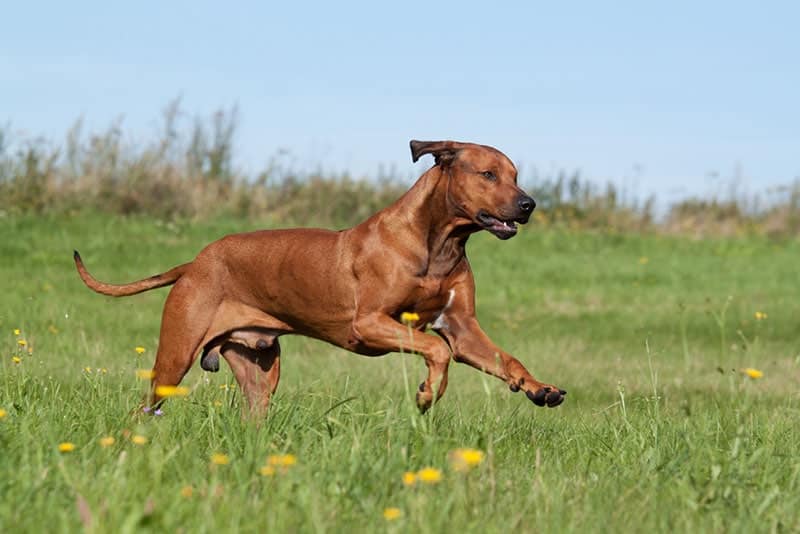
The Rhodesian Ridgeback’s genetics and history help explain their unique physical and mental character. Interestingly, this dog and the Boerboel are some of the only breeds known to originate from this part of Africa. The latter was also a product of interbreeding several canines. They also had similar jobs as big-game hunters and guardians of the homestead.
9. Two People Were Integral to the Breeding of the First Rhodesian Ridgeback
Understanding a dog’s personality is easier if you can trace the breed’s origin. Rev. Charles Daniel Helm and a hunter Cornelius van Rooyen can provide such an account. The reverend purchased two dogs from a nearby town and allowed van Rooyen to interbreed with his dogs. The semi-wild canines added what would become the Rhodesian Ridgeback’s unique trademark: the ridge along their back.
10. The Dalmatian and the Rhodesian Ridgeback Have an Intimate Connection
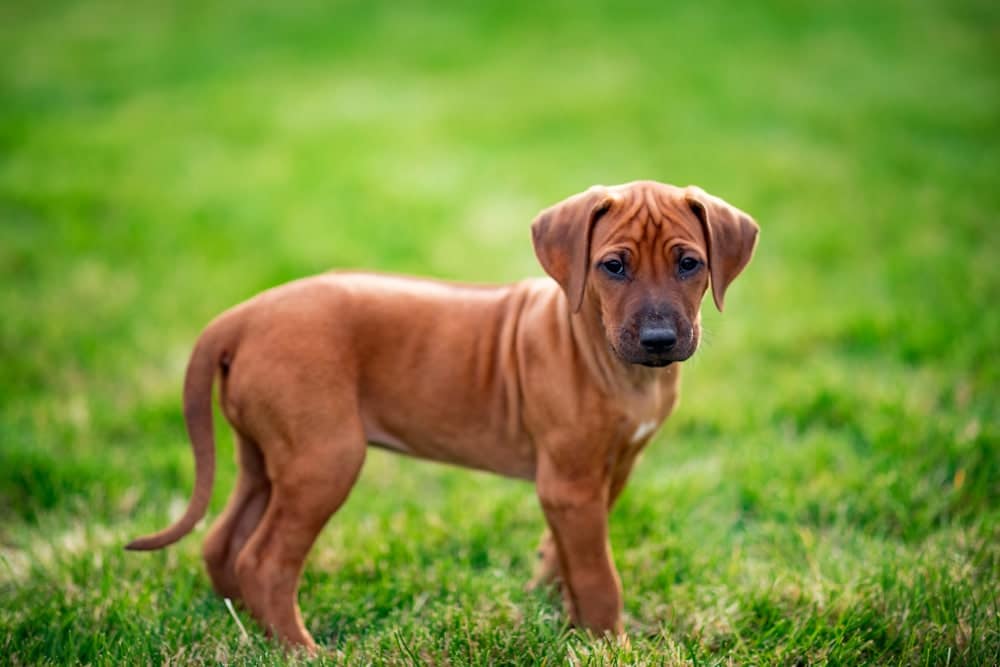
Becoming recognized as a breed means having a standard by which to judge other dogs. The development of the Rhodesian Ridgeback resulted in many early variations. Van Rooyen had interbred pups of various sizes. The founding members of what would be the dog’s parent club decided to use the Dalmatian standard as their framework.
11. The Rhodesian Ridgeback’s Snout Is as Long as Their Skull
Part of the Rhodesian Ridgeback’s distinctive appearance starts with the animal’s skull. It helps give the pup a dignified and muscular look. Surprisingly, the length of the dog’s muzzle is as long as their skull, giving the dog symmetry in their appearance.
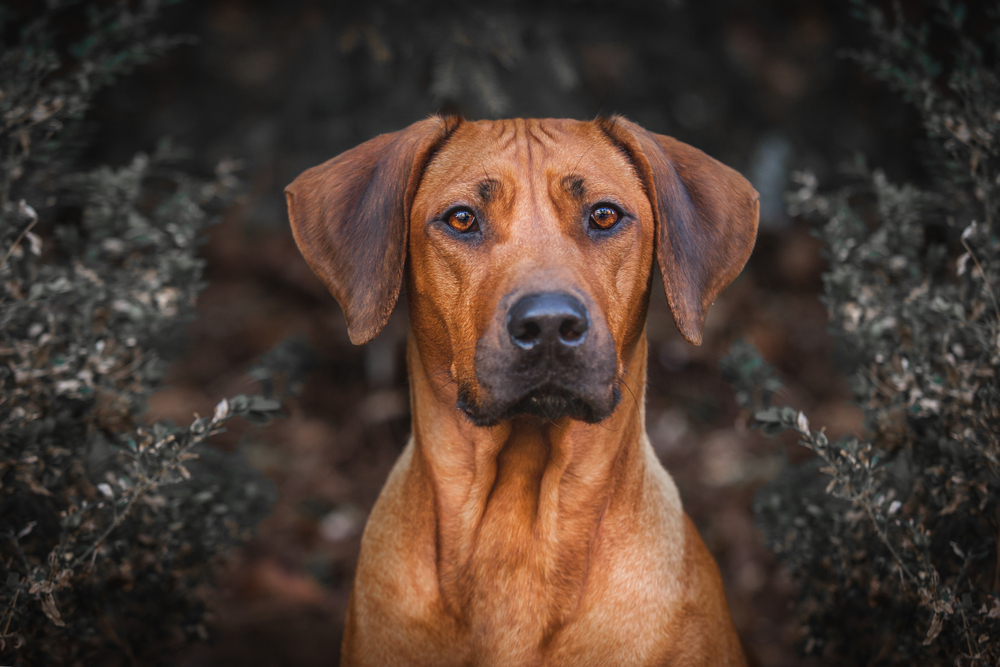
12. The Official AKC Standard Only Allows for Variations of the Wheaten Color for This Breed
Part of a breed’s standard typically includes a description of the animal’s coat and the accepted colors. For the Rhodesian Ridgeback, that means variations of the wheaten color, from light wheaten to red wheaten. However, the AKC rules limit the accepted amount of white and black permitted.
13. The Absence of a Ridge Will Disqualify the Rhodesian Ridgeback in the Show Ring
The distinctive ridge of the dog is a part of the breed’s standard, with a lengthy description of its shape and whorls. Its absence will disqualify the pup from competition. Scientists have since learned that it is a dominant trait in these dogs. Puppies only need to inherit one copy or allele of the gene for it to be visually present in the offspring.
14. The Pup’s Distinctive Ridge Has an Unintended Consequence
This study found a link between the inheritance of the ridge and the development of a condition called dermoid sinus. The term describes the incomplete separation of the nervous system and skin during embryonic development. The mutation leaves a palpable opening on the dog’s back. The issue requires veterinary intervention and often needs surgical excision to prevent bacterial infection or neurological problems, and affected dogs shouldn’t be bred.
15. Famous People Who Have Owned This Dog Include David Bowie, Errol Flynn, Patrick Swayze, and Tim Tebow
A dog with a reputation as a fighter, like the Rhodesian Ridgeback, is sure to attract a lot of fans. This breed has a significant following, with the likes of David Bowie and Errol Flynn. Princess of Monaco Grace Kelly and her husband, Prince Rainier III, also owned these dogs. It pays to have friends in high places. That explains the pooch’s rank as 41st on the AKC’s list of most popular breeds.
Conclusion
Few dogs carry themselves so dignified as the Rhodesian Ridgeback. This dog is as courageous as they come. What other animal would tackle the likes of lions and leopards and walk away from the battle? However, this ardent guardian is an affectionate pet at heart. They will do anything to protect their family from danger, and you can’t help but fall in love with them.
Featured Image Credit: SubertT, Shutterstock