In this article
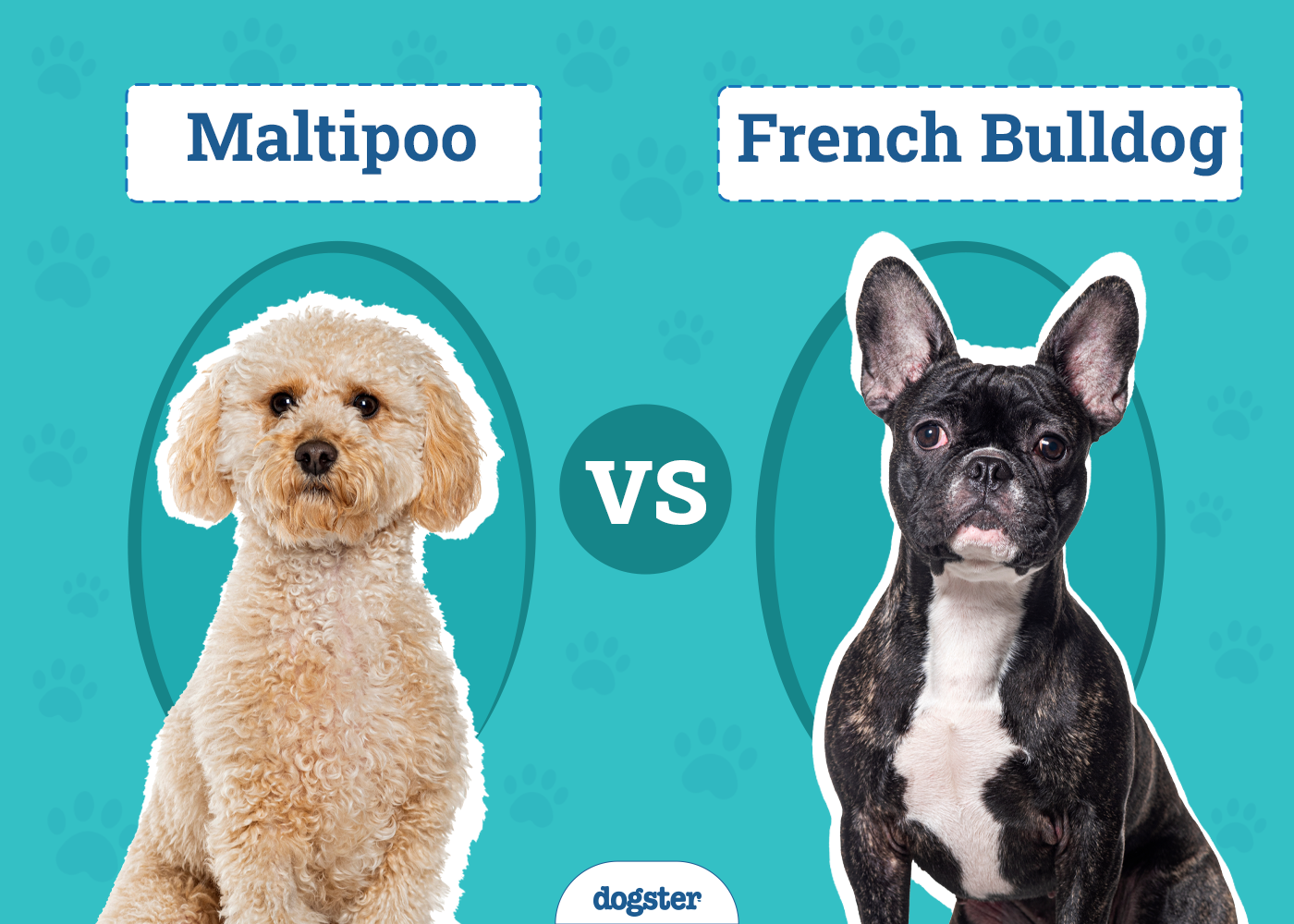
View 3 More +The Maltipoo and French Bulldog are friendly and easygoing dogs that make wonderful family pets. Because of their small size and love for people, they often become a dog lover’s constant companion. While both breeds have temperaments that fit well with first-time dog owners, you still have to consider the factors that differentiate the two breeds from each other.
In general, Maltipoos tend to be better dogs for allergy sufferers, and owners must be prepared to engage in plenty of active play sessions. French Bulldogs have laidback personalities and prefer to spend more time relaxing than going on strenuous outdoor excursions.
Once you learn about the differences between these two breeds, you’ll have a better idea of which one is best for you. These key things you need to know about each dog breed will help you determine

Visual Differences
At a Glance
- Average height (adult): 8 – 12 inches
- Average weight (adult): 7 – 20 pounds
- Lifespan: 12 – 14 years
- Exercise: 1 hour a day
- Grooming needs: Moderate
- Family-friendly: Yes
- Other pet-friendly: Often
- Trainability: Intelligent, eager to please
- Average height (adult): 11 – 13 inches
- Average weight (adult): 15 – 28 pounds
- Lifespan: 10 – 12 years
- Exercise: 30 minutes a day
- Grooming needs: Low
- Family-friendly: Yes
- Other pet-friendly: Often
- Trainability: Intelligent but can be stubborn

Maltipoo Overview

Personality / Character
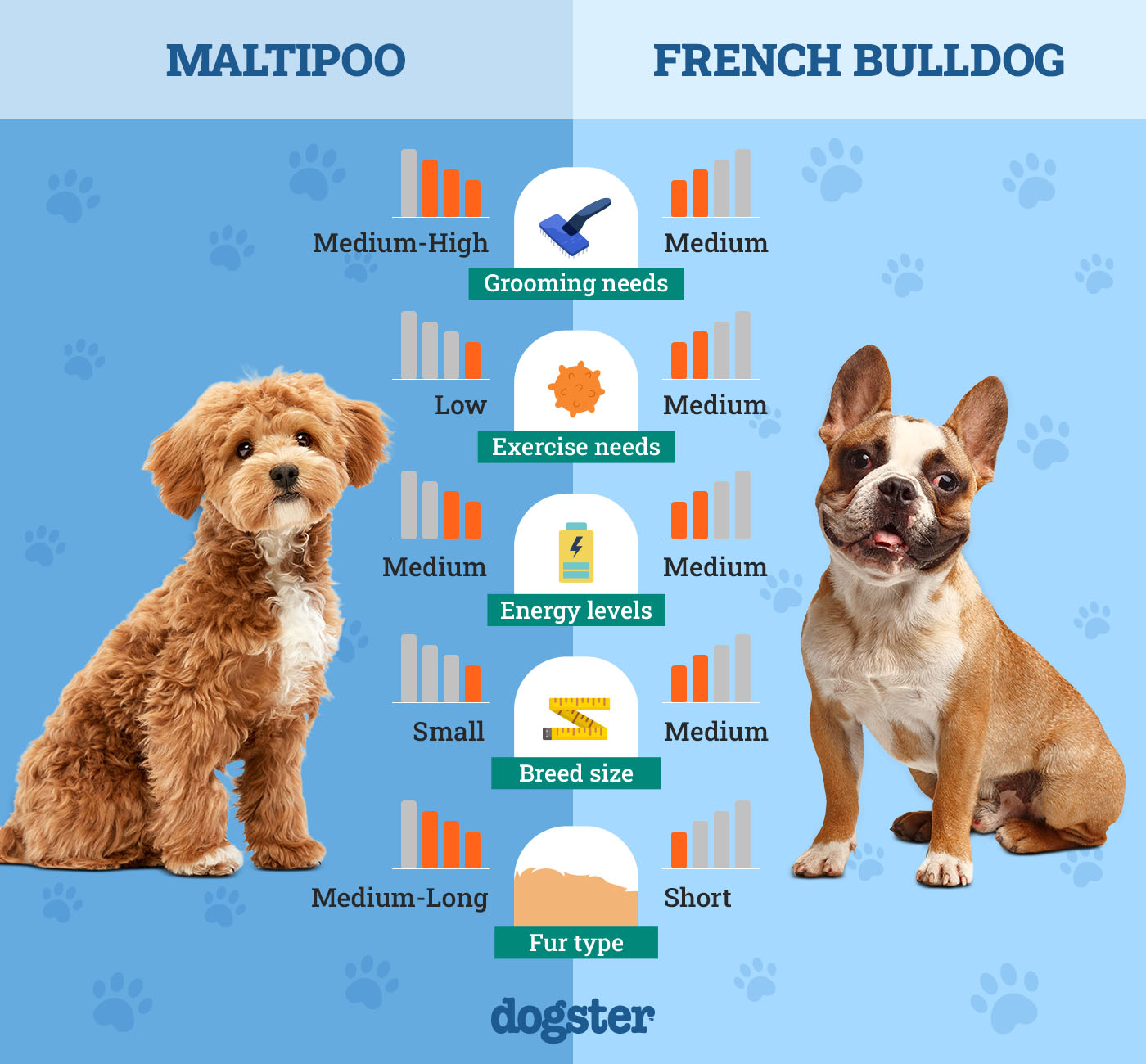
Maltipoos are a hybrid breed that’s a mix between a Maltese and Poodle. The sizes of Maltipoos may vary depending on the size of the Poodle, but fully matured adults don’t tend to exceed 20 pounds.
Maltipoos often inherit the friendly and sweet nature of the Maltese and the intelligence and loyalty of the Poodle. This winning combination makes them fairly easy to train as they’re often eager to please and quick to pick up on learning new things once they’ve completed foundational obedience training.
Bred as companion dogs, Maltipoos don’t do well being home alone for long hours. They don’t tend to have an independent streak and prefer sticking by their owners’ side. They often become sweet lapdogs once they’ve grown out of puppyhood and become calmer adults.
Training
Both the Maltese and Poodle are some of the easiest dogs to train, making them excellent breeds for first-time owners. Because the Maltipoo is generally eager to please, it doesn’t take much to teach them basic obedience commands. They respond very well to praise and love receiving attention. So, training sessions should be kept fun and encouraging. As Maltipoos are extremely sensitive to tone, expressing strong frustration will be especially detrimental to their confidence.
While Maltipoos are relatively easy to train, they may have difficulty with potty training due to their small size. Maltipoo puppies have small bladders and need more opportunities to relieve themselves than large dog breeds. They also can’t hold it in as well, so potty breaks are more urgent, and owners must be extra proactive with potty training.
Exercise
Maltipoos don’t have extreme exercise needs. A brisk morning and evening walk around the neighborhood should help them expend their energy and keep them physically healthy. Due to their small size, you can occasionally skip the walks as long as you play with them at home.
While Maltipoos don’t need many hours of exercise, they often prefer using up their energy playing with their favorite people. Don’t be surprised if your Maltipoo wants to play with you frequently and receive attention all throughout the day. Activities that are fun for Maltipoos will be playing tug with a small rope or chasing a ball around the house as you watch.
Along with physical exercise, Maltipoos need mental stimulation. Poodles are an especially intelligent breed that enjoys learning. So, Maltipoos will benefit from playing with enrichment toys, like treat dispensing puzzles, and they usually love learning new tricks.

Health & Care
Maltipoos have more grooming needs than French Bulldogs. Their soft, silky coats can get tangled and matted easily, so they require daily brushing. To make grooming more manageable, you can request a shorter haircut from your groomer.
Maltipoos are generally healthy dogs. However, they can be predisposed to genetic health issues commonly found in toy dog breeds. Owners should be aware of the following health concerns:
- Patellar luxation
- Hypoglycemia
- White dog shaker syndrome
- Collapsed trachea
Suitable For:
Maltipoos are great for first-time dog owners, apartment dwellers, and families with children. If you have young children, make sure to supervise interactions, as the tiny Maltipoo can get easily injured from improper handling.
These dogs are also popular among allergy sufferers. Just keep in mind that people get allergic reactions to proteins found in dog dander, saliva, and urine. So, there’s no such thing as a 100% hypoallergenic dog.
While low-shedding dogs spread less dander throughout the home, other factors, such as caring for the dog’s skin and implementing proper potty training, can help reduce allergy symptoms.

French Bulldog Overview

Personality / Character
It’s no surprise that the charming French Bulldog has risen in popularity over the years. These dogs are difficult to breed yet are in high demand. They have easygoing personalities and have low exercise and grooming needs. So, they’re great apartment dwellers.
French Bulldogs have strong loyalty tendencies and can also become possessive of their families. While they aren’t known to be aloof around strangers, they definitely have their chosen favorites and don’t do well being left by themselves for too long. These dogs need and thrive on human companionship and don’t like being home alone.
Training
French Bulldogs are slightly more independent than Maltipoos, and they’re not known to compete in obedience and agility competitions. While they’re eager to please and love attention, they can have a mind of their own at times and have a stubborn streak. So, training them can be a little more challenging.
French Bulldogs require firm, fair, and fun training. Most succeed when training sessions are kept short and contain a lot of positive reinforcement.

Exercise
While French Bulldogs tend to be relaxed and gentle, they do have a playful side to them. They can be quite bold and up for engaging in new challenges. However, they don’t have the best stamina, so don’t be surprised if their enthusiasm and playfulness fizzle out rather quickly.
Even though French Bulldogs are considered low-energy dogs, they still require daily exercise. They’ll enjoy a leisurely walk or spending some time snooping around a safe, fenced area. While this dog breed can be active and participate in dog sports, it’s important never to overexert a French Bulldog. French Bulldogs are brachycephalic dogs and can have more difficulty regulating their body temperature after exercise than other dog breeds.

Health & Care
French Bulldogs are known to be susceptible to several significant health concerns. So, it’s extremely important to find a reputable breeder known to raise healthy puppies. Here are some conditions to keep in mind when caring for a French Bulldog:
- Brachycephalic syndrome
- Intervertebral disc disease (IVDD)
- Von Willebrand’s disease
- Hip dysplasia
- Hemivertebrae
- Allergies
When it comes to grooming, French Bulldogs require less attention than Maltipoos. They require occasional brushing and baths to help remove debris and loose hair from their coats. One of the most important things a French Bulldog owner must do is ensure that they clean around and between their wrinkles regularly. Food and moisture can get trapped between their facial wrinkles, which can lead to skin infections. So, owners must remember to clean and wipe them dry after mealtimes and baths.
Suitable For:
French Bulldogs can be a good fit for first-time dog owners as long as the owners are willing to invest in proper obedience training. They’re also great for living in apartments and homes with children.
The ideal owner for a French Bulldog is probably someone who can be at home with them or bring them around as they run errands. They’re excellent companions for people who work from home as they’re perfectly content dozing off on a couch while you work.
Keep in mind that French Bulldogs aren’t recommended for allergy sufferers. They shed moderately, and they’re known to drool a lot. This combination can lead to frequent or severe allergic reactions.
Which Breed Is Right for You?
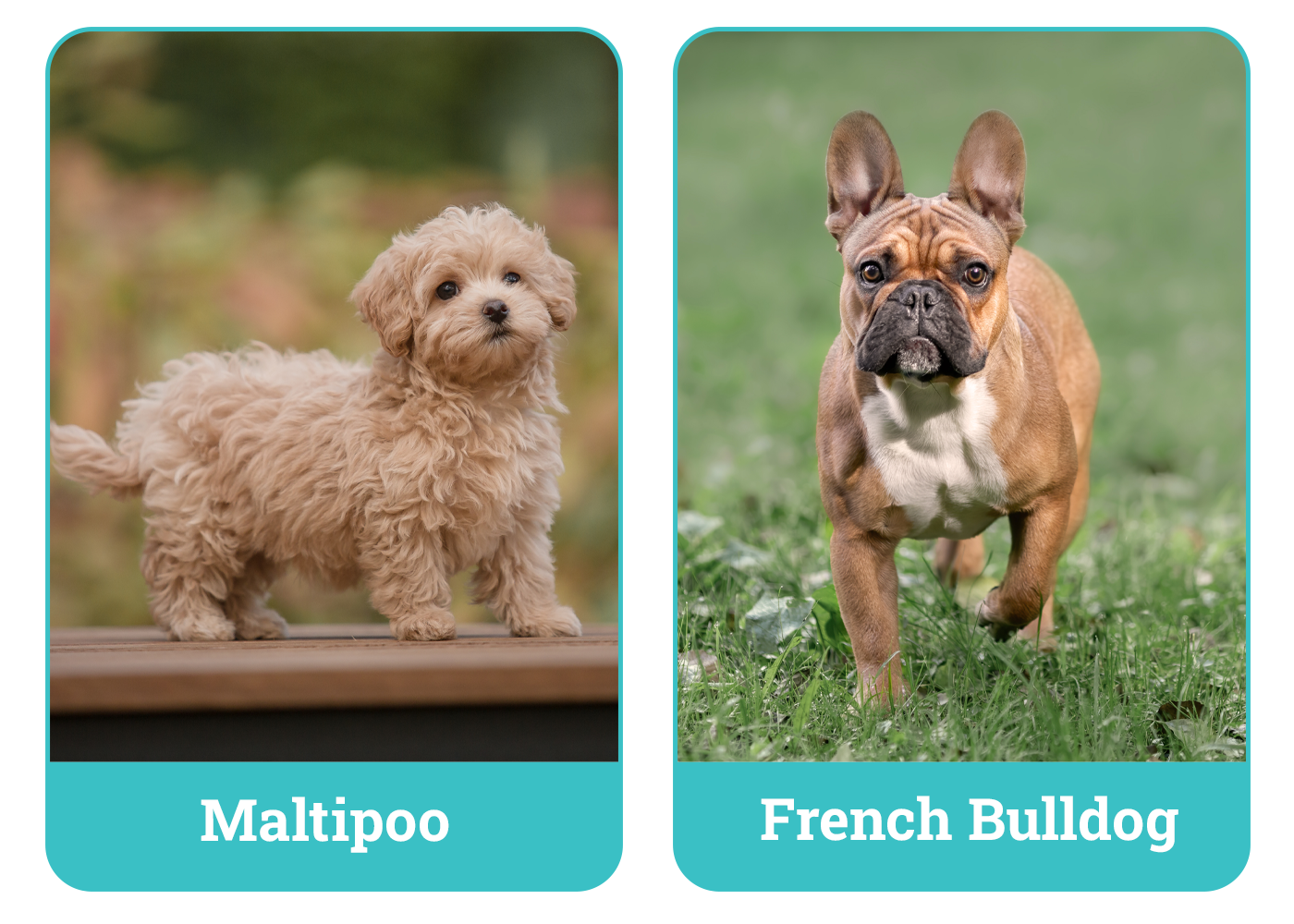
Overall, Maltipoos and French Bulldogs are excellent apartment dogs and can do well living in urban areas. They both don’t require too much exercise, but they’ll still need a lot of attention because they enjoy being the center of attention.
Maltipoos have a slight edge for first-time dog owners because of their eagerness to please and minimal health concerns. They’re also a better fit for people with allergies. However, they can act needier than French Bulldogs and won’t be content with receiving partial attention.
French Bulldogs are a good fit for individuals who work from home and are looking for a dog that doesn’t require as much interactive attention. They’re a little more easygoing and quieter than Maltipoos, but owners should be prepared to see their stubbornness make an appearance every now and then.
Both dogs love and need to be around people. So, before you decide on either breed, make sure that you can adequately meet their companionship needs to ensure that they can live a happy and fulfilling life in your home.
Featured Image Credit: Top – dezy, Shutterstock | Bottom – Hasan Gulec, Pexels