Does Nose Work Tire Dogs Out? Vet-Reviewed Care Facts


In this article
As dog owners, we’re always looking for creative methods to give them a complete daily workout that ensures their physical fitness and mental satisfaction. If you haven’t tried nose work activities, you’re missing out on one of the best enrichment opportunities for any dog!
Scenting is an efficient exercise that demands focus, problem-solving skills, and independence. It is an excellent way to exhaust and relax even the most high-energy dog. Learn how to make this part of your dog’s routine as we explore whether nose work can tire dogs out and what fun activities you can set up at home.

Is Nose Work a Good Workout for Dogs?
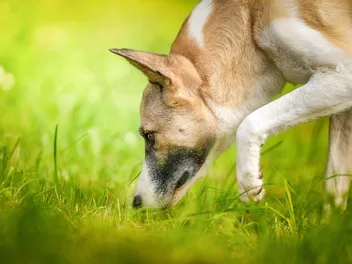
Nose work may not involve much strenuous physical activity, but it provides more stimulation than a simple walk. Your dog has to employ their mind and body for scent work, expending excited energy that can wear them out surprisingly well.
You can give your dog 20–30 minutes of nose work within their exercise routine. You’ll discover they tire out faster and find loads of satisfaction in these games, resulting in a more relaxed pet for the rest of the day.

Benefits of Nose Work
As an activity that draws upon your dog’s natural behavior, nose work is one of the best ways to exercise your pet, provide mental enrichment, and improve their general welfare. Foraging with their nose is a fundamental survival habit that involves minimal direction from the handlers and leaves most of the work to the dog.
Nose work gives dogs autonomy, a chance to make active decisions, move at their pace, and solve problems independently. With the freedom to have fun, dogs become happier, more optimistic, and more confident.
How We Put the Dog’s Nose to Work
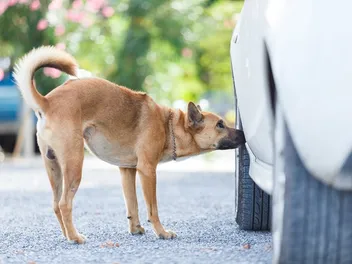
A dog’s nose can gather specific types of information that modern technology still can’t come close to capturing. Traditionally, dogs helped humans on the hunt, using their scenting skills and endurance to track faraway game.
Over time, dogs diversified, employing their noses for jobs like finding vermin on the property, locating lost travelers in the wilderness, and even sniffing out delectable truffles.

Modern Jobs for the Dog’s Nose
In the 20th century, we began testing to see how incredible the dog’s nose could be. Dogs became invaluable in critical functions involving search and rescue, military and police work, and even healthcare. Common jobs dogs fulfill, or could potentially fulfill, include:
- Live-find and human remains detection
- Pest detection (e.g., bed bugs, ants)
- Explosives detection
- Narcotics, cash, and contraband detection
- Medical detection (e.g., cancer markers, infections)
- Cell phone detection in prisons
Some service dogs use their pronounced detection skills to help their handlers operate and stay safe. For instance, a peanut allergy dog can detect hazards in food and alert their handler to the risk. Some can even sense changes in the body by picking up minute chemical signs, helping their owners prepare for oncoming seizures, blood sugar fluctuations, and rapid blood pressure drops.


How Can You Do Nose Work at Home?
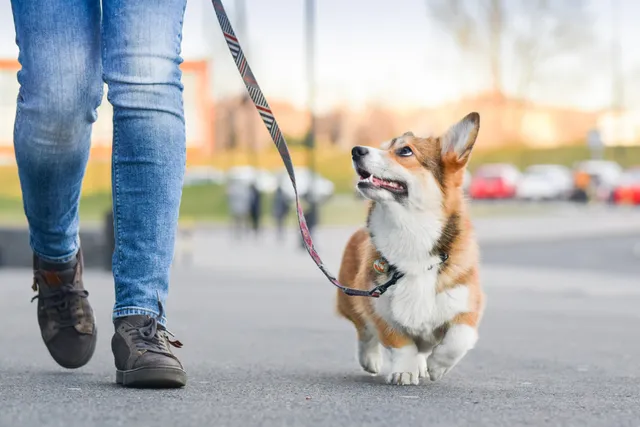
The best part about nose work is that it’s an exercise you can do inside or outdoors at any time of day. Anyone can set it up, and practically every dog will want to do it! Letting your dog sniff around during your walk around the neighborhood is a simple way to let them flex their olfactory muscles.
Your walks will be slower, but your dog will come out feeling more fulfilled. Alternatively, teaching nose work games is straightforward and something you can do in various settings. Once you think your dog is ready and excited for the next challenge, you can check out sports like scent work trials to push their limits.
Hide and Seek
Training hide and seek involves showing your dog that something of interest equals rewards, so they are motivated to find it. It’s easy with a treat or their favorite toy, and locating it immediately rewards your dog.
Set your dog’s favorite toy or treat in a conspicuous spot in the room. Tell them to “Find” and release them to get the item. Once they retrieve it, shower them with praise. Repeat this several times until your dog gets used to hearing the command and searching for the prize.
Build on this by hiding the treat in increasingly hard-to-find spots. Remove your dog from the room, and hide the treats. Bring your dog back while saying “Find” to begin the search. Focus on ensuring your dog’s success, only proceeding when they show consistency and understanding.
Eventually, you can incorporate props like boxes for hiding treats or expand the search area to the backyard. Do this for 10–20 minutes before feeding your dog to give them a healthy mental workout.
Snuffle Box
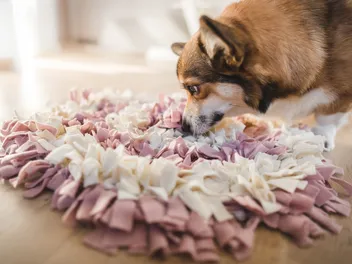
A snuffle box is another delightful indoor mental enrichment device that only requires you to set it up so your dog can do the rest. You can find several creative ways to assemble and customize the box to work with what you have and adjust the difficulty.
To build your snuffle box, empty out a large cardboard box and sprinkle a few bits of kibble and a couple of treats in the bottom. Then, add layers of filling to hide the treats. The filling can include pieces of paper, towels, plastic bottles, toilet paper tubes, or anything lightweight and safe for your dog's foraging. For dogs that are prone to eating non-food items, we recommend using more bulky items that they can’t swallow.
Sprinkle more food over the filling as you add each layer. A well-built box will give your dog several minutes of exhaustive, exciting mental exercise to tire them out.
Towel Game
The towel game only takes a few seconds to set up and doesn’t require any special equipment. Spread a bath towel out, and scatter kibble mixed with a couple of treats on top of it. Roll the towel up from a short end. Put the roll on the floor for your dog to unfurl with their nose.
Soon, your dog will figure out the concept and get adept at undoing the towel. You can then up the challenge by adding extra folds to the towel, layering in additional towels, or tying a knot in the towel after rolling it from the long side.

Final Thoughts
Nose work is fun for dogs, easy for owners, and too beneficial to leave out of the routine. Dogs dive into scenting activities with upbeat energy thanks to a natural urge to work and a tendency to use their noses to accomplish their goals.
No matter your situation or your pet’s personality, nose work should be part of their daily exercise if you want to give your dog the mentally and physically exhausting workout they deserve.
Related reads:
What Is BSL (Breed Specific Legislation)? Vet-Approved Explanation
Can Dogs Be Left or Right Pawed? Vet-Approved Facts & Explanation
Should I Let My Dog Sniff on Walks? Vet-Verified Facts & Explanation
Sources
Featured Image Credit: Ryan Brix, Shutterstock
Expert dog care, straight to your inbox
News, insights, expert advice, and everything dog.

No spam — unsubscribe anytime.
By signing up, you agree to our Terms & Conditions and Privacy & Cookies Policy.
How useful was this post?
Click a star to rate. You can leave written feedback afterwards. (We read all feedback.)
Nicole has loved animals of all sizes her whole life so it's no wonder she has dedicated her career to helping them through what she loves best: learning, writing, and sharing knowledge with others. She’s the proud mom of two dogs, a cat, and a human. With a degree in Education and 15+ years of writing experience, Nicole wants to help pet parents and pets around the planet to live happy, safe, and healthy lives.