How to Go Fishing With Your Dog: Vet-Approved Safety Precautions & Etiquette


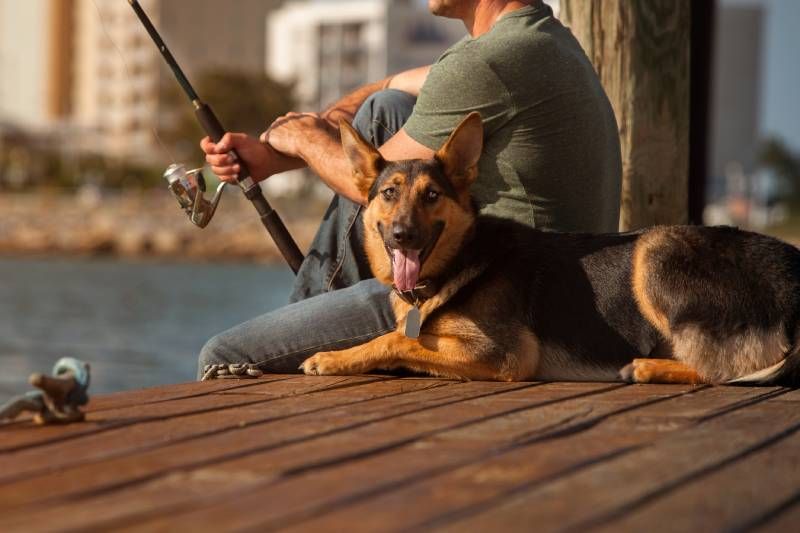
Having a dog to go fishing with is just about as good as having a good fishing buddy. Speaking of having a good fishing buddy, you have to make sure they stay safe throughout the whole activity. Not all dogs make good fishing buddies, and some may even spook the fish, leaving you without a single catch for the day. But that can be avoided by learning how to go fishing with your dog.
In this step-by-step guide, we’ll discuss the proper preparation, training techniques, safety precautions, and etiquette needed to take your dog with you on a successful day of fishing.

Before You Start
First things first: is your dog a brand new puppy? Or do you have an adult dog that’s been your companion for a while? Age, training level, and temperament are important factors when deciding whether your dog is ready for a fishing trip. Puppies or untrained dogs may struggle with impulse control, recall, and staying calm in new environments, so shorter or more controlled outings are usually more appropriate.
Some dogs get colder than others, and the weather is an important factor to consider. If you think your dog will be miserable out in damp, cool weather, leave them at home.

Preparation
Preparation is important if your dog has never gone fishing with you. In that case, you’ll want to prepare your dog beforehand. Utmost care should be taken to keep hooks, lines, and casting actions at a safe distance to avoid injury. Basic obedience commands such as sit and stay are important for maintaining control and preventing unwanted chasing or sudden movement. Fishing hooks and tackle can pose serious safety risks, so supervision is essential at all times.
Start with basic desensitization by introducing fishing equipment gradually so your dog can become familiar with the sights and sounds. Go into the backyard, cast a few lines without any hooks, and observe your dog’s reaction. If your dog tries to chase the cast, command them to stay or sit since you certainly don’t want your dog diving into the water every time you cast.
Break out your fishing gear and tackle bags and keep them at a safe distance, out of your dog’s reach. The last thing you want is your dog’s mouth to get jabbed with a fishing hook. Once you feel your dog is comfortable, give it a try for real.
You’ll also need to consider where you’ll be fishing. Will you fish by boat or off a pier? Regardless, you need to ensure your dog won’t dive into the water and that the environment is safe and appropriate for your dog’s behavior level. Go to a nearby lake, river, or whatever is close to you where you can legally fish. Cast a few to gauge your dog’s reaction. If they remain calm, praise them and give them a treat. If they dive into the water, you’ve got more training to do.

Top 10 Safety Precautions and Etiquette
1. Check Regulations
Not all places allow dogs in fishing waters due to wildlife, such as ground-nesting birds, endangered wildlife, or other factors. Before you head out, ensure your dog is allowed to accompany you on the fishing trip.

2. Keep Others in Mind
There are many types of fishing, one being bank fishing. Keep in mind that not everyone is a dog lover, and some people are afraid of dogs. If you’re bank fishing, keep your dog on a leash unless they obey your commands consistently. If the area allows your dog to be off leash, ensure your dog is well-behaved and obeys your commands to avoid your dog wandering off.
3. Meeting Mr. Fish
If this is the first time your dog is fishing with you, you’ll want to introduce your dog to your first catch. Keep in mind that this may be the first time your dog has ever seen a fish, and their curiosity could get the better of them.
Allow your dog to smell it from a distance and watch their reaction. Some dogs may try to take a bite, but you want to avoid this from happening. Let them see the fish and watch you release it back into the water or store it in an appropriate container. With repeated exposure and proper training using positive reinforcement, most dogs can learn to remain calm around fishing activity, although individual responses may vary.

4. Familiarize Your Dog With the Boat
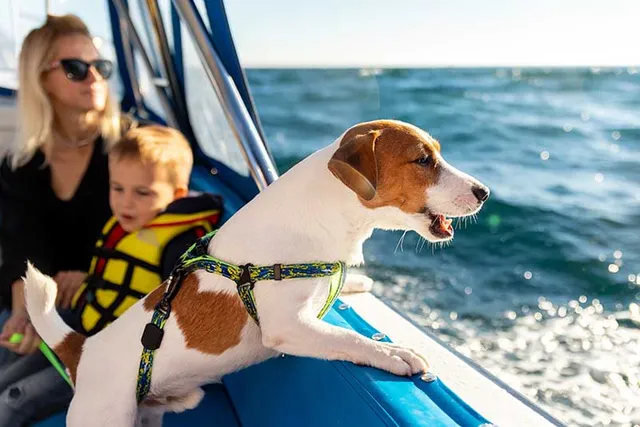
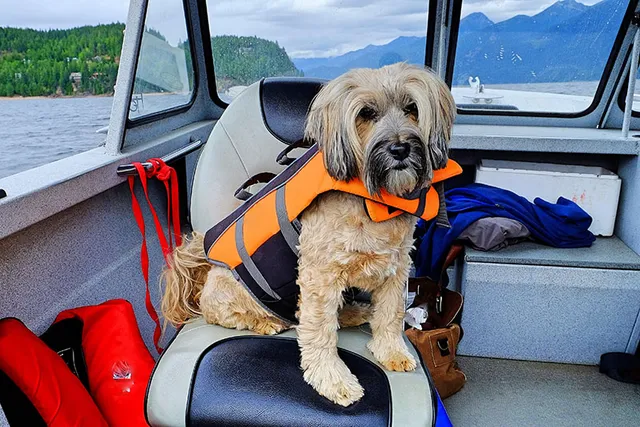
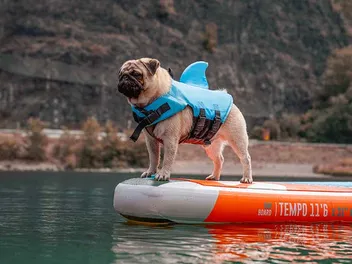
Getting into a boat may be awkward for your dog at first. Before you head out on a fishing trip by boat, ensure your dog is comfortable getting in and out. You’ll also need to designate a place in the boat for your dog to be comfortable and secure, not being able to jump out. They should be on a leash and wear a safety vest. You should train your dog not to jump out of the boat until they hear your command.
5. De-barb Your Hooks
The last thing you want is to cut your fishing trip short because your dog has a hook in his eye or mouth. This is very painful for your dog and could cause serious injury. De-barbing the hooks is better for the fish, and it helps avoid an accident while you cast. If you can’t de-barb your hooks, you can always put dog goggles on them for added safety. Careful casting and keeping your dog at a safe distance are still the most important safety measures. There is no substitute for proper supervision and safe handling of fishing gear around dogs.

6. Dog Gear
You’ll need to bring your dog’s gear along with your fishing gear.
Your dog’s gear should consist of the following:
7. Know Your Dog’s Swimming Abilities
Many dogs are natural swimmers and are comfortable in water, but some are not. Comfort and the dog’s ability in water vary widely depending on breed, age, health, and experience. Know your dog’s swimming abilities before taking them on any fishing trip. This is especially important if you plan to fly fish in a stream. You don’t want your dog to get swept up in a current downstream. Pick a spot that’s comfortable for your dog, and always keep a close eye on them.

8. Know the Signs of Heat Exhaustion
Depending on the time of year and your location, it can get extremely hot as the sun rises and settles in the sky.
Watch for signs of heat exhaustion in your dog that include:
If the temperatures are sweltering, it’s best to let your dog sit this particular fishing trip out.
9. Blue-Green Algae
Blue-green algae are actually cyanobacteria that can grow in freshwater, especially in warm, slow-moving, or nutrient-rich water conditions. These blooms can produce toxins that are dangerous to dogs and may cause severe neurologic, liver, or gastrointestinal illness if ingested when dogs drink or swim in the affected water.
Blooms can pop up sporadically, so be on the lookout. Some agencies will post signs if blue-green algae are present.

10. Don’t Forget Bathroom Breaks!
If fishing from a boat, allow your dog regular potty breaks. Keep an eye on them and keep them on a leash to prevent them from running into a wooded area to potty, as rattlesnakes or other dangers could be lurking.

Conclusion
Fishing with your dog can be a fun bonding experience for both of you. However, before you go, there’s more to it when it comes to safety and etiquette. Be mindful of other people fishing, ensure your dog obeys your commands, is safe and out of reach of any hooks, is comfortable in whatever terrain or boat you’ll be fishing in, and don’t forget extra water, treats, and a leash. Also, be mindful of hot weather for your dog, check the regulations wherever you plan to fish, and most of all, have fun!
Related Reads:
Featured Image Credit: Marcus Holman, Shutterstock
Expert dog care, straight to your inbox
News, insights, expert advice, and everything dog.

No spam — unsubscribe anytime.
By signing up, you agree to our Terms & Conditions and Privacy & Cookies Policy.
How useful was this post?
Click a star to rate. You can leave written feedback afterwards. (We read all feedback.)
Rachel Giordano is a writer and musician living in Pensacola, Florida, with her partner and their two dogs, Aero, a Border Collie/Sheltie mix and Sophie, a Boston Terrier. Rachel holds a Bachelor of Arts degree in communication and loves writing about animals of all types. When she’s not writing about pets, she loves to write suspense/thriller novels. A musician by night and writer by day, she enjoys educating the public about the needs and requirements of animals, big and small.