Get

In Your Inbox

Dogster is reader-supported. When you buy via links on our site, we may earn an affiliate commission at no cost to you. Learn more.

How Far Away Can a Dog Smell a Person? Facts & FAQ

Share

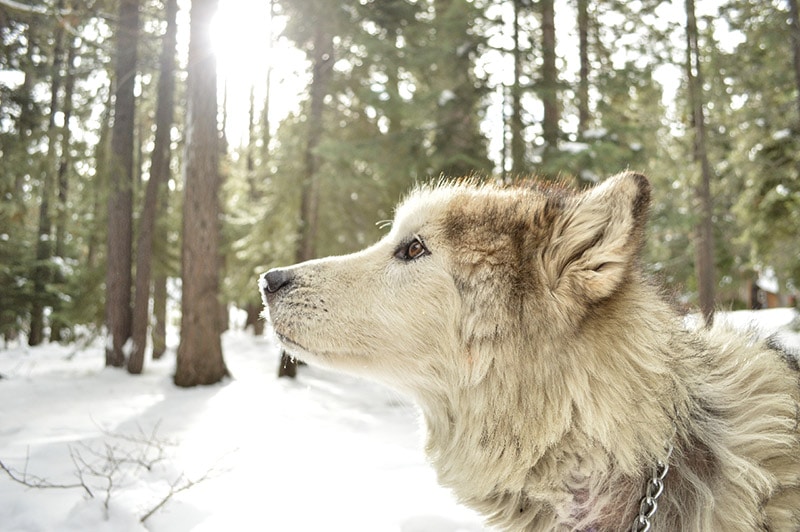
a dog in a forest in winter_JumpStory

Dogs are renowned for their keen senses, particularly their sense of smell. A dog can smell a person (particularly one they recognize) from up to 40 feet away, but this depends on the conditions surrounding the dog and the person they’re trying to smell.1

Certain factors affect how far away a dog can smell a person. Wind speed and direction, for example, affect how far away a dog can “catch” a scent and how much of that scent is carried.

divider dog paws 2 oct 2024

Wind Speed and Direction

If a dog is trying to smell a person and is “downwind” (meaning the wind is blowing from the person in the dog’s direction), their scent will be pushed toward the dog by the wind. The scent molecules will be carried toward them this way, and the opposite is true if the wind is blowing away from the dog toward the person.

The speed of the wind is also a factor since the scent spreads out slowly as molecules in the air. If the breeze is gentle, more scent molecules can fan out into the air, meaning more will be available to the dog. Conversely, if the wind is fast and strong, the molecules will be moved into a stream less likely to reach the dog’s nose.

Mixed breed of German Shepherd and Labrador Retriever
Image By: Jarry, Shutterstock

Rain

The type of rain makes a difference when a dog is tracking a human scent. If the rain is heavy and oppressive, it can move the scent molecules down and press them close to the ground, meaning a dog would have to be “nose to the ground” to find the scent trail of a person.

On the contrary, if there is a light rain, it can actually help to stir up scent molecules and “refresh” the smell, and a dog is more likely to smell the person from further away and will have an easier time finding a scent trail.

Other Smells

It may seem obvious, but distractions and other overbearing smells can also affect how far away a dog can smell a person. If in a controlled environment, a dog can smell the person’s scent from a maximum distance (around 40 feet). If out in the field, such as during search and rescue, there will be a cacophony of other scents and smells to filter through, which can distract a dog.

Chocolate Labrador Retriever
Image By: Eve Photography, Shutterstock

Can Dogs Smell Illness in People?

Dogs have an excellent sense of smell. It’s so good that some can detect when a person is sick. Many dogs have been known to act strangely around their owners without being provoked, leading to the owners getting medical attention and being treated for various illnesses that hadn’t begun to show symptoms yet, such as cancer.

There have been years of research detailing how dogs can do things, and dogs can now be trained to detect illness in their owners, ranging from incoming seizures to drops in blood glucose and even narcolepsy and COVID-19.

Dogs can do this due to their incredibly sensitive sense of smell. Some illnesses, such as cancer, give off specific scent molecules that people exude in their breath, sweat, or urine. These can be picked up by dogs trained to signal when they smell them, making them incredibly useful as service dogs in the community.

Dogs trained to detect seizures, for example, can not only smell minute differences in their owner’s natural smell but are also clued into their behavior. Scent changes and almost imperceptible changes in behavior trigger the dog to signal when a seizure is imminent, allowing the person to reach a safe place before the episode occurs.

What Breed of Dog Has the Best Sense of Smell?

bloodhound dog walking on the grass
Image By: Edoma, Shutterstock

All dogs have scent receptors called olfactory bulbs. Their sense of smell seems to be a dog’s main sense, and all breeds have an incredible olfactory system, including olfactory receptors and a vomeronasal organ. A human’s sense of smell isn’t comparable since dogs have 200–300 million scent receptors in their noses, much more than a human’s 400.

However, the Bloodhound has the most advanced sense of smell. They were bred for hunting and tracking and have been used for tracking people since the Middle Ages. Everything about this breed is made to amplify scent, from their creased faces that direct scent molecules to their noses to their long ears that prevent wind from scattering nearby scents.

This gives them an incredible gift for tracking and finding humans. The record for the longest time a scent was followed occurred in 1954 in Oregon when a Bloodhound followed the scent trail of a missing family found dead over 330 hours after they went missing. Because of this, the Bloodhound is often used as a search and rescue dog or a cadaver dog.

You are free to use this image but we do require you to link back to Dogster.com for credit

divider dog paws 2 oct 2024

Final Thoughts

Dogs have extraordinary senses of smell that have been used to track humans for centuries. The farthest a dog can smell a human is usually around 40 feet away, but it depends on environmental factors such as wind speed, wind direction, and weather. Some breeds are more skilled at tracking scents, such as the Bloodhound, and dogs are now being used more than ever to detect toxic chemicals, bodies, and even diseases.


Featured Image Credit: JumpStory

Want content like this delivered to you?

Sign Up For Our Newsletter

News, insights, expert advice, and everything dog

* By submitting, you agree to our Terms & Conditions and Privacy & Cookies Policy.


How useful was this post?

Click on a star to rate (you can leave written feedback after clicking submit)

Help us improve Dogster for pet parents!

Your feedback really matters.

What did you like about this post? Also how can we improve it?

Join the conversation

Leave a Reply

You’re very welcome to leave a comment or question. Please know that all comments must meet our community guidelines, and your email address will NOT be published. Let’s have a positive and constructive conversation.


Talk With A Vet Online

Peace of mind,
anywhere, anytime

Affordable vet advice

Dogster’s Weekly Photo Contest Winners: Best Easter Photo (April 9, 2026)

Every week our team gets the privilege of sorting through our readers photos to choose what dogs will win this weeks contest! See...

We Didn’t Just Add a Dog to Our Life – We Built a Life With Him

“We didn’t just bring a dog home—we built a life together.” Most people are quietly taught a version of pet ownership that looks...

What Most Airlines Won’t Let You Do With Your Dog (Even If You Pay Extra)

Airline pet policies are notoriously hard to navigate. The information is scattered across different pages, buried in FAQ sections, and often contradicts what...

Designer Breeds: Best of Both? New Study Says No

“I’ll take a highly trainable, low-shedding lapdog, hold the heart disease and anxiety!” Something I always found amusing was when people would point...

More related

Can Dogs Laugh? What Science Says

Our dogs are so cheerful and full of spunk that you would think you would see them suffer from the giggles from time...

9 Best Hot Spot Shampoos for Dogs In 2026: Reviews & Top Picks

At best, hotspots can be minor aesthetic problems for dogs. At worst, they can be painful, irritating, and even get infected. It’s best...

My Dog Ate a Squirrel: Should I Be Worried? Our Vet Explains

If you have just witnessed your dog eating all or part of a squirrel, your initial reaction could fall anywhere along the spectrum...

Miniature Schnoxie Dog Breed: Info, Pictures, Care & More

The Miniature Schnoxie is the perfect designer dog for you if you want a small breed that is loyal, fun to be around,...

Keep reading

Can Dogs Eat Cashews? Vet-Approved Nutrition Facts

Cashews are a much-loved snack and have great health benefits. The delicious nuts can be eaten all on their own or added to various dishes for a nutty flavor. But what about dogs? Your dog may adore cashews and other...

Can Dogs Eat Cashews

4 Benefits of Turmeric for Dogs (Based on Science)

Dogs are like humans. They are susceptible to various diseases that can cause joint pain and inflammation and can also benefit from this yellow spice. We have listed four benefits of turmeric for your dog, along with other information you...

Close-Up Shot of Turmeric Powder

10 Best Dog Foods in the UK in 2026 – Reviews & Top Picks

Gone are the days of limited dog food choices. As owners have become more attuned to canine nutritional requirements and have access to a wealth of information on ingredients, both good and bad, the range of dog food has expanded...

shih tzu dog getting wet food from owner at kitchen

Top 10 Most Popular Dog Treat Brands in 2026 – Reviews & Top Picks

Dog owners know how much their pets love treats. What could be better than a delicious treat to reward your dog for a job well done? There are many different flavors, textures, and sizes of dog treats, as well as...

jack russell terrier having treats

Organ Meat for Dogs: Vet-Verified Safety & Preparation Tips 

Organ meats from animals that are raised properly and safely, such as farmed chickens, turkeys, ducks, cows, and sheep, can be a healthy and nutrient-rich treat for your dog. However, while dogs can technically eat organ meat, it’s crucial that...

Cooked chicken livers and gizzards in hot cast iron pan

10 Best Dog Foods for Pomeranians in 2026 – Reviews & Top Picks

Pomeranians have vastly different nutritional needs than dogs of larger breeds. Small dogs have higher metabolic rates than larger dogs and need to take in a sufficient number of calories to stay healthy. You might be surprised to learn that...

Pomeranian eating dry food from green bowl

TBHQ in Dog Food: Vet-Approved Feeding & Safety Facts

TBHQ, or tertiary butylhydroquinone, is likely an ingredient that you aren’t familiar with. This chemical additive is commonly used in pet foods to extend shelf life and keep the food from going rancid. You might be surprised to know that...

person pouring dog food to a bowl

Can Dogs Eat Salsa? Vet Approved Facts & FAQs

Salsa is a spicy relish composed of tomatoes, peppers, herbs, limes, onions, and spices. It’s usually paired with tortilla chips as an appetizer, but it can also be used as a topping or filling for tacos, enchiladas, or burritos. Salsa...

Can Dogs Eat Salsa

Love Dogs? So Do We! Join the Dogster Community

Stay informed with expert pet care insights delivered straight to your inbox! Discover professional guidance on animal behavior, feeding tips, trusted product picks, and much more.


Sign up for the Dogster Email Newsletter