

Aggression is a concerning issue in dogs. If not promptly and correctly managed, aggression can lead to dangerous situations. Aggressive dogs can lunge, bite, or attack another dog or person, causing severe injuries.
Therefore, most prospective dog owners want to know how aggressive certain breeds can be. The Cane Corso is not inherently aggressive. While some breeds may do more damage due to their size and power, any species can be aggressive, and the Cane Corso is no exception. Keep reading below to learn more about aggressive behavior in the Cane Corso.

About the Cane Corso
The Cane Corso is a working breed that belongs to a subcategory known as Molossus dogs. Molossus dogs are named after the Molossi, a people in ancient Greece believed to have bred enormous, Mastiff-like dogs as guardians. When the Roman Empire occupied Greece, they captured some Molossus dogs and took them to Italy to cross them with Italian dogs. This crossbreeding resulted in the ancestor of two massive modern dogs: the Neapolitan Mastiff and the Cane Corso. The ancestors of the Cane Corso were used on the front lines of battle.
As the generations progressed, the Cane Corso was steadily developed and eventually adapted to new roles. This dog was often used for hunting wild boars, farming, protecting livestock, and guarding property. Due to their background, the Cane Corso is intelligent and trainable. They are confident protectors with a noble bearing and an assertive attitude. They are dignified, independent, and alert, always watching to protect their families.
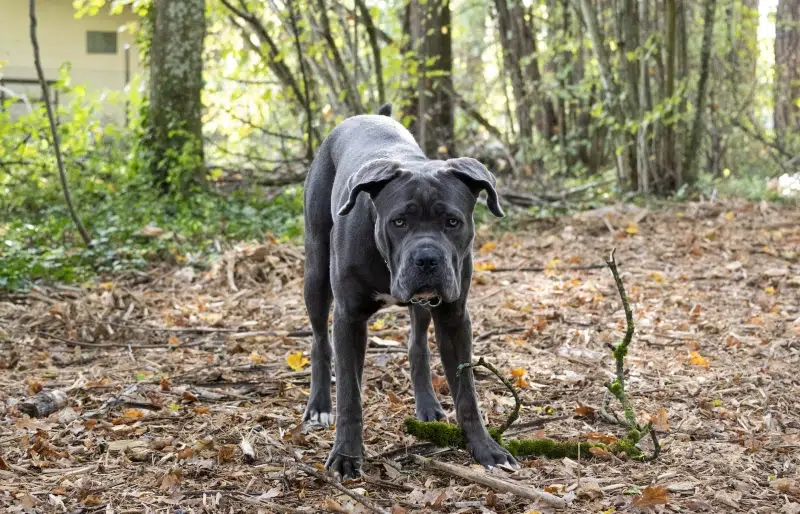
They can reach 28 inches tall and weigh well over 110 pounds. With a large head and powerful muscles, the Cane Corso strikes an imposing figure. They are eager to please and loyal to humans, but their size and power make them unsuitable for first-time dog owners.
Proper training and socialization are vital since this protective dog can grow into an energetic, massive canine. If the owner of a Cane Corso cannot reliably rein in their dog, the willful Cane Corso may walk all over them. In the worst-case scenario, untrained dogs living in stressful environments can turn aggressive.

Is the Cane Corso Prone to Aggression?
The Cane Corso is not inherently aggressive, but they have been bred over generations to be vigilant and protective. If the owner of a Cane Corso does not establish themself as the boss right away, the Cane Corso may take their guardianship duties too far. A well-trained Cane Corso is eager to please their owner and will heed any direction given. Still, they remain suspicious of strangers.
If you are a new dog owner or unfamiliar with training large guard dogs, the Cane Corso is not the right fit. But if you have experience training and socializing large, vigilant dogs, you’ll have a loyal companion.
Signs of Aggression in the Cane Corso
Knowing the signs of aggression in your dog is the first step to interfering and preventing such behavior in the future.
- A stiff and rigid posture
- Intense, threatening barking
- Muzzle punching—when a dog punches a person or dog with their nose
- Lunging or charging
- Growling
- Showing teeth
- Snarling (a combination of a growl and bared teeth)
- Snapping
- Nipping without tearing the skin
- Biting and tearing or puncturing the skin
- Biting hard enough to bruise
- Multiple bites, one after another
- Biting and shaking
Top 9 Reasons Your Cane Corso May Behave Aggressively
When looking for signs of aggression, it is important to note that aggression can be your dog’s response to various situations. To put an end to your dog’s aggressive behavior, it is important to know what might be causing it.
1. Territorial Aggression
Territorial aggression is common with Cane Corsi. This quality can be a benefit when your dog is scaring away intruders, but it can be a serious issue if your Cane Corso is territorial at inappropriate times. If your dog is aggressive toward anyone who enters the house, such as friends, family, or other visitors, you must manage your dog’s behavior.
2. Protective Aggression
Dogs are social creatures that form strong bonds with their families, and the Cane Corso is no exception. If your Cane Corso does not allow anyone to get close to you, they may display protective aggression. Again, protectiveness is a trait that the Cane Corso was intentionally bred to possess, and at appropriate moments, it can be desirable. But when your dog’s protectiveness turns to aggression, people can get hurt.
3. Possessive Aggression
If you have a multiple-pet household, your dog may behave aggressively toward other pets if they see them playing with their toys or eating their food. Possessive aggression can also target humans, such as when someone draws too close to your dog’s food bowl.
4. Fear Aggression
If your Cane Corso is fearful, the source of their anxiety will trigger a flight or fight response. When the dog cannot flee, their only option is to fight. If fearful behavior is causing your dog’s aggression, the best thing you can do is remove your dog’s stressor or find a way to help them overcome their fear.
5. Defensive Aggression
Defensive aggression is a form of fearful aggression. However, rather than lash out as a response to fear, your Cane Corso may take the first strike rather than wait for fear to overwhelm them.

6. Frustration Aggression
Like with children, frustration may cause your dog to lash out. Dogs often experience frustration when they want to go somewhere but are prevented from doing so by a leash or cage. This may cause your dog to associate the leash or cage with frustration, causing them to become aggressive each time they are restrained.
7. Pain-Induced Aggression
A dog with an injury or medical complication can become aggressive. If your ordinarily relaxed dog suddenly becomes aggressive with seemingly no cause, contact your vet. There is a chance that an underlying health concern is causing the issues.
If you need to speak with a vet but can't get to one, head over to PangoVet. It's our online service where you can talk to a vet online and get the advice you need for your dog — all at an affordable price!
8. Sex-Related Aggression
Unsterilized dogs (particularly males) may attack each other to establish themselves as the most powerful male and attract a mate. This can also occur in female dogs, though it is less common. Even if there is no animal of the opposite sex in your home, they can attack another male dog in a public area due to instinct, but this behavior tends to wear off after 3 years of age in sterilized dogs.
9. Predatory Aggression
Since dogs are closely related to wolves, they have a strong prey drive. This is especially true of the Cane Corso, whose ancestors were put on the front lines of battle and were used to hunt boars. If a squirrel or other smaller animal runs by your dog, it may activate the dog’s prey drive and cause them to become aggressive.

How to Handle an Aggressive Cane Corso
Always supervise your Cane Corso when they are around others, especially strangers. Correct the dog and separate them from the situation if they behave aggressively. Do not allow strangers to approach your dog and pet them without your permission. When your dog behaves well in social situations, reward them with a treat.
Never challenge an aggressive dog since it can result in an attack. Instead, you can contact a behavior specialist immediately for modification and management.
Conclusion
Although the Cane Corso is a powerful, protective watchdog, they are not inherently aggressive. Any dog, from the largest Great Dane to the tiniest Chihuahua, can display aggressive behavior. What is important is that you train and socialize your Cane Corso from an early age to adapt to new situations and people. If your Cane Corso knows you are the boss, they will be a friendly and loyal companion.
Featured Image Credit: Dora Zett, Shutterstock
 About the Cane Corso



























2 Responses
This was very informative and helpful thank you a bunch 🫶🏾
Hello Michael,
Thank you very much for your wonderful feedback! We are glad you found the information in our article helpful.