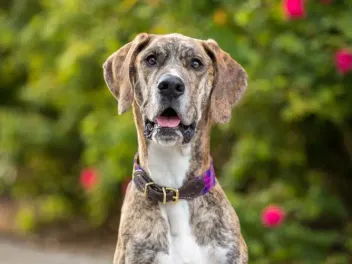
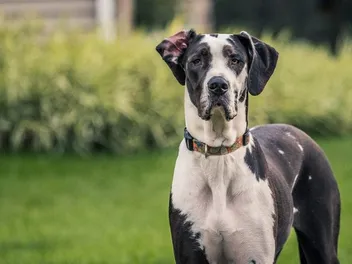
Great Dane vs Boxer: Differences Explained (With Pictures)

In this article
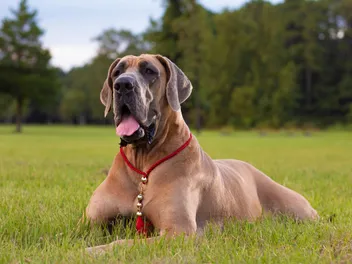
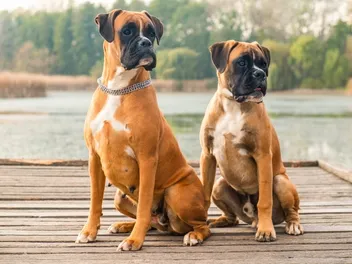
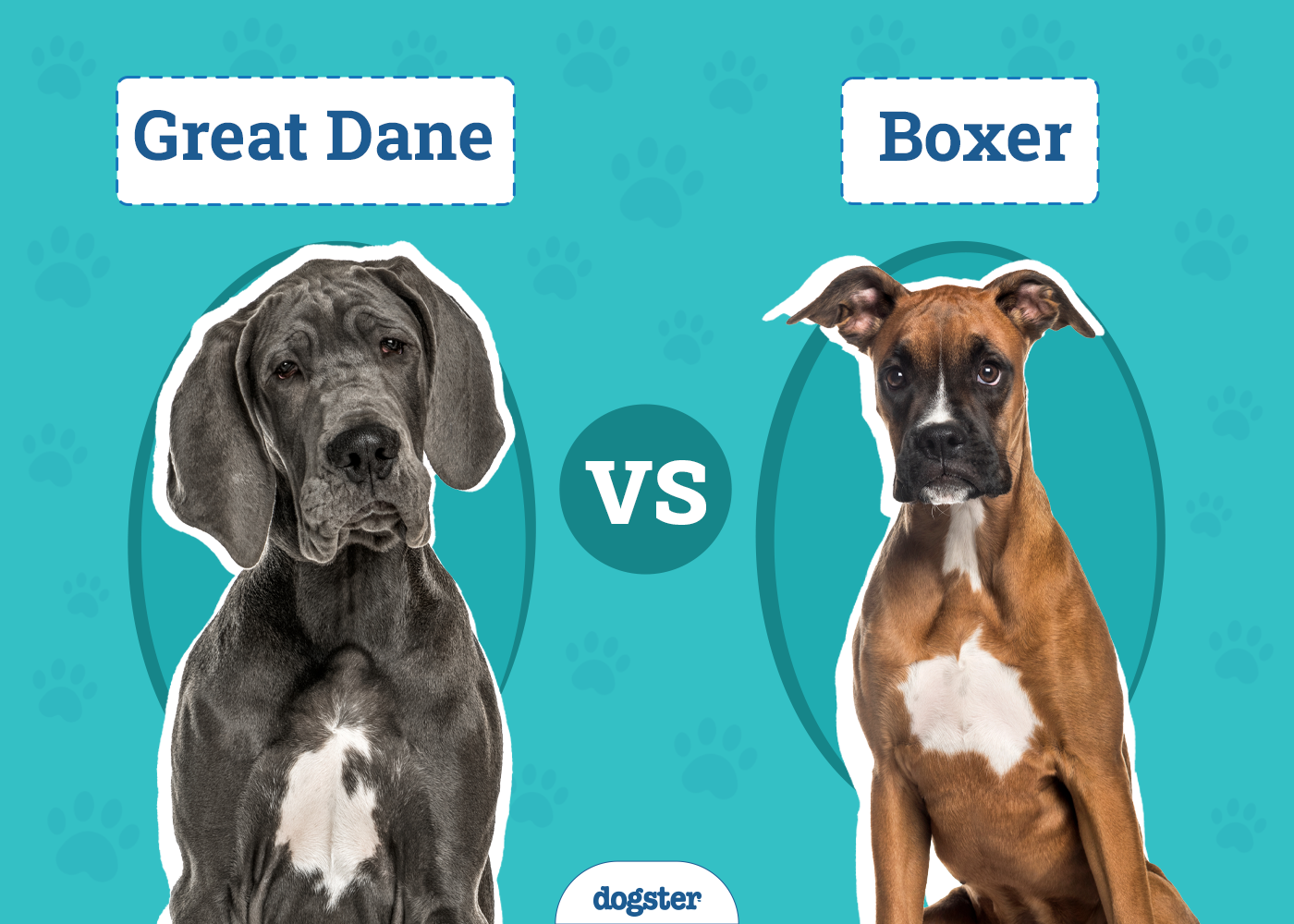
Great Danes and Boxers have tight muscular physiques, but these two gorgeous breeds are quite different. Great Danes are some of the largest dogs in the world; some can reach over 3 feet tall at the shoulders. The largest Great Dane currently alive, Zeus, is over 7 feet tall when he stretches out on his hind legs! Boxers, on the other hand, tend to be medium size dogs, with most only growing to 12 inches or so at the withers.
Great Danes can weigh more than 175 pounds, while Boxers seldom tip the scales at more than 70 pounds, and they also have totally different personalities! Great Danes are generally sweet, loyal, gentle, loving, and kind. While they enjoy exercise, they're often quite laid back and relaxed. Boxers are loyal, confident, and active, but without good training, these powerful dogs can become unruly and difficult to manage. They have plenty of energy and are often prone to jumping when excited.

Visual Differences

At a Glance
Great Dane Overview

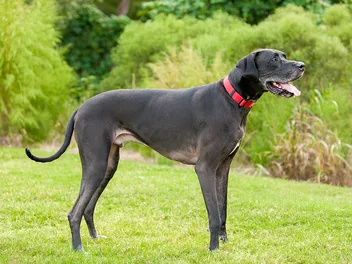
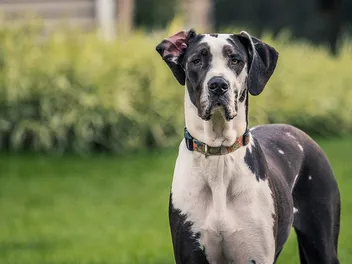
The American Kennel Club describes Great Danes as the Apollos of the canine world due to the breed's balanced proportions. Simply put, the dogs are enormous. Many of these giant dogs tower over grown men at full extension on their hind legs! But while Great Danes may look imposing, they're incredibly laid back and sweet.
German aristocrats first bred the dogs to hunt wild boar and deer, but those hunting instincts have been selectively removed through breeding, leaving us with the easy-going, sweet, patient Great Danes we know today!
Personality / Character
Great Danes make wonderful companions for those willing and able to meet this breed's outsized physical needs. They get along spectacularly well with children and aren't inclined to exhibit aggression towards smaller critters, including cats. But keep in mind that small children and babies should never be left alone with dogs, no matter how friendly or mellow.
Great Danes aren't known for excessive barking or getting wound up and excited. Most tend to be relatively mellow, but some are inclined to get just a bit carried away when they come upon an intriguing scent.
Training 🎾
As a working breed, Great Danes often enjoy activities that allow them to engage their natural instincts to solve fun problems. Most enjoy learning new things and are relatively easy to train. Because they’re so large, early obedience training is an absolute must as it's critical that your pet feels comfortable looking to you for guidance in new situations.
Great Danes typically enjoy scent work which combines the fun of sniffing with training. Since they naturally like to interact with and please their favorite people, Great Danes often respond quite well to positive reinforcement. Encourage your companion and give them lots of love when they're engaged in behavior you want to see more of to get your pet to respond to commands.

Health & Care
Large breeds, including Great Danes, generally suffer from more health issues than smaller dogs. The Great Dane is at heightened risk for bloat, dilated cardiomyopathy, and hip dysplasia. The average lifespan for these dogs is between 7–10 years. Great Danes require a great deal of food, and keeping one of these dogs fed can put a healthy dent into most budgets.
A puppy’s diet and growth need careful monitoring to prevent the development of joint diseases such as hip dysplasia, osteochondritis dissecans, and hypertrophic osteodystrophy. Because Great Danes often suffer from genetic conditions, purchasing these animals from reputable breeders is essential. According to the American Kennel Club (AKC), breeding animals should have thyroid, eye, hip, and heart tests to minimize the chances of producing offspring with debilitating genetic conditions.

Suitable for:
Great Danes make lovely family pets for those with the room and experience to handle this giant breed. They rarely become aggressive and make loyal, patient companions. Because these dogs grow so large, they need plenty of room to move around, making the breed best suited for homes with lots of indoor and outdoor space.
However, they’re calm enough to live in apartments as long as you can keep them busy and provide enough exercise. Great Danes do best in homes that regularly meet the breed's need for leisurely activities such as brisk walks and the occasional swim.

Boxer Overview

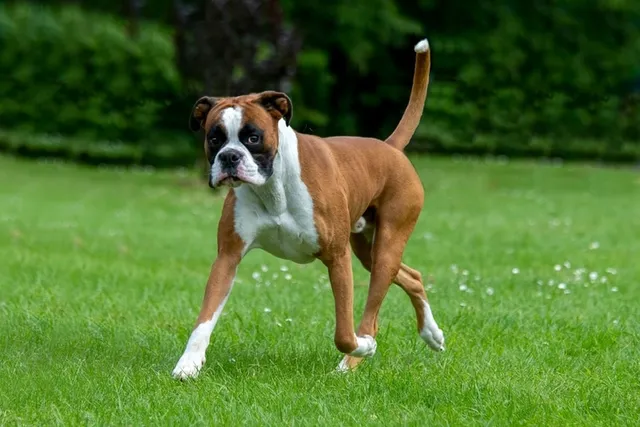
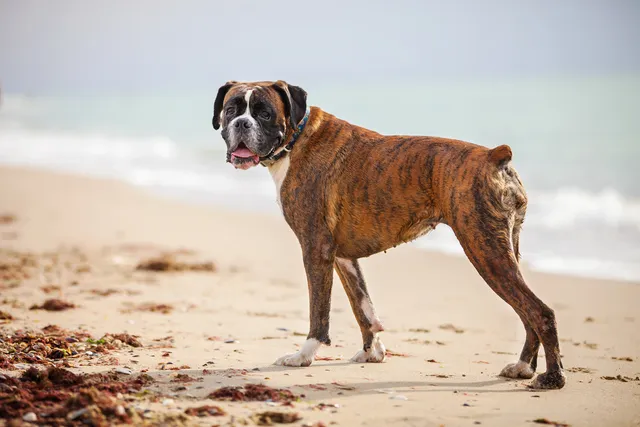
Boxers are curious, intelligent, muscled bundles of energy. Initially bred for game hunting and later used for bull baiting, Boxers are powerfully built and courageous. They’re protective and loving, and most get along with children. The breed has a powerful prey drive, so they require early training and socialization to prevent unwanted chasing. Boxers require several hours of daily physical activity, or they can become anxious, bored, and potentially destructive.
Personality / Character
Boxers typically do well in active households. Boxers thrive in environments where they can run and play with abandon. Because of the breed's muscularity, enthusiasm, and heritage, good training and socialization are essential. Boxers tend to jump when excited, which can be problematic around older adults and small children. They are also inclined to chase, and the breed is not always the best choice for households with other pets, including small dogs, cats, and tiny mammals. Boxers that grow up around other animals and have good early training are often less inclined to go after smaller pets. They also love to dig and pull on the leash during walks.
Training 🎾
Most Boxers love training and excel at learning new tricks and activities. Training is a fantastic human-dog bonding activity, but positive reinforcement usually delivers the best results with Boxers. These intelligent and loyal dogs often become headstrong if they lack a healthy bond with their owner. Agility training gives Boxers a fun way to get their hearts pumping and improve their mental stimulation. Because Boxers are protective, they require consistent early socialization to learn how to work productively with their instincts. Puppies can begin learning basic commands such as sit, stay, and come between 8–16 weeks old. Boxers can move on to more advanced obedience training at around 6 months old. Most dogs will be mentally and physically developed enough to participate in agility and obedience competitions around their first birthday.

Health & Care
Like most purebred dogs, Boxers often suffer from breed-specific conditions. They are at increased risk for developing several conditions, including aortic stenosis, arrhythmogenic right ventricular cardiomyopathy, dilated cardiomyopathy, cranial cruciate ligament conditions, bloat, and hypothyroidism.
Boxers are a brachycephalic breed, and their facial structure makes it difficult for them to cool down in the heat. They're prone to developing upper airway abnormalities, such as stenotic nares and everted laryngeal saccules, which can make breathing difficult. So, while Boxers generally love to play and be active, they sometimes have difficulty running long distances. Most only require weekly brushing and occasional baths, but they also need to have their teeth brushed at least three times per week.
Suitable for:
Boxers make fantastic family pets! These chiseled dogs are loyal, active, fun, and protective, and they typically get along well with children. Because they need a lot of exercise, they're great pets for families on the go. While they're not known as huge barkers, they can be reactive to strange dogs and people if not properly trained and socialized.
However, they don't require extensive grooming or trips to the doggy salon. The breed has a relatively high prey drive, making early obedience training essential to prevent these dogs from chasing cats and other small creatures that pique their interest.

Which Breed Is Right for You?

Great Danes and Boxers are loyal and friendly, but Great Danes tend to be a bit mellower, provided they get enough exercise and attention. They're patient, easy-going, and usually get along well with children, other dogs, and cats. Most Great Danes aren't inclined to bark or become excessively stimulated, but they need plenty of physical activity and mental stimulation, or they can become bored and destructive.
Boxers are playful and usually have far more energy than Great Danes. They're energetic, curious, and protective, but untrained Boxers sometimes have trouble restraining themselves around cats and small children, making good training an absolute must.
Great Danes require more space than Boxers because they’re much larger. While they don't need acres of indoor space to be happy, they take up plenty of real estate when going about their daily business. However, Great Danes can live happily in apartments provided they have enough entertainment and exercise.
Boxers have more energy than Great Danes and require far more exercise to stay centered. They're best suited for those looking for an active companion. Because Great Danes are so large, their basic maintenance often costs substantially more. Providing healthy food for a 175-pound animal can quickly add up. And due to the breed's size, it's incredibly important that Great Danes eat high-quality food to help prevent the development of joint conditions. It costs $30 per month on average to feed a Boxer and $75–$200 to keep an adult Great Dane fed. It generally costs more to insure Great Danes than Boxers.
See also:
Sources
Featured Image Credit: Top - BIGANDT.COM, Shutterstock | Bottom - Chris Shafer, Pexels
Expert dog care, straight to your inbox
News, insights, expert advice, and everything dog.

No spam — unsubscribe anytime.
By signing up, you agree to our Terms & Conditions and Privacy & Cookies Policy.
How useful was this post?
Click a star to rate. You can leave written feedback afterwards. (We read all feedback.)
Lorre Luther is a writer from Rotterdam. A former lawyer from the United States, she moved to the Netherlands to follow her dreams and become a writer. Lorre enjoys traveling and reveling in the astonishing beauty of our world. She has a soft spot for animals and is firmly convinced that cats are smarter than humans.