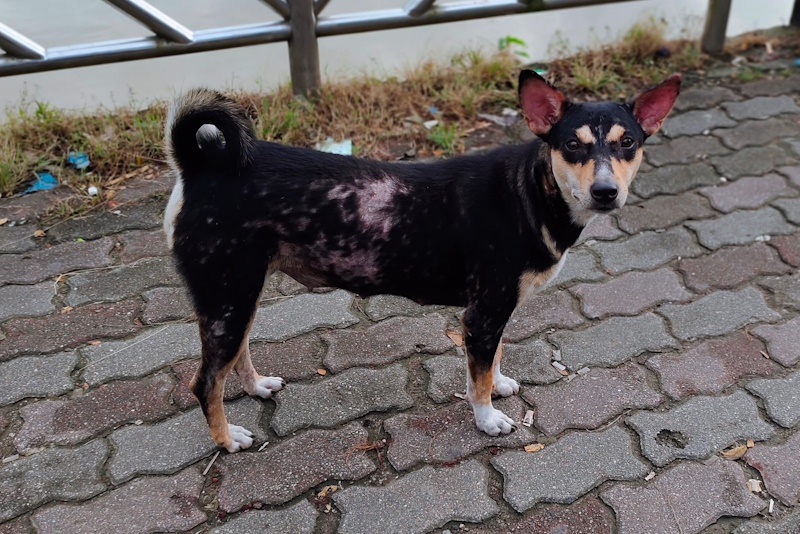
Inflamed hair follicles can be irritating, to say the least! The visible bump surrounding the hair follicle is the result of inflammation and accumulated debris from within the follicle. Inflammation of the hair follicle, called folliculitis, is common in our canine companions, especially those with short hair and who are allergy-prone. Continue reading below to learn more about this condition that many of our pets face.

What Is Folliculitis?
Folliculitis is the inflammation of the hair follicle, the small pore that surrounds a hair, and is a type of superficial pyoderma or skin infection. Folliculitis is limited to the more superficial portions of the hair follicle and does not extend to the deeper portions. A single follicle can be impacted, or it can occur more diffusely. Bacterial folliculitis is the most common folliculitis occurring in canine patients; however, fungi and parasites can also play a role.
Hair follicle inflammation occurring specifically around the chin and lip region is referred to as muzzle folliculitis. This type of folliculitis is the result of hair being broken and pushed into the skin, causing inflammation. This can happen during play or when a dog is rubbing their face. Due to the nature of the hair, this typically occurs in short-coated, young dogs. Similarly, folliculitis can occur from friction or chafing between toes resulting in swellings, referred to as interdigital cysts.
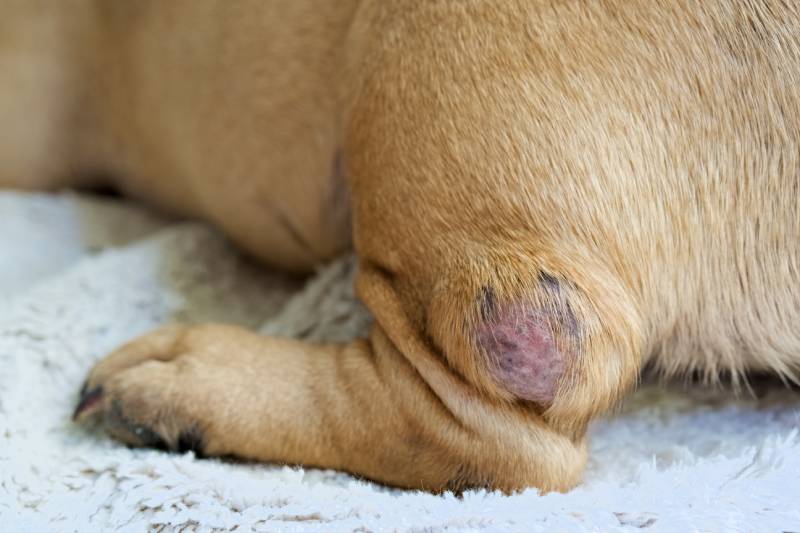
Signs of Folliculitis
There are several signs of folliculitis in dogs, with some of the most common being:
- Hair loss
- Bumps on skin (papules, crust, collarettes)
- Red skin, hyperpigmentation
- Itchiness
- Discomfort
Is your dog presenting any of these signs? We suggest you speak with a vet online.
If you need to speak with a vet but can't get to one, head over to PangoVet. It's our online service where you can talk to a vet online and get the advice you need for your dog — all at an affordable price!
What Are the Causes of Folliculitis?
Folliculitis can occur due to many different factors. Underlying diseases that can cause unhealthy skin, like allergies, parasites, endocrine disorders, and trauma, can incite folliculitis. Further, folliculitis can be compounded with infectious agents, including parasites, bacteria, and fungi.
Most commonly, folliculitis occurs secondary to environmental allergies. Although folliculitis can be present without bacteria, bacterial folliculitis is quite common in canines. In cases of bacterial folliculitis, the normal bacteria found on the surface of the skin, often Staphylococcus, gains access to deeper layers through damaged skin.
Folliculitis can also be seen concurrently with metabolic conditions like Cushing’s Disease (hyperadrenocorticism) and hypothyroidism, which result in poor skin conditions. Fungal infections, like ringworm, also result in folliculitis and hair loss.
Parasites and fungal infections can also lead to folliculitis. Demodex mites live within hair follicles and sebaceous glands in all dogs. These mites typically do not cause problems unless there is systemic illness or immune compromise that allows the mites to multiply rapidly. When this occurs, the condition is called demodicosis or demodectic mange. Patients with demodicosis can develop folliculitis and obvious skin lesions.
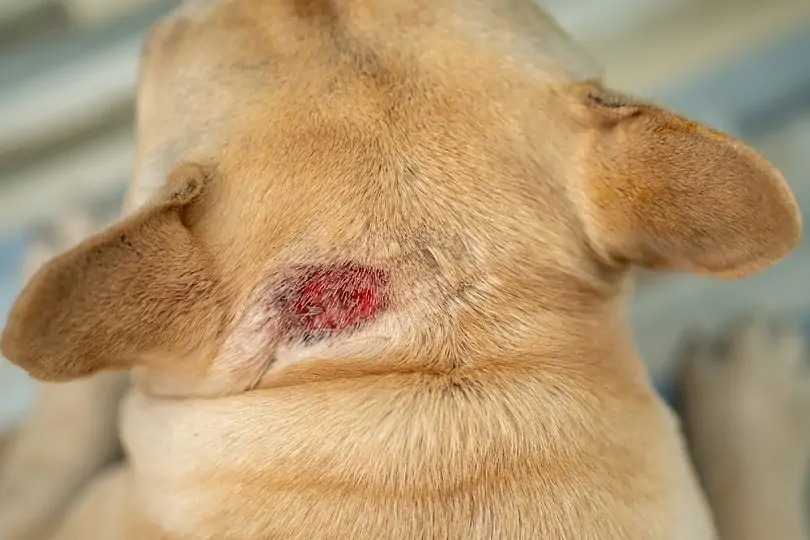

Diagnosing Folliculitis
Your veterinarian will perform a thorough physical examination on your companion. Although physical signs may be present suggestive of folliculitis, diagnostics are beneficial to determine any infectious agents present and to identify underlying causes.
Examples of diagnostics that can be used include skin impressions, skin scrapings, biopsies, and cultures. These modalities allow for infectious agents, like bacteria, fungi, and parasites, to be identified and appropriately treated. In cases of bacterial folliculitis, a culture can be helpful to better determine what bacteria are present and which antibiotics would be most efficacious.
Additionally, your veterinarian may recommend doing bloodwork to check for certain diseases that may predispose your companion to folliculitis, especially if this is a recurring problem or if systemic signs of illness are present.
Allergies are a leading cause of folliculitis in dogs. As a result, addressing the underlying allergens can help bring significant improvement by reducing inflamed skin and itchiness. Identifying allergens is most often done through serum and dermal testing. Both methods look at immunological responses to allergens and use that information to formulate therapeutic immunotherapy to help lessen the signs of allergies in affected dogs.
How Do I Care for a Dog With Folliculitis?
Multiple treatment modalities may be utilized to bring relief to patients. Minor or localized folliculitis may be appropriately treated with topical treatments, including ointments or shampoos.
Systemic antibiotics will be used in cases of bacterial folliculitis or if secondary bacterial infections are present. Antibiotics are often administered orally, and cephalosporins are often used as the first line of defense. Parasite control will need to be initiated in cases of Demodex.
Skin infections can be as itchy! It is beneficial for patients to receive relief from itchiness as soon as possible to help prevent further self-trauma that can occur through scratching. Soothing shampoos, steroids, and products like Apoquel® and Cytopoint® are often utilized for itch relief.
Folliculitis may be challenging to treat and can take time to fully resolve. It is important to schedule re-check appointments with your veterinarian, as this is how progress is monitored and changes to the treatment plan are initiated.


Frequently Asked Questions
Are Certain Breeds More Predisposed to the Development of Folliculitis?
Dogs with short coats are most likely to experience folliculitis, but as of now, it seems that no specific breed is more genetically predisposed.
What Is the Difference Between Folliculitis and Furunculosis?
Both folliculitis and furunculosis are terms used to describe an inflamed hair follicle. Folliculitis is more the inflammation of the superficial portions of the follicle, whereas furunculosis references deeper portions of the follicle.

In Summary
Folliculitis is one of the most common types of skin conditions seen in our canine companions. Secondary conditions can amplify and predispose dogs to the development of folliculitis. Re-check clear completely. Contact your veterinarian to schedule an appointment for your pet if you suspect they may be battling folliculitis or another skin condition.
Featured Image Credit: kazi suhel tanvir mahmud, Shutterstock