While dogs and coyotes are part of the same genus (Canus), there are many differences between the two species. Coyotes have never been domesticated, so they not only have different diets and habits than their domesticated canine counterparts, but their physical attributes are different, too. So, while it may be easy to mistake a dog for a coyote at first glance, it’s important to know that they’re two wildly different animals.
However, if you’re hoping to one day adopt a dog that looks like a coyote, you’re in luck. There are a handful of breeds that can look nearly identical to coyotes, so come along with us as we take a look at the seven most coyote-like dog breeds.

How Are Dog Breeds That Look Like Coyotes Classified?
Wild Heritage
Most dogs with a coyote-like appearance have some degree of wolfdog in their heritage. Wolfdogs are those produced by mating a domestic dog with a gray, eastern, red, or Ethiopian wolf.
Appearance
Dogs and coyotes can share many of the same physical attributes, including coat color (brownish, gray, black, or blonde), eye color, and size. Coyotes have thick coats with an undercoat that grows thicker in cooler weather, just like many dog breeds.
The 7 Dog Breeds That Look Like Coyotes
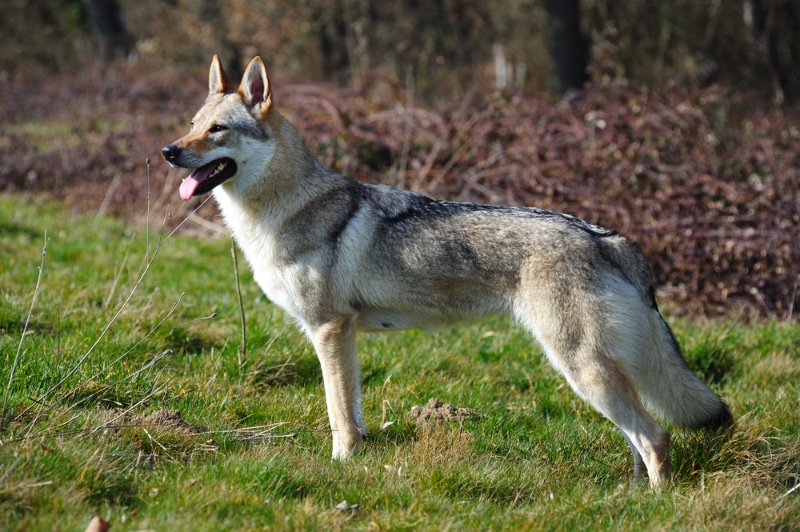
1. Czechoslovakian Wolfdog
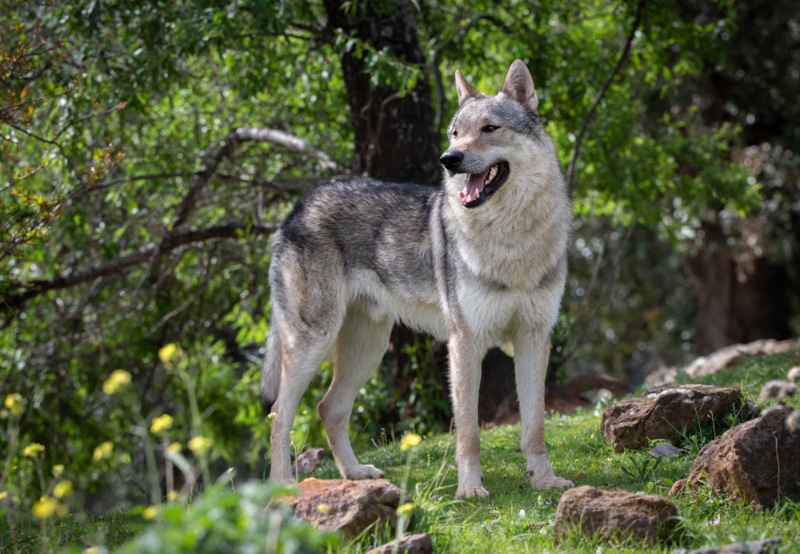
| Origin: | Czechoslovakia |
| Height: | 24 to 26 inches |
| Temperament: | Dominant, independent, loyal, energetic |
The Czechoslovakian Wolfdog is a breed of wolfdog first developed in Czechoslovakia (modern-day Czech Republic and Slovakia) in the 1950s by crossing a Carpathian Grey Wolf with a German Shepherd. The Czech Wolfdog is a working dog with great stamina and high energy levels. They may have aggressive tendencies toward smaller animals. Training can be challenging as these dogs generally lose motivation and grow tired quickly of repetitive exercises.
2. Saarloos Wolfdog
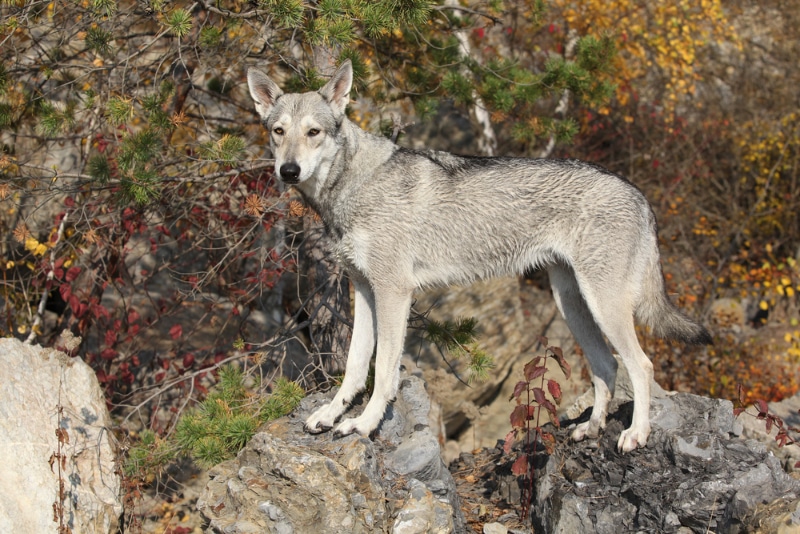
| Origin: | Netherlands |
| Height: | 24 to 30 inches |
| Temperament: | Lively, independent, reserved, aloof |
The Saarloos Wolfdog is a cross of a German Shepherd and a Siberian grey wolf. They originated in the Netherlands in the 1930s and were eventually further crossed with German Shepherds to give us the Saarloos Wolf Dogs we know today. Despite continually being evolved with German Shepherds, DNA studies from 2015 show that this breed has more genetic associations with the grey wolf than other breeds. The Saarloos Wolfdog is highly devoted to their humans, forming very tight bonds with them.
3. Utonagan
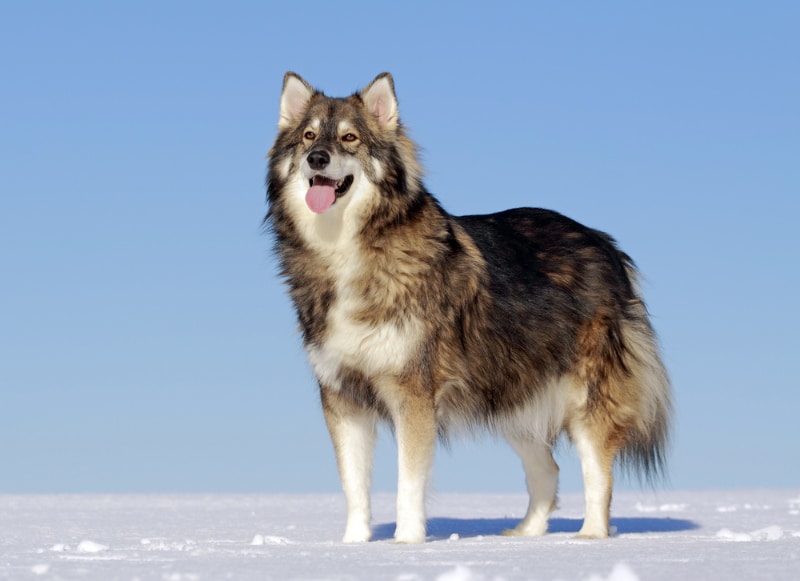
| Origin: | England |
| Height: | 23 to 28 inches |
| Temperament: | Intelligent, friendly, alert, active |
The Utonagan is a relatively new breed, first developed in the 1980s by a breeder looking to create a dog that looked like a wolf but had the well-tempered attitude of a domesticated dog. The breed is a cross of several similar-looking breeds, including the Alaskan Malamute, Siberian Husky, and German Shepherd, among others. Though they don’t have wolf blood like some of the other coyote-like breeds we’re looking at today, they have similar sizing and facial structures to coyotes.
4. Tamaskan
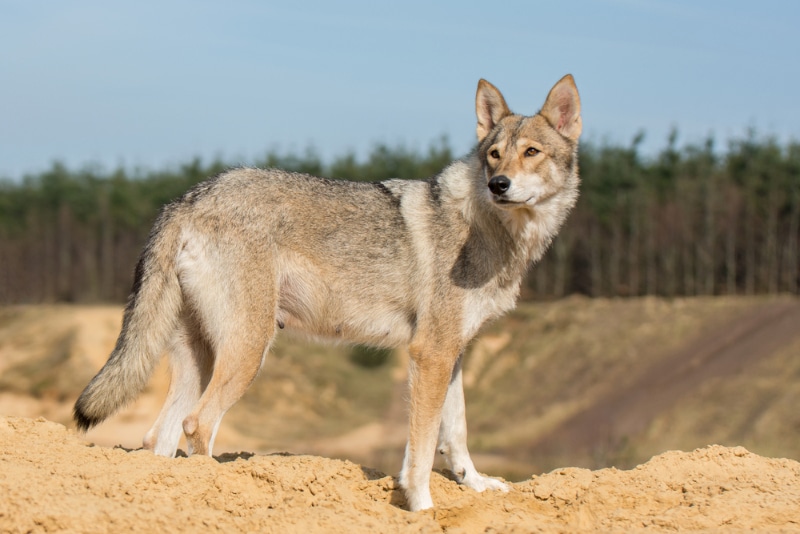
| Origin: | Finland |
| Height: | 24 to 28 inches |
| Temperament: | Intelligent, alert, friendly, outgoing |
The Tamaskan was selectively bred with arctic breeds like Alaskan Huskies, Canadian Eskimo Dogs, and Labrador Huskies to resemble a wolf. The breed founders were members of Utonagan societies but believed that that breed was becoming too closely related to each other. They set out to create genetic diversity, using working husky crosses from Finland to develop the Tamaskan.
5. Kugsha
| Origin: | United States |
| Height: | 20 to 27 inches |
| Temperament: | Hyper intelligent, independent |
The rare Kugsha is a Spitz-type dog with a coyote-like head shape, size, coloring, and coat. These dogs are not yet recognized by any kennel club, so not much is known about their origins or personality. They are believed to be part wolf and part Malamute.
6. Siberian Husky
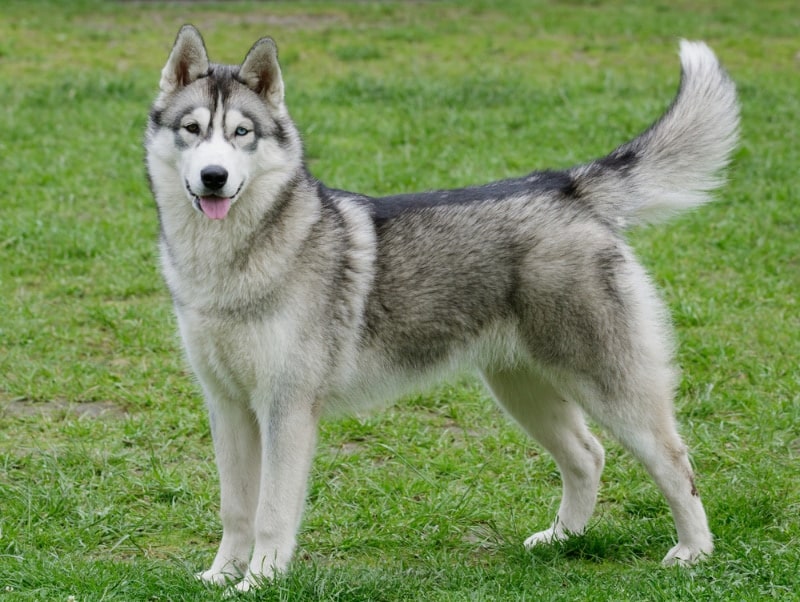
| Origin: | Siberia |
| Height: | 20 to 23.5 inches |
| Temperament: | Independent, playful, active, powerful |
Siberian Huskies are working sled dogs that are easily recognizable thanks to their thick coat, distinctive markings, and coyote-like faces. The breed originated in Siberia for both sled pulling and companionship. The modern Siberian Husky is typically kept as a house pet, with many redeeming personality traits that make them great for families.
7. Coydog
| Origin: | Mexico |
| Height: | 22 to 27 inches |
| Temperament: | Independent, aloof, unsocial, fearful |
The Coydog, as you may have been able to guess by its name, is a hybrid between a female domestic dog and a male coyote. These dogs are much rarer than you might think, as they aren’t particularly playful or outgoing. They require a firm and confident pack leader, and even then, they may not grow to be well-rounded pets. Fun fact: A female coyote mixed with a male domestic dog is known as a Dogote.

Conclusion
Dogs and coyotes differ vastly in terms of temperament, behavior, and domestication, although they might look very similar. If you are looking for a dog that has a similar appearance to a coyote, yet with the domesticated loyalty of a canine companion, the dog breeds discussed in this article are the closest match.
It’s important to know about the needs, energy levels, and training requirements before choosing a coyote-like dog. The majority of these breeds have strong instincts and require experienced owners, and will be the best fit for households with an active lifestyle. With the right care, training and commitment, they can make devoted and rewarding pets.
Featured Image Credit: Julia Remezova, Shutterstock
 How Are Dog Breeds That Look Like Coyotes Classified?