Get

In Your Inbox

Dogster is reader-supported. When you buy via links on our site, we may earn an affiliate commission at no cost to you. Learn more.

Understanding Dog Body Language: Vet-Approved Guide With Pictures

Share

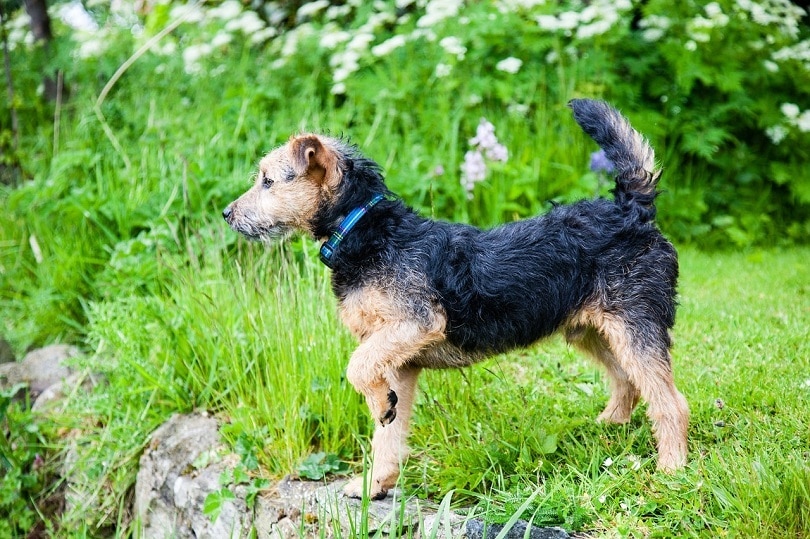
Lakeland Terrier

Even though there is a language barrier between humans and dogs, they have still earned the title of “Man’s Best Friend.” Imagine how strong your bond with your dog would be if you could talk to each other!

The good news is that although we may not be able to speak to our dogs, we can still communicate with them. While you can’t enroll your dog in English lessons, you can learn how to better understand canine body language. Dogs communicate nonverbally, using their ears, tails, and more to express their emotions.

The more you understand your dog’s body language, the better you can respond when they communicate their needs. In this article, we look at six ways your dog expresses their emotions and include pictures so you can see what canine body language looks like.

divider dog faces oct 2024

The 6 Dog Body Languages

1. Relaxed Body Language
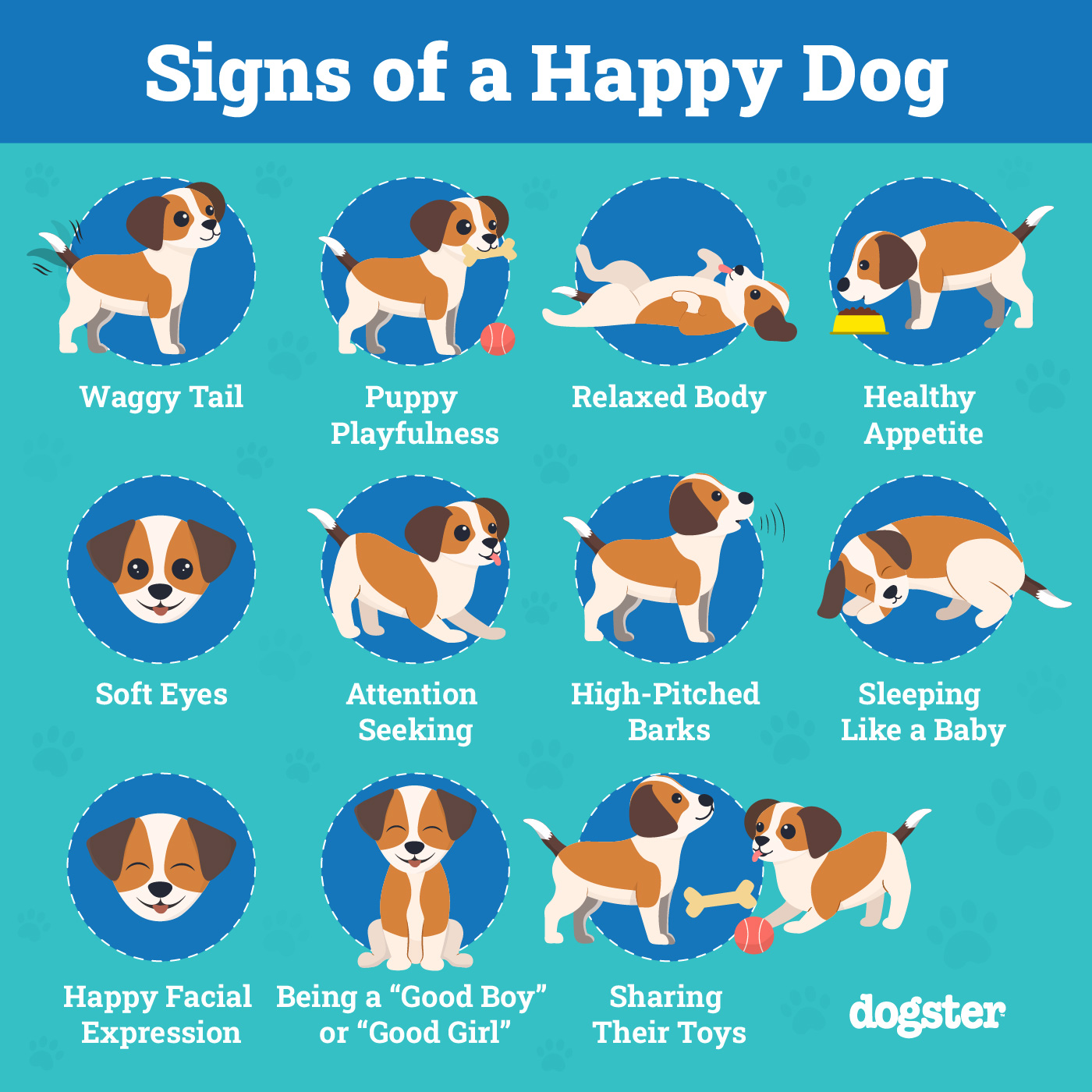
Dogster_Signs of a Happy Dog_Infographic_v1-2 FINAL_Mar 13 2024
You are free to use this image but we do require you to link back to Dogster.com for credit

Relaxed dogs are happy dogs. This is when your furry friend is feeling their best, no matter whether they are resting or playing. Relaxed dogs are engaged with their surroundings and may be eager to receive or show affection.

They may be squirmy if they’re feeling excitable, and their motions may be overdramatized during play. Their tail will wag in wide, gentle motions. Their ears will be held in a relaxed, natural position, and their eyes will be soft. Their forehead and mouth will have no tension.


2. Stressed or Anxious Body Language

A wary female dog lying on the bed
Image Credit: MDV Edwards, Shutterstock

Stressed or anxious dogs often display mannerisms meant to soothe or dissipate tension, avoid attention, and demonstrate their discomfort. These behaviors include:

  • Looking or turning away
  • Hesitant movements or darting away quickly
  • Licking or smacking lips
  • Yawning
  • Holding their body in a curve
  • Raising a paw
  • Scratching or pawing
  • Trembling
  • Freezing

If your dog appears distressed, try to find out what is agitating them. If the stressor is someone or something in their environment, remove the trigger so your dog can calm down.


3. Alert Body Language

Working gun dog in training
Image Credit: Gail Johnson, Shutterstock

When a dog is alert, they pay close attention to their surroundings. They are not necessarily agitated, but they may become agitated if they feel something is wrong. Alert dogs will have wide-open eyes and perked, forward-facing ears.

There will be no tension in their mouth or forehead. They will stand evenly on all four paws, poised and balanced so they can act at a moment’s notice. As for their tail, it will extend outward and may wag slightly.


4. Appeasing Body Language

Adult Golden Retriever lying on the floor
Image Credit: Stephen Andrews, Unsplash

Appeasing body language can be deceptive to the human eye. While this behavior is submissive and geared to make them appear unthreatening, it can appear frightening to humans. Appeasing dogs may pull their lips back into a grin or snarl, which can be mistaken for aggression.

Other signs that your dog is displaying appeasing behavior include pinned-back ears, squinted eyes, and a low-tucked tail. In addition to their scrunched-up mouth, they may lick their lips often.


5. Frightened Body Language
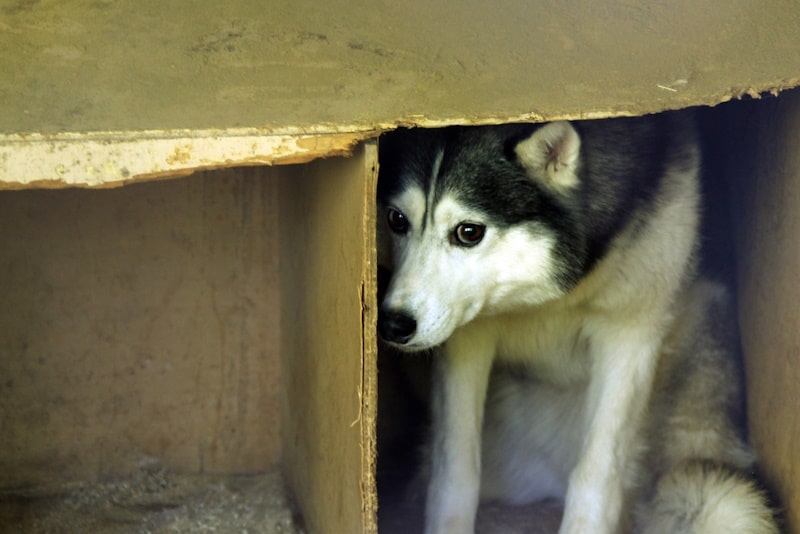
Freightened dog hiding under plywood box
Image Credit: Katoosha, Shutterstock

Spotting signs of fear in dogs is often easy for owners. Scared dogs will have a stiff, hunched posture and hold their heads close to the ground. Their ears will be tucked close to their head, and their tail will be tucked and pressed close to the belly.

They often turn their head away from whatever is frightening them, but they keep their eyes locked on the stressor. They may keep their mouth closed tightly or pant as though they are hot.

Be aware that a frightened dog can quickly become an aggressive dog, biting out of fear.


6. Aggressive Body Language
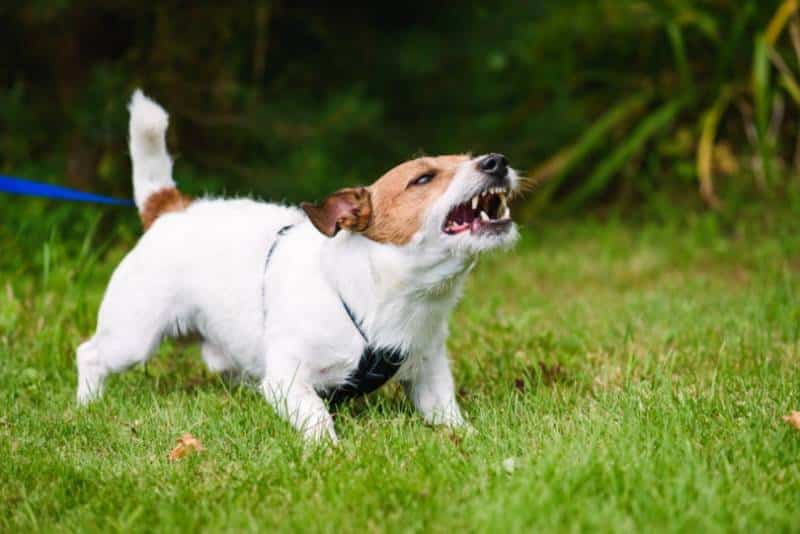
Angry dog barking at something or someone
Image Credit: alexei_tm, Shutterstock

Aggression is typically easy to spot. Aggressive dogs will react to a stressor and will often do so with a rigid posture. The fur on their shoulders and the base of the spine will stand up straight, and their body will be shifted forward in a “ready” stance.

Their eyes will be locked onto whatever is causing their aggression, and they will likely have wrinkles along the mouth and forehead. Depending on the reason for their aggression, such as fear or territorialism, your dog may also display other signs.

divider single dog paw oct 2024

Why Isn’t My Dog Relaxed?

While it is normal for dogs to express emotions outside of contentment and joy now and then, it can be upsetting to see your dog wracked with stress, anxiety, or fear. This is especially true when you have no clue why your dog is upset.

If your dog displays consistent or uninterrupted distress, talk to your vet. Stress, anxiety, fear, and aggression can be signs that your dog is sick or in pain. After ruling out medical conditions, you can then move on to other reasons for your dog’s emotional issues.

Consulting a vet or canine behavioral specialist can be a great way to discover why your dog exhibits emotional issues. They can tell you if the issue is related to your dog’s environment, enrichment, or something else. From there, you can take steps to improve your dog’s living situation so they can return to their happy, relaxed self.

If you need to speak with a vet but can't get to one, head over to PangoVet. It's our online service where you can talk to a vet online and get the advice you need for your pet — all at an affordable price!

PangoVet_Mention-in-Content Savings V1

divider dog faces oct 2024

Conclusion

Understanding your dog’s body language is an important part of communicating with our pets, as well as knowing how to approach or interact with dogs you have just met. When your dog displays emotions such as stress, fear, or aggression, it is a sign that something is wrong. Addressing the stressors in your dog’s environment will help them to feel comfortable in their home again.

You might also want to check out: 


Featured Image Credit: Eventsfb, Pixabay

Want content like this delivered to you?

Sign Up For Our Newsletter

News, insights, expert advice, and everything dog

* By submitting, you agree to our Terms & Conditions and Privacy & Cookies Policy.


How useful was this post?

Click on a star to rate (you can leave written feedback after clicking submit)

Help us improve Dogster for pet parents!

Your feedback really matters.

What did you like about this post? Also how can we improve it?

Join the conversation

Leave a Reply

You’re very welcome to leave a comment or question. Please know that all comments must meet our community guidelines, and your email address will NOT be published. Let’s have a positive and constructive conversation.


Talk With A Vet Online

Peace of mind,
anywhere, anytime

Affordable vet advice

Marigold Shocks Her Owner By Delivering 17 Irish Doodle Puppies in a Single Day

The one question vets hate hearing as they ultrasound expectant canine mothers is “how many puppies are there?” The reason is that, on...

Dogster’s Weekly Photo Contest Winners: Out Adventuring (March 12, 2026)

Every week our team gets the privilege of sorting through our readers photos to choose what dogs will win this weeks contest! See...

Ask Dr. Paola- Help! My Dog Gets Reoccurring UTIs (March 9, 2026)

Welcome to our “Ask Dr. Paola” series, where every Monday we bring expert advice straight from Dr. Paola Cuevas (MVZ) to help our...

DIY Repellents for the Dog Who Thinks Everywhere Is His Toilet

Dog urine and everything nice have a complicated relationship. One thrives, the other suffers, and if you’re reading this, you already know which...

More related

My Dog Ate a Wasp: Our Vet Explains the Risks, Signs & Next Steps

All of us are likely aware of people who have serious allergies to bees and/or wasps and become worried that the same thing...

Warlock Doberman: Info, Pictures, History & Origin

The Warlock Doberman, also known as the King Doberman, is a bigger, more muscular crossbreed between a Doberman and either a Great Dane...

Dog Registration Papers: Vet-Approved Facts & Why You Need Them

When purchasing a dog from a breeder, many people wonder if it’s a good idea to get registration papers for their new pet,...

18 Dog Breeds Who Love Water and Swimming: With Info & Pictures

Some dog breeds are water dogs that love water and swimming, while others avoid water like the plague. Some dog breeds, such as...

Keep reading

Can Dogs Eat Cotton Candy? Vet-Verified Facts & Safety Guide

We all want to share our special treats with our dogs, but some things are off-limits. Cotton candy, which is just air and sugar, may seem fine, but it’s not good for your dog’s health. Can dogs eat cotton candy?...

Can Dogs Eat_cotton candy

Spot & Tango Fresh Dog Food Review 2026: Pros, Cons & Final Verdict

Review Summary With so many dog food brands available, it can be challenging to find one suitable for your pet. Many brands use lower-quality ingredients to cut costs, and it can be tempting to purchase them, but doing so can...

Dogster_Spot & Tango Review

How Much Should I Feed My Corgi? Vet-Reviewed Feeding Guide

Most Corgis love to eat. They’re food-driven, and there’s nothing wrong with that! But while you’ll never have to question how to motivate your Corgi, one thing you might have to worry about is their overeating. Corgis always want to...

Hungry Welsh corgi Pembroke or cardigan puppy eats from ceramic bowl standing on fleecy carpet

Can Dogs Eat Pine Nuts? Vet-Verified Nutrition Facts & Considerations

There are many pieces of misinformation floating around the web on what is and is not safe for your canine companions. One of these very topics might have to do with pine nuts. Are pine nuts toxic to dogs? No,...

Dogster-Can-Dogs-Eat-Pine Nuts

11 Best Foods for Dogs with Pancreatitis in 2026 – Reviews & Top Picks

Stomach trouble is no fun for anyone, and your playful pooch is no exception. While some issues go away within a few hours, others, like pancreatitis, take longer to manage and recover from. When you’re considering which food is the...

dog eating wet food

How to Boil or Cook Ground Beef for Dogs: Vet-Approved Recipes & Tips

All pets need a well-balanced diet, and dogs need meat to thrive. Dogs have a specialized digestive system, powerful teeth, and a stomach adapted to dealing with meat and bones. Knowing that dogs need to eat meat is one thing;...

uncooked ground beef in glass bowl

How Often Should Puppies Eat? Vet-Approved Guide & Scheduling

Raising puppies is not for the faint of heart. It’s a tough gig, not unlike raising a newborn baby, but it is extremely gratifying, rewarding, and a whole lot of fun. One of the most important parts of successfully caring...

puppies eating from bowls together

Can Dogs Eat Bugs? What the Science Says

Any dog owner has probably seen their dog eat a bug here and there, as dogs love to snoop and sniff outdoors. Dogs are curious beings and love to investigate the world around them, which can mean playing with a...

Can Dogs Eat_bugs

Love Dogs? So Do We! Join the Dogster Community

Stay informed with expert pet care insights delivered straight to your inbox! Discover professional guidance on animal behavior, feeding tips, trusted product picks, and much more.


Sign up for the Dogster Email Newsletter