In this article
The Sheltie, known as the Shetland Sheepdog, is a small herding dog originating from Scottish islands. They are described as being a hardworking and highly intelligent dog breed that is often confused with a miniature Rough Collie.
If you’re an owner of a Sheltie, you might be wondering whether you can take them for a swim or take them on your next trip to the ocean or lake. Although their thick coats are suited for the harsh climates of their native land, it doesn’t make them fit for swimming. Most Shelties don’t enjoy being drenched in water; however, they can be trained to tolerate and even enjoy it.

Do Shelties Enjoy Water?
Shelties generally avoid water and don’t show much interest in swimming. With time and training, some Shelties can become used to getting wet and partake in swimming activities. This dog breed isn’t naturally suited for swimming since they were originally bred as herding dogs.
Their long coats can also become heavy in the water, which can weigh them down significantly. Once their coat becomes wet, it can take longer to thoroughly dry. This can cause your Sheltie to feel cold and even uncomfortable, making them associate water with something negative. Shelties that don’t enjoy getting a bath probably don’t like the water aspect of it, either from the sound of the tap or from their long coats.
Can Shelties Swim?
While Shelties can certainly swim, they generally don’t enjoy it much. This is especially true if your Sheltie has no prior experience of swimming and getting wet outside of bath time. There is a possibility that some Shelties tolerate water better than others, and it can vary on the individual Sheltie. Like most dog breeds, Shelties will instinctively swim when necessary. However, that doesn’t mean that they are fond of it, and they are not considered natural swimmers.
Unlike certain dog breeds that genuinely enjoy swimming and getting wet, Shelties don’t. Swimming wasn’t something the breed was bred to do, and they prefer activities that engage their natural herding and working abilities. If swimming isn’t something that your Sheltie enjoys doing, it’s best not to force them to. Regardless, it is possible to train your Sheltie to become a better swimmer.
Shelties are highly intelligent and eager to learn, which is why they excel at many dog training activities. Training your Sheltie to swim can present an exciting challenge for them if it is done with their safety in mind. It is also important to train your Sheltie to swim and handle being in water if you have a pond or pool in your yard.
This will ensure that they can handle accidentally falling in, and this training could potentially save their life. However, you should always take the proper safety precautions when keeping Shelties on a property with a body of water they could fall into. Ask a vet about the best way to train your Sheltie and about the best safety precautions you can take.
If you need to speak with a vet but can't get to one, head over to PangoVet. It's our online service where you can talk to a vet online and get the advice you need for your pet — all at an affordable price!

Introducing Shelties to Water and Swimming
Before you begin, understand that it can take time and patience to condition your Sheltie to water. Some Shelties may be uncomfortable around water, so you shouldn’t force them to get into it. Doing so could make your Sheltie fearful of water and make it more difficult to train them to swim.
Instead, you want to ensure that the entire process is a positive one and that it is done in a calm and comfortable environment. Over time, your Sheltie may start to enjoy the water even if they didn’t start as a naturally strong swimmer.
The 5 Steps to Introducing Shelties to Water
- First, you will need to assess how your Sheltie is around water. See whether they seem fearful of getting wet or going near pools or the sea, or if they show signs of discomfort. If your Sheltie is already comfortable around water and getting wet or splashed, then you can start training them to swim.
- Next, Shelties that aren’t familiar with water will need to be slowly introduced to it. You can start by walking your Sheltie on a lead near a shallow body of water. If possible, let your Sheltie dip their paws in and see how they react. Do not let your Sheltie into the water just yet but do encourage their good behavior with healthy treats.
- Place your hand in the water and gently splash around. Use gentle words to show and explain what you are doing. Gentle encouragement and treats will allow your Sheltie to associate water with something positive.
- Once you have let your Sheltie safely roam around water and they have become comfortable, you can begin placing a bit of the water on their fur to see how they react. However, you don’t want to drench your Sheltie with water just yet.
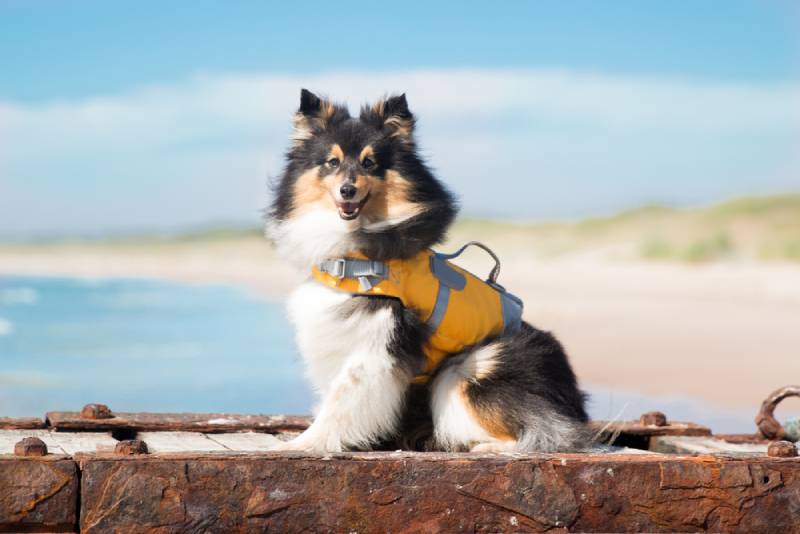
- Lastly, you can begin letting your Sheltie roam in a shallow body of water with a doggy life jacket on. The water shouldn’t be deep enough for them to start swimming instinctively, but they will get much wetter than just a splash. Give them their favorite treat after and use gentle words of encouragement during the process.

Additional Tips
To keep your Sheltie safe, never leave them unattended near a body of water. Even if your Sheltie is wearing a life jacket and has experience swimming, accidents can happen.
It is best to introduce your Sheltie to water on a warmer day. Colder days and evenings can make it take longer for their fur to fully dry, leaving them feeling cold and wet. You don’t want your Sheltie’s first experience around water to be uncomfortable, so try drying them off with a towel afterward.
Always teach your Sheltie where the steps of the pool are and ensure that they know how to exit any body of water they swim in with ease. Furthermore, most pool water is treated with harsh chemicals like chlorine that can be drying to your Sheltie’s fur. It’s important to rinse off your Sheltie with tap water after or give them a bath with a moisturizing conditioner.
Training Your Sheltie to Swim
Once your Sheltie has gotten used to being around water and getting wet, you can start letting them paddle in shallow water. It is best to keep your Sheltie safe in a doggy life jacket, even if you are supervising them.
The life jacket may also help them gain confidence when swimming and condition their body for when they aren’t wearing one in shallow water. It’s recommended to let your Sheltie go in the water on their own, rather than forcing them.
Once the water reaches a certain part of their body, Shelties will start to paddle and swim. Your Sheltie should only be swimming without a life jacket for a few minutes while you are watching. This should be done in an enclosed pool where you can closely monitor your shelter. Even better if you can be in the water with them too.
This brief swim without a life jacket allows your Sheltie to swim in shallow water and support their full body weight. Otherwise, your Sheltie should be wearing one near water for their safety. Whether your Sheltie genuinely enjoys swimming is up to the individual, as not all Shelties will willingly start swimming even with training.
Can Shelties Benefit from Swimming?
Shelties can benefit from swimming in several different ways. Swimming and hydrotherapy have become a big part of some treatments and therapies for canines.
- Cooling down in summer: A dip in the pool with you on a hot summer’s day can help your Sheltie cool down.
- Exercise: Shelties can benefit from taking a brief swim in water as a form of exercise and joint strengthening.
- Stress relief: Shelties who enjoy swimming will reap the stress-relieving benefits from the exercise and the lighter weight they feel in the water.
In Conclusion
Although Shelties don’t have the natural drive to swim and regularly interact with water, you can condition them to do so. However, not all Shelties will become fond of water or enjoy being in it. If your Sheltie isn’t taking well to being in the water, it’s important to respect their wishes and stop at any signs of stress.
Featured Image Credit: Lisjatina, Shutterstock