In this article
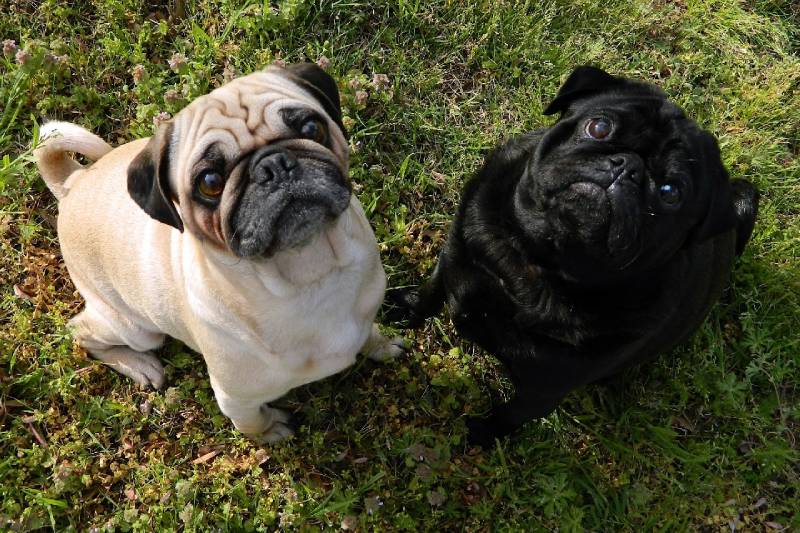
What’s not to love about a Pug? These quirky little dogs bring great joy to their family’s lives, not least due to being natural comics with a real sense of fun. Another perk of Pug parenting is that they’re not typically big barkers, but that doesn’t mean they never bark or make any noise.
All dogs make noise to some extent, it’s just that some breeds, including the Pug, are known for being less “barky” in general than others. That said, every dog is an individual and there’s no guarantee you won’t get a Pug with a bit more sass than expected! This post will explore some of the noises Pugs make and tips for stopping excessive barking.

What Noises Do Pugs Make?
Though the American Kennel Club describes Pugs as being the kinds of dogs that usually only “bark to alert,” you can still expect a variety of noises to come from your snuffly delight. Here are some common Pug noises and what they mean.
Barking
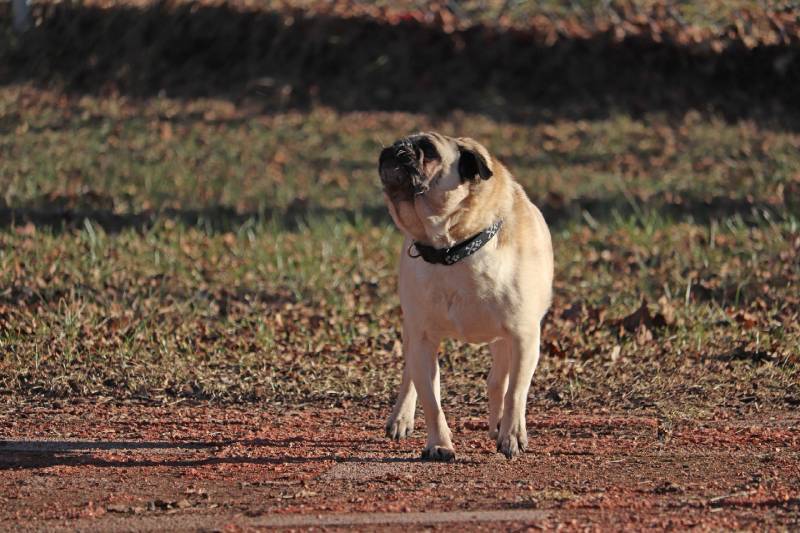
Though Pugs aren’t the noisiest of dogs, they may still bark for a variety of reasons. One of the reasons your Pug may bark is that they want to alert you to something interesting. They may also be warning you about something, greeting you, expressing excitement or happiness, or attempting to warn off a perceived or real threat.
According to the AKC, you can usually tell from the pitch of the bark whether it’s a happy bark or a “back off” kind of bark. High-pitched barks are typically welcoming in nature, whereas lower barks tend to be more often emitted as a warning. It’s said that a Pug’s bark sounds like a “yip” or a “yodel.”
Snorting
Pugs are brachycephalic, which means they have smushed, flat faces and short heads. The fact that they have such short palates means they tend to snort a lot and, when they’re asleep, snore a lot. Though snorting is common in Pugs due to the way they’re bred, it’s important to keep an eye out for more serious respiratory issues.
If you have a brachycephalic breed like a Pug, it’s a good idea to discuss with your vet how much snorting is normal and when some kind of treatment may be required. This is also an important consideration if you decide to get a brachycephalic breed—they’re much more prone to respiratory health conditions and other issues, including digestive problems and skin issues due to their folds.
Reverse Sneezing
Reverse sneezing looks and sounds pretty scary when it happens, but it’s usually nothing to be worried about. It’s common in brachycephalic breeds and happens when there’s an irritant or allergen in your Pug’s airways. It can also occur when your Pug is super excited.
Reverse sneezing is when a dog inhales air quickly and repeatedly through their nose, which results in a loud snorting or honking sound. As long as your Pug doesn’t have an underlying health condition (like a heart condition) or is reverse sneezing way too frequently, they should be fine. If you suspect that reverse sneezing is caused by an allergy, your vet may prescribe antihistamines to help keep it under control.
You can help a Pug having a reverse sneezing attack by taking them outside for some fresh air and talking to them in a soothing tone.

Whining
Pugs sometimes whine to get your attention—most likely to remind you that it’s dinner time or time for a walk! If your Pug is feeling anxious or suffers from separation anxiety, they may whine due to feeling stressed when you leave. Dogs also whine or whimper when in pain.
Howling
Howling is a way in which dogs communicate with other dogs, and exactly which emotions they’re conveying with howls are a bit lost on us humans. Some dogs howl when they hear a high-pitched sound like a siren or music. They may also howl to get attention, for example, to try calling you back when you leave (more likely in dogs with separation issues) or simply to let you know that they’re there.


How to Stop My Pug Barking So Much
If your Pug is a little more vocal than others, you might be worried about a potential knock on your door from a neighbor. We’ve been there. Below are some of the reasons your Pug might be barking and tips for dealing with the situation.
Barking for Attention
If your Pug is barking to attract your attention, your best bet is to ignore it—it’s hard, we know, but necessary. Whether it’s a positive response (the attention they want) or a negative response (scolding and yelling), any kind of response shows your Pug that they can get your attention by barking, so you’ll need to reframe that mentality.
When the barking starts, remain silent, stay still, and avoid eye contact with your Pug. Ignore the barking and, when it stops and your Pug is calm, reward them with some praise, cuddles, or a treat.
Barking at People From the Window

If your Pug has a habit of barking when they see people passing by from the window, they might be feeling anxious or fearful or trying to alert you to the fact that there’s someone there. For this kind of barking, you’ll need to attune yourself to the signs that your dog is going to bark.
When you spot an “opportunity,” redirect your dog’s attention from the window to you. Get them to do something you can reward them for, like sitting. You can also teach your Pug to watch you instead of the passersby with a command like “watch me.”
Don’t worry if you can’t do this every time your Pug is at the window—we can’t sit there all day! If you’re not going to be around for a while, you might want to temporarily block your Pug’s view with the curtains.
Barking When You Leave
It’s common for dogs with separation anxiety to bark when their humans leave the house. For mild or moderate cases of separation anxiety, you can try desensitizing your Pug by doing brief daily practice sessions where you leave for a short time (a few seconds at first) and re-enter when your dog is calm.
Start by closing doors to rooms inside the house before progressing to you actually leaving. As they get better at being alone, you can gradually increase the time. If the situation does not improve, please contact your vet or a dog behaviorist.
Barking at Other Dogs
If your Pug is barking at other dogs or passersby while out walking on the leash, they may be experiencing frustration at not being able to go and play with the other dog, or they may be fearful.
In addition to socializing your Pug with other dogs gradually so they become less suspicious of them, here are some things you can try when your Pug starts barking out in public.
- Calmly turn around and walk in the opposite direction, away from what’s causing your Pug to bark. Avoid trying to reassure or calm them—simply turn around and walk away at a normal pace. When the other dog is out of sight, stand still with your Pug and wait for them to calm down. Continue on your way only when they are calm.
- Make sure your shoulders are pointed away from the person or dog they’re barking at to show them that there is nothing of interest.
- Take your fearful Pug to the park and allow them to watch other dogs from a safe distance. When a dog comes into view, give your Pug a treat. This teaches them to associate other dogs with something good. Try doing this in short daily sessions if possible.
- Try to socialize your Pug with as many different people as possible, though not too many at once so as not to overwhelm them.
- If your Pug’s barking does not improve, it’s best to enlist the help of a professional trainer.
Final Thoughts
To recap, Pugs are typically quiet dogs barking-wise, but you can expect quite an array of sounds to come from them nevertheless, including snorting, honking, snoring, snuffling, yodeling, yipping, whining, and howling. Some of these, like snorting and snoring, come down to the Pug’s physiology, whereas others are just the normal sounds a dog makes to communicate with their humans.
See also:
- How to Train a Pug: 11 Tips & Tricks
- Will A Pug Be Good With My Cat? Temperament & Personality Traits
Featured Image Credit: Ryan Garrett, Shutterstock