Get

In Your Inbox

Dogster is reader-supported. When you buy via links on our site, we may earn an affiliate commission at no cost to you. Learn more.

How Much Protein Do Senior Dogs Need? Facts & FAQs

Share

Elderly-dog-eating-from-a-bowl_Maggie-McManus_shutterstock
Providing proper nutrition to senior dogs is not as straightforward as it might seem. For starters, different breeds have different nutritional needs. Secondly, the age at which a dog is considered senior also varies between breeds.

For instance, larger breeds have shorter life expectancies and reach their senior years much sooner than smaller breeds. Finally, and most importantly, neither the National Research Council nor the Association of American Feed Control Officials (AAFCO) has set guidelines regarding the dietary requirements of senior dogs.

As a result, it can be challenging to determine your senior dog’s exact nutritional requirements, especially regarding the appropriate protein levels. Roughly, protein makes up at least 25% of your senior dog’s diet. Fortunately, you can adjust your dog’s diet by understanding your senior dog’s physiology. This article will detail everything you need to know about a senior dog’s protein requirements.

divider single dog paw oct 2024

How Much Protein Do Senior Dogs Need?

Dogs are omnivorous, meaning that protein (primarily meat) and fruits and vegetables account for a large portion of their diet. They have evolved to rely on protein across all stages of their lives. There is a myth that protein is bad for senior dogs.

Apparently, too much protein can overtax an older dog’s kidneys due to the high phosphorus levels that come with it. However, the study responsible for that myth used rats, not dogs. Therefore, while too much protein can be hazardous for a senior rat, the same does not apply to dogs.

senior-dog-eating-chicken_Sophie-Louise-Davis_shutterstock
Image Credit: Sophie Louise Davis, Shutterstock

Senior Dog Food vs. Regular Dog Food

Senior dogs require more protein than other dogs, and here is the reason. One of the functions of protein in the dog’s body is building and maintaining muscle tissue. Since dogs lose muscle mass as they grow older, they require more protein in their diet to hold on to muscle tissue for longer.

Muscle tissue loss compromises the dog’s immune system, making the animal more susceptible to diseases. Additionally, the dog loses their strength, affecting their energy levels and mobility. Therefore, by increasing the amount of protein in your senior pup’s diet, you will help them hold onto their strength for longer. Experts recommend ensuring protein makes up at least 25% of your senior dog’s daily caloric intake.

Dog-with-a-full-food-bowl_nancy-dressel_shutterstock
Image Credit: Nancy Dressel, Shutterstock

Encouraging Your Senior Dog to Eat

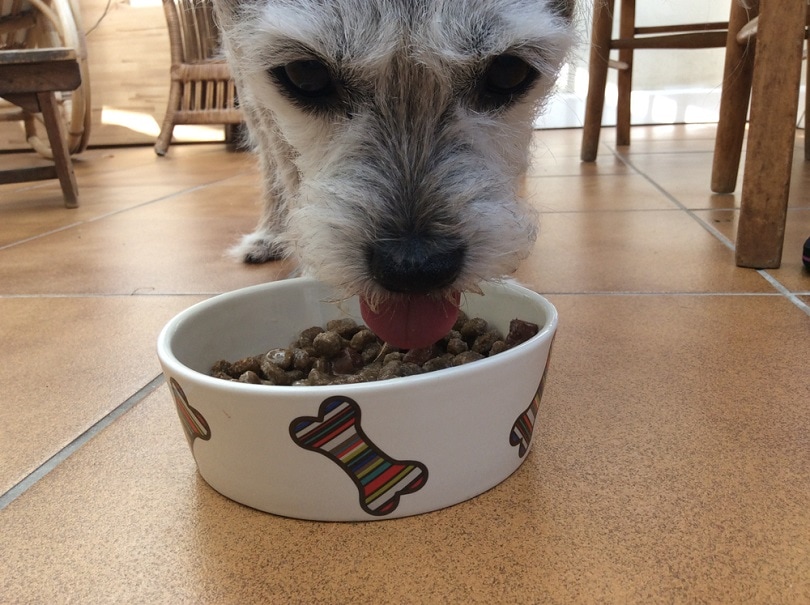
The main reason senior dogs are frail is their decreased appetite. Therefore, increasing the amount of protein in their food will not mean much if they don’t eat that food in the first place. However, you can make the dog’s food more palatable. That can involve warming the food to enhance its aroma, thus stimulating the dog’s appetite.

High-fat foods are also worth considering since they’re more appetizing, but it is best to consult with a vet to develop a healthy diet for your senior pup. We suggest booking a call with an online vet for stress and hassle free nutrition advice.

If you need to speak with a vet but can't get to one, head over to PangoVet. It's our online service where you can talk to a vet online and get the personalized advice you need for your pet — all at an affordable price!


PangoVet_Mention-in-Content Savings V1

divider dog paws 3 oct 2024

Conclusion

Generally, most senior dogs need more than the average amount of protein in their diets. Protein helps build muscle tissue, allowing the dog to hold onto their withering muscle mass for longer. Nevertheless, the amount of protein a senior dog requires varies between breeds, but a good rule of thumb is that protein should make up roughly ¼ of your dog’s daily calories. For more specifics regarding your loved one, consult your vet to determine the ideal nutritional requirements for your aging pet.

Other Dog Reads: 


Featured Image Credit By: Maggie McManus, Shutterstock

Want content like this delivered to you?

Sign Up For Our Newsletter

News, insights, expert advice, and everything dog

* By submitting, you agree to our Terms & Conditions and Privacy & Cookies Policy.


How useful was this post?

Click on a star to rate (you can leave written feedback after clicking submit)

Help us improve Dogster for pet parents!

Your feedback really matters.

What did you like about this post? Also how can we improve it?

Join the conversation

Leave a Reply

You’re very welcome to leave a comment or question. Please know that all comments must meet our community guidelines, and your email address will NOT be published. Let’s have a positive and constructive conversation.


Talk With A Vet Online

Peace of mind,
anywhere, anytime

Affordable vet advice

Dogster’s Weekly Photo Contest Winners: Best Easter Photo (April 9, 2026)

Every week our team gets the privilege of sorting through our readers photos to choose what dogs will win this weeks contest! See...

We Didn’t Just Add a Dog to Our Life – We Built a Life With Him

“We didn’t just bring a dog home—we built a life together.” Most people are quietly taught a version of pet ownership that looks...

What Most Airlines Won’t Let You Do With Your Dog (Even If You Pay Extra)

Airline pet policies are notoriously hard to navigate. The information is scattered across different pages, buried in FAQ sections, and often contradicts what...

Designer Breeds: Best of Both? New Study Says No

“I’ll take a highly trainable, low-shedding lapdog, hold the heart disease and anxiety!” Something I always found amusing was when people would point...

More related

Merrick Dog Food vs Blue Buffalo 2026 Comparison: Pros & Cons

If there’s one goal you should strive toward as a dog owner, it’s providing your pooch with the best life possible. You can...

300+ Dog Names Starting With T for Your Terrific Pup

Naming your dog is such an exciting task! When you decide on a category, such as names starting with “T,” it’s only a...

9 Ways to Keep Your Dog Out of Your Cat’s Food

For one reason or another, animals always seem to like food that doesn’t belong to them. Perhaps dogs think that cat food tastes...

Can Dogs Eat Mealworms? Vet-Approved Nutritional Guide

Does the idea of cozying up to a fresh bowl of mealworms appeal to you? Once you get past the ick-factor, you might...

Keep reading

Why Is There No Pork in Dog Food? 5 Vet-Reviewed Reasons

Pork isn’t an ingredient in dog food that is completely unheard of, but it is much less common than others. If you check the back label of your dog food, you might see pork as an ingredient somewhere in the...

ham pieces cut up on a wodden cutting board pork meat

Raw Dog Food Diet Plan: Vet-Approved Guide to Get Started

Raw food diets for dogs are surrounded by controversy, but they’re becoming more popular among dog owners. These diets aren’t new. Racing Greyhounds and sled dogs have been eating raw diets for decades, and an Australian veterinarian, Ian Billinghurst, proposed...

Husky wolf dog excited to be fed with raw food

How to Calculate Pet Food Dry Matter Basis (With Calculator)

What is dry matter basis and why is it important for pet food? We’ve got the answers—and a calculator—to help you determine the ratio of nutrients to moisture content. When looking at the nutritional values of pet food, the guaranteed...

dry dog food in plastic bag and dog head

Can Dogs Eat Hemp Seeds? Vet-Verified Facts & FAQ

There are many highly nutritious superfoods on the market that we add to our diets daily, and we may consider doing the same for our dogs. Hemp seeds are a popular human superfood, and hemp-based products are now thriving in...

Can Dogs Eat_Hemp Seeds

How to Properly Store Dog Food: 14 Vet-Approved Tips

Proper storage for dog food is vital for maintaining its flavor and nutritional value. Like human food, improperly stored dog food can go stale and invite bacteria, mold, insects, and rodents. However, many people could use a bit of help...

ready to eat dog food in a container box

Can Dogs Eat Baking Soda? Vet-Approved Facts & FAQ

Baking soda is a common pantry item, and it can be easy for dogs to get a taste of it if they happen to break in and snoop around your kitchen cabinets. So, is baking soda safe for dogs? Baking...

Can Dogs Eat Baking Soda

Can Dogs Eat Loquats? Vet-Approved Nutrition Facts

Loquats—also known as Japanese plums—are the fruits of Eriobotrya japonica trees. These sweet orange fruits offer a host of health benefits for humans, but are they safe for dogs? The ASPCA does not list loquats in its toxic plant roundup,1...

Can Dogs Eat Loquats

Can Dogs Eat Acorns? Vet-Verified Facts & Safety Guide

Dogs love exploring their surroundings and trying new things. So, it’s not uncommon for them to become curious about natural snacks like acorns and the nuts of oak trees (Quercus species). But as pet owners, it’s important to understand the...

Can Dogs Eat Acorns

Love Dogs? So Do We! Join the Dogster Community

Stay informed with expert pet care insights delivered straight to your inbox! Discover professional guidance on animal behavior, feeding tips, trusted product picks, and much more.


Sign up for the Dogster Email Newsletter