Get

In Your Inbox

Dogster is reader-supported. When you buy via links on our site, we may earn an affiliate commission at no cost to you. Learn more.

Can Golden Retrievers Be Left Alone at Home? Vet-Verified Facts & FAQ

Share

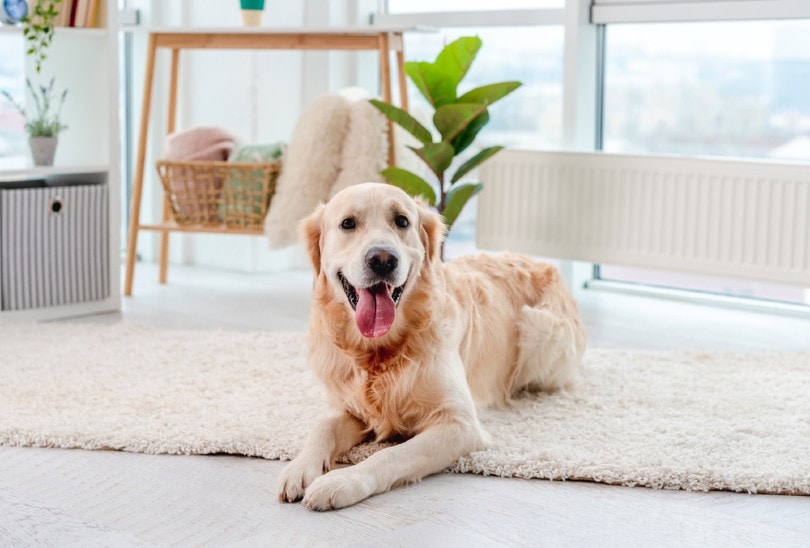
Golden retriever lying on light floor

At some point or another, we’ve all contemplated whether or not it would be fair to leave a dog at home while we go out to work or spend a day out somewhere. The truth is, some dog breeds do better than others when it comes to being left alone for a few hours, and Golden Retrievers are one of them. You can leave a Golden Retriever at home for a certain period of time as long as they have everything they need throughout the day.

divider dog paws oct 2024

How Long Can Golden Retrievers Be Left Alone at Home?

As a rule, you can leave a healthy adult Golden Retriever at home for between 3 and 6 hours and no longer than 8 hours. If you do plan on leaving your Golden Retriever at home alone, though, you’ll need to make sure they’re left in a safe environment and have everything they need to be comfortable throughout the day.

You might also want to dog-proof your home and furniture, just in case your Goldie gets the urge to chew or resort to other destructive behaviors while you’re away. Leaving your dog for extended periods of time could lead to such behaviors, often as a result of boredom or stress, which is why it’s not a good idea to leave your Golden Retriever alone for more than 8 hours at the most.

Your Golden Retriever should have access to the comfy spots they love to lounge and sleep on, their favorite toys or comforters, and plenty of clean drinking water. Speaking of water—your dog’s bathroom routine is another important factor to consider.

If you’re going to be out of the house for more than a few hours and you know your Golden Retriever is likely to need the bathroom at some point during that time (this depends on their routine), you might also need to make arrangements for your dog to have a bathroom break at some point.

golden retriever dog on a couch
Image Credit: LightField Studios, Shutterstock

Can I Leave a Golden Retriever Puppy Alone?

Puppies are a little different because their needs are greater. According to the American Kennel Club, puppies under 10 weeks old should not be left alone for longer than an hour.

Here are the AKC guidelines:
  • Up to 10 weeks: Maximum 1 hour
  • 10–12 weeks: 2 hours
  • 3 months: 3 hours
  • 4 months: 4 hours
  • 5 months: 5 hours
  • 6 months: 6 hours
  • Older than 6 months: Maximum 6–8 hours

Can I Leave a Senior Golden Retriever Alone?

Like puppies, a dog’s needs may change somewhat once they head into their senior years—for one thing, they tend to need more frequent bathroom breaks. Whether you can leave your senior Golden Retriever at home for a few hours depends on any health conditions they may have and their bathroom-related needs.

In short, if your senior Golden Retriever is healthy, there’s no reason why they can’t stay alone at home for a few hours—ideally 2–4 hours, though this may vary. If your Goldie has special requirements due to a health condition or other needs, you may need to arrange for someone to check in on them.

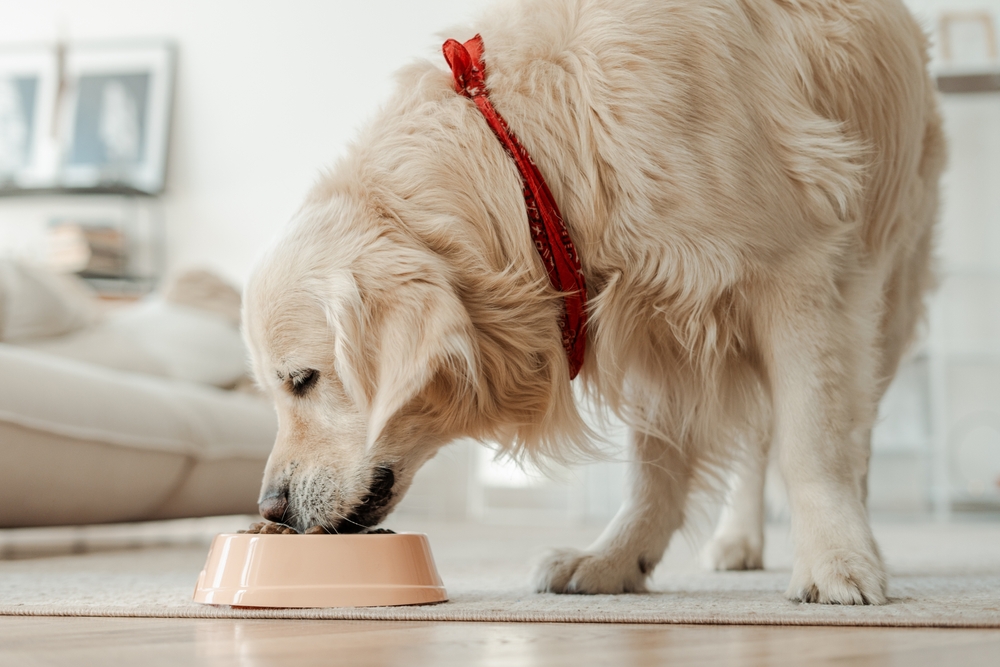
golden retriever dog eating
Image Credit: Chendongshan, Shutterstock

Tips for Leaving a Golden Retriever at Home

  • Train your Goldie to be alone by rewarding them for short periods they spend alone (i.e. in their bed, in another room, etc.) before progressing to leaving them home alone.
  • When you start to leave your Goldie alone, do so incrementally rather than for long periods right away. Start with 1 hour, then 2 hours, and so on.
  • Make sure your Goldie has everything they need to be comfortable and suitably entertained while you’re away (favorite toys, mentally stimulating obstacle toys, beds, etc.).
  • Walk your Goldie before you leave the house. This gives them a chance to go to the bathroom and get some energy out.
  • Dog-proof your home with baby gates, sofa covers, etc., if you’re concerned that your Goldie might become destructive.
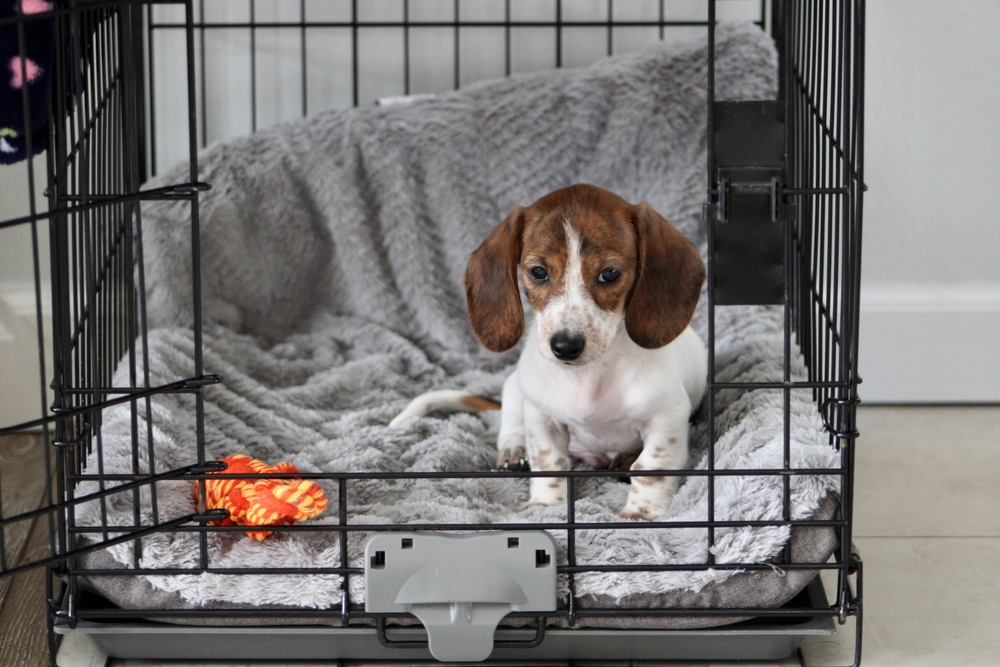
  • In general, it’s best not to leave your Golden Retriever locked in their crate while you’re out. The crate should be somewhere they can come and go freely and where they feel safe. Keeping a dog in a crate for long periods can be incredibly stressful for them.

divider dog paws oct 2024

Final Thoughts

So, as long as your Golden Retriever is healthy, you can leave them alone for about 3 to 6 hours and no longer than 8 hours. For puppies, how long they’re left alone depends on their age, and for senior dogs, it depends on any health conditions or bathroom needs they may have. If possible, it’s best to start training your Goldie as early as possible to spend time alone so it doesn’t come as such a shock to them down the line.

See also:


Featured Image Credit: Tatyana Vyc, Shutterstock

Want content like this delivered to you?

Sign Up For Our Newsletter

News, insights, expert advice, and everything dog

* By submitting, you agree to our Terms & Conditions and Privacy & Cookies Policy.


How useful was this post?

Click on a star to rate (you can leave written feedback after clicking submit)

Help us improve Dogster for pet parents!

Your feedback really matters.

What did you like about this post? Also how can we improve it?

Join the conversation

Leave a Reply

You’re very welcome to leave a comment or question. Please know that all comments must meet our community guidelines, and your email address will NOT be published. Let’s have a positive and constructive conversation.


Dogster's Digital Magazine is Back!​

Dogster Magazine Cover June 2026

Vet-approved health & behavior advice

Real dog stories & community features

The Organization Helping Pets Feel Safer, Happier, and ‘Fear Free’ – Heroes of the Pet World

For many pet owners, stress during veterinary visits, grooming appointments, travel, or even routine handling can feel like an unavoidable part of life...

Why Some Dogs Treat Mealtime Like Playtime – And When to Pay Attention

Most dogs are reliable eaters. Bowl goes down, food disappears. So when a dog starts batting kibble across the kitchen floor, tossing pieces...

Major Win for Dogs: Ontario Becomes the Final Province to Ban Ear Cropping and Debarking

​​Ontario has approved new animal welfare regulations that will prohibit elective ear cropping and devocalization (debarking) procedures in dogs from January 1, 2027....

Dogster’s Weekly Photo Contest Winners: Most Adorable Puppy (June 8, 2026)

Every week our team gets the privilege of sorting through our readers photos to choose what dogs will win this weeks contest! See...

More related

Red Doberman: Info, Pictures, Origin & History

With their long legs and muscular physique, Dobermans are one of the most visually striking dogs you’ll ever see. Red Dobermans may not...

What Is Regurgitation in Dogs? The Differences With Vomiting

Regurgitation occurs when a dog expels the contents of their esophagus, as opposed to vomiting, which is when the contents of the stomach...

Gut Check: The Surprising Link Between the Microbiome and Dog Health

If you’ve ever heard the phrase “health begins in the gut,” you might be surprised to learn it applies to dogs just as...

Are Monsteras Toxic to Dogs? Vet-Verified Facts, Info & Poison Help

Having house plants and dogs together in the same space can be quite a challenge. You want to keep both alive and healthy,...

Keep reading

Can Dogs Eat Pita Chips? Vet-Reviewed Nutrition Facts & FAQ

Made with flour, water, yeast, and salt, pita is a simple snack originally by the Middle East and Mediterranean cultures that easily assimilates into most meals and party foods. Whether you prefer to use it as a mini pizza crust...

Can Dogs Eat Pita Chips

What Is Animal Digest in Dog Food? Vet Reviewed Benefits & Drawbacks

Animal digest is an ingredient used in dog and cat foods to improve palatability. Dairy products, amino acids, and fats or fatty acids are other traditional palatants (also called flavor enhancers) added to dog and cat foods to make them...

man checking dog food label

How Much Does The Farmer’s Dog Food Cost? 2026 Pricing Update

When you want to give your dog food that’s the best of the best, fresh is the way to go. But we all know that fresh food costs more than traditional kibble. So, how much does a food like The...

Finny with the farmer's dog food

10 Best Legume-Free Dog Foods in 2026 – Reviews & Top Picks

Food sensitivities can make shopping for dog food difficult, especially if your dog is allergic to common ingredients like legumes. While there are benefits to adding legumes to your dog’s diet, there are several reasons that you might prefer to...

dog eating from bowl in kitchen

Can Dogs Eat Quinoa? Canine Diet & Health (Vet-Approved)

Quinoa is a gluten-free seed that has been a staple in many human diets for centuries, but has been elevated to prominence in recent years as a natural alternative to grains for health-conscious humans. It is also considered a healthy...

Can Dogs Eat_quinoa

Can Dogs Have Almond Milk? Vet-Verified Nutrition & Health Facts

Lactose intolerance is common in adult dogs, so it’s not recommended for them to consume dairy milk. Fortunately, your dog can enjoy many different alternatives, including almond milk, in moderation. In general, almond milk is safe for dogs to drink,...

a glass of Almond milk surrounded with almonds

Before You Add Olive Oil to Your Dog’s Bowl – Read This!

You drizzle it on your salad, cook with it, and probably have a bottle sitting proudly on your counter. Olive oil is celebrated for its heart-healthy fats and antioxidants, but what about your dog? Can your furry friend benefit too,...

olive oil

Can Dogs Eat Gourds? Vet-Verified Facts & FAQ

Gourds are often used for decorative displays in autumn, both in the home and the garden. They’re all part of the Cucurbita family, which includes pumpkins and squash. Gourds are generally safe for dogs in small quantities. Still, there are...

Can Dogs Eat Gourds

Love Dogs? So Do We! Join the Dogster Community

Stay informed with expert pet care insights delivered straight to your inbox! Discover professional guidance on animal behavior, feeding tips, trusted product picks, and much more.


Sign up for the Dogster Email Newsletter