Can Dogs Find Their Way Back Home? Vet-Verified Facts, Prevention Tips & True Stories


In this article
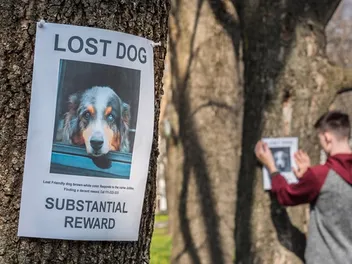
We’ve all heard stories of amazing dogs that found their way home after traversing hundreds of miles. But how is this even possible? How can a dog find their owner in a place they’ve never been to before?
The answer lies in the incredible senses that dogs have, especially their sense of smell and direction. Studies have also shown that canines are sensitive to the Earth’s geomagnetic field.
Here, we explore all the reasons that many dogs are capable of finding their way back home.

Let’s Look at These Studies
In 2020, Virginia Tech1 and the Czech University of Life Sciences conducted a study on 27 dogs over a period of 3 years in 622 trials.2 These pups were let loose in forested areas wearing GPS collars and small action cameras. After a while, the dogs were recalled by their owners, who were out of sight, so they had to figure out how to find them.
The findings of the study were as follows:
- All the dogs started back toward their owners doing what’s called a “compass run,” which is running along the north-south geomagnetic field axis. The researchers surmised that the dogs were able to orient themselves to find their owners this way.
- The dogs either followed their own outbound route through tracking or used a new route as a form of scouting.
- 59% of the dogs switched to tracking using scent to navigate their way.
- 32% of the dogs ran for about 65 feet (20 meters) along the north-south axis regardless of whether their owners were north or south of them. The dogs then ran back on a new route.
According to the researchers, the findings of the study demonstrate that the Earth’s magnetic field may give dogs a universal frame of reference, which helps them orient themselves. It was also found that the dogs that did the compass run found their owners much faster than the dogs that used scent to track their owners.
Ultimately, the study showed that dogs can find their way due to their ability to detect magnetic fields.

Dogs Use Their Senses
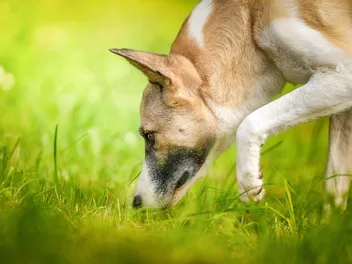
We all know that dogs have amazing senses, particularly their sense of smell, and they use these to their advantage in various situations, including returning to their homes.
Smell
Dogs have an incredible sense of smell. They possess up to 100 million olfactory receptors, and to put that into perspective, humans only have about 6 million.3 Their sense of smell is so sensitive, they can detect one drop of liquid in 20 Olympic-sized swimming pools!4
Moreover, dogs have a specialized organ called the vomeronasal, or Jacobson's, organ, which is located in the roof of their mouth and has nerves leading to the brain. It helps dogs smell pheromones, which are particularly useful for detecting and marking territories. These enable dogs to learn about other dogs' sex, age, health, and reproductive status. Dogs leave pheromone markers in their urine, feces, and even their paw pads.
A dog’s nostrils are also able to work independently of each other, allowing for a better sense of direction as to where a scent is coming from. Since dogs can learn so much about their neighborhood through scent, it’s understandable that certain odors can lead them home.

Sight
A canine’s visual acuity, or clarity of vision, is about three to four times worse than that of a human. However, dogs are thought to still recognize and remember visual cues, such as landmarks. While they may be more focused on scent during their walks, dogs likely take note of their surroundings as a form of visual orientation.
Even wolves are known to create a mental map of their territory by using landmarks, and they are capable of taking shortcuts to get from one specific point to another. Visual cues along with familiar smells work together to lead a dog to their home.

How to Ensure That Your Dog Can Get Back Home
Even if your dog can find their way home, it’s best to prevent it from happening in the first place.
1. Train Them
Be sure to provide basic training for your dog, including commands like "sit" and "stay." Teaching your dog a reliable recall command is also essential for their safety.
If your dog is well-trained, they may be less likely to bolt and more likely to come back when called, which can be lifesaving!
2. Keep Them Contained

Remember that your dog should be leashed when they are outside or contained within a fence if you let them out loose at home. Sometimes, a dog's instincts can override even the best training, whether they are chasing a squirrel or getting spooked by something.
Consider using a harness instead of your dog’s collar when they’re outdoors. Collars can be easy for dogs to slip out of.
3. Spay or Neuter Your Dog
Dogs that haven't been spayed or neutered are more likely to try to escape or wander off due to their strong instinct to mate. Having your dog spayed or neutered can reduce the likelihood of losing them and prevent accidental pregnancies.
4. Keep Their Microchip Updated

If you haven't already, get your dog microchipped, and don't forget to register the microchip! Ensure that the information is always kept up to date, which is particularly important when you move to a new place or change your phone number.
Rescue organizations and veterinarians have chip readers, so if your dog gets lost, the microchip helps ensure that they can be returned to you.
5. Use an ID Tag
Microchips can track your dog, but having an ID tag on your dog's collar is still a good idea. The tag should include your dog's name and your address and phone number. This will make it easier for anyone who finds your dog without a microchip reader to get in touch with you so you can arrange to pick up your pet.
6. Try a GPS Tracker

A GPS tracker can enable you to find and track your dog should they become lost. You typically need to pay for a subscription, but you’ll be able to pinpoint your dog's location on a map through your smartphone, which can give you peace of mind.
True Stories of Dogs Finding Their Way Home
Bucky
An outstanding story of a dog finding their way home is of a black Labrador Retriever named Bucky. He was moved from South Carolina to Virginia because he was temporarily being taken care of by his owner’s family.
However, he escaped and walked over 500 miles to get back to his owner and home. Bucky was found only a few miles from the house and taken to a vet clinic, where his microchip helped reunite him with his owner.
It's incredible how far Bucky went to be with his beloved owner again!

Prince
Prince was a Shih Tzu that went missing for 5 years. During that time, his owner, Myrna Carillo, moved four times and started a family, but she never forgot about her beloved dog. One day, when Myrna came home from work, she was shocked to find Prince sitting on her front porch.
It was a miraculous reunion after 5 long years and four moves! In this case, it seems that Prince was more focused on finding his owner than his original house!
Jarvis
Jarvis was a Jack Russell who accompanied his owner on a ferry to visit a country estate in Cornwall. While on the estate, Jarvis ran off, and after hours of searching, Vivienne and her 2-year-old granddaughter had to head home.
In the meantime, somehow Jarvis had managed to board a ferry and trot the 2 miles back to Devon—he actually beat his owner home!
In Conclusion
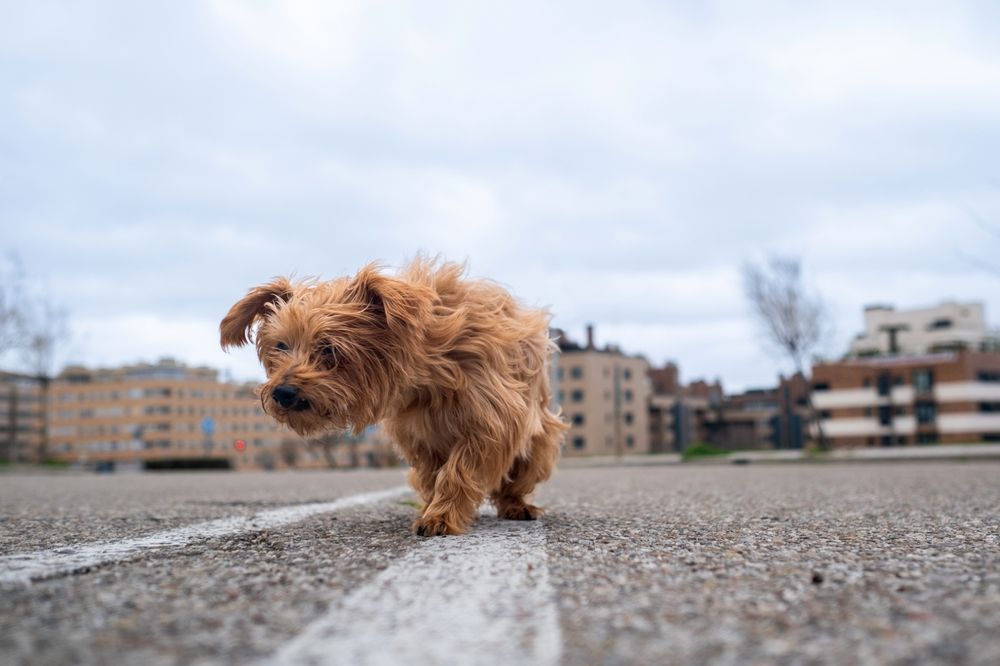
No one truly knows how dogs can traverse such long distances over terrain that they are unfamiliar with and manage to find their home. That said, it seems that their incredible sense of smell and ability to sense geomagnetic fields play vital roles in enabling them to literally “home in” on their house.
However, just because some dogs can make it home against all odds doesn’t mean they all can. This is why microchipping your dog and following the other tips are so critical to preventing your dog from becoming lost in the first place.
See also:
Sources
Featured Photo Credit: Javier Zapatero, Shutterstock
Expert dog care, straight to your inbox
News, insights, expert advice, and everything dog.

No spam — unsubscribe anytime.
By signing up, you agree to our Terms & Conditions and Privacy & Cookies Policy.
How useful was this post?
Click a star to rate. You can leave written feedback afterwards. (We read all feedback.)
Kathryn was a librarian in a previous lifetime and is currently a writer about all things pets. When she was a kid, she hoped to work in a zoo or with wildlife in some way, thanks to her love for animals. Unfortunately, she's not strong in the sciences, so she fills her days with researching and writing about all kinds of animals and spends time playing with her adorable but terribly naughty tabby cat, Bella. Kathryn is hoping to add to her family in the near future – maybe another cat or two and a dog.