Leucistic & Albino Pugs: Vet-Verified Info & FAQ


In this article
If you have a white Pug, you might wonder how rare they are and if they have albinism. White Pugs are indeed extremely rare, but yours may or may not have albinism. They could also have a closely related condition known as leucism, or they may be the mixed breed offspring resulting from a white parent.
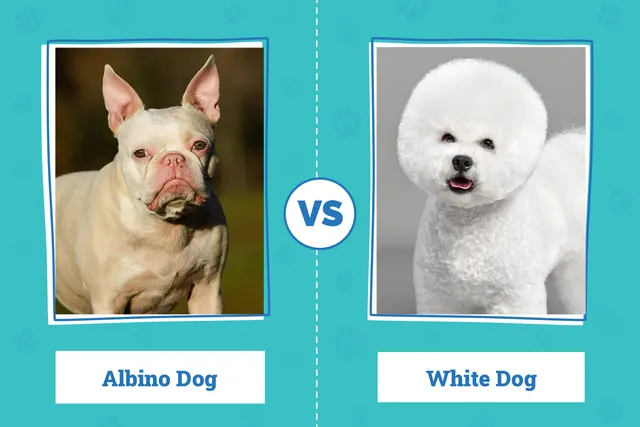
While leucistic dogs are sometimes mistakenly labeled as “albino,” there are distinct differences between the two conditions.
Read on to learn more so you can determine whether your Pug has leucism, albinism, or is just the result of having a white parent.

What Are the Different Types of Albinism and Leucism?
Albinism
Albinism in dogs—or any other species—is a rare genetic mutation that occurs when pups are born without the genes required to produce melanin, the pigment responsible for coloring the skin, hair, eyes, and even blood vessels.
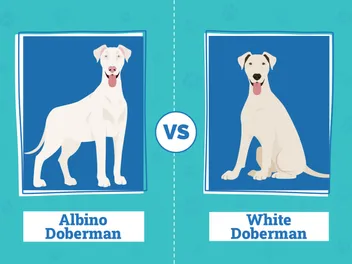
Several different genetic variants can cause albinism in certain dog breeds. For example, studies found that changes to the SLC45A2 gene can cause albinism in breeds like Dobermans, Pekingese, and Pomeranians1. However, an albino Pug in this study didn’t carry the same mutation, suggesting numerous mutations can cause this condition in dogs2.
In order for a dog to develop albinism, both parents must carry the albinism gene. These parents do not have to be albinos themselves. For example, two black dogs could carry the recessive gene, resulting in an albino pup.
Leucism
Leucism, though sometimes used interchangeably with ‘albinism’, is a different condition. Dogs with leucism have a reduction in all types of pigment in affected cells, not only melanin. Like albinism, leucism is inherited. The severity and position of the muted colors can vary greatly between parents and their offspring. In the case of recessive genes, leucism can even skip generations.

Advantages of White Pugs
Perhaps the only true advantage of owning a white Pug versus any other color is just how rare a white coated Pug is. Even then, this may not be considered an “advantage” when we look at what causes albinism in dogs and the related health conditions that can result from this genetic mutation.
When we think of Pugs, most people picture the most common coat colors, like fawn, brindle, and black. Purebred white Pugs are very rare as they’re most often the result of a genetic mutation. However, mixed-breed Pugs can be white if the other parent is white.
Disadvantages of White Pugs
White Pugs are a bit of a controversy in the dog world, especially those that result from designer breeding. The breeders concerned with ensuring the good health of their puppies will avoid producing albino dogs altogether. Albinism and leucism are sometimes exploited by breeders, causing white-coated gene pools to be bred so closely that congenital abnormalities occur extremely often in these dogs.
Albino Pugs, in particular, are more prone to developing health problems due to their complete lack of melanin. Without the protective pigment in their eyes and skin, albino dogs can be extremely sensitive to light and at a higher risk of developing skin cancer. Sunscreen or another form of sun protection is a must anytime a white Pug goes outside in the bright sun.
Frequently Asked Questions (FAQ)
How should I care for an albino or leucistic Pug?
Due to an albino or leucistic Pugs’ deficiencies in melanin, sun protection is an absolute must when spending time outside. Without proper protection from the harsh UV rays, these pups can develop sunburns and even skin cancer. We recommend buying clothing of some kind for cover as well as sunscreen to use whenever you’re out in the bright daylight with your pup. Make sure you apply the sunscreen everywhere that cannot be covered by your pet’s protective clothing (e.g., the nose and paws). You might also wish to invest in dog sunglasses for eye protection.
Some albino or leucistic dog owners avoid going outside during the bright, sunny times of the day in favor of nighttime or early morning play sessions and walks.
What is vitiligo?
Vitiligo is a rare skin condition that causes the skin to lose natural pigment in a process known as depigmentation. Affected dogs will have bleached splotches of skin and may also have white spots in their coat and claws.
Do albino dogs have red eyes?
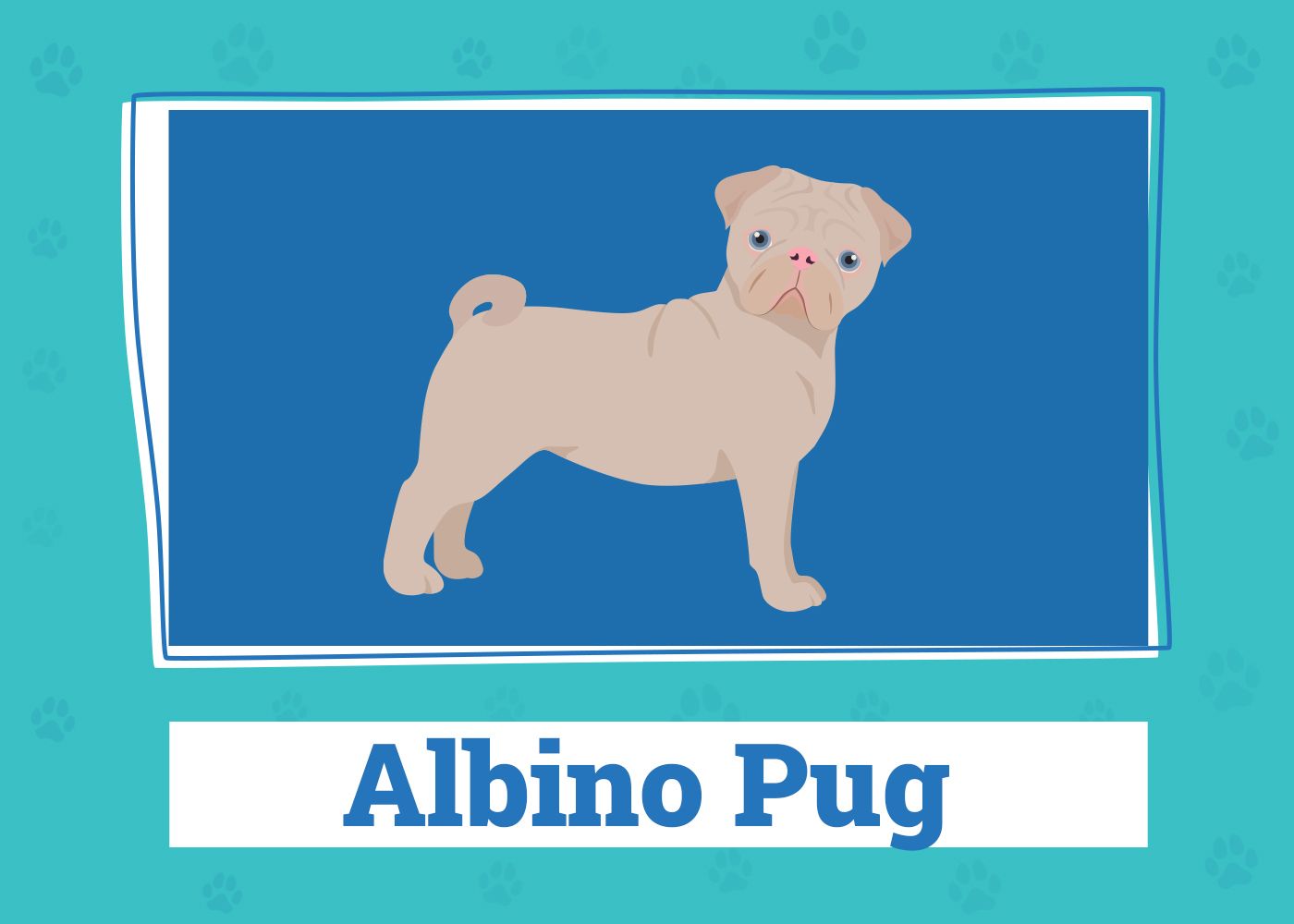
No, albino dogs do not actually have red eyes. However, it may appear as such at times as these dogs do not have the pigmented layer of reflective tissues at the backs of their eyes. When a light shines directly in their eyes, it may reflect red from the blood vessels present there. While albinism is marked by pink irises in some animal species (e.g., rabbits and rodents), the same doesn’t apply to dogs. Most Pugs considered albino will actually have blue eyes and skin that looks pinkish around their eyes.

Conclusion
The terms “albinism” and “leucism” are sometimes used interchangeably when referring to white Pugs, though they are two separate conditions. Albino pugs produce no melanin anywhere on their body, while those with leucism have a primary problem producing any pigment, not just melanin, in affected cells. Care for a Pug with no or reduced melanin production may differ slightly from caring for a “normal” Pug. Extra sun protection will be necessary to prevent burns and reduce the risk of cancer development.
Expert dog care, straight to your inbox
News, insights, expert advice, and everything dog.

No spam — unsubscribe anytime.
By signing up, you agree to our Terms & Conditions and Privacy & Cookies Policy.
How useful was this post?
Click a star to rate. You can leave written feedback afterwards. (We read all feedback.)
Chantelle is passionate about two things in her life – writing and animals. She grew up on the prairies of Canada surrounded by animals and as an adult, she choose to share her home with five cats, two guinea pigs, and a bearded dragon. Chantelle, her husband, and their child take great pride in being great animal parents- the ones who spend a thousand dollars on wall-mounted cat shelves so that their cats can have an indoor jungle gym all year round. When Chantelle isn’t snuggling her cats on the couch or taking pictures of them being funny, she’s outside exploring in the Rocky Mountains, binging the same shows on Netflix over and over, and reading about whatever random topic pops into her brain.