10 Beautiful Miniature Schnauzer Colors (With Info & Pictures)

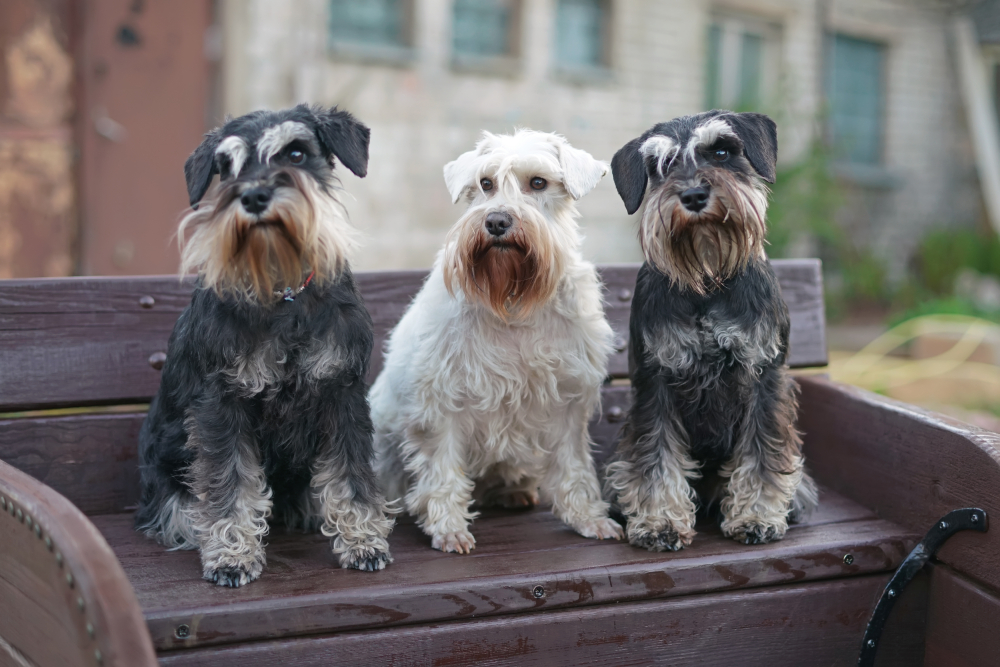
Miniature Schnauzers are bright, trainable, and agreeable dogs that get along great in nearly any household. Better yet, they come in a ton of colors! While only three Miniature Schnauzer colors are officially recognized by the AKC, you can get a Miniature Schnauzer of your very own in lots of gorgeous colors. Check out the different coats below and choose your favorite today.

The 10 Miniature Schnauzer Colors
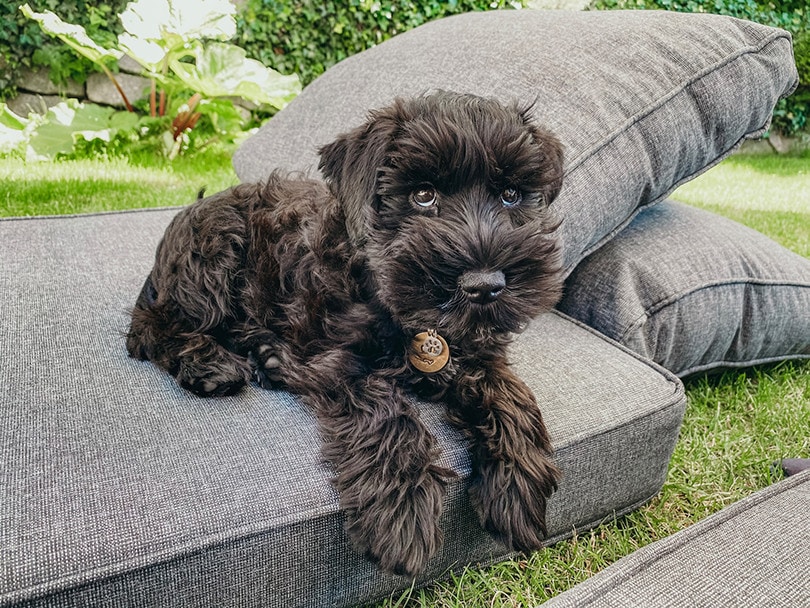
1. Solid Black

Black Miniature Schnauzers are fairly common and one of the three AKC-recognized colors. These Schnauzers are born with an all-black coat that may stay black as the dog ages or develop white patches on the chest, chin, or toes.
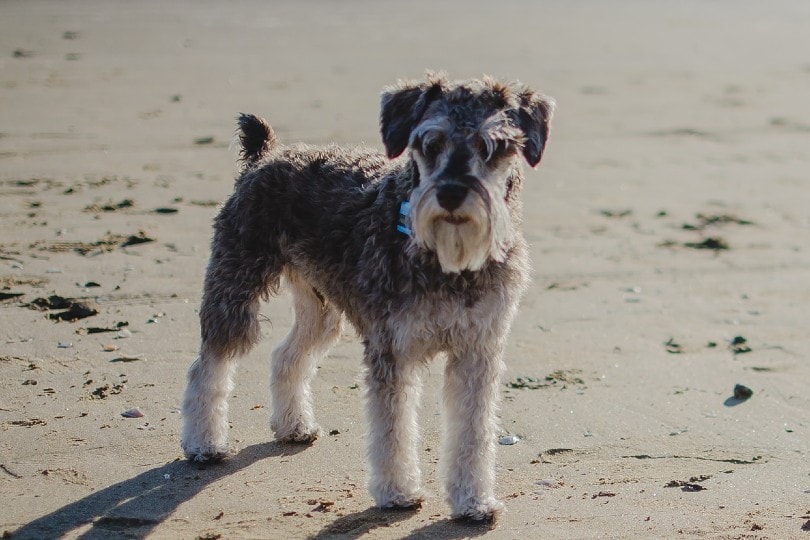
2. Salt & Pepper

One of the most famous and strikingly handsome colors are the AKC approved salt & pepper Miniature Schnauzers, which can vary from light gray to dark gray. What’s unique about their coat is that their fur is banded, meaning it changes color along the length of the hairs. Fur may be alternating shades of gray, black, and white to produce a huge number of possible unique coats.
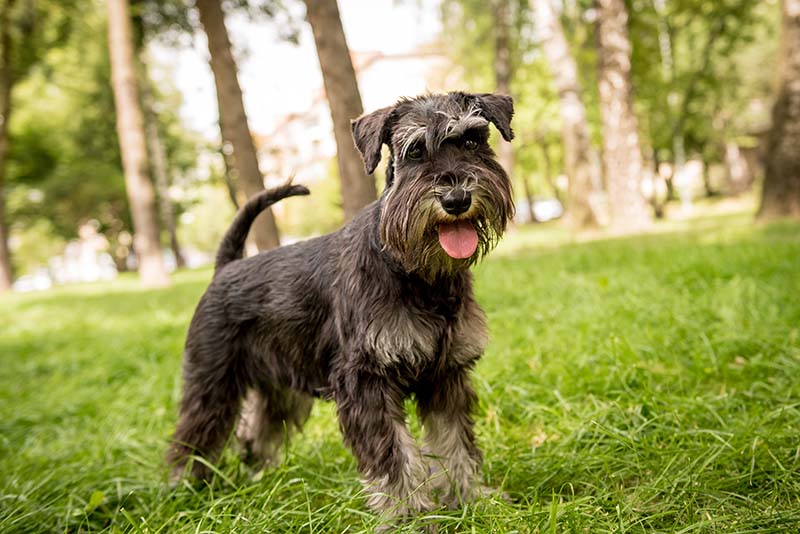
3. Black & Silver

The last of the AKC-recognized Miniature Schnauzer colors, black & silver is the gentleman Schnauzer coloring. They have a black body with various gray-silver accents along their feet, mustaches, ears, eyebrows, and legs. The precise shade of gray can range from light platinum to a darker, almost charcoal gray.
4. White

White Miniature Schnauzers have uniquely gray skin underneath their sleek, shiny white coat, but they are not albinos. White Schnauzers don’t typically develop any markings in other colors, nor does the color’s sheen fade over time as some other light coats do. White was once considered a defective color in the Schnauzer bloodline.
5. Blue

Blue Miniature Schnauzers carry two copies of the recessive dilution gene, which turns black pigment blue. These dogs have a diluted black coat with bluish undertones, including the nose. Blue isn't the same as merle, a separate gene that adds mottled patches to a coat and is usually introduced through crossbreeding.
6. Liver Pepper

Liver pepper is a Miniature Schnauzer color with a unique banded look like salt and pepper. Instead of gray banded hairs, though, the liver pepper color makes the hairs light and dark brown. Colors range from a light golden brown to a darker chocolate. Virtually all liver pepper Miniature Schnauzers have liver brown pads, noses, and eyelids.
7. Wheaten

This golden fur shade is often confused with the coat of the Wheaten Terrier, but it's a recessive Schnauzer color that falls outside the breed standard. However, the coloring is gorgeous and variable—it can range from a light cornstalk yellow to a deeper Scotsman red. The coat is luxuriously soft and can even resemble a plain white Miniature Schnauzer if the color is fair enough.
8. Rust

Also called black & rust, these Miniature Schnauzers sport an all-black body with rusty orange-red accents on their eyebrows, mustache, feet, legs, and under the tail. Depending on the dog, the rust coloring can be a subtle dark golden brown or a more showy orange or red.
9. Particolor

Particolor is a flowery word that simply means white with patches of another color. A particolored Miniature Schnauzer may have coats with black, white, liver, lilac, silver, or any of the Miniature Schnauzer colors. The size and placement of those patches vary from dog to dog.
10. Ticked Particolor

Ticked particolor is a fancy way to say a particolored Miniature Schnauzer that has little “ticks” or evenly spaced spots of color on the fur. This coloring is kind of exclusive because in Miniature Schnauzers, ticking is only black or salt & pepper. This is one of the rarest of all colorings in the breed, thanks to a particular gene that causes the ticked look.
Summary
The Miniature Schnauzer comes in a multitude of attractive, eye-catching colors to choose from, whether you want the classic salt & pepper or maybe something more exotic, like a ticked particolor coat. No matter your preference, you’re sure to find a color in the breed to fall in love with.
See also:
Featured Image Credit: Eudyptula, Shutterstock
Expert dog care, straight to your inbox
Vet-reviewed advice, training tips, and the best of Dogster. Free, and you can unsubscribe anytime.
By signing up, you agree to our Terms & Conditions and Privacy & Cookies Policy.
Codee Chessher is a freelance writer whose motto is: there is nothing a well-worded sentence can't accomplish! He loves to write about pets, travel, DIY, and more. Codee's experience is varied, but the written word has always been his strongest and biggest passion.
Join the conversation
Ask a question, share your story, or send private feedback.