5 Best Big Dogs for Apartments: Pictures, Facts & Size

Dogs are great animals to share our lives and homes with. They love to cuddle, they can be fun and spunky, they can go hiking and adventuring outdoors with us, and they tend to give us plenty of laughs. However, if you’re living in an apartment, you might be worried that you don’t have enough room or resources to care for a dog, especially one that’s considered a medium to large breed.
In general, smaller breeds make better apartment dogs as they require less space and are more easily manageable. You won’t be picking up any of the dogs on the list if they misbehave which means you will need to work hard to ensure they are properly socialized, exercised, and trained.
Without this, these large breeds can get out of hand, especially in an apartment setting.

How Are Big Dogs for Apartments Classified?
There is no official classification for big dogs that do well in apartment settings. That said, there are a few traits that these types of dogs have in common:
- Low to Medium Energy Levels — Big dogs that don’t have high energy levels can usually do fine in apartments if they get out for brisk walks at least once a day and have access to outdoor bathroom breaks regularly.
- Minimal Barking — Barking is a problem for apartment dwellers who own dogs because the noise tends to annoy the neighbors. Therefore, big dog breeds that don’t bark much are best suited for apartment living.
- Independence — Dogs that are independent don’t mind spending time at home alone. Unfortunately, not all dogs are independent enough to handle alone time and can develop stress, anxiety, and destructive behavior that affects household members and/or neighbors. So, big dogs with independent temperaments tend to do best when it comes to apartment life.
The 5 Big Dogs for Apartments
1. The Greyhound

Breed Overview
Origin:
Lifespan:
Weight:
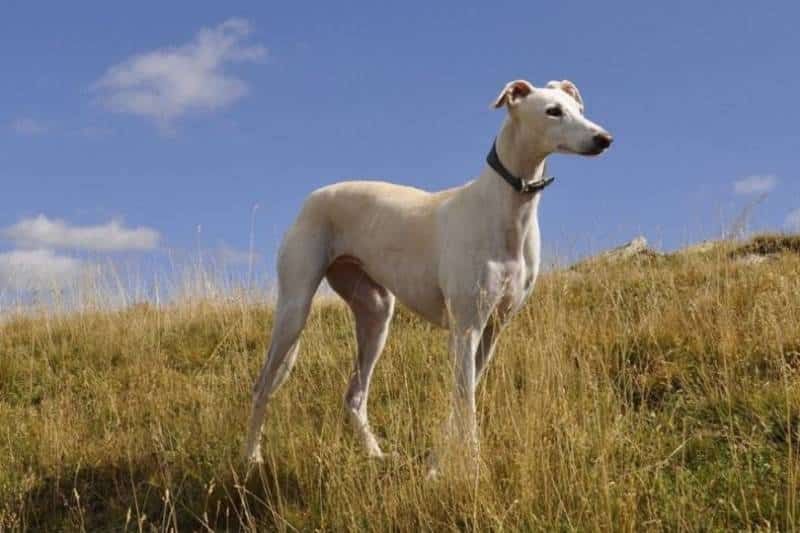
Greyhounds might be tall and skinny, but their energy levels are not high, so they can get all the exercise that they need while living in an apartment. They do not mind chilling in the living room while human companions are doing their thing, and they are likely to snooze the day away while everyone is gone.
You will see your Greyhound shine when they are allowed a good run in a securely fenced area. However, their prey drive is something to be aware of. They will happily pursue any small fluffy animal so they must be kept under control and socialized with small dogs early in life to avoid any issues.
2. The Bulldog

Breed Overview
Origin:
Lifespan:
Weight:
Bulldogs make good apartment dogs as they don’t have huge exercise needs. They are generally couch potatoes that do fine with a bit of moderate exercise each day. In fact, owners need to be careful when exercising these dogs as they can suffer from Brachycephalic Obstructive Airway Syndrome (BOAS) meaning they don’t cope well with heat or strenuous exercise. An air-conditioned apartment is ideal to ensure they don’t overheat.
As long as they are well-socialized and have their needs provided, including exercise and mental stimulation they don’t usually bark too much. That doesn’t mean they are completely effortless to take care of though. They are prone to dental problems and skin fold dermatitis which makes good dental care and hygiene an important aspect of owning a Bulldog.
3. The Saint Bernard

Breed Overview
Origin:
Lifespan:
Weight:
Saint Bernards might be huge, but they are referred to as “gentle giants” due to their gentle nature and attitude. They do need daily exercise outdoors, but they are laidback and can get along well in an apartment atmosphere if they have a space of their own to sleep, play, and hang out. A corner of a room is suitable if bedding and quietness from household noises can be afforded.
Like other large dogs, these powerful dogs can be unruly if not well-trained and socialized. They can also chew heavily as puppies.
4. Basset Hound

Breed Overview
Origin:
Lifespan:
Weight:
Basset Hounds are content with a daily walk and, because they were bred to hunt in groups, are sweet and sociable. They have an independent streak that can make them difficult to train, but short sessions with plenty of rewards can help overcome this. Nevertheless, they will always find an intriguing scent to be of more value than your training.
This breed can be very vocal and is known for baying, so ensure your apartment is soundproof to avoid any disgruntled neighbors. They are prone to ear infections so need regular ear cleaning.
5. The Bullmastiff

Breed Overview
Origin:
Lifespan:
Weight:
The Bullmastiff is a laidback, protective breed that tends to bond deeply with their human companions. They have an easy-going temperament and can get along well with people and other animals when socialized from a young age. These dogs don’t have excessive amounts of energy and are happy with a brisk walk outdoors each day. The rest of the time, they’ll be happy hanging out inside the apartment and snoozing or engaging in interactive toys.
The downside to this breed is that they are guard dogs, so without the right upbringing, they can be reactive to people in the apartment hallways. As a puppy, they are also more energetic and heavy chewers so they will need a fair bit of work to start with.
Some individual dogs within the breed can have higher mental and exercise needs so you should discuss the family and temperament of the puppy with the breeder before committing to one.
Final Thoughts
There are not many large-breed dogs that are a perfect fit for living in an apartment. That being said, with enough time spent devoted to exercise, training, and socialization many other breeds can learn to live in an apartment. It’s best to stay away from breeds with high mental stimulation and exercise needs if you don’t want to spend all day caring for your apartment dog.
Consider how well a particular breed is suited to your lifestyle, and speak openly to people experienced with the breed before taking one home.
Sources
Featured Image Credit: nonmisvegliate, Pixabay
Expert dog care, straight to your inbox
Vet-reviewed advice, training tips, and the best of Dogster. Free, and you can unsubscribe anytime.
By signing up, you agree to our Terms & Conditions and Privacy & Cookies Policy.
Rachael has been a freelance writer since 2000. In this time she has had an opportunity to research and write about many different topics while working to master the art of fusing high-quality content with effective content marketing strategies. She is an artist at heart and loves to read, paint, and make jewelry. As a vegan, Rachael is obsessed with helping animals in need, both in her community and anywhere in the world where she feels she can make a difference. Animals also happen to be her favorite topic to write about! She lives off the grid in Hawaii with her husband, her garden, and her rescue animals including 5 dogs, a cat, a goat, and flock of chickens.
Join the conversation
Ask a question, share your story, or send private feedback.