Are Dogs Allowed in Yellowstone National Park? 2026 Update

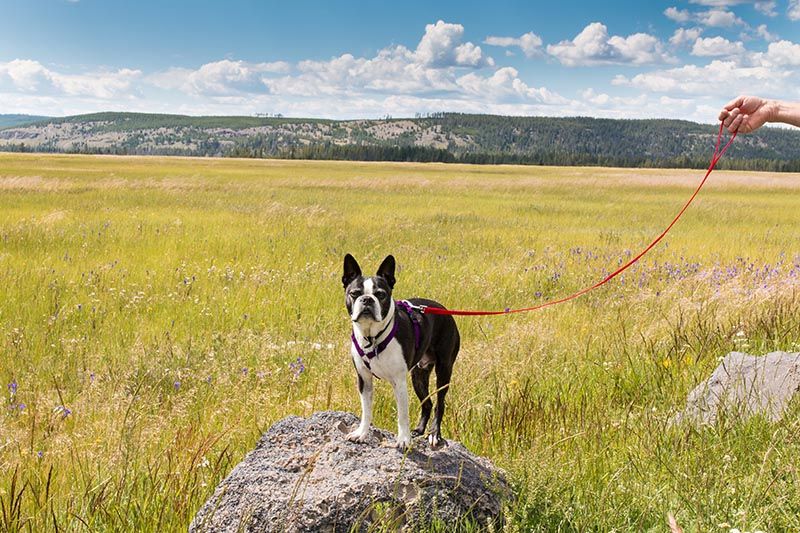
Yellowstone is among the best national parks in the United States. You can get a ticket for cheap and enjoy everything America’s record-breaking park has to offer. But wait, what if you want to take your dog along for the ride? Are canines allowed? The answer is yes, but only if you follow the park’s restrictions and limitations.
The only animals that have access to all Yellowstone facilities are licensed service dogs. However, if it’s just a pet dog, they have to be controlled 24/7 and never left unattended. And even then, they won’t let your pet near the boardwalks or thermal areas. Yes, there are quite a few regulations to keep in mind. Read on to learn more!

What Is Yellowstone National Park? Why Is It Popular?
A UNESCO World Heritage Site, Yellowstone is one of the most frequently visited national parks in the States. It’s a gigantic recreation area (up to 3,500 square miles) built on top of an ancient volcano. Mostly, Yellowstone is located in Wyoming, but it also extends to Idaho and Montana. There’s plenty to see there, including lush forests, rivers, canyons, and hot springs. The park has its own Grand Canyon, too.
More than that, it’s inhabited by different animals, most notably antelopes, wolves, and bears. Yellowstone is also home to 10K+ hydrothermal features. If you’ve ever wondered why this park looks so otherworldly (we’re talking about the beautiful combination of colors/hues), the bacteria that live in these features are responsible for that. First opened back in 1872, Yellowstone is still very popular.

Can You Visit With a Dog?
Thankfully, dogs are not banned from Yellowstone. But sadly, you won’t be able to enjoy it to the fullest while having a pet on your side. First, a dog will only be allowed to stroll along with you in the developed areas. Secondly, the four-legged chap has to stay within 100 feet of the closest camping areas, parking spots, and roads. Thermal areas, in turn, are off-limits for dogs.
The same is true for the Yellowstone hiking trails, boardwalks/elevated paths, and undeveloped areas (like the backcountry). Also, make sure you have full control over the dog. That means it has to be on a leash (the max length for it is six feet), in a crate, or sitting in a car. Never let the dog walk/run on their own or tie them to a lamppost, tree, table leg, or anything like that. Here are some more requirements:
These rules apply to dogs of all shapes and sizes. Carried pets don’t get any “free passes.” Only registered service dogs are allowed to be in the park and all of its facilities. But even they are required to be on a leash at all times while visiting Yellowstone.
Why Do These Restrictions Exist, Anyway?
For a person that’s never been to Yellowstone or any other gigantic national park, all these limitations might seem like a bit too much. However, they’re there for a reason, and that’s to protect your dog.
What About the Outside Areas?
There are quite a few kennels located in communities near Yellowstone. So, if you’ve got your dog with you yet don’t want to worry about them while exploring the park, do consider leaving them there. Now, pets are not allowed in hotels. However, there are many cozy cabins and loggings in the area that will gladly accept your doggo for a fee.
Give them a call first, though. Chances are they might be booked ahead. Or, why not try and enjoy the surroundings together with the pet? While they might not be as picturesque as the park itself, there’s still a lot to see there. Besides, you won’t have to pay a single penny just to drive around outside of the park.

Cats and Other Pets: Are They Banned?
While cats are much smaller and less aggressive than dogs, every single regulation that we just discussed applies to them as well. So, don’t leave them unattended, make sure they don’t run away, and protect your feline from wildlife and hot spots. Oh, and don’t forget to clean up after the cat!
See Also: Are Dogs Allowed in Yosemite?
Do the Same Rules Apply to All Parks?
Yes, most national parks do impose strict restrictions on domestic animals. Just like Yellowstone, they don’t allow dogs, cats, or any other four-legged companions in the most crowded areas. This is true for all animals, no matter how big, small, or cute they are. To avoid hassle with the park’s staff members, check in advance to learn about your rights.
For that, go to the official website, social media groups, or send an email. To speak to a representative directly, go ahead and call them. It shouldn’t be hard to find this info on official resources. But, since all national parks, wilderness zones, and public-access areas are owned by the US government, expect the rules and limitations to be similar, if not identical.
Dog Etiquette in Public Places: Essential Guide

Before you do any socializing with your dog like going to a park, follow these simple yet important tips:
Conclusion
If you’re a big fan of nature, breathtaking views, and exotic animals, you probably have Yellowstone on your must-visit list. And what better way to explore this gigantic national park than in the company of your four-legged bud, right? Well, it’s not that easy. While dogs are not banned, the laws and limitations regarding pets are very strict.
The good news is that if you take a moment to learn your way around these regulations, you can still visit Yellowstone with your dog. Besides, the area beyond the park’s borders is just as beautiful, and it doesn’t have nearly as many restrictions. So, plan ahead, pack some tasty snacks, and hit the road!
See also:
Sources
Featured Image Credit: Spring_summer, Shutterstock
Expert dog care, straight to your inbox
News, insights, expert advice, and everything dog.

No spam — unsubscribe anytime.
By signing up, you agree to our Terms & Conditions and Privacy & Cookies Policy.
How useful was this post?
Click a star to rate. You can leave written feedback afterwards. (We read all feedback.)
Ollie is a zoologist turned freelance animal writer living in South Australia with his partner Alex and their mini zoo consisting of their eldest, a rescue dog named Pepper, many aquatic creatures, and their cat Steve. Ollie has a Master's degree in wildlife biology but became a freelance animal writer in 2020 and hasn't looked back. He loves sharing what he has learned with pet parents around the planet.