Dog Penis Behavior: Everything You Wanted to Know (Vet Answer)
In this article
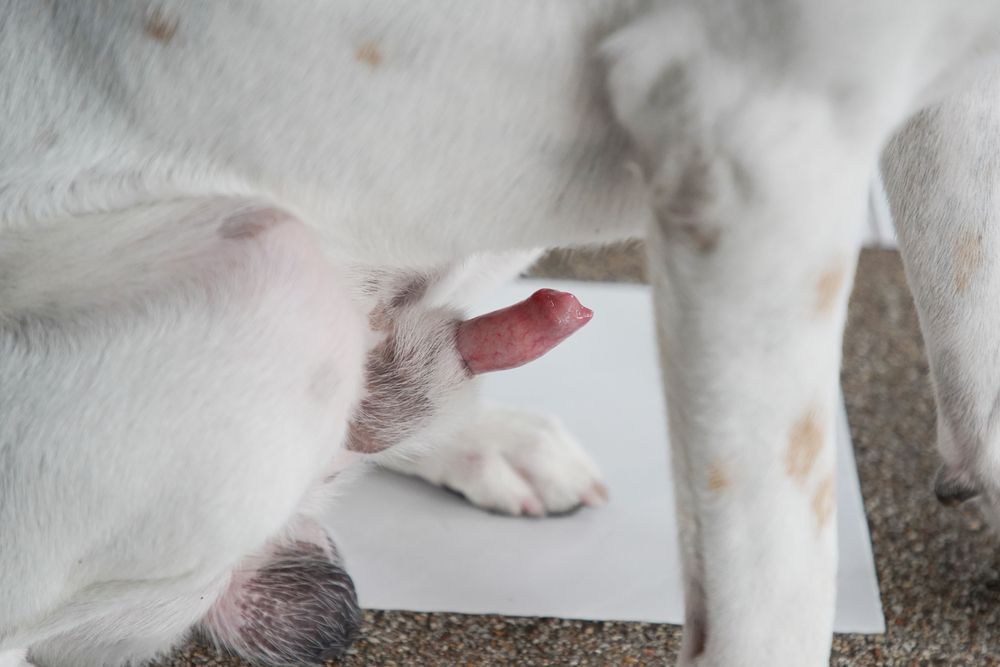
When you work as a vet, there are all sorts of phrases and words that pet owners will use to describe their dogs’ “unmentionables,” and I’ve heard them all. Weenie, thingy, willy, pee-pee, dongle; anything to avoid saying the word “penis!” One term that is particularly common when talking about this particular piece of a dog’s anatomy is “lipstick.” And if you’ve had a glimpse at the canine penis, it’s pretty easy to see why.

The Canine Penis
Let’s start with some basic anatomy to give you a better understanding of this part of a dog’s body. Most of the time, a dog’s penis is concealed within the prepuce—a furry sleeve of skin that protects the sensitive organ. The prepuce, which is the same as the human foreskin, covers the body and tip of the penis—also known as the “glans penis”—and retracts when the organ is erect. The membranous skin that covers the glans penis is filled with blood vessels and sensitive nerve endings. It is normally light to dark pink, but when stimulated, blood flow increases to the organ, causing it to become engorged and bright red in color. This crimson hue, along with the angular shape of its tip, is what draws the comparison to lipstick.
Anatomically and functionally, the penis of a dog is very similar to that of humans, with two notable differences. One is the presence of the bulbus glandis, which is unique to canines, also referred to as the bulb or knot. This tissue becomes swollen during arousal, often seen as two prominent lumps sitting alongside the prepuce, leading many owners of castrated dogs to worry that their dog’s testicles were growing back! These are sometimes mistakenly referred to as “bulbourethral glands,” but dogs are actually the only mammalian species that do not have these.
Another notable difference between the human and canine penis is that dogs have a bone in theirs.
The Bone in a Dog’s Penis
Interestingly, most mammals have an “os penis,” including all carnivore species. This bone, called the baculum, means that a dog’s penis is always rigid, even when not erect. The baculum is believed to aid in prolonged and repeated copulation in species with intense competition for reproductive success. It allows the male to increase his chances of siring offspring by mating with multiple females for extended periods of time. Being a bone, the baculum is susceptible to damage from trauma, but this is a risk that is clearly outweighed by its reproductive advantages.
Without the aid of the baculum, a dog erection, and therefore the ability to copulate, relies solely on increased blood flow to the penis. In most cases, this can only be sustained for a limited amount of time.
Only a few mammalian groups lack an os penis, including some cetacean (dolphins and whales) species, rabbits, marsupials, elephants, hyenas, and ungulates (hoofed animals).
Another notable inclusion on the “no bone” list is Homo sapiens. As the only great ape without an os penis, it would appear that human evolution has prioritized the avoidance of trauma over sustained copulation with multiple partners; something that has been the source of much anthropological interest. But we’re not here to discuss the ins and outs of human monogamy!


Normal Dog Penis Function
Whether this is an area of particular interest for you or you’re just looking for a little bit of information, it is always important to be able to be aware of normal dog penis structure and function so that you can more easily recognize when something is wrong.
As you’re probably aware, most of the time, a dog’s penis is tucked away neatly in the prepuce, visible only as that slightly dangly area on the tummy. It usually stays sheathed during urination.
When a dog gets excited, aroused, or stimulated, blood flow to the penis increases, causing it to become enlarged and push out of the prepuce. A lot of the time, we only see it in a slightly aroused mode as our dog sits there, panting happily with his “lipstick” or "red rocket" proudly on display. When a dog encounters a receptive female, the penis becomes fully engorged and unsheathed, including the bulbus glandis. When dogs mate, the vaginal wall tightens around this “knot,” resulting in the characteristic “tie” of canine copulation.
Many people mistakenly believe that if their dog has been neutered, all sexual activity will cease. This is not the case. Although the drive and ability to reproduce is gone, there are certain sexually based behaviors that still have a role to play. Plus, there are some things that just feel good! That’s why even castrated dogs will engage in humping and even get an erection when excited.
1. Smegma
One aspect of male dog anatomy that owners aren’t a fan of is the discharge that often sits at the tip of the prepuce, known as smegma. This material, which is normally a creamy, yellowish pale-green color, is simply a combination of the fluid created by the accessory sex glands mixed with urine. It may not be particularly pleasant, but it’s usually not a sign of a problem.
2. Size Does Matter (Sort Of)
How large or prominent the penis and its associated structures are will obviously correlate to the size of the dog, but it is also very much dependent on their age and sexual maturity, whether or not they have been neutered, and if so, how old they were at the time.
Both the baculum and the penis itself will continue to grow throughout development, with most of this growth occurring as they reach sexual maturity. Dogs that are castrated before they reach this stage, or particularly if they are castrated before even entering it, will have a noticeably smaller penis, scrotum, and bulbus glandis.
This doesn’t matter to your dog (at least, we’re pretty sure it doesn’t!), but if you’re ever having a look “down there” and notice any size discrepancies between individuals, this may be the reason. For example, a sexually mature, entire (unneutered) small-breed dog can be similarly endowed to a larger breed that was neutered at a young age.
You may be interested in: At What Age Do Dogs Reach Sexual Maturity? What Science Says!

The Not-So-Normal Stuff
Now that we’re up to speed on normal penis structure and function, let’s take a look at some of the not-so-normal conditions:
1. Discharge
While smegma is a normal, albeit unpleasant, feature of many dogs’ penis and prepuce, if that discharge changes color, consistency, or texture, it could be a sign of trouble.
Infection can result in a discharge that is bloody, brown, bright green, or foul-smelling. Urinary crystals or stones can lead to a gritty or sandy appearance of the material around the prepuce. Excessive licking of the prepuce and discharge can also be an indication of a problem. Any deviation from what is normal for your dog should be discussed with your vet.
Did you know that you can speak with a real vet online about your dog's health?
2. Paraphimosis and Priapism
You might have noticed that your dog’s penis is stuck out and won’t go back in. This is a surprisingly common phone call we receive in veterinary practice, and it almost exclusively affects entire dogs that have been feeling rather “excited.” There are two main reasons this can occur:
- Priapism: A true “persistent erection” where increased blood flow to the penis persists for a period of more than 3 to 4 hours. It can be the result of certain drugs or trauma causing an influx of arterial blood to the area (non-ischemic priapism), or a hematological (blood) problem (ischemic priapism). Non-ischemic priapism isn't usually painful, whereas ischemic priapism can be quite painful and distressing.
- Paraphimosis: Not a true dog erection, but the result of a physical obstruction preventing the glans penis from re-entering the prepuce. It is often the result of a short or narrow prepuce. The longer the penis remains exposed, the more inflamed, dry, and swollen it will become, further compounding the problem.
Both conditions require veterinary attention, but it is sometimes possible to address the problem at home with the advice from your vet.
3. Tumors
The normal penis is quite smooth, so any lumps or bumps need to be taken seriously. Mast cell tumors and squamous cell carcinoma are the most common types of tumors that can form on the canine penis. A third type, transmissible venereal tumor, is rarely seen in developed countries but can be encountered in parts of Central and South America, East Asia, the Middle East, parts of Africa, and Central Australia.

Broken Penis
Not a terribly common problem, fortunately, but the os penis can be fractured as a result of trauma. Much of the time, the fracture is left to heal on its own, but sometimes a temporary urinary catheter may be placed to prevent urethral obstruction, and there are cases where surgical repair has been needed.
Excessive Humping
If you have a male dog, you’re going to see some humping from time to time. It may be an act of dominance, play, or sexual excitement. And sometimes, it just feels nice for them. But if your dog seems to be humping an excessive amount, it could indicate trouble.
Humping can be a way for a dog to self-soothe if they are experiencing issues with constipation, bladder stones, prostatic enlargement, or other swelling/inflammation in the area. It can also be a sign of sexual frustration, which can easily lead to behavioral issues, so if you think your dog’s humping behavior is getting out of control, talk to your vet.

Frequently Asked Questions
Why Do Dogs Turn Around When They Mate?
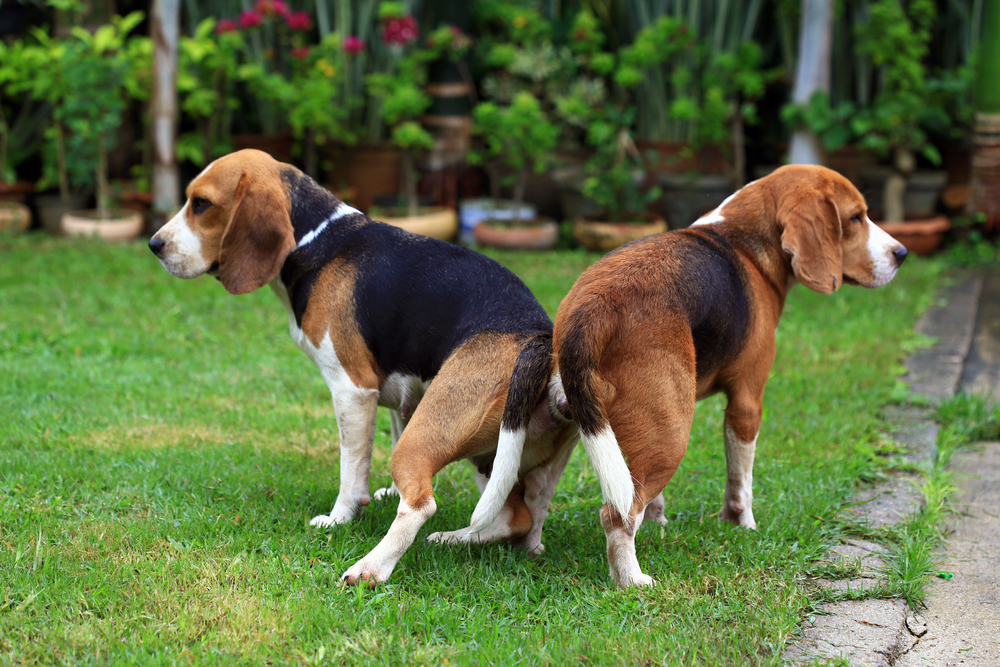
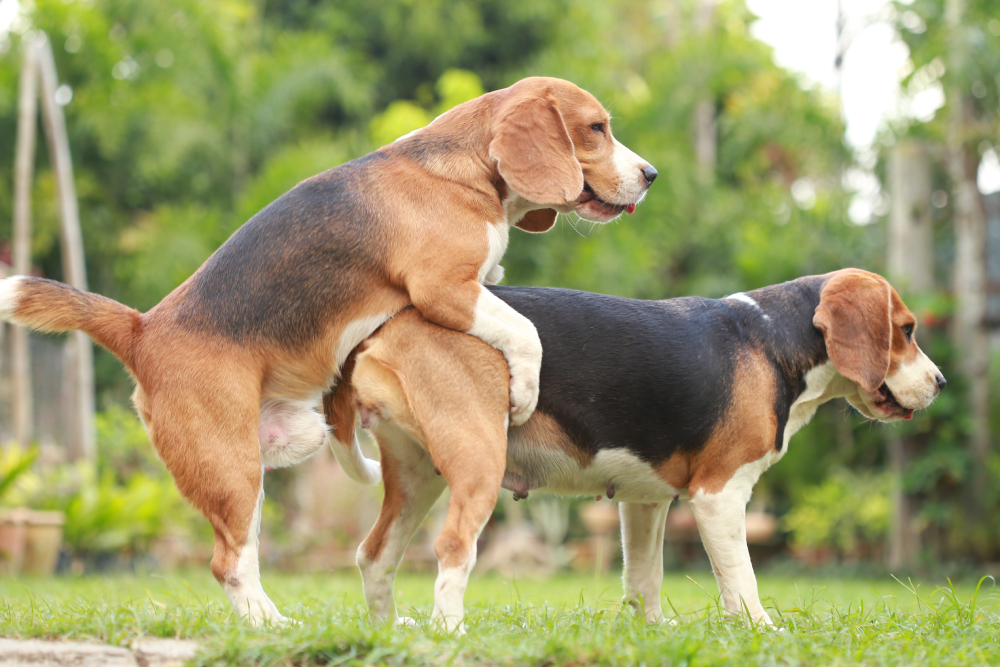
When dogs copulate, the bulbus glandis enlarges to facilitate ejaculation, and the muscles of the vaginal wall tighten around it to prevent the penis from withdrawing. This maximizes the chances of fertilization happening. Dogs will stay locked together for around 5 to 30 minutes to allow the final fraction of the ejaculate to make its way to the female’s reproductive organs. Some, but not all, dogs will dismount after a period of time and turn 180 degrees so they are facing back-to-back. This is believed to put pressure on the blood vessels to help carry the semen along the urethra, but others believe it is just more comfortable for the male.
Can I “Replace” the Penis if It Gets Stuck Out?
The best course of action if your dog is experiencing priapism or paraphimosis is to contact your vet. If your dog is amenable to it, which they may not be, you can apply some lubrication (e.g., KY Jelly) and gently massage the penis back into the prepuce. If that doesn’t happen readily, the best thing to do is apply plenty of lubrication to stop the tissue from drying out and get it to the vet.
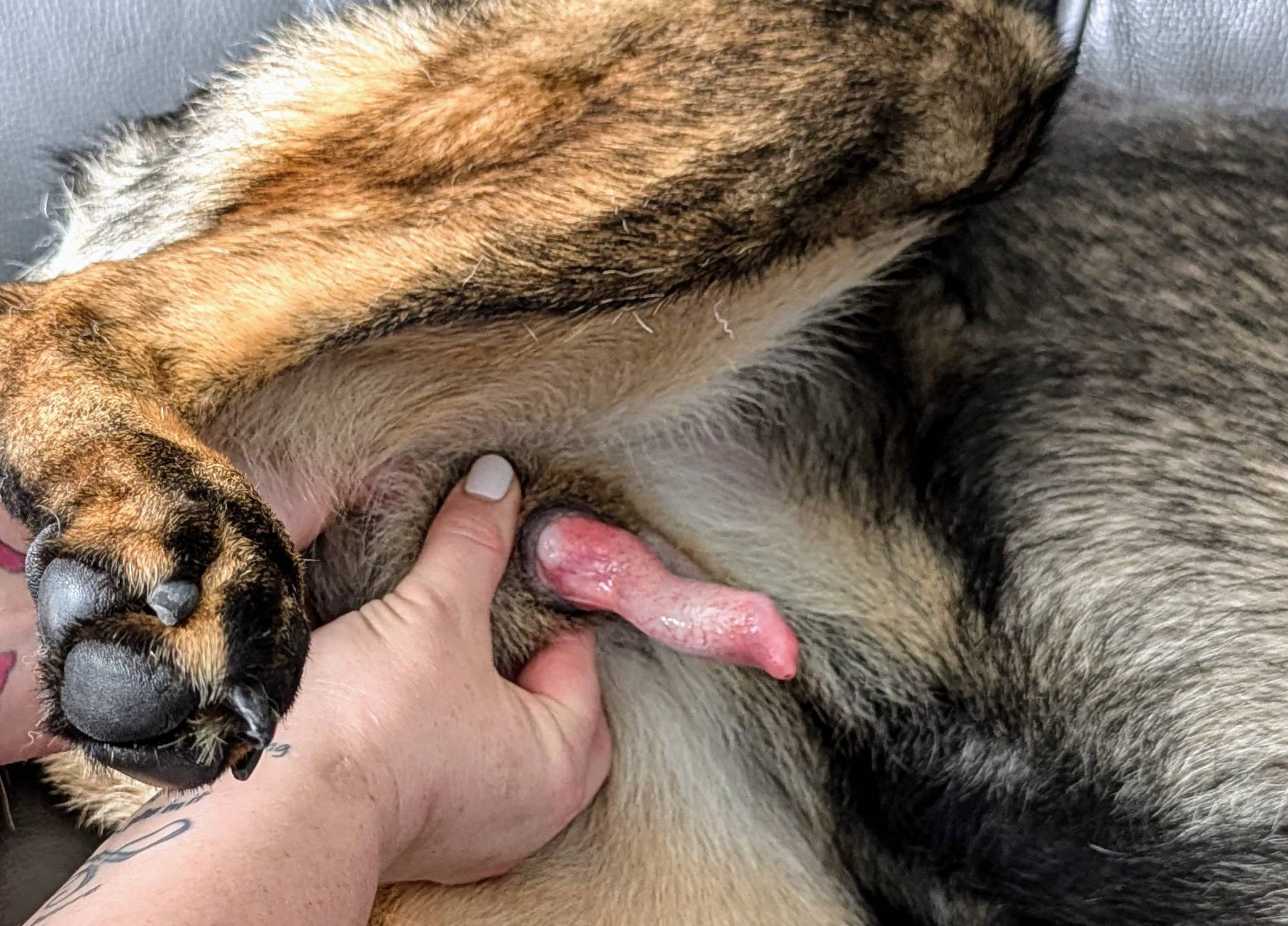
How Can I Check My Dog’s Penis?
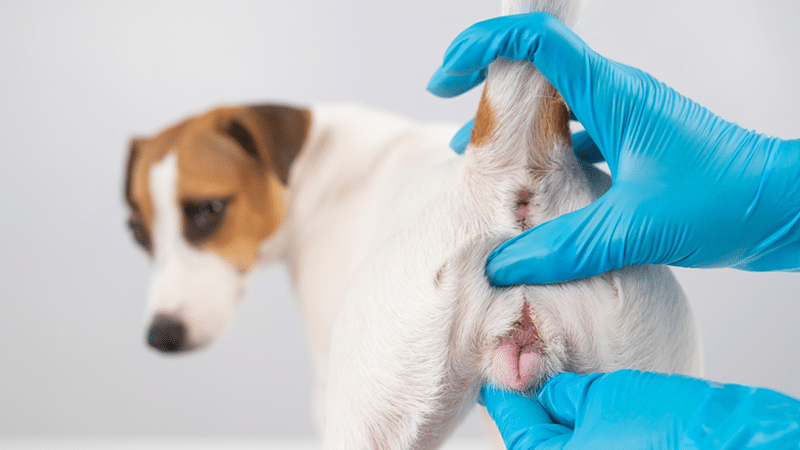
Unless you suspect there is a problem, there is usually no need to physically examine the penis, but if you do need to take a closer look and are feeling up to the challenge, the first thing you need to do is make sure your pal is on board with your plan. Even very placid dogs may object to this sort of examination if you have never done it before. You will also need someone to hold your dog still because you’ll need both hands.
With one hand, feel for the end of the os penis at the tail end of the prepuce. Grip this firmly but gently. With your other hand, pull the prepuce back, as you push the os penis forward. The glans penis may look light to dark pink or even white, and it should appear smooth and moist. Don’t handle the glans itself, and make your exam as brief as possible.
In general, you shouldn’t need to do this sort of examination unless you suspect there is a problem, and your vet will be able to perform this examination. However, here are the steps you can take:
1. Locate the os penis, and carefully grip the base with one hand while holding the prepuce in the other.
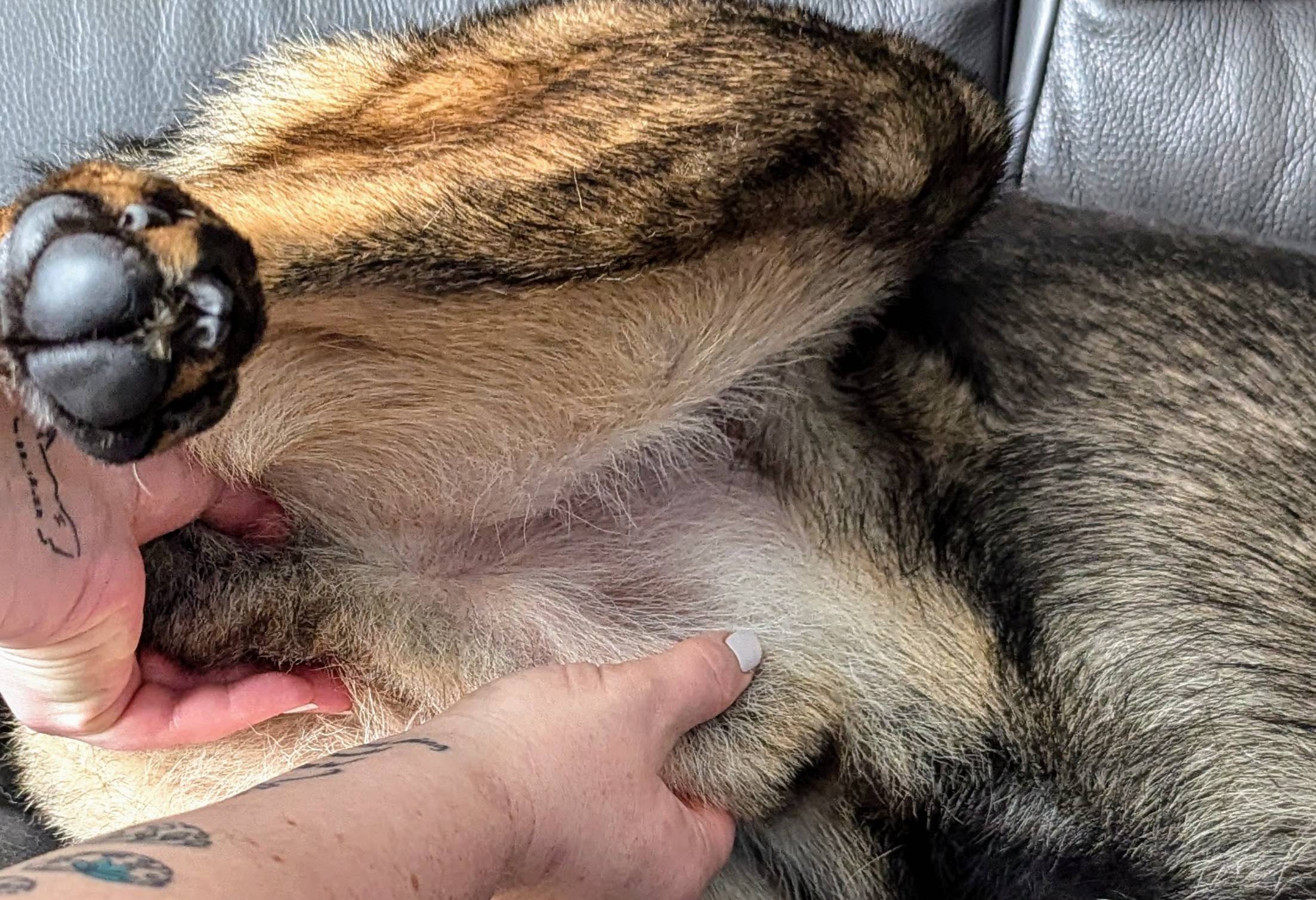
2. Pull the prepuce back whilst pushing the os penis forward
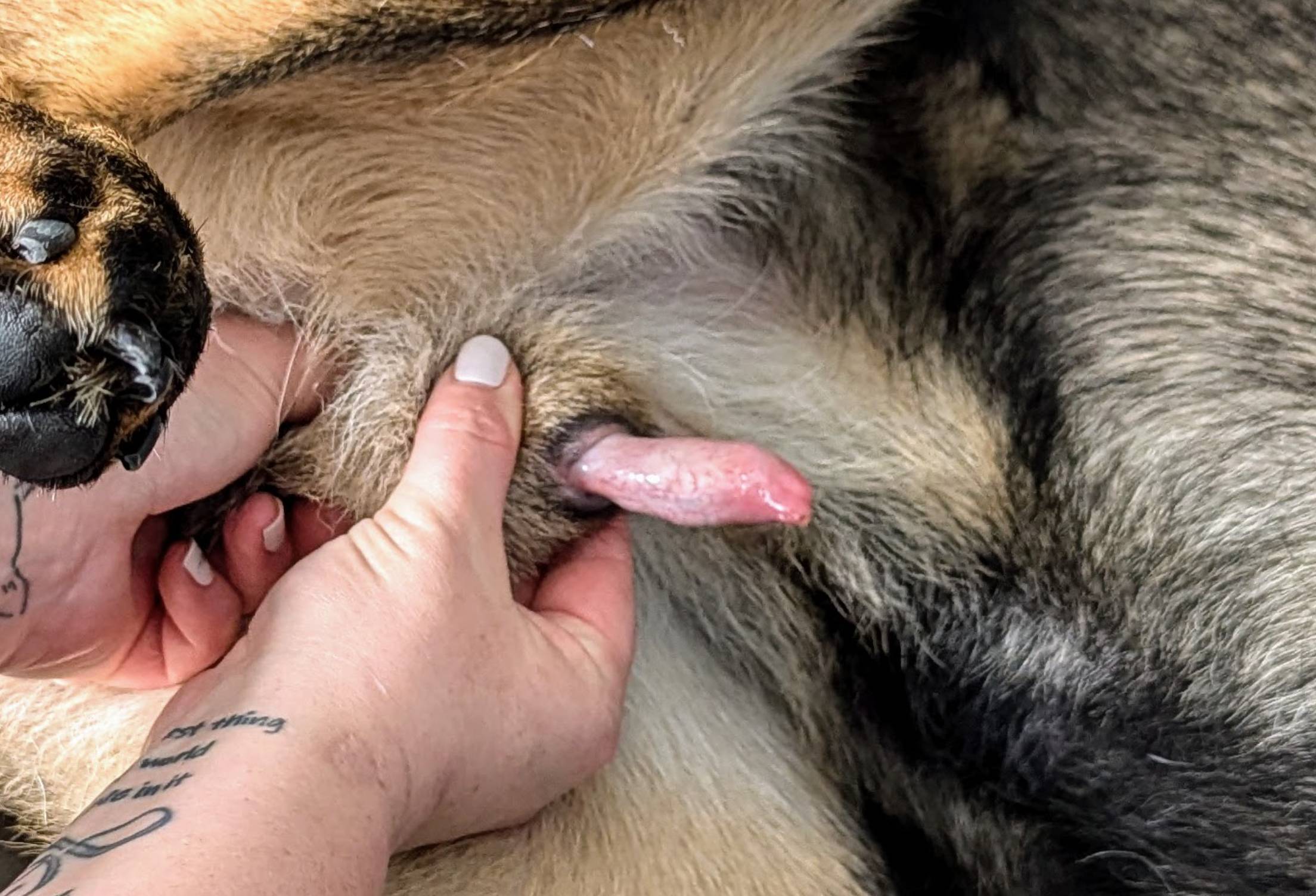
3. Keep a firm but gentle grip as you push the glans penis further to see the bulbus glandis.

Final Thoughts
Rather than treat it as a subject of shame or mystery, it is important to be familiar with every aspect of your dog’s anatomy and physiology, and that includes the penis. So, the next time your dog puts that lipstick on show, rather than look away, take the opportunity to check for any problems, and if you think there may be something amiss, speak to your vet. I can promise you that it won’t be as embarrassing as you think!
Sources
https://onlinelibrary.wiley.com/doi/10.1002/9781119414612.ch56
https://www.science.org/content/article/why-humans-lost-their-penis-bone
https://www.ucl.ac.uk/news/2016/dec/study-sheds-light-function-penis-bone-male-competition
https://onlinelibrary.wiley.com/doi/abs/10.1111/j.1748-5827.1995.tb02798.x
https://www.researchgate.net/publication/282211882_Fracture_of_the_os_penis_in_five_dogs
https://www.msdvetmanual.com/reproductive-system/canine-transmissible-venereal-tumor
https://www.sciencedirect.com/topics/pharmacology-toxicology-and-pharmaceutical-science/penis-tumor
Featured Image Credit: Karyn Kanowski
Expert dog care, straight to your inbox
Vet-reviewed advice, training tips, and the best of Dogster. Free, and you can unsubscribe anytime.
By signing up, you agree to our Terms & Conditions and Privacy & Cookies Policy.
Dr. Karyn Kanowski, BVSc MRCVS (Vet)
Dr. Karyn is originally from Queensland, Australia, and has resided in the UK for the past 10 years. She graduated from The University of Queensland School of Veterinary Science in 2010, and also holds a Bachelor’s degree in Zoology. Karyn is passionate about using experience, evidence, and working with pet owners to provide the best solutions for pets. She also believes in making reliable information about animal health accessible to everyone. 5 cats and 4 dogs let her share their home with her and her husband, and when she is not practising as a veterinary surgeon, she spends her time writing, gardening, and cleaning up pet hair!
Join the conversation
Ask a question, share your story, or send private feedback.