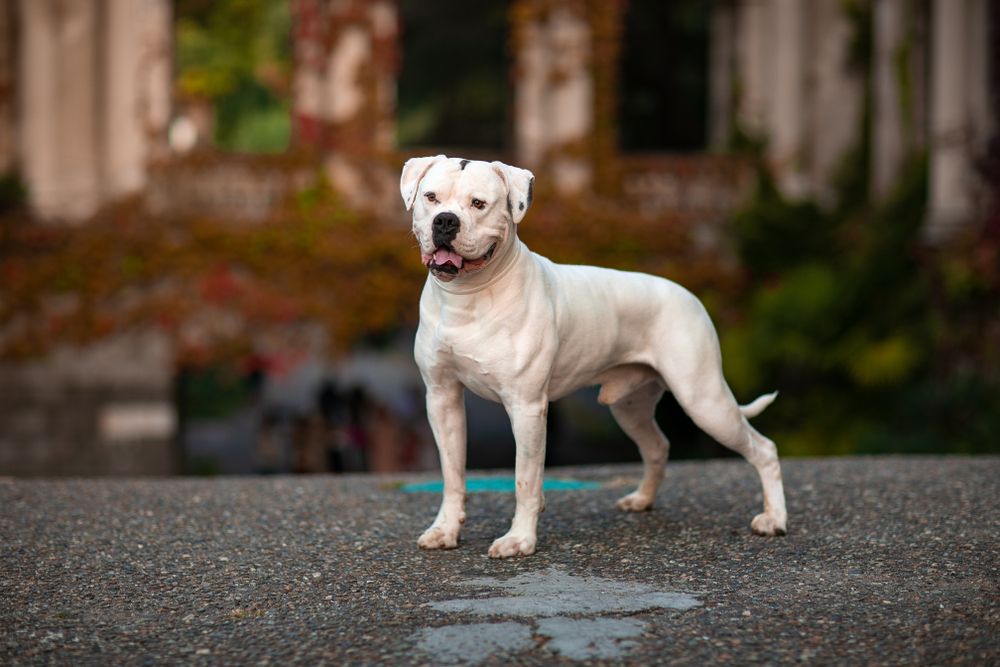
American Bulldog: Breed Info, Pictures, Facts, Traits & Care

In this article
View 8 More +If you’re looking for a powerful and loyal dog with a heart of gold, look no further than the charming American Bulldog. These lovable goofs love nothing more than to have a good old-fashioned romp outside and then curl up at your feet once they’re tired. They demand an active family but are gentle enough to do well in homes with older children—with supervision, of course.
If you’re interested in learning more about this breed or even welcoming one into your home, you’re on the right page! Read on as we break down all the main characteristics of the American Bulldog and how to best care for them.
| Height: | 20–28 inches |
| Weight: | 60–120 pounds |
| Lifespan: | 12–15 years |
| Colors: | White, brown, brindle, black, tan, lilac, red, fawn, merle, tricolor |
| Suitable for: | Active families, experienced dog owners, those seeking a low-shedding dog, families with older kids |
| Temperament: | Confident, affectionate, friendly, clownish |
Often confused with the Pitbull because they both come from Mastiff stock, American Bulldogs are actually a distinct breed developed in the US rather than the UK. Bulldogs are a stocky, loving breed known for being both protective and bubbly with their families.
American Bulldog Characteristics

American Bulldog Breed Puppies

Because of their association with Pitbulls and their soaring popularity, it’s even more important to find a reputable and responsible breeder to purchase an American Bulldog puppy. Unethical puppy mills are rife with unsavory breeding practices and should be avoided at all costs. Ideally, you want to look for a breeder who’s a member of the American Bulldog Club, which adheres to a strict code of ethics in their breeding practices.
Avoid breeders who don’t let you visit their breeding facilities or dodge questions about their pups. Legitimate breeders are more than happy to let you visit their facilities and answer any questions you may have about their breeding practices. If at all possible, ask to see the parents of a litter in person or in pictures to get an idea of what the dogs will look like at maturity. Lastly, we highly recommend getting a clean bill of health in the form of health screenings. Again, good breeders will have this on hand.

Temperament & Intelligence of the American Bulldog 🧠
American Bulldogs are a great all-around dog. They’re active and powerful enough to serve as a guard dog, intelligent enough to be trainable, and friendly enough to worm their way into your heart. With enough exercise, they’re an affable and gentle breed that comfortably carves a niche for themselves in nearly any family.
If you’re worried about the bad reputation of Bully breeds, don’t be! Like all so-called aggressive breeds, the American Bulldog is only aggressive when raised, socialized, and handled poorly. When trained and socialized properly, American Bulldogs are downright friendly, even clownish dogs that can make fast friends with strangers.
American Bulldogs are very trainable when you speak their language, which is lots of treats and positive reinforcement. They pick up on basic commands easily and have a natural eagerness to please, even if they can push boundaries sometimes. Despite looking like a drooly meathead, Bulldogs are very bright.
Are These Dogs Good for Families 👪
Yes, with some caveats. American Bulldogs are more demanding dogs than your average small or medium breed, and their rowdy antics are a bit too much for families with small kids. They need a moderately to highly active home that can give them enough exercise and mental stimulation in a safe manner. Without enough exercise and stimulation, they can grow anxious and develop bad behaviors, like chewing or aggression.
Older children and teens make perfect playmates with strict boundaries and close supervision, and an American Bulldog will come to love and protect all family members with equal fervor. That said, they’re more challenging than your average dog breed, and you’ll have to teach both your kids and dog how to interact safely before you can take your eye off them.
Does This Breed Get Along With Other Pets 🐶 😽
Sometimes, they can get along with other dogs, but it takes a lot of socialization and training to curb their natural standoffishness. American Bulldogs are a very take-charge type of doggo, and it’s easy for them to see other pets as competition to dominate. Socialization when young is imperative to get them used to unfamiliar sights, including other pets and people. With proper obedience training and socialization, American Bulldogs can make fast friends with other dogs.
We generally don’t recommend them for homes with cats unless you’re extremely confident in your animal wrangling skills. It’s technically doable with enough patience, but difficult!


Things to Know When Owning an American Bulldog:
Food & Diet Requirements 🦴
A robust physical specimen like the American Bulldog needs high-quality animal-based proteins to fuel their powerful muscles. Chicken, lamb, beef, turkey, and fish are all great sources of protein, and all your best kibbles will use some combination of them. Other than protein, a balanced mix of healthy fats, veggies, carbs, and assorted vitamins/minerals are also essential.
For a growing Bulldog puppy, we recommend a kibble with between 22% to 25% protein content, while an adult maintenance diet is closer to 18% protein. For a more personalized idea of what type of diet most benefits your Bulldog, we suggest visiting your vet to learn about any unique dietary deficiencies that could make certain diets necessary.
Exercise 🐕
Looking at the American Bulldog’s muscular physique, you probably assume they need a lot of exercise, and you’d be correct. The more vigorous, the better! For a ballpark figure, plan for 1.5 to 2 hours of strenuous exercise per day. Bulldogs love playing tug-of-war, taking long walks, and chewing on sturdy toys.
Don’t neglect to tucker out their bright little brains, either. American Bulldogs were originally farm dogs that proved adept at a laundry list of tasks, and they craved mental stimulation. Indoors, you can satisfy these urges with puzzle feeders, treat toys, and snuffle mats that challenge their brains to earn tasty rewards. Training is also a great way to provide mental stimulation, which is up next in our care guide.

Training 🎾
American Bulldogs need ample socialization in the socialization period from 8 to 16 weeks to become well-adjusted adult dogs. This means taking them to lots of places to see lots of unfamiliar sights, including people and other pets. This can be challenging at first, but your best ally is positive reinforcement with lots of treats. Ignore leash tugging, barking, and whining, and immediately reward good, tolerant behavior.
The same goes for obedience training. American Bulldogs are strong dogs that need strong owners who know when to establish and hold boundaries, which your dog will test incessantly. The good news is that they’re usually very eager to please, especially when delicious treats are involved. We recommend starting with the basics, like their name and commands, such as sit or stay. Bulldogs can learn even more advanced commands, too, given time, and some are known to excel at athletics like agility.
Grooming ✂️
You’ll be pleased to learn that American Bulldogs are low-maintenance as far as grooming goes. Their short coats only need a good brushing every week or two, depending on how dirty they get. Baths are sparser, and clean Bulldogs can go 6 weeks to 2 months between thorough baths with a high-quality dog shampoo.
In the spring and fall, your American Bulldog will shed considerably worse than usual during the shedding season as they blow their coat to get ready for the upcoming hot/cold seasons respectively. This means you’ll need to brush their coats for dead hair more frequently—every week or twice a week should be fine. If you notice that’s not doing the trick, you can brush as often as needed with a soft des-hedding brush. Brushes with pins are way overkill and not necessary for this breed because their coat generally doesn’t tangle or mat.

Health and Conditions 🏥
The American Bulldog's lifespan is around 12 to 15 years with proper care and good genes. They are a medium-large breed and like any breed, though, they’re prone to developing certain health conditions more often and need regular checkups to detect potential problems early. Your vet can tell you more, but for now, let’s check out the most common health issues this breed faces so you have a more educated idea of what your dog may face.
Male vs. Female
Male Bulldogs are typically more muscular in physique and heavier than females, who trend lither on average. As for the American Bulldog's personality, every dog is unique separate from gender, but males are commonly more social and needier than females, who are more self-assured and docile.

3 Little-Known Facts About the American Bulldog
1. They’re Born Farm Dogs
American Bulldogs came from Europe with farmers as livestock guardians, personal protectors, and even hunting dogs—they wore a lot of hats in their time. Their powerful build and fearless personality made them equally adept at guarding cattle, cornering feral hogs, and as an all-around family protector.
2. American Bulldog Colors Often Change
It doesn’t happen with every dog, but many American Bulldogs change their colors from puppyhood to maturity. Black and white are the most common colors for the breed, which may change to a milder brown and white as their colors “mellow” over time. Not all Bulldogs’ colors will change, but it happens often enough to warrant a mention here as a fun fact!
3. The Breed Nearly Went Extinct
Like many breeds, the American Bulldog nearly went extinct in the 20th century. After WWII, there was little standardization in the breed, and many breeds technically fit the bill, but they were few and far between. Thanks to the efforts of John D. Johnson and Alan Scott, the breed was revitalized, and they’ve become a popular family pet with stable populations.


Conclusion
American Bulldogs are beautifully brawny dogs with the spirit of a bold adventurer and a heart three times their size. They take some work to train and socialize and aren’t a good fit for every home, but the ones that do adopt one will find out they’re goofy, gentle giants that just want to protect their loved ones.
Sources
Featured Image Credit: Golland, Shutterstock
Expert dog care, straight to your inbox
News, insights, expert advice, and everything dog.

No spam — unsubscribe anytime.
By signing up, you agree to our Terms & Conditions and Privacy & Cookies Policy.
How useful was this post?
Click a star to rate. You can leave written feedback afterwards. (We read all feedback.)

Codee Chessher is a freelance writer whose motto is: there is nothing a well-worded sentence can't accomplish! He loves to write about pets, travel, DIY, and more. Codee's experience is varied, but the written word has always been his strongest and biggest passion.