In this article
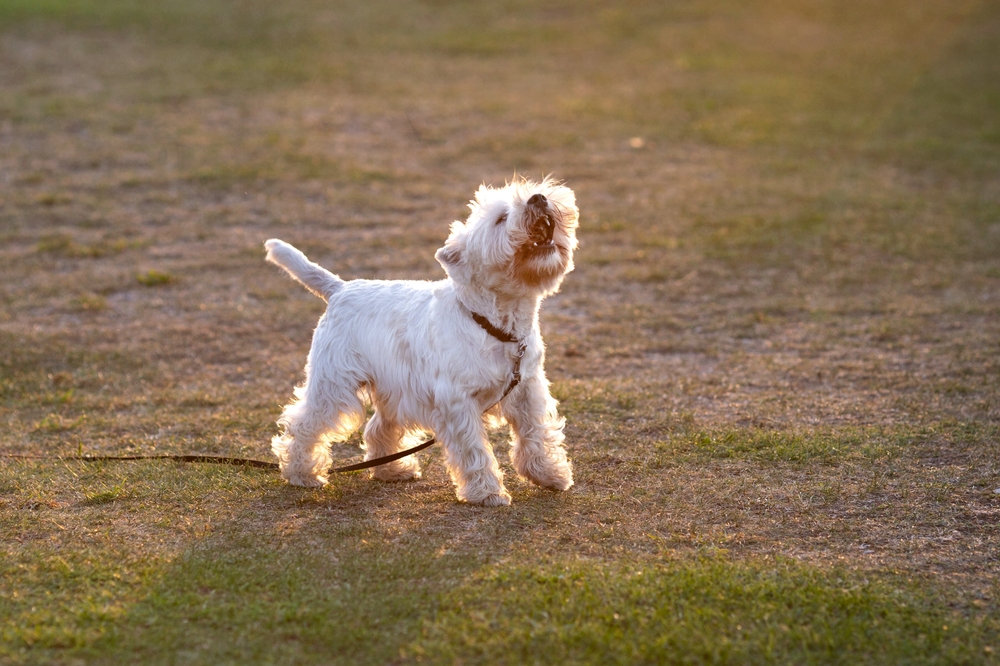
Does your dog launch into a barking fit every time the mailman approaches? Or do they bark frantically at the window whenever someone walks by? Perhaps they bark at you constantly when you’re trying to work from home.
Your dog isn’t being annoying on purpose. They’re communicating. It’s just that their message is getting lost in translation, and the volume is way too high for modern life.
The good news? Most excessive barking isn’t a personality flaw. It’s usually a solvable problem once you understand what’s actually triggering it.

Why Dogs Bark (And Why It Matters)

Before you can change the behavior, you need to decode what your dog is saying. Dogs bark for surprisingly specific reasons:
- Territorial barking happens when people or animals enter what your dog considers their space.
- Alarm barking is a reaction to sudden sounds or sights, not necessarily territorial, just startling.
- Greeting barking is your dog's enthusiastic "Hello!" It is usually paired with a wagging tail and relaxed body language.
- Attention-seeking barking is exactly what it sounds like: your dog has learned that making noise gets them what they want.
- Frustration-induced barking emerges when dogs are confined or separated from something they're desperate to reach.
- Compulsive barking involves repetitive vocalizing, often alongside repetitive movements like pacing.
- Socially facilitated barking—when one dog sets off a chain reaction in others—proves that peer pressure isn't just a human problem.
Identifying which type (or types) you're dealing with gives you a starting point.
Simple Tricks That Actually Work
Start by removing the trigger when possible. If your dog barks because they're bored, they need more physical and mental exercise. If they're barking at passersby through the window, the simplest fix is blocking their view with curtains or bottom-up blinds. Yes, really—sometimes the best training tool is a piece of fabric.
Many territorial barkers genuinely believe they're protecting the house. When they bark and the mail carrier leaves, it reinforces the behavior. In their mind, they successfully scared off an intruder. Breaking this cycle means eliminating the window watch altogether.
Stop accidentally rewarding the behavior. If your dog barks and you feed them, throw a ball, or even yell at them, you've just taught them that barking works. Attention (even negative attention) is still attention.
When your dog barks for attention, turn your back and walk away. It feels counterintuitive, especially when the barking gets louder at first, but they'll eventually learn that noise doesn't equal results. Then you can reward them for staying quiet instead.
Teach them a quieter way to get your attention. Ignoring attention-seeking barking only works if you give your dog an alternative. Train them to sit at your feet and make eye contact when they want something. Only respond when they're quiet, and ignore them completely when they bark.
Train a "quiet" command. Wait for a moment when your dog stops barking, even just for a second, and immediately give them a high-value treat. Gradually extend the time they need to stay quiet before treating. Once you can anticipate when they're about to stop, add a verbal cue like "quiet" or "settle." With repetition, they'll learn to stop barking on command.
Don't leave them alone for hours. Dogs are social animals. A dog left unsupervised in the yard or alone indoors for extended periods will often bark out of loneliness or boredom. Tying them up outside isn't exercise. It's isolation. They need genuine interaction, playtime, and mental stimulation.
Build self-control through training. Some dogs bark because they can't handle impatience or frustration. Basic obedience training, commands like "leave it" or "watch me", teaches them that patience has rewards and that barking isn't necessary to get what they want.
Create a calm space and use it strategically. Designate a specific spot as your dog's calm zone: a bed, crate, or corner they associate with peace. Train them to "go to place" when something triggers their barking, like visitors arriving. Once they're calm, you can bring them back into the action.
If guests set off your dog's barking, whether from excitement or anxiety, don't let them greet people at the door. Use a baby gate or pen to create distance from the entryway. Only allow your dog to socialize once they've settled down.
What Doesn't Work (And What You Should Never Do)
Punishment doesn't stop barking—it creates fear and anxiety, which often leads to worse behavioral problems down the line. Electronic shock collars are inhumane. Debarking surgery, which alters a dog's vocal cords, is extreme and doesn't address the underlying cause.
Dogs have legitimate reasons to bark sometimes, and that's okay. Training takes time and consistency, but it's the most effective approach and strengthens your relationship in the process.

When to Get Help
If you've tried these strategies and aren't seeing progress, a professional dog trainer or behaviorist can provide personalized guidance. Look for trainers who use positive reinforcement methods.
Also consider that some barking may have a medical component. Hearing loss, pain, or severe separation anxiety might require a veterinarian's attention.
The key to reducing barking isn't silencing your dog—it's understanding what they're trying to communicate and giving them better ways to say it. Once you know why they're barking, you can address the real issue instead of just treating the symptom.
The Bottom Line
Your dog's barking isn't a character flaw—it's their way of talking to you, and they're just waiting for you to understand the language. The approach that works depends entirely on what's driving the behavior in the first place. Stay consistent with your training, respond with patience instead of frustration, and remember that every dog learns at their own pace. With time and the right strategy, your dog will figure out when their voice is needed and when silence is golden. The goal isn't a completely quiet dog—it's a dog who knows how to communicate without driving everyone up the wall.
Feature Image Credit: Irina Nedikova, Shutterstock
Did You Know?