Alpha Dog Training: 11 Vet-Approved Tips


In this article
The theory of the “alpha dog” is based on wolf pack hierarchy, and it is one that is quickly losing popularity. It infers a very basic social structure within a pack, with a top male and female wolf leading a group of individuals in decreasing levels of seniority. The more we have come to understand wolf behavior and pack dynamics, the more we are realizing that it is far more complex.
Although there tends to be a male and female in leadership or decision-making roles, the rest of the pack are not necessarily subordinates; they just have different jobs. Under normal circumstances, there is very little conflict over dominance within a pack, because each individual grows up knowing their role. In the majority of cases, most members of the pack will defer to the breeding female, and younger pups will submit to their older family members, but there is rarely fighting over leadership unless pack numbers increase significantly, a leader dies, or if habitat shrinkage causes multiple packs to share space.
So what does this mean for training a "dominant" dog? Well, it all comes down to leadership, consistency, and clarity.

Before You Start
When bringing a dog into your home, it’s essential to pick a breed and individual that matches your experience level, lifestyle, and household. Do you have any other pets or children? Do you have a lot of time to spend exercising a dog? Some dogs want constant attention and companionship, while others may be more independent or aloof.
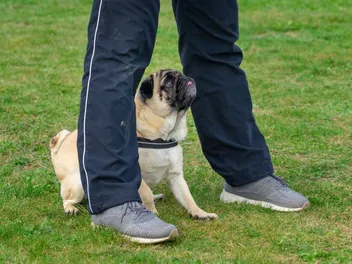
Although each dog is different, there are certain breed characteristics that can have a strong impact on their behavior and personality. For example, herding dogs like Border Collies are going to need a LOT of mental and physical stimulation to keep them from becoming frustrated and overweight, whereas a Pug is not going to be the ideal companion for someone who wants a dog to accompany them on challenging hikes and long beach runs.
If you already have a dog at home, what is their personality like? Are they submissive and easygoing? Or are they confident and bold? These are things you need to consider when deciding what sort of dog will fit in best with your household.

How Do I Know If I Have a Dominant Dog?
Dogs that show dominant behaviors are, to some extent, hardwired that way. In a pack situation, they would be the leaders or decision-makers, and take responsibility for the safety of the group. When they join a family of humans, they may initially still want to take on this role, which can result in conflict and frustration on both sides. Dominant dogs will usually start to show particular personality traits during adolescence (around age 4-10 months), which might include:

- Barking for attention
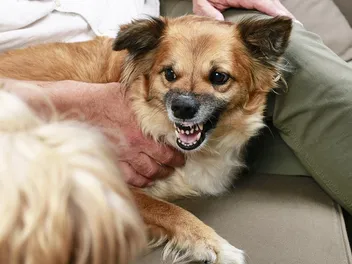
- Nipping/biting ankles, hands, shoes, or clothing
- Humping (people or other dogs)
- Guarding food or toys
- Jumping up on you
- Urinating on vertical surfaces
Although these behaviors can seem cute when they are little, they will almost certainly lead to problems in the future. This is when it is vital to make sure these behaviors are not tolerated from DAY ONE. If you let them get away with it now, you will cause confusion and frustration when you later try to put a stop to them, and this is where conflict occurs.
So this is where clarity, consistency, and leadership come into play.
If, from day one, your pup is shown that the leadership role in the home is already taken, they will accept it. It must be clear from day one that the humans set the rules, and the dog receives positivity, praise, and rewards for following them. If there is inconsistency about this, your dog will feel confused about what role they should be playing, and will be more likely to want to challenge you for dominance.
So we’re going to give you a few tips on how to train the dominant dog.

The 11 Tips On How to Train a Dominant Dog
1. Have a Family Meeting to Discuss Training
Everyone in your household must be on the same page so as not to confuse your dog about your expectations. We recommend having a family meeting to discuss training. Once your boundaries are set, everyone must follow them.
One rule to consider includes limiting treats to training aids. It’ll make them seem more desirable to your dog, but you’ll also get your pup’s rapt attention during lessons.

2. Get Your Head Right, and Remain Calm and Confident
Don’t underestimate your dog’s emotional intelligence. Canines can read human body language and facial expressions. The tone you want to set with them is both assertive and calm. Your confidence in your commands is going to make a big difference in how your dog responds to you. If your dog is showing dominant behaviors, you need to use a clear, calm, but firm voice; whispers and sweet talk are great for cuddle time, but are not ideal for being a leader.
3. Lay Down the Ground Rules With Your Dog
Your dog isn’t going to know how to behave appropriately if you don’t allow some behaviors one day and then allow them the next. You need to remain consistent with your expectations and stick to them. If you can do this, your dog will automatically look to you for leadership, and you may not have to worry about dominant behavior at all.
Do not allow your dog to jump up at you or anyone else. The best way to deal with the dog that jumps up is to walk forwards into them so that they have to back off. Pushing them with your hands is often seen as a positive interaction, and backing away is a submissive act. If you have children, it is important to teach this one early on.

4. Start With the Basics
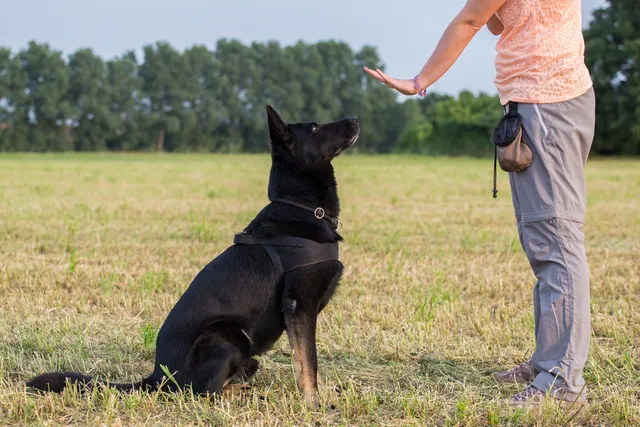
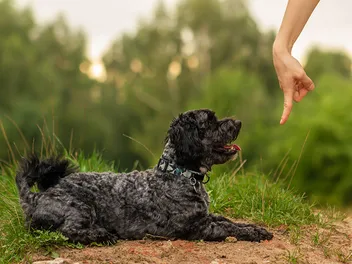
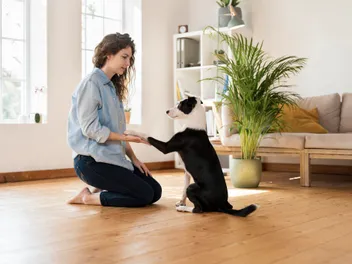
We recommend beginning with the basics by teaching commands like “sit,” “stay,” “come,” and “no.” All dogs must know how to respond appropriately to these words because they serve as the foundation for the rest of your training and establish you in a dominant role. These commands are simple and easy for any pup to learn, no matter how dominant they are.
5. Set Up a Consistent Training Schedule
A consistent training schedule goes a long way toward establishing trust and a bond with your dominant dog. The comfort of a routine is easy to grasp, and it helps build confidence in a positive way with your pet. We suggest short sessions as opposed to an hour-long lesson, as you want your pup to be engaged the entire time, and training sessions that last too long can bore them and lead to unwanted behaviors.
The best way to schedule training sessions is after they’ve woken up from a sleep, take them for a short walk or play, then give them a small amount of food. This way, they will be alert but not hyper, hungry (for treats) but not desperate to eat.

6. Use Food to Your Advantage
Food is your ally when it comes to training. They need to learn what behaviors will yield a reward and what ones lead to you ignoring them. If they become a bit pushy when they see the treat, give them a stern “no” and then walk away and ignore them. They will soon learn that they only get a treat when they behave appropriately, and be ignored when they are not showing good manners.
7. Practice Positive Reinforcement Regularly
By far the most effective way to successfully train any dog is through positive reinforcement. And that doesn’t just mean through the use of treats! Whenever your dog is acting appropriately, you reward them with toys, treats, praise, or anything else that they enjoy. Whenever they are doing something they shouldn’t, give them a short, firm “no” and then ignore their behavior. Do not give them any attention, as this could reinforce poor behavior.

8. Redirect Your Dog’s Energy and Keep Them Stimulated
Many dominant dogs historically performed a job, whether herding livestock or flushing game. It’s part of what makes canines intelligent, but it also nurtures several personality traits and skills, such as independence and problem-solving.
Many dominant dogs need something to do to provide vital mental stimulation. If they’re bored or not getting enough exercise, this could lead to problem behaviors. You should ensure that your dog is getting enough physical activity throughout the day, as well as encourage mentally stimulating activities, such as using a puzzle feeder.
You will always be far more successful in stopping an unwanted behavior if you replace it with a desirable one. So, let’s say your dog is chewing on a shoe. Instead of yelling, you would tell them “no” and then redirect them to their favorite toy. If they continue to play with the toy, you will reward them. The next time they choose the toy over a shoe, reward them again.
9. Use Crate Training
A crate can be one of the most useful tools in your training arsenal. The ideal dog crate should be a warm and cozy space for your dog, never a prison or place for punishment. A crate can be a safe place for your pup to stay when you are out, a place to take them when they are overstimulated, and somewhere they can go when they are feeling stressed or overwhelmed. When a dog thinks of their crate as a place where they sleep and feel calm, it can be a really helpful way for you to “reset” them if things are getting a bit too much. Most dogs will take themselves to their crate to rest or chill out, and when they do, it is important that everyone in the home knows that when the dog is in their crate, we must respect their space.
Crates are also great for toilet training, as most dogs will avoid using their bedroom as a toilet.

10. Challenge Your Dog With New Tasks
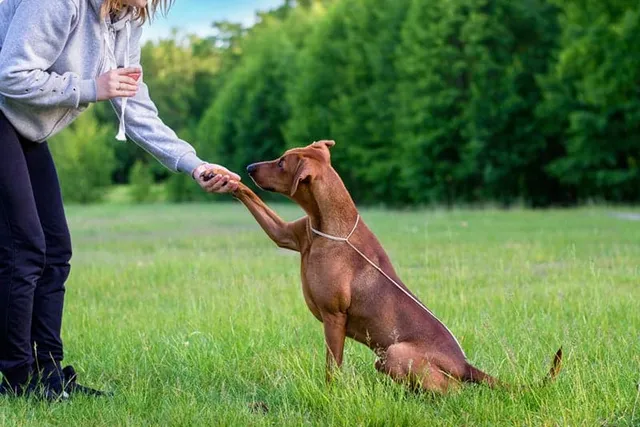
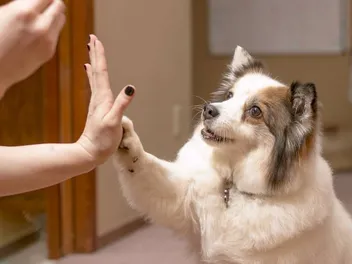
While being consistent in training is essential, it’s also critical to challenge your pup with new tasks after they’ve mastered a few. You can also introduce more complex tricks by linking simple ones together. It’s a process called chaining, coined by American psychologist B.F. Skinner. If your dog seems distracted during your lessons, mix things up with a new task.
11. Don't Be Afraid to Ask for Help
Training a dominant dog can be challenging, and some can be more complicated than others. If you find yourself struggling, or if your pup shows aggression to you or your family, we strongly urge you to seek professional help. Start with your vet to get a referral to an experienced behaviorist. It doesn’t make you a bad caregiver. Instead, it shows how seriously you take your responsibility, and a professional can give you additional training tips.


Final Thoughts
When it comes to training, being calm, clear, and confident is vital, never more so than when you are dealing with a dominant dog.
Although any breed of dog can show dominant behavior, certain breeds can be more difficult to train than others, and not all canines are suitable for first-time or inexperienced pet owners. However, approaching your work confidently can make an excellent impression on your dog and curb unwanted dominance.
Hopefully, the tips here will give you the confidence you need to take on that training challenge, but don’t be afraid to reach out to your vet or a dog trainer for help. It is much easier to deal with a problem before it sets in than to try to tackle it a year or two down the line.
Sources
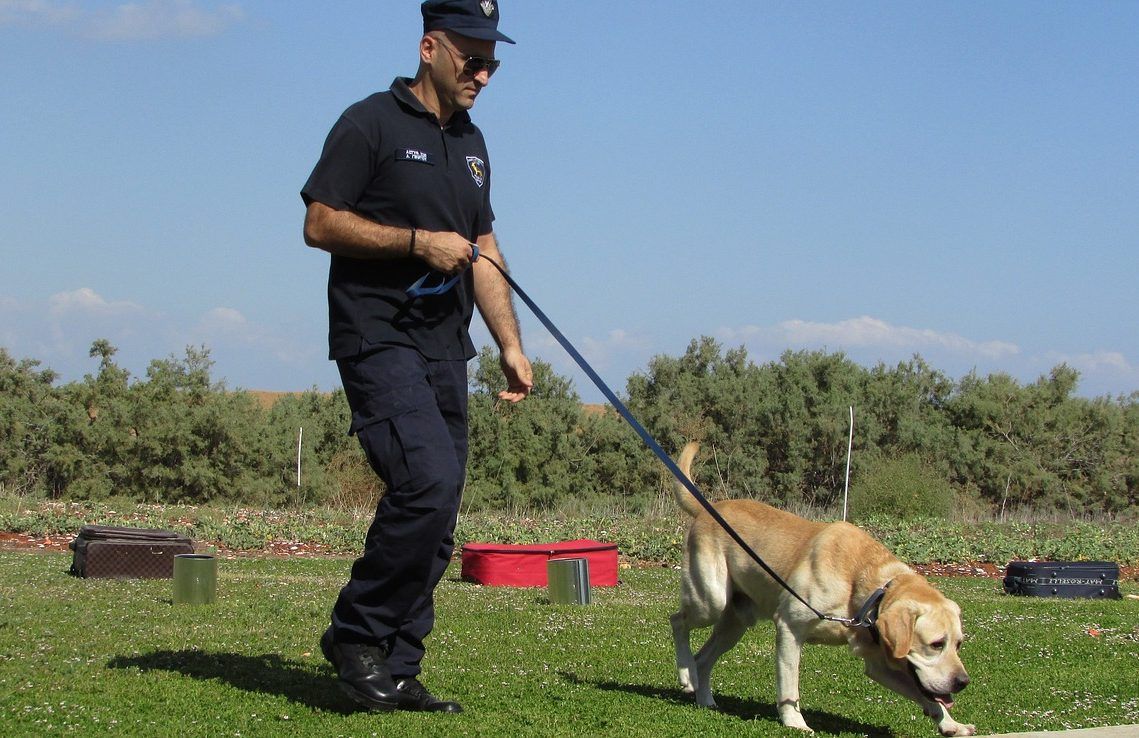
Featured Image Credit: dimitrisvetsikas1969, Pixabay
Expert dog care, straight to your inbox
News, insights, expert advice, and everything dog.

No spam — unsubscribe anytime.
By signing up, you agree to our Terms & Conditions and Privacy & Cookies Policy.
How useful was this post?
Click a star to rate. You can leave written feedback afterwards. (We read all feedback.)
Since 2009, Chris has written on a variety of topics. Her motto with all of her writing is “science-based writing nurtured by education and critical thinking.” She specializes in scientific topics, with a special love for health and environmental topics, and of course, pets of all shapes and sizes.
Chris lives happily with her husband and three cats in the land of 10,000 lakes, writing, wining, and boating as much as she can. She and her husband, Norm, were awarded the State of Kentucky Colonel Honor for their restoration work at Mammoth Cave National Park.