Get

In Your Inbox

Dogster is reader-supported. When you buy via links on our site, we may earn an affiliate commission at no cost to you. Learn more.

Understanding Dog Body Language: Vet-Approved Guide With Pictures

Share

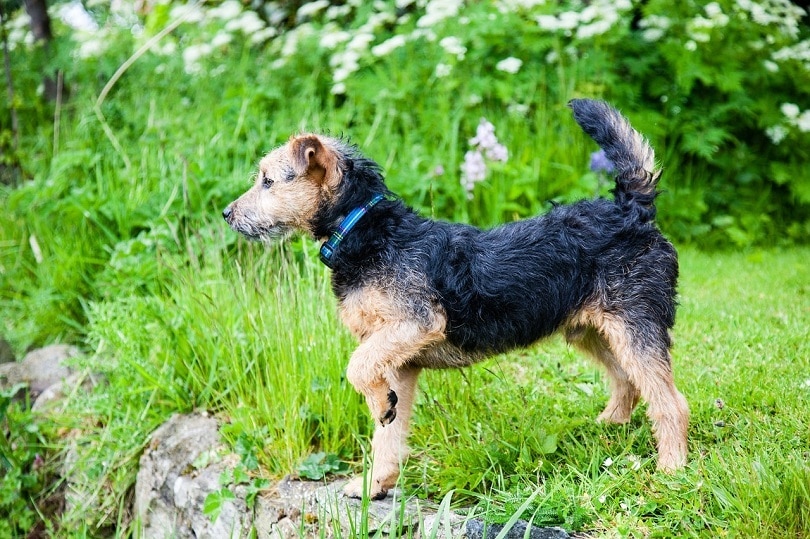
Lakeland Terrier

Even though there is a language barrier between humans and dogs, they have still earned the title of “Man’s Best Friend.” Imagine how strong your bond with your dog would be if you could talk to each other!

The good news is that although we may not be able to speak to our dogs, we can still communicate with them. While you can’t enroll your dog in English lessons, you can learn how to better understand canine body language. Dogs communicate nonverbally, using their ears, tails, and more to express their emotions.

The more you understand your dog’s body language, the better you can respond when they communicate their needs. In this article, we look at six ways your dog expresses their emotions and include pictures so you can see what canine body language looks like.

divider dog faces oct 2024

The 6 Dog Body Languages

1. Relaxed Body Language
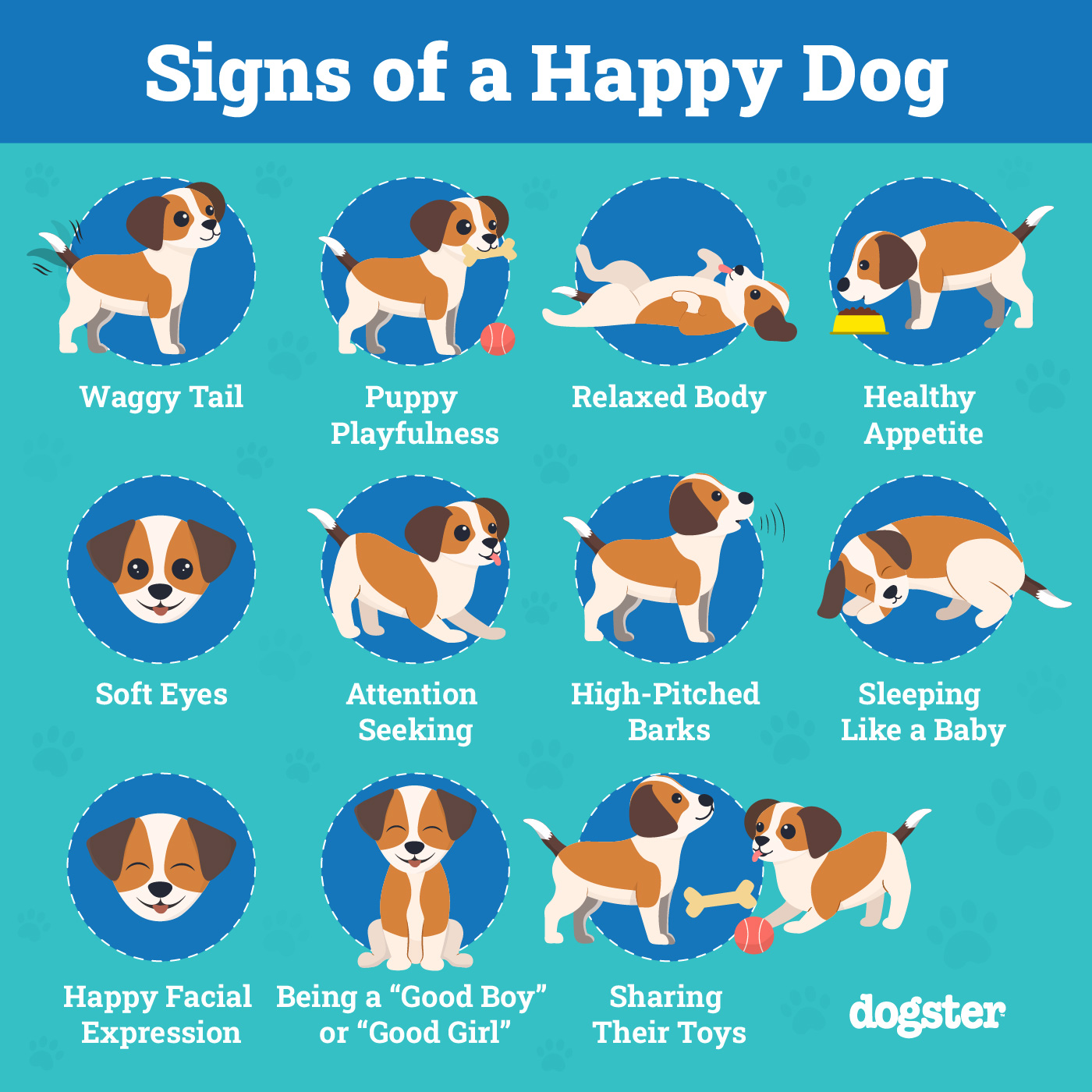
Dogster_Signs of a Happy Dog_Infographic_v1-2 FINAL_Mar 13 2024
You are free to use this image but we do require you to link back to Dogster.com for credit

Relaxed dogs are happy dogs. This is when your furry friend is feeling their best, no matter whether they are resting or playing. Relaxed dogs are engaged with their surroundings and may be eager to receive or show affection.

They may be squirmy if they’re feeling excitable, and their motions may be overdramatized during play. Their tail will wag in wide, gentle motions. Their ears will be held in a relaxed, natural position, and their eyes will be soft. Their forehead and mouth will have no tension.


2. Stressed or Anxious Body Language

A wary female dog lying on the bed
Image Credit: MDV Edwards, Shutterstock

Stressed or anxious dogs often display mannerisms meant to soothe or dissipate tension, avoid attention, and demonstrate their discomfort. These behaviors include:

  • Looking or turning away
  • Hesitant movements or darting away quickly
  • Licking or smacking lips
  • Yawning
  • Holding their body in a curve
  • Raising a paw
  • Scratching or pawing
  • Trembling
  • Freezing

If your dog appears distressed, try to find out what is agitating them. If the stressor is someone or something in their environment, remove the trigger so your dog can calm down.


3. Alert Body Language

Working gun dog in training
Image Credit: Gail Johnson, Shutterstock

When a dog is alert, they pay close attention to their surroundings. They are not necessarily agitated, but they may become agitated if they feel something is wrong. Alert dogs will have wide-open eyes and perked, forward-facing ears.

There will be no tension in their mouth or forehead. They will stand evenly on all four paws, poised and balanced so they can act at a moment’s notice. As for their tail, it will extend outward and may wag slightly.


4. Appeasing Body Language

Adult Golden Retriever lying on the floor
Image Credit: Stephen Andrews, Unsplash

Appeasing body language can be deceptive to the human eye. While this behavior is submissive and geared to make them appear unthreatening, it can appear frightening to humans. Appeasing dogs may pull their lips back into a grin or snarl, which can be mistaken for aggression.

Other signs that your dog is displaying appeasing behavior include pinned-back ears, squinted eyes, and a low-tucked tail. In addition to their scrunched-up mouth, they may lick their lips often.


5. Frightened Body Language
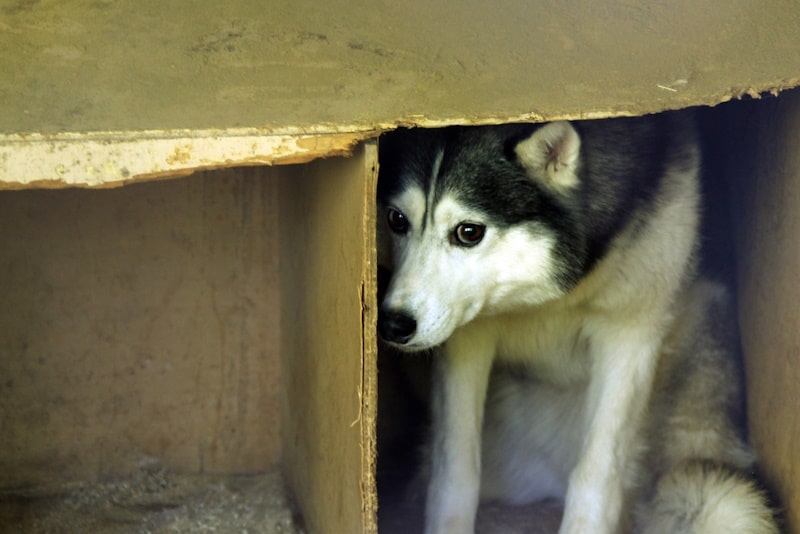
Freightened dog hiding under plywood box
Image Credit: Katoosha, Shutterstock

Spotting signs of fear in dogs is often easy for owners. Scared dogs will have a stiff, hunched posture and hold their heads close to the ground. Their ears will be tucked close to their head, and their tail will be tucked and pressed close to the belly.

They often turn their head away from whatever is frightening them, but they keep their eyes locked on the stressor. They may keep their mouth closed tightly or pant as though they are hot.

Be aware that a frightened dog can quickly become an aggressive dog, biting out of fear.


6. Aggressive Body Language

Angry dog barking at something or someone
Image Credit: alexei_tm, Shutterstock

Aggression is typically easy to spot. Aggressive dogs will react to a stressor and will often do so with a rigid posture. The fur on their shoulders and the base of the spine will stand up straight, and their body will be shifted forward in a “ready” stance.

Their eyes will be locked onto whatever is causing their aggression, and they will likely have wrinkles along the mouth and forehead. Depending on the reason for their aggression, such as fear or territorialism, your dog may also display other signs.

divider single dog paw oct 2024

Why Isn’t My Dog Relaxed?

While it is normal for dogs to express emotions outside of contentment and joy now and then, it can be upsetting to see your dog wracked with stress, anxiety, or fear. This is especially true when you have no clue why your dog is upset.

If your dog displays consistent or uninterrupted distress, talk to your vet. Stress, anxiety, fear, and aggression can be signs that your dog is sick or in pain. After ruling out medical conditions, you can then move on to other reasons for your dog’s emotional issues.

Consulting a vet or canine behavioral specialist can be a great way to discover why your dog exhibits emotional issues. They can tell you if the issue is related to your dog’s environment, enrichment, or something else. From there, you can take steps to improve your dog’s living situation so they can return to their happy, relaxed self.

If you need to speak with a vet but can't get to one, head over to PangoVet. It's our online service where you can talk to a vet online and get the advice you need for your pet — all at an affordable price!

PangoVet_Mention-in-Content Savings V1

divider dog faces oct 2024

Conclusion

Understanding your dog’s body language is an important part of communicating with our pets, as well as knowing how to approach or interact with dogs you have just met. When your dog displays emotions such as stress, fear, or aggression, it is a sign that something is wrong. Addressing the stressors in your dog’s environment will help them to feel comfortable in their home again.

You might also want to check out: 


Featured Image Credit: Eventsfb, Pixabay

Want content like this delivered to you?

Sign Up For Our Newsletter

News, insights, expert advice, and everything dog

* By submitting, you agree to our Terms & Conditions and Privacy & Cookies Policy.


How useful was this post?

Click on a star to rate (you can leave written feedback after clicking submit)

Help us improve Dogster for pet parents!

Your feedback really matters.

What did you like about this post? Also how can we improve it?

Join the conversation

Leave a Reply

You’re very welcome to leave a comment or question. Please know that all comments must meet our community guidelines, and your email address will NOT be published. Let’s have a positive and constructive conversation.


Talk With A Vet Online

Peace of mind,
anywhere, anytime

Affordable vet advice

The Hidden Risk in Tall Grass That Most Dog Owners Ignore

Finding a tick on your dog can look like a lot of things, depending on when you catch it. Some are engorged and...

America’s Most Popular Dog Breed Is Also One of the Unhealthiest

We’re now 3 for 3 in the category of disappointing canine accolades with the French Bulldog being announced as America’s most popular dog...

Ask Dr. Paola- Help! My Dog Keeps Barking at the TV! (March 30, 2026)

Welcome to our “Ask Dr. Paola” series, where every Monday we bring expert advice straight from Dr. Paola Cuevas (MVZ) to help our...

Dogster’s Weekly Photo Contest Winners: I’m a Messy Eater (March 26, 2026)

Every week our team gets the privilege of sorting through our readers photos to choose what dogs will win this weeks contest! See...

More related

Is Weed Smoke Bad for Dogs? Our Vet Takes a Look

Marijuana is a recreational drug that has been used by people for years. Recreational use of marijuana is now legal in 24 states...

TBHQ in Dog Food: Vet-Approved Feeding & Safety Facts

TBHQ, or tertiary butylhydroquinone, is likely an ingredient that you aren’t familiar with. This chemical additive is commonly used in pet foods to...

Why Do Dogs Roll in Stinky Things? Vet-Reviewed Reasons & Prevention Tips

Dogs are notorious for rolling around in just about anything stinky they can find, including dead animals, garbage, and poop. The behavior is...

19 Types of Spitz Dog Breeds: Info, Pictures, Facts & History

You have probably run into a Spitz dog at least once in your life, even if you didn’t know it! This category of...

Keep reading

Can Dogs Eat Popcorn? Vet-Reviewed Health & Safety Guide

I’m not a big popcorn lover, but my daughter is. And so is my dog Tula, based on the longing look in her eyes and the trail of slobber that escapes her mouth. My daughter is better trained than the...

Can Dogs Eat Popcorn

9 Best Dog Foods for a Yorkie Poo in 2026 – Reviews & Top Picks

If you are the lucky owner of a Yorkie Poo, you are familiar with how such a large personality can come in a tiny package. There is no doubt you will be in search of the best dog food to...

Brown Yorkie Poo standing in the grass

5 Herbs That Are Good for Dogs: Vet-Verified Safety & Benefits

Adding herbs and spices to our meals not only enhances the flavor, but many of them also have various health advantages. So, if we can benefit from specific herbs, maybe our dogs can too? This is broadly true, but it’s...

Bowl of basil on wooden background

Can Dogs Eat Candy Canes? Vet-Approved Facts & Safety Guide

Candy canes are fun and tasty seasonal treats that appear everywhere around the winter holiday season. If you have cats or kids, it’s likely that a candy cane will find its way onto the floor sometime during the festivities, and...

Can Dogs Eat_candy canes

9 Dog Food Games to Play to Make Mealtime Fun for Your Pup

Our canine companions require a lot of enrichment and a good variety of it. Including exercise and playtime in their daily lives is easy, but how can you enrich their mealtimes? Meals can always be made more fun and exciting...

Dog playing shell game with her human

Can a Puppy Eat Adult Dog Food? Vet Approved Facts & FAQ

Bringing a new puppy home is an exciting experience. Plenty of responsibilities are involved, like ensuring your new pup gets the proper nutrition for a long, happy, and healthy life. But what exactly should you be feeding your puppy? Is...

Can a Puppy Eat Adult Dog Food

7 Best Dog Food Can Lids in 2026 – Reviews & Top Picks 

If your dog eats a wet food diet and you don’t use the whole can at once, the last thing you want is the leftovers stinking up your fridge! Instead of using cling film or aluminum foil every time, there...

ORE Pet Can Cover

Hill’s Science Diet Puppy Food Review 2026: Recalls, Pros & Cons

Review Summary If you’ve got a growing pup, you know how important it is to give them the best fuel possible. Hill’s Science Diet puppy foods are a great choice because of the company’s research-backed approach to nutrition. With over...

Dogster_Hill’s Science Diet Puppy Food Review

Love Dogs? So Do We! Join the Dogster Community

Stay informed with expert pet care insights delivered straight to your inbox! Discover professional guidance on animal behavior, feeding tips, trusted product picks, and much more.


Sign up for the Dogster Email Newsletter