My Dog Swallowed a Sewing Needle: What to Do Now?

In this article
Uh-oh—your dog just got into the garbage and managed to eat a sewing needle. What should you do? Is this considered an emergency? Firstly, take a deep breath and stay calm. Unfortunately, the ingestion of a needle can cause problems in your pet. However, panicking isn’t going to do you any good. The very first thing you need to do is contact your veterinarian, as they will be able to give you exact instructions regarding how they want to handle it. If you’ve found yourself in this scary situation, continue reading to learn about the risk of needle ingestion and potential interventions.

The Risk of Needle Ingestion
Sewing needles can potentially get lodged, penetrate, or migrate through tissues within the body. Most commonly, the oral cavity, esophagus, and gastrointestinal tract are at risk. The movement of a sharp object like a needle could lead to lacerations and tissue damage. If the stomach or gastrointestinal tract is perforated due to the migration of a needle, peritonitis may ensue.
In addition to being painful, the foreign body could cause secondary infections including abscesses. Needles attached to thread also increase the risk of linear foreign bodies.

What to Do: Contact Your Veterinarian
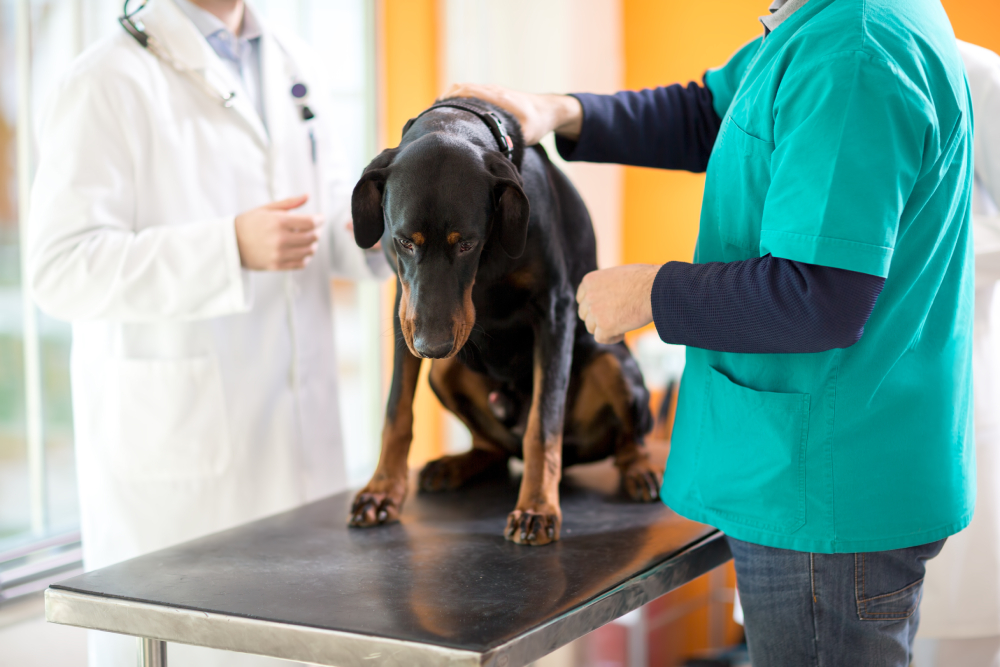
The first thing you should do after your pet has consumed a sewing needle is contact your veterinarian. At the time of the appointment, your veterinarian will examine your pet and evaluate the oral cavity. In some instances of needle ingestion, the needle may become lodged within the oral cavity.
Your veterinarian will likely recommend performing radiographs to determine the location of the needle if not visible within the mouth. The induction of vomiting is not recommended, as the needle could pierce the esophagus on its way from the stomach to the oral cavity.
Signs of Needle Ingestion
- Difficulty swallowing
- Pain
- Hypersalivation
- Pawing at the mouth
- Anorexia
- Vomiting
- Gagging/retching
- Fever
Interventions
If the sewing needle is in the esophagus or the stomach, the best option is to have the needle removed by endoscopy. Endoscopy is the procedure in which a camera is placed into the oral cavity to identify and retrieve an object in the upper gastrointestinal tract. This approach eliminates the needle’s transit through the gastrointestinal tract and allows visualization of potential irritation secondary to needle consumption.
If the needle is not able to be retrieved via endoscopy, a decision must be made to either monitor and intervene with supportive care or move forward with exploratory surgery. If the needle becomes lodged or the patient is experiencing clinical signs of discomfort or illness, surgical intervention will be necessary.
If a wait-and-see approach is elected, your veterinarian may recommend bulking the diet to help cushion the needle. Bulking of the diet can be done by feeding white bread and high-fiber dog food. Close observation for signs of pain and obstruction will be necessary until the needle is defecated out.
Serial radiographs will be beneficial to monitor the needle’s transit, as in some cases, the needle may migrate outside of the oral cavity or gastrointestinal tract and run the risk of injuring other organs and causing infection. A retrospective study published in AVMA in 2014 was done evaluating sewing needle foreign bodies in dogs and cats between 2000–2012. Of the 58 animals in which surgery was performed, 17.2% had a perforation identified at the time of surgery.
Supportive Care
In some cases of needle ingestion, mucosal irritation may have occurred. In cases like this, sucralfate or Carafate ® may be recommended as a mucosal protectant. Additionally, fluid therapy may be necessary to help support the transit of the needle through the gastrointestinal tract.


Conclusion
Some dogs who ingest sewing needles can pass the needle without any problems or interventions, but this is not always the case, and it is impossible to predict the cases in which complications may arise. If you think your companion has ingested a needle, you should quickly contact your veterinarian.
If the needle is in the esophagus or the stomach, endoscopic removal is ideal. Definitive intervention of a needle foreign body via surgery or endoscopy provides a promising prognosis. If needle retrieval is not an option, close monitoring, and serial radiographs will be necessary.
Sources
See also:
Featured Image By: Marianne Krohn, Unsplash
Expert dog care, straight to your inbox
Vet-reviewed advice, training tips, and the best of Dogster. Free, and you can unsubscribe anytime.
By signing up, you agree to our Terms & Conditions and Privacy & Cookies Policy.
Dr. Marti Dudley DVM (Veterinarian)
Dr. Marti Dudley is a small animal veterinarian with a strong interest in preventative medicine and pet parent education. She enjoys being a resource for pet owners as she believes that having a team approach leads to the best possible care of pets. Dr. Dudley enjoys writing and has been able to use this skill as another avenue to educate pet owners outside of the traditional office setting.
Dr. Dudley has been practicing veterinary medicine since 2014. She has an interest in preventative care and emphasizes the importance of pet owner education. Dr. Dudley’s experience in veterinary medicine is broad, as she has worked as a general practitioner, which has allowed her to see and treat many different types of conditions.
Dr. Dudley received her bachelor’s degree in biology from Longwood University in Virginia. She earned her Doctor of Veterinary Medicine (DVM) degree from Ross University.
Join the conversation
Ask a question, share your story, or send private feedback.