What Flowers Are Poisonous to Dogs? 17 Common Flowers to Keep Away From Your Pup


Flowers are beautiful additions to any home and garden. Their bright, colorful blooms can bring joy on the darkest days and even boost your home's curb appeal. As pretty as they are to look at, though, many species of flowers are toxic to canines. However, it is essential to note that not all poisonous flowers are deadly for dogs. Some will only cause mild clinical signs if ingested, but dog-owning flower lovers should still familiarize themselves with safe and unsafe flower options.
Read on to learn about the most common flowers that you should keep out of your pup's reach.

How Are Poisonous Flowers for Dogs Classified?
There are far too many toxic components present in flowers to go over in this short article. Nearly all the flowers in this list contain different toxic principles from one another.
The most common poisonous elements in flowers and plants include:
It's less important that you as a dog owner understand the chemical properties of these toxic principles and how they operate and more important that you realize that the flowers that you bring into your home and yard may contain any of these. Let's look at 17 poisonous flowers that could harm your dog and the signs that you should be on the lookout for.
The 17 Poisonous Flowers for Dogs
1. Azalea

| Toxic principle(s): | Grayanotoxin |
| Other common names: | Rosebay, rhododendron |
| Scientific name: | Rhododendron spp. |
Azaleas are common shrubs with funnel-like flowers. They're grown as ornamentals for their showy flowers and are native to Asia, Europe, and North America. Both the foliage and flowers of the azalea are valuable for cutting, so they can be found in many styles of bouquets.
Azaleas contain grayanotoxins, which can affect the cardiovascular system. Dogs that ingest any part of the plant may exhibit signs like vomiting, weakness, diarrhea, and even cardiac failure. If your dog has eaten this plant, you must seek veterinary care as soon as possible. Ingesting 0.2% or more of their body weight in azaleas can lead to clinical signs. The overall prognosis is typically fair with treatment.
2. Tulip

| Toxic principle(s): | Tulipalin A and B |
| Other common names: | N/A |
| Scientific name: | Tulipa spp. |
Tulips are popular spring flowers, known for their long parallel leaves and cup-shaded petals. They're available in a wide range of colors, which makes them extremely popular for bouquets and growing in gardens.
Tulips contain the toxic principles, tulipalin A and B, with the highest concentrations of this toxin in the bulbs. Severe poisoning from tulips is most often seen when dogs dig up freshly planted bulbs. Ingestion can cause severe tissue irritation in the mouth and esophagus, resulting in signs like excessive drooling, diarrhea, and vomiting. In severe cases, difficulty breathing can put the dog’s life in danger.
3. Carnation

| Toxic principle(s): | Unknown |
| Other common names: | Pinks, wild carnation, sweet William |
| Scientific name: | Dianthus caryophyllus |
Carnations are widely cultivated for their gorgeous fringe-petaled flowers, and they're among the most commonly used flowers in the floral industry.
The toxic principle in carnations is unknown, though ingestion may cause mild gastrointestinal and dermatological signs. Thankfully, carnations are only mildly toxic compared to some of the other flowers on this list, but it's important to be mindful if your dog has access to where your carnations are growing or displayed.
4. Buttercup

| Toxic principle(s): | Protoanemonin |
| Other common names: | Butter cress, figwort |
| Scientific name: | Ranunculus spp. |
Buttercups are mostly perennial plants that produce multi-petaled flowers. They're distributed throughout the world but are commonly found in forests and fields in the northern temperate zone. Buttercups are typically considered invasive weeds, though several ornamental varieties do exist.
Buttercups contain the toxin protoanemonin, a bitter-tasting oil that can irritate the gastrointestinal tracts' mucus membranes. The flower contains the highest concentration of this toxin. Thankfully, the buttercup's bitter taste typically keeps animals away, so it generally doesn't pose a serious threat. When ingested, it can cause mouth swelling, drooling, vomiting, diarrhea, and weakness. If your dog were to eat a large amount, they may develop blood in the urine or seizures.
5. Daisy

| Toxic principle(s): | Sesquiterpene, lactones, pyrethrins |
| Other common names: | Lawn daisy, English daisy |
| Scientific name: | Bellis perennis |
Daisies are among those flowers that are instantly recognizable, but did you know that the daisy family is one of the biggest plant families? There are over 32,000 different species and hundreds of genera. Some daisies, like the Gerber daisy (Gerbera jamesonii), are not toxic to dogs at all. All poisonous varieties will contain varying amounts of toxic principles that could potentially harm your pup. So, before you plant any daisies in your yard or bring home a bouquet of them to display in your home, it's best to check the species so you can determine if it's safe for your pup.
Clinical signs of daisy poisoning include incoordination, diarrhea, vomiting, and excessive drooling.
6. Peony

| Toxic principle(s): | Paeonol |
| Other common names: | N/A |
| Scientific name: | Paeonis officinalis |
Peonies are long-lived perennial shrubs with green leaves and fluffy petaled flowers in a variety of gorgeous colors. They are popular in gardens, and their timeless elegance and charm make them popular in bouquets too.
Peonies contain the toxin paeonol, especially in their bark. When ingested in large amounts, peonies can cause gastrointestinal signs like vomiting and diarrhea.
7. Poinsettia

| Toxic principle(s): | Diterpenoid euphorbol esters |
| Other common names: | Euphorbia, lobster flower, flame leaf flower |
| Scientific name: | Euphorbia pulcherrima |
Poinsettias are flowering plants with gorgeous red and green foliage that makes them popular in floral displays at Christmastime. although they have a bad reputation, poinsettias are only mildly toxic to dogs. The sap found in the plant contains chemicals known as diterpenoid euphorbol esters, which contain blistering compounds that can irritate the skin, gastrointestinal tract, and mucous membranes. Dogs that eat poinsettia may exhibit signs like vomiting, drooling, and sometimes diarrhea. If the sap comes into contact with the skin, dermatological signs may develop, including redness, itchiness, and swelling.
8. Lily of the Valley

| Toxic principle(s): | Cardiac glycosides |
| Other common names: | Convallaria |
| Scientific name: | Convallaria majalis |
The lily of the valley is an easy-to-recognize plant due to its nodding white bell-shaped flowers accompanied by a leafless stalk. These beautiful flowers are woodland plants native to Asia and Europe. They're often considered invasive in parts of North and South America, as they grow fast and can take over other native vegetation.
This plant contains cardiac glycosides, which can affect your dog's heart by dropping their heart rate or causing severe cardiac arrhythmia. Other signs of ingestion include vomiting, diarrhea, and even seizures or coma. This is a severely toxic plant for dogs, and immediate veterinary care is required.
9. Oleander

| Toxic principle(s): | Cardiac glycosides |
| Other common names: | Rose-bay |
| Scientific name: | Nerium oleander |
Oleanders are popular ornamental shrubs used in parks and private gardens in warm subtropical regions. Thanks to their pretty blooms, oleanders can also be found in bouquets and floral arrangements.
All parts of this plant are considered severely toxic. They contain naturally occurring poisons that can affect your pet's heart and interfere with their electrolyte balance. Signs of oleander ingestion include cardiovascular effects, such as an abnormal heart rate, nausea, drooling, tremors, and seizures. In severe, life-threatening cases, your veterinarian may need to administer an expensive antidote.
10. Cyclamen

| Toxic principle(s): | Terpenoid saponins |
| Other common names: | Sowbread, Persian violet |
| Scientific name: | Cyclamen spp. |
Cyclamen is a sweet-smelling perennial plant that makes a fantastic flowering houseplant. It has dark green leaves with veins or blotches and solitary flowers in numerous colors.
This plant contains irritating saponins throughout, though they are more present in the tubers or roots. When it's ingested, dogs may show clinical signs, including vomiting, drooling, and diarrhea. If eaten in large quantities, cyclamen can cause cardiac issues, such as an abnormal heart rate or rhythm, seizures, or even death.
11. Autumn Crocus

| Toxic principle(s): | Colchicine |
| Other common names: | Meadow saffron |
| Scientific name: | Colchicum autumnale |
The autumn crocus has cup-like blossoms and resembles a true crocus, but it is actually a member of an entirely different plant family. Its flowers emerge from the ground a long while before the leaves appear.
If ingested, the autumn crocus can cause vomiting, gastrointestinal bleeding, multi-organ damage, and respiratory failure. The minimum toxicity is not known, so if you know your dog has eaten any part of the plant, seek veterinary care as soon as possible.
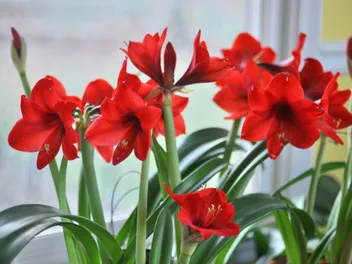
12. Amaryllis

| Toxic principle(s): | Lycorine, phenanthridine alkaloids |
| Other common names: | Belladonna lily, cape belladonna, naked lady, etc. |
| Scientific name: | Amaryllis spp. |
Amaryllis are easy-to-grow flowers that are popular due in part to how long they last as cut flowers. They bear a resemblance to lilies and are part of the lily family, though their toxic effects are different. Their large, trumpet-shaped flowers come in a variety of colors.
The leaves, stems, and bulbs contain phenanthridine alkaloids, which can cause a drop in blood pressure, vomiting, excessive drooling, respiratory issues, and abdominal pain.
13. Hydrangea

| Toxic principle(s): | Cyanogenic glycoside |
| Other common names: | Hills of snow, seven bark |
| Scientific name: | Hydrangea arborescens |
Hydrangeas are truly breathtaking flowering shrubs with umbrella-shaped blooms in all sorts of colors. The soil's acidity can somewhat control the coloring, which is partly what makes them so desirable.
Hydrangeas contain cyanogenic glycosides, which can commonly cause signs like stomach upset, lethargy, vomiting, and diarrhea if ingested. The highest concentration is found in the leaves and flowers. If your dog eats a significant number of hydrangeas, they may be at risk of cyanide poisoning, but this is quite rare.
14. Lavender

| Toxic principle(s): | Linalool, linalyl acetate |
| Other common names: | English lavender |
| Scientific name: | Lavandula angustifolia |
Lavender is a perennial flowering plant in the mint family. It is popular for herb gardens because its fragrant leaves smell lovely, and its flowers are gorgeous. Many people use the dried flowers to make sachets to scent their closets.
If ingested, lavender can cause nausea, vomiting, and inappetence. A mild exposure is typically not harmful, but it's always best to err on the side of caution and reach out to your vet if you believe your dog has eaten the plant.
15. Kalanchoe

| Toxic principle(s): | Bufadienolides |
| Other common names: | Madagascar widow's-thrill, flaming Katy, etc. |
| Scientific name: | Kalanchoe spp. |
Kalanchoe is a popular succulent with many small, colorful blooms. It's relatively easy to care for and can add a pop of color to any space.
Kalanchoe belongs to a group of plants that contain cardiac toxins; however, ingestion most often results in gastrointestinal upset or irritation. If a large amount is eaten, there may be a chance for severe cardiac signs to develop.
16. Gladiolus

| Toxic principle(s): | N/A |
| Other common names: | N/A. |
| Scientific name: | Gladiolus species |
Gladiolus is a striking perennial plant known for its tall flower spikes and big, bright blooms. It makes fantastic cutting flowers and looks particularly spectacular in summer bouquets.
Ingestion of this plant can cause gastrointestinal irritation but should not cause systemic toxicity. Other signs may include vomiting, excessive salivation, abdominal pain, and depression. The bulbs contain more of the toxic principle than other parts of the plant.
17. Daffodil

| Toxic principle(s): | Lycorine |
| Other common names: | Narcissus, paper white, jonquil |
| Scientific name: | Narcissus spp. |
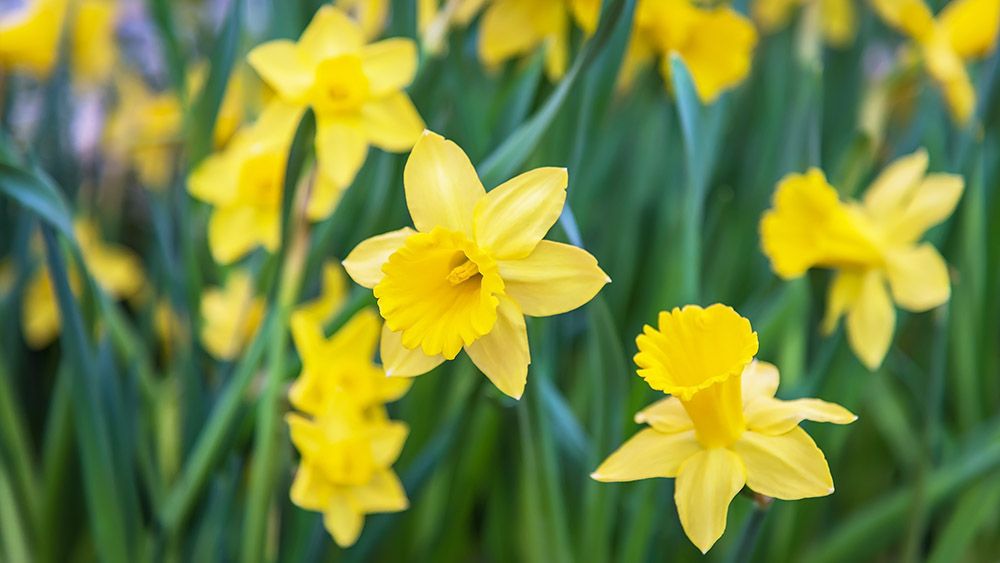
Daffodils are the ultimate spring flowers, promising sunnier days after a long, harsh winter. These beautiful plants are easy to keep and are reliable perennials that do just as well in a vase as they do in the garden.
As with many of the other plants on this list, the bulbs have the highest concentration of the toxin. However, all parts of the plant contain toxic components. There are crystals in the bulb's outer layer that can cause severe tissue irritation and excessive salivation. Eating the bulb, plant, or bloom can cause gastrointestinal signs, such as vomiting, diarrhea, and abdominal pain. In some cases, ingestion can also lead to cardiac arrhythmias or respiratory depression. If you know your dog has eaten any part of your daffodils, we recommend seeking veterinary care as soon as possible.
Final Note
If you own a dog and want to keep a backyard garden or grow plants in an indoor space, you need to know which ones will be dangerous for your pet. This is just a shortlist of the most common toxic flowers. Check out the ASPCA list, or contact the Pet Poison Helpline before buying flowers for your yard or home, to ensure that you’re choosing safe, pet-friendly ones. If your dog begins experiencing any clinical signs after you know or suspect that they've eaten a flower, call your vet to find out what you should do or go straight to the clinic.
See Also: Plants That Are Toxic to Dogs
Featured Image Credit: tonkid, Shutterstock
Expert dog care, straight to your inbox
News, insights, expert advice, and everything dog.

No spam — unsubscribe anytime.
By signing up, you agree to our Terms & Conditions and Privacy & Cookies Policy.
How useful was this post?
Click a star to rate. You can leave written feedback afterwards. (We read all feedback.)
Chantelle is passionate about two things in her life – writing and animals. She grew up on the prairies of Canada surrounded by animals and as an adult, she choose to share her home with five cats, two guinea pigs, and a bearded dragon. Chantelle, her husband, and their child take great pride in being great animal parents- the ones who spend a thousand dollars on wall-mounted cat shelves so that their cats can have an indoor jungle gym all year round. When Chantelle isn’t snuggling her cats on the couch or taking pictures of them being funny, she’s outside exploring in the Rocky Mountains, binging the same shows on Netflix over and over, and reading about whatever random topic pops into her brain.