In this article
Dogs have an upper and lower eyelid plus a third eyelid that helps protect their eyes against foreign objects, but this doesn’t always prevent them from getting something in their eye. Just like we have trouble getting a stubborn piece of dirt or sand out of our eyes sometimes, dogs can have the same problem. Unfortunately, the issue will rarely go away on its own, so quick treatment is necessary.
In minor cases, you can remove the object from your dog’s eye at home by gently flushing it with water. This step-by-step guide will help you through the process and assist you in determining when an eye injury requires a trip to the vet.

Things to Remember
Before you start trying to remove an object from your dog’s eye, there are a few things that you need to remember. Preparation is essential for quick and effective treatment and will make your task easier.
1. Ask a Friend

Eye injuries can be severe, and keeping yourself and your dog calm while you work is crucial. This isn’t always an easy task when you’re on your own, especially when you have to hold your dog’s eye open while you rinse it out.
If your dog is cooperating and you’ve determined that you can handle the injury at home, you can ask a friend to help you hold your dog. This is not mandatory and will depend on your dog’s temperament. They’ll be able to keep your dog still and calm while you focus on clearing the debris from their eye.
2. Don’t Use Your Fingers
It might seem easier to use your fingers to try to remove the object in your dog’s eye, but you should never do this. Not only will your fingers risk adding more debris to your dog’s eye, but you might also cause more damage by scratching the cornea. Your dog may also find it more intimidating to have your fingers poking around their eye instead of something small like a syringe or eye dropper.
3. Use Warm Water or Sterile Eye Wash

Keeping the eye clean and reducing infection are vital steps when you try to remove a foreign object from your dog’s eye. Sterile saline solution or eye wash are safest, and you can purchase options designed for dogs that are safe and in handy bottles. You should keep a supply in your doggy first-aid kit, but in case of an emergency, warm water will work too.

Step-by-Step Guide to Getting Something Out of Your Dog’s Eye
1. Gently Hold the Eye Open
When you’re trying to get something out of your dog’s eye, you’ll likely need an extra pair of hands. You also need to be as gentle as possible to avoid making your dog more uncomfortable or causing further damage. Remember, your dog likely won’t want you messing with their eyes if they’re already feeling irritated.
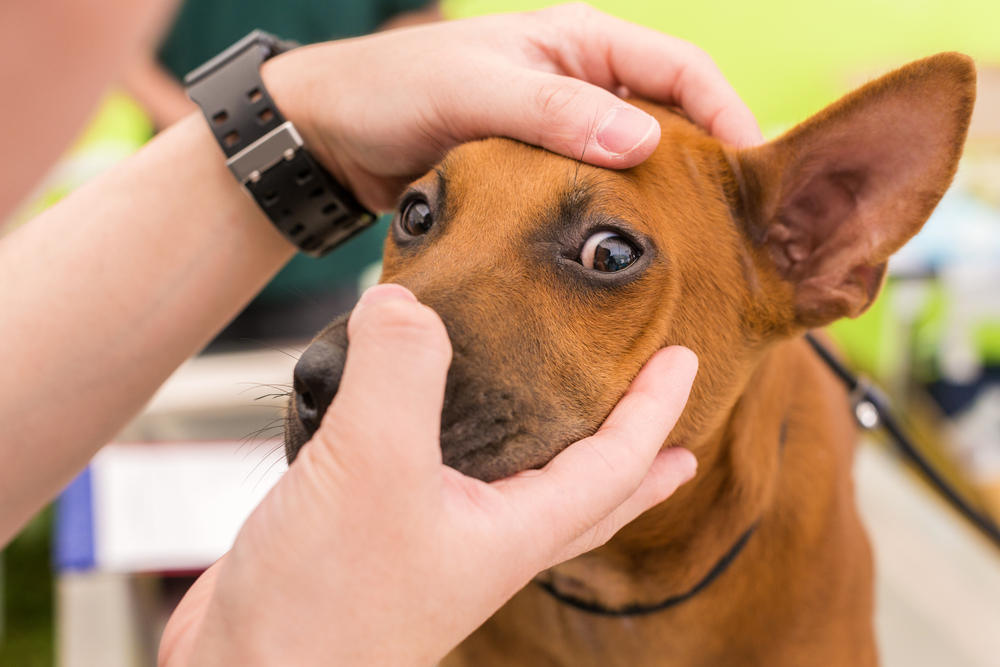
As gently as possible, lift your dog’s upper eyelid with one hand while you hold their head, and pull down their lower lid with the other. Using both hands is important and will help you properly assess the situation.
2. Judge the Severity of the Injury
With luck, the bit of dirt or grass stuck in your dog’s eye will be relatively easy to remove at home. However, there are plenty of eye injuries that should be handled by a veterinarian. Before you make any attempts at treating the issue yourself, you need to assess how severe your dog’s eye injury is.
If you’ve caught the issue early, you can clearly see the foreign body, and your dog is cooperating and not distressed, you can move on to the next step. However, if your dog is holding the eye shut all the time, the eye is very red and inflamed, the cornea is badly scratched, there’s green or yellow discharge, or your dog was exposed to glass, metal, or chemicals, you need to go to a vet.
3. Check for the Foreign Object
You must be careful when you look for whatever is in your dog’s eye to avoid missing anything that could cause further damage if it’s not removed. Depending on what’s causing the problem, the object could be something tiny and hard to see, such as dust, dirt, or sand, or something more obvious, such as grass.
Don’t just check for foreign objects before flushing your dog’s eye. You’ll need to check their eye after you’ve rinsed it to determine whether the object is gone or if another rinse is necessary.
4. Flush With Warm Water or Saline Solution
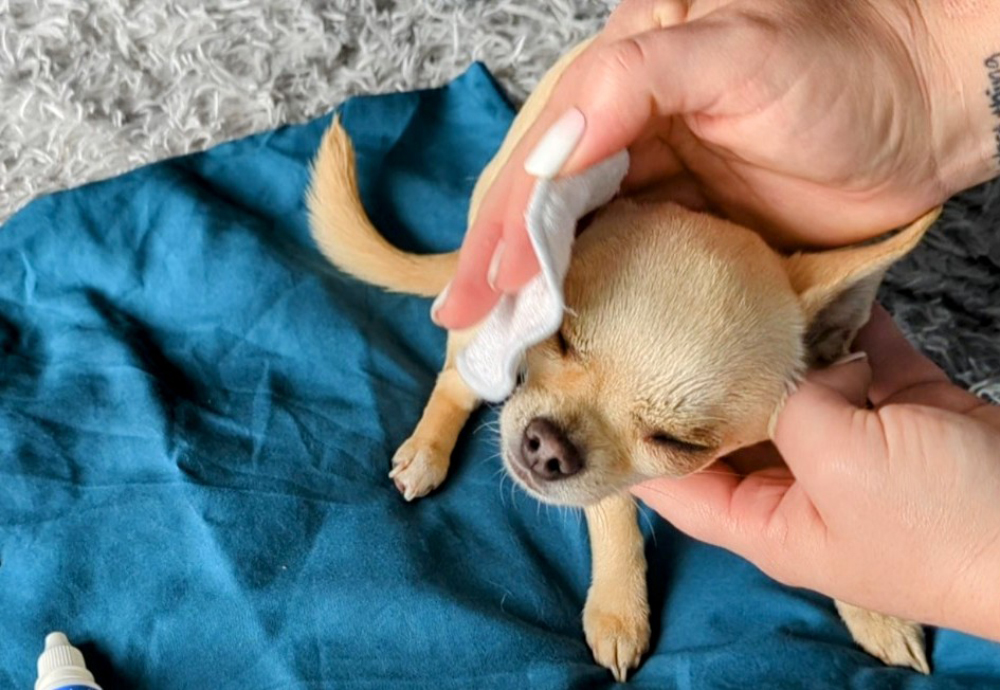
The gentlest and easiest approach to removing anything from your dog’s eye—or anyone else’s, for that matter—is by using water. It’s not the most comfortable solution, but it’s the most effective and the least likely to cause further damage. After all, the tear ducts naturally produce liquid to flush out objects as necessary.
Use ready-made saline solution or eye wash for dogs that you can purchase at a pet store, or get lukewarm water. You must make sure the water isn’t too hot or too cold. You don’t want to cause further discomfort or pain to your dog while you’re trying to help them.
5. Repeat
In the best-case scenario, a single rinse will be enough to dislodge the object in your dog’s eye. That said, a second rinse is a good idea, just in case. Once the first rinse is finished, check their eye for anything that might remain.
If the eye is clean, rinse again just to be sure, and then let your dog go and reward them for their patience. However, if something is still present and repeated rinses don’t move it, you’ll need to head to a vet.
6. Monitor the Injury
Your home treatment doesn’t stop once you’ve removed the object from your dog’s eye. It can be difficult to tell whether the object caused any damage, even if it was only present for a short time. There’s also the possibility that something is still stuck, and you just can’t see it.
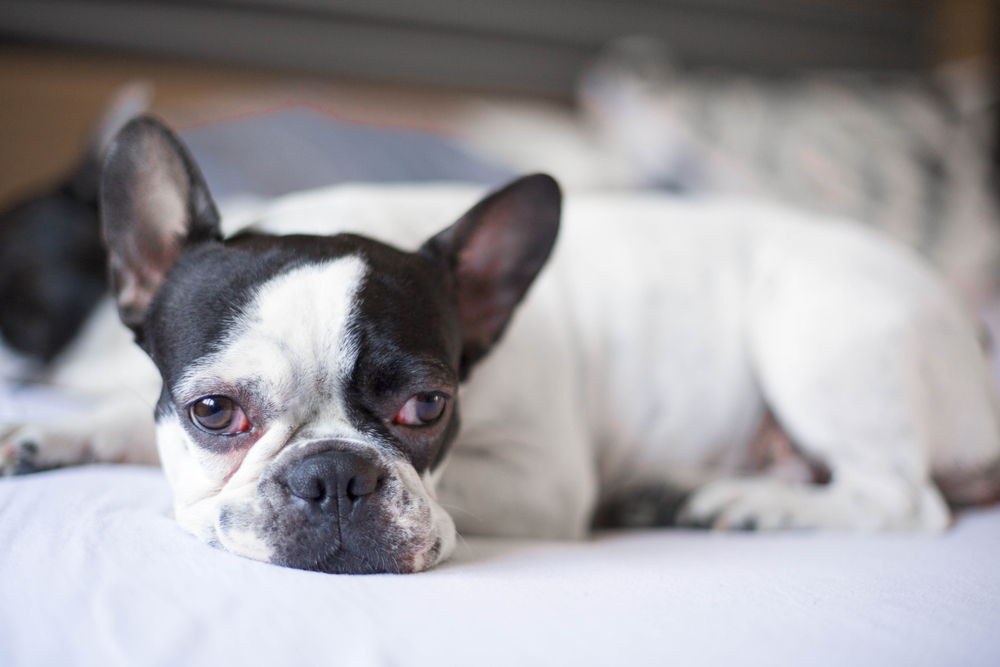
You’ll need to monitor your dog to make sure their eyes don’t show any signs of further irritation or potential infections. If you notice discharge, your dog keeps pawing at their eyes, and the redness and inflammation don’t go away, you should see a veterinarian.
7. Go to a Vet If Necessary
Sometimes, objects that get stuck in your dog’s eye aren’t as simple to remove as you might hope. It might be wedged in place in a way that you can’t see or flushing it with water simply isn’t enough to remove it.
If rinsing your dog’s eye doesn’t remove the object, don’t try to pry it out in any other way. Instead, you’ll need to cover the eye with clean cloth or gauze, stop your dog from scratching or pawing at their eye with an Elizabethan collar (e-collar), and head to your emergency vet.
Don’t wait for the issue to go away on its own. Eye injuries can lead to ulcers, perforation, and even blindness, and the faster you get your dog treated, the more comfortable they’ll be.
If you need to speak with a vet but can't get to one, head over to PangoVet. It's our online service where you can talk to a vet online and get the advice you need for your pet — all at an affordable price!

How Do I Know If My Dog Has Something in Their Eye?
You might not witness when your dog gets something in their eye. If they’re in another room or outside playing, they can get up to all sorts of mischief. Knowing that something is wrong can be relatively easy, though, especially if you’re familiar with how your dog usually behaves.
Here are signs to watch out for if your dog has something in their eye:
- Excessive rubbing or scratching at the eye
- Excessive tearing
- Lethargy
- Light sensitivity
- Pus-like or discolored discharge
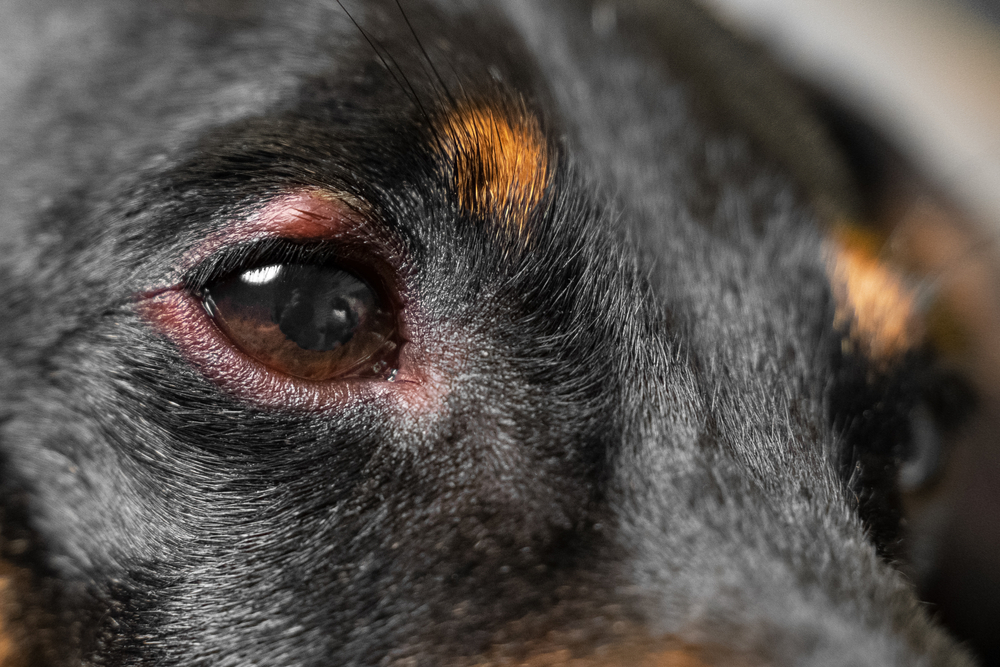
- Redness or irritation
- Squinting
- Swelling
- Visible obstruction or damage
- Changes in behavior
Conclusion
Like us, dogs sometimes get dirt or other debris in their eyes. Fortunately, many of these cases can be treated at home by flushing the eye with warm water. In some cases, though, you’ll need a veterinarian to help prevent more serious injuries from developing. We hope that this guide has helped you determine whether your dog can be treated at home or if they need to see a vet.
See also:
Featured Image Credit: Masarik, Shutterstock