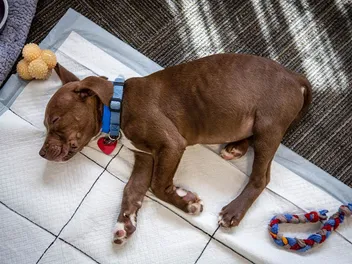
Why Is My Dog Restless at Night? 9 Vet-Reviewed Reasons


In this article
If you notice that your dog is restless in the middle of the night, it could be a sign that something is wrong. Restlessness in dogs can lead to poor sleep and disruption to the household. Dogs of all ages can experience restless sleep, and finding the cause and treating it is important. There are a number of common reasons that dogs can be restless at night, including pain, anxiety, or certain illnesses. Once the underlying cause of restlessness is treated, dogs can return to normal sleeping patterns, but some causes of restlessness might only be improved and not fixed entirely. Here are nine common causes of restlessness in dogs at night and what to do about them.

The 9 Reasons Why Dogs Are Restless at Night
1. Anxiety or Stress
Dogs experiencing elevated levels of anxiety or stress can have trouble sleeping. In this way, dogs are very similar to humans. Dogs can get stressed by a variety of things, some of which we might not even register as a stressful thing. A move to a new place, new family members, travel, new pets, a change in diet, or a change in routine can all cause a dog to feel stressed out. The more obvious causes such as fireworks and thunderstorms can also cause great anxiety in some dogs. In most cases, anxiety in dogs should subside when the conditions causing the stress resolve or when a dog acclimates to new circumstances. If you suspect that your dog has chronic or prolonged anxiety, your veterinarian might be able to prescribe medications to help deal with their anxiety.

2. Pain
Pain is one of the most common things that can disrupt sleep. Causes of pain can include things such as arthritis, injury, and bowel problems. Some problems can get worse at night when a dog has been inactive for a while and started to seize up. If your dog is suffering from diarrhea or vomiting, they might be unsettled overnight because they need to go outside so often. If you can find and treat the source of your dog’s pain or discomfort, it should help them sleep better at night.
3. Needing to Use the Bathroom
If you forget to let your dog out right before bed or if you give them food or water late at night, it can lead them to need to use the bathroom in the middle of the night. This can wake them up and cause them to become restless. Dogs do not have the luxury of going to the bathroom in the middle of the night like people do. The best way to avoid this problem is to let your dog out right before you go to bed to ensure that their bladder and bowels are empty.
You should also consider feeding earlier in the day (around 5 PM) to ensure that your dog has plenty of time to go outside and do their business. If you feed your dog right before bed or let them drink a bunch of water late at night, it can lead to bedtime discomfort. After all, you wouldn’t want to hold your bladder from 10 PM until dawn, and neither would your dog.
Did you know that you can speak with a real vet online about your dog's health?
4. Uncomfortable Temperature
Dogs can get too hot or too cold during the night. Temperature problems typically affect very young dogs and senior dogs more than adult dogs. If a dog is at an uncomfortable temperature, they will not be able to sleep deeply. You might have to adjust your thermostat to ensure that your dog is at the proper temperature by turning up the winter heat or the summer air conditioner. Dogs with thick coats or those with very little body fat are more prone to feeling too cold or too warm. You can also provide blankets or floor space for dogs to be able to bundle up or stretch out to try and allow them to feel more comfortable at night.
5. Hyperthyroidism
Hyperthyroidism is a fairly rare condition in dogs. However, when it occurs, it is usually due to a tumour of the thyroid gland which leads to the overproduction of the thyroid hormones. These hormones can affect your dog’s sleep in a number of ways. Hyperthyroidism can lead to hyperactivity, increased hunger and thirst, weight loss, and excessive urination. All of these things can potentially affect your dog’s regular sleep habits. If you notice any of these symptoms in your dog, consult your veterinarian for diagnosis and treatment options.

6. Lack of Exercise
Dogs need a certain amount of physical exercise during the day in order to get their energy out. This is especially true for certain dog breeds and for puppies. Dog breeds such as hunting dogs and working dogs were bred to spend long hours moving during the day. Similarly, puppies typically have much higher energy reserves and play drives than older dogs. If a dog does not have a proper outlet for their energy, it can lead to restlessness at night as well as playing after dark. Getting your dog more exercise and stimulation during the day can lead to better sleep.
7. Canine Cognitive Dysfunction (CCD)
Canine cognitive dysfunction, also known as doggy dementia, is the general degradation of a dog’s mental functions as they age. Not all dogs develop CCD as they get older, but some do. CCD can disrupt your dog’s sleep cycle and can also be accompanied by confusion, sleeping during the day, and abnormal behaviors. All of these side effects can contribute to poor sleep at night. In fact, restlessness and poor sleep are usually principal signs that a dog could have or be developing CCD. If you have an older dog with worsening sleep patterns, it could be the result of CCD.

8. Cushing’s Disease
Cushing’s disease is a syndrome that is caused by excess cortisol production in dogs. Cushing’s disease can result in increased drinking, increased urination, excessive panting and an increased appetite. As discussed, needing to urinate more often can lead to restless sleep. If you suspect that your dog has Cushing’s disease, you should contact your veterinarian to discuss diagnosis and treatment options. Cushing’s disease is usually treatable with an oral medication. Treating your dog’s Cushing’s disease can help them sleep better at night.
9. Illness
Dogs can get sick just like people. A dog suffering from an infection or virus can develop restless sleep. Fever, discomfort, and pain can accompany certain illnesses, leading to poor sleep. Minor bugs will often resolve on their own, but in the case of more severe infections or prolonged illness, you should see your vet to get medication to treat the problem. Some dogs sleep a lot while sick, while others become uncomfortable and restless when they are not feeling well.

When You Should See the Vet
Sleep is a vital part of a healthy dog’s lifestyle. If a dog is not getting enough sleep, it can have a cascading negative effect. If you notice that your dog is not sleeping properly for multiple days in a row or if they are chronically restless at night, you should consult your veterinarian for advice. Owning a restless dogs can also affect your sleep having a negative effect on everyone involved, so it is a good idea to try and resolve the issue as soon as it arises. It might be hard to discern the exact cause of restlessness in your dog without the help of a veterinary professional.
Conclusion
Having a restless dog can become a major problem. Sleep is very important and ensuring that your dog is getting the proper amount of sleep is important for their health. Some causes of restless sleep have simple solutions, whereas otherers may be harder to treat. The first step is to figure out the underlying cause with the help of your vet, and treat it as best you can so that you and your dog can get back to counting sheep.
Also see:
Sources
Featured Image Credit: MDV Edwards, Shutterstock
Expert dog care, straight to your inbox
Vet-reviewed advice, training tips, and the best of Dogster. Free, and you can unsubscribe anytime.
By signing up, you agree to our Terms & Conditions and Privacy & Cookies Policy.
Join the conversation
Ask a question, share your story, or send private feedback.