How Long Do Boxers Live? Vet-Verified Average Lifespan, Data & Care



In this article
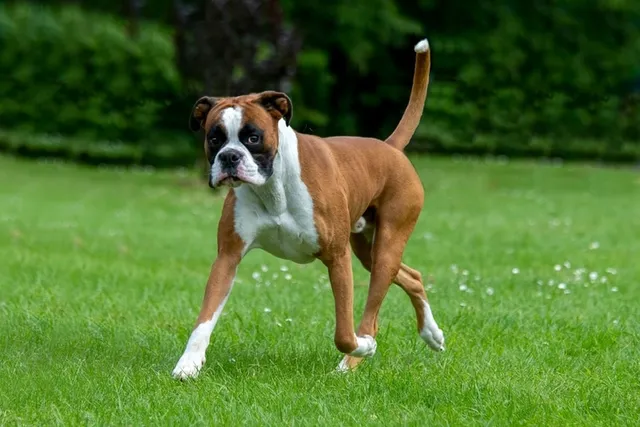
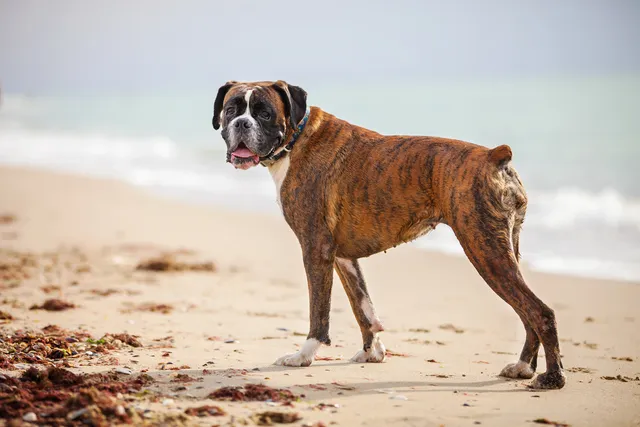
Boxers are an upbeat and playful dog breed. Their infinite patience and desire to be protective make them fantastic pets for homes with children. If you’re searching for the perfect family dog, Boxers can make a great choice.
As a prospective Boxer parent, you probably wonder how many years of companionship you’ll share with your potential pet. Boxers have a pretty average lifespan, living around 10 to 12 years; however, several factors can impact their longevity. Read on to learn how to care for your Boxer to encourage a longer, healthier, and happier life.

Boxer Average Lifespan
Boxers live between 10 and 12 years old on average, but their lifespan can be affected by several controllable and uncontrollable factors. Unfortunately, these loyal family pets are prone to a few health conditions that can negatively impact their lifespan; however, owners can have some control over factors such as lifestyle and nutrition that can impact their lifespan.

How to Care for Your Boxer for a Long Lifespan
1. Feeding & Diet
Like all dogs, Boxers require a healthy diet of food formulated for their current life stage and health. A commercial kibble or wet food diet is the best way to ensure your pup gets the nutrients they need to thrive.
Adult Boxers should be fed two meals daily. Because Boxers can be prone to developing gastric dilatation-volvulus (GDV),1 a life-threatening form of bloat, owners may want to invest in slow feeder bowls to encourage slower eating to potentially help prevent GDV.
Despite the Boxers’ high activity levels, they can be prone to weight gain and obesity if they’re overfed and/or under-exercised.
A veterinarian can provide customized feeding schedules and recommend portions based on each Boxer’s life stage, size, activity level, and diet.
2. Environment
Since Boxers are energetic, they do best in home environments with a sizable yard. However, they may be able to adapt to apartment life if their owners ensure they’re given plenty of opportunities to exercise outdoors.
Mental stimulation is just as crucial for Boxers as physical activity. Interactive toys, such as puzzle feeders, can provide the enrichment these pups need to be happy and to prevent boredom.
3. Care
Boxers are high-energy dogs, thanks to their working dog heritage. As such, they need an owner who is committed to providing them with plenty of opportunities for exercise. They need at least two hours of exercise daily.
However, care must be taken when exercising with Boxers as they are a brachycephalic breed and heat and overexertion can cause heat stroke and breathing issues.

4. Healthcare
Potential Boxer owners need to do careful research before buying their puppy. Boxers’ genetics can significantly impact their lifespan, so be sure you choose a breeder that has had pre-breeding health screenings done on their breeding animals.
Along with the potential breathing issues and GDV, Boxers may also be prone to certain types of cancer including mast cell tumors, lymphoma, and osteosarcoma. Heart conditions like dilated cardiomyopathy and arrhythmogenic right ventricular cardiomyopathy may also be a concern. According to UC Davis, some of the most relevant genetic tests for Boxers are those for degenerative myelopathy and hemophilia A/Factor VIII deficiency.
Boxers can be prone to numerous health conditions and diseases, so prevention is the best medicine for these pups. Keeping up with your annual veterinary exams can help your vet establish a baseline for your pup’s health and identify potential issues faster.
The Life Stages of a Boxer
According to the American Animal Hospital Association (AAHA), there are four life stages for any dog.
Puppy (Birth to 6 to 9 months)
During the puppy phase, a Boxer has a lot of energy and will light up every room with their silly attitude and pure sweetness. Owners should begin training and socializing their Boxers as soon as possible to ensure they grow to be well-rounded and well-behaved young adults.

Young Adult (6 to 9 months to 3 to 4 years old)
During the young adult stage, Boxers will complete their physical and social maturation. As a medium to large-size breed, they need a little more time to reach their full size than their smaller counterparts. As such, most Boxers are not fully grown until they’re around 18 to 24 months.
Young adult Boxers will still retain much of their puppy-like energy.
Adult (3 to 4 years old to 8 to 9 years old)
The adult stage for dogs begins after their physical and social maturation and lasts until the final 25% of their estimated lifespan, which for Boxers is between 8 and 9 years of age.
Adult Boxers should eat a healthy diet and get plenty of exercise to maintain a healthy weight. Yearly veterinary exams are important to catch any health issues before they become major.

Senior (8 to 9 years old until the end of Iife)
Boxers are generally considered seniors when they reach eight years of age. At this point, it’s normal for them to start slowing down, and they may experience age-related life changes such as hearing loss and vision impairment.
How to Tell Your Boxer’s Age
The only 100% accurate way to tell your Boxer’s age is to ask the breeder for their date of birth. If you do not have access to that, there are some ways you can estimate your dog’s age. However, know that this is not an exact science and will never be completely accurate.
First, take a look at your dog’s teeth. It takes time for wear and plaque, stains, and tartar to build up on teeth, so if these imperfections are absent, your pup may still be relatively young.
A dog’s eyes can also provide insight into their age. When dogs get older, their eyes can become cloudy or have a blue-ish tint to them.
Weathered paws can also indicate age. Paw pads of older dogs are often thicker and rougher. Due to keratin formation, they may have cracks or even bristly areas.

Conclusion
Boxers tend to live around 10-12 years. These fun and beautiful family dogs are sadly prone to several health conditions that can reduce their longevity. However, getting your puppy from a reputable breeder, providing your Boxer with a nutritious diet, a healthy exercise plan, and the best possible living environment can absolutely promote a longer life for your furry family member.
Sources
Featured Image Credit: Pixel-Shot, Shutterstock
Expert dog care, straight to your inbox
News, insights, expert advice, and everything dog.

No spam — unsubscribe anytime.
By signing up, you agree to our Terms & Conditions and Privacy & Cookies Policy.
How useful was this post?
Click a star to rate. You can leave written feedback afterwards. (We read all feedback.)
Chantelle is passionate about two things in her life – writing and animals. She grew up on the prairies of Canada surrounded by animals and as an adult, she choose to share her home with five cats, two guinea pigs, and a bearded dragon. Chantelle, her husband, and their child take great pride in being great animal parents- the ones who spend a thousand dollars on wall-mounted cat shelves so that their cats can have an indoor jungle gym all year round. When Chantelle isn’t snuggling her cats on the couch or taking pictures of them being funny, she’s outside exploring in the Rocky Mountains, binging the same shows on Netflix over and over, and reading about whatever random topic pops into her brain.