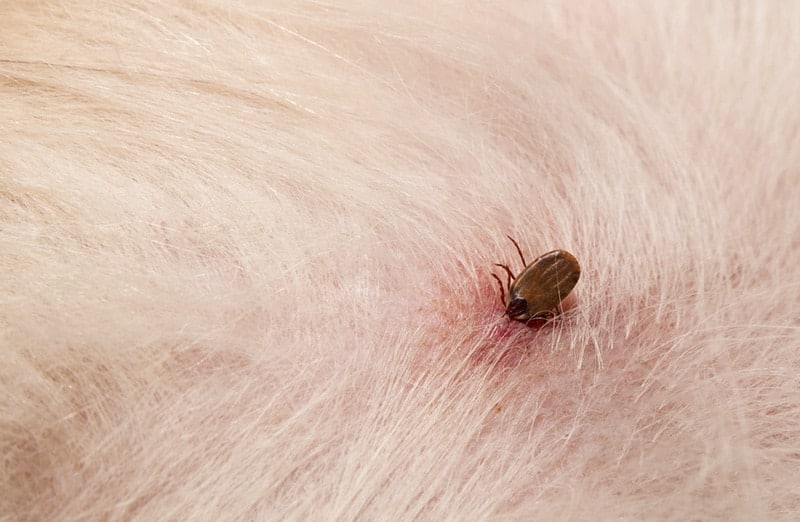
Anaplasmosis In Dogs: Our Vet Explains the Signs, Causes & Treatment


In this article
Many people have heard of Lyme disease, a common tick-borne disease seen in dogs across the United States. However, another common tick-borne disease is anaplasmosis. This disease, similar to Lyme disease, is caused by a bite from an infected tick. Dogs are at a high risk for this disease, especially those dogs with a high exposure to ticks. The good news is that there are great ways to prevent this disease and treatment options available if your dog tests positive. So let’s talk more about anaplasmosis.

What Is Anaplasmosis?
Anaplasmosis is an infectious, tick-borne disease. The infectious agent is most commonly the bacteria Anaplasma phagocytophilum, and less commonly the bacteria Anaplasma platys. The bacteria can spread to the bloodstream, causing the abnormal signs seen with the disease. In veterinary medicine, you will sometimes hear veterinarians refer to this disease simply as Anaplasma.

What Are the Signs of Anaplasmosis?
Oftentimes, there are no outward, abnormal signs of Anaplasma. Some dogs will act lethargic as compared to normal, have a slight decrease in their appetite, and/or change in behavior due to a fever. Other times, once anaplasmosis is diagnosed, further blood work will be completed. This may find abnormalities such as a low platelet count, low red blood cell count, and/or an abnormal white blood cell count. However, it’s important to remember that many tick-borne diseases, including Anaplasma, have non-specific findings. In other words, lethargy, a decreased appetite, and even mild blood work changes can be seen from any number of other diseases and conditions. Therefore, any abnormal signs are not specific to only Anaplasma.
What Are the Causes of Anaplasmosis?
As mentioned above, anaplasmosis is caused by the bacteria Anaplasma phagocytophilum, and less commonly the bacteria Anaplasma platys. The bacteria is carried by black-legged ticks that attach to a dog for a blood meal. The tick typically needs to be attached for 24–48 hours before the bacteria is transmitted into the bloodstream of the dog. Once transmitted to the dog, it will take at least 1–2 weeks for abnormal clinical signs of anaplasmosis to occur.
Anaplasma is transmitted by the same kind of tick that also transmits Lyme disease. This is important to remember as your dog can become infected with both at the same time. While these ticks can be found in many areas of the United States, they are most prevalent, and therefore Anaplasma is most common, within states of the Northeast, Midwest, and West Coast.

Diagnosing Anaplasmosis in Your Dog
Diagnosis of Anaplasma is made by a blood test. The most common test is typically done at your dog’s yearly exam and only requires a few drops of blood. The test commonly tests for heartworm disease and three types of tick-borne disease, including anaplasmosis. If positive, it means that your dog has antibodies to the bacteria. This does not mean that your dog has an active infection, and/or that your dog even has any abnormalities from anaplasmosis. It simply means that your dog has at minimum been exposed to the bacteria before.
Oftentimes, once a positive test is returned, a full blood panel will be completed. This will diagnose if your dog also has low platelets, low red blood cells, and/or low white blood cells, all of which may be caused by active anaplasmosis infection.
How Do I Care for a Dog With Anaplasmosis?
There are different trains of thought with treatment. If your dog is in a highly endemic area, and the test mentioned above comes back positive, your veterinarian may choose to just treat your dog. Other times, your veterinarian will want to confirm with a full blood panel that your dog has an active infection prior to treating them.
The most common treatment is with the antibiotic Doxycycline. This is typically prescribed for 14–30 days, depending on the dog, area of the country, and clinical signs. If your dog also has Lyme disease, almost always they will be treated for at least 30 days. Your veterinarian may treat until their blood panel shows no abnormalities.
Your dog will continue to test positive for antibodies, sometimes for years, despite having no active infection and having undergone treatment. This is why it’s very important to speak to your veterinarian about their specific diagnostic and treatment recommendations for your dog.
Frequently Asked Questions
Can I Prevent Anaplasmosis?
Yes! The good news is that you can protect your dog from a number of tick-borne diseases by giving them regular, prescription tick prevention. These need to be prescribed and obtained at your regular veterinarian, but are recommended to give to your dog all year long. We never recommend ordering these products online or buying them at a store without a prescription as you may unknowingly be purchasing counterfeit products.
Can My Dog Die from Anaplasmosis?
If the bacterial infection is severe, and your dog is not treated appropriately and quickly, then there is the chance they can pass away. This occurs most commonly if your dog develops bloodwork abnormalities such as low platelets, white blood cells, and/or red blood cells. If left undiagnosed and treated, your dog can pass away from complications stemming from these abnormalities.

Can My Dog Become Infected More Than Once?
Yes. If your dog is not on regular preventative, there is no way to know and/or predict if they become bit by an infected tick. This is why regular prevention is so important, especially in highly endemic areas.
Conclusion
Anaplasmosis is a tick-borne bacterial disease that is highly prevalent in certain areas of the United States. Anaplasma is spread by the same kind of tick that spreads Lyme disease, and your dog can be infected with both at the same time. A tick has to be attached for 1–2 days in order to pass the bacteria, which is why regular prevention is so important. As a tick attaches for a blood meal, they will ingest the preventative in your dog’s bloodstream and die prior to being able to pass on the disease. Many people will not notice any abnormalities with their dogs, even if infected. Your veterinarian can diagnose Anaplasma through a blood test and treatment consists of multiple weeks of the antibiotic Doxycycline. Unfortunately, some dogs can pass away if complications with red blood cell, white blood cell, and platelet counts become severe.
Sources
Featured Image Credit: andriano.cz, Shutterstock
Expert dog care, straight to your inbox
Vet-reviewed advice, training tips, and the best of Dogster. Free, and you can unsubscribe anytime.
By signing up, you agree to our Terms & Conditions and Privacy & Cookies Policy.
Dr. Kim Podlecki DVM (Veterinarian)
A graduate of The Ohio State University College of Veterinary Medicine, Dr. Podlecki has more than 12 years of experience working with small animals in the US. Dr. Podlecki worked almost exclusively in specialty medicine and emergency for more than a decade before transitioning to relief in both general practice and ER. Dr. Podlecki also owns her own consulting company (renewvetconsulting.com) with the focus of helping veterinary hospitals prioritize their staff to promote a healthier internal culture.
Join the conversation
Ask a question, share your story, or send private feedback.