Worms in Dog Poop: Our Vet Explains Signs, Causes & Treatment


In this article
Seeing little white worms in your dog's poop can be alarming, but it's important to know that intestinal worms are common in canines. Some dogs may not show any signs if they have a small worm load, while heavy loads can make them more obviously sick or even be fatal. Regular fecal examinations by your veterinarian can help ensure that your dog remains as free from worms as possible!

What Are Worms?
Worms, also known as intestinal worms or parasites, are common in dogs. The most frequently diagnosed intestinal worms in canines include roundworms (ascarids), hookworms, whipworms, and tapeworms. Worms acquire their nutrition from their host, in this case, a dog. They absorb the nutrients meant to keep the dog healthy. They can cause various health issues, and the dog’s age, size, and overall health and the type and number of worms can mitigate or exacerbate the damage. While you may be familiar with worms living in the stomach and intestines, they can also be found in other organs if they migrate, such as the heart, lungs, and kidneys.

What Are the Common Types of Intestinal Worms That Dogs Can Have?
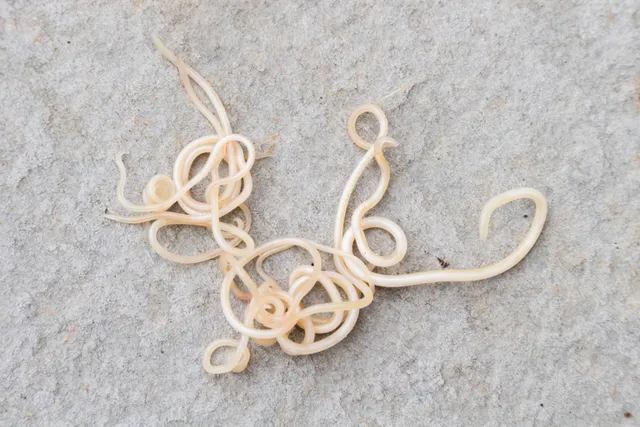
- Roundworms: Also known as ascarids, these are common in dogs, especially puppies. In dog poop, they look like long strands of cooked spaghetti. The larvae of the species Toxocara canis can also infest and migrate through tissues and organs in people.
- Hookworms: There are several species of hookworms found throughout the world. These small, thin worms have a hooked-shaped mouth part on one end.
- Whipworms: Adult worms of this species are usually found in the colon and cecum. They are small, look like a piece of thread, and are larger at one end than the other.
- Tapeworms: These are also known as cestodes, and the adult worms are segmented and are found in the small intestine. Tapeworms may appear as small segments of rice in dog poop or surrounding the anus.

What Are the Signs of Worms in Dogs?
Signs of worms are often non-specific and may mimic other health conditions, so it is always important to contact your veterinarian if your dog is showing any abnormalities.
The signs can also depend on the type of worm and may include:
If your dog is showing any of these signs and you are seeking the best possible treatment for your pup, we recommend speaking with an online vet for quick and easy access to an expert's opinion.
What Are the Causes of Intestinal Worms?
Puppies and dogs can acquire worms in several ways.
| Intestinal Worm | Transference in Puppies | Transference in Adult Dogs |
| Roundworms | Transfer to the growing fetuses through the mother's placenta Transfer of worms during nursing in mother’s colostrum and milk Puppies less than 3 months old eating worm eggs that have been in the environment for more than 4 months | A bit of resistance Immunosuppression during the birth of puppies can activate inactive worm infestations in a mother dog, which can then be passed through her milk into nursing puppies |
| Hookworms | Larvae are ingested Pass through the mother’s colostrum or milk during nursing Larvae penetrate the skin | Larvae are ingested Larvae penetrate the skin |
| Whipworms | Ingestion of infective eggs | Ingestion of infective eggs |
| Tapeworms | Eating a flea or rodent carrying tapeworms | Ingestion of fleas Eating small mammals, raw meat, and the internal organs of butchered animals (offal) |

How Are Intestinal Worms Diagnosed in Dogs?
Most cases are diagnosed by the owner collecting a poop sample from their dog and taking it to a veterinarian. The vet may perform a fecal flotation test, which is where the feces is placed in a solution to prepare it for examination under a microscope to detect any parasite eggs. Adult worms or segments can also be collected and taken to the veterinarian for identification. Keep in mind, however, that worm eggs may not always show up on a fecal test.

How Are Intestinal Worms Treated in Dogs?
Most intestinal worms can be treated with an antiparasitic drug. Dewormers are available in many forms, including oral liquid medication, tablets, injections, or topical applications. Pyrantel pamoate (Strongid T) is one type of oral antiparasitic treatment. Certain monthly heartworm preventatives can also concurrently treat roundworms, hookworms, and whipworms. Pyrantel pamoate, however, is ineffective for tapeworms. These cases may need to be treated with praziquantel.
Other dewormers may include:
Treatments may need to be given for a few weeks at a time, depending on the dog’s age and diagnosis. If you notice worms in your dog’s poop or vomit after giving them a dewormer, it means the treatment is working.
How Can You Prevent Worms in Your Dog?

To prevent intestinal worms, you can:

Frequently Asked Questions
Can I Catch Worms From My Dog?
Yes, in some cases, it is possible to become infested with worms from your dog. One example is a roundworm infestation, and children are especially vulnerable. To lessen the chance of transmission, be sure to promptly remove all dog feces, and practice good hygiene by washing your hands after cleaning up or interacting with your pet.

Are Puppies Born With Worms?
Puppies can be born with roundworms if their mother is infected. The worms can cross the placenta into the developing fetuses.

Conclusion
Intestinal worms can be alarming and dangerous. It is important to schedule regular fecal examinations and deworming treatments as recommended by your veterinarian. Additionally, maintain good hygiene, and always wash your hands after interacting with your dog.
Sources
Featured Image Credit: Petra, Pixabay
Expert dog care, straight to your inbox
News, insights, expert advice, and everything dog.

No spam — unsubscribe anytime.
By signing up, you agree to our Terms & Conditions and Privacy & Cookies Policy.
How useful was this post?
Click a star to rate. You can leave written feedback afterwards. (We read all feedback.)
Dr. Stacie Grannum DVM (Veterinarian)
Dr. Stacie Grannum was born and raised in Arizona, USA. When she was a little girl, an encounter with a little animal changed her life forever. A tiny bird fell high from its nest, and Stacie diligently cared for it. Sadly, despite her best attempts to save it, the baby bird did not survive. From this devastating loss came a new ambition, carving the path that Dr. Grannum followed. She knew that she wanted to pursue a career in veterinary medicine. She worked hard toward that goal and dedicated her time to pursuing the field.
Today, her focus is on pet health, particularly wellness and preventive medicine. She also enjoys writing about pet health and is eager to share what she has learned over the year with other animal lovers.
In 2014, Dr. Grannum earned her Doctor of Veterinary Medicine Degree from Colorado State University.