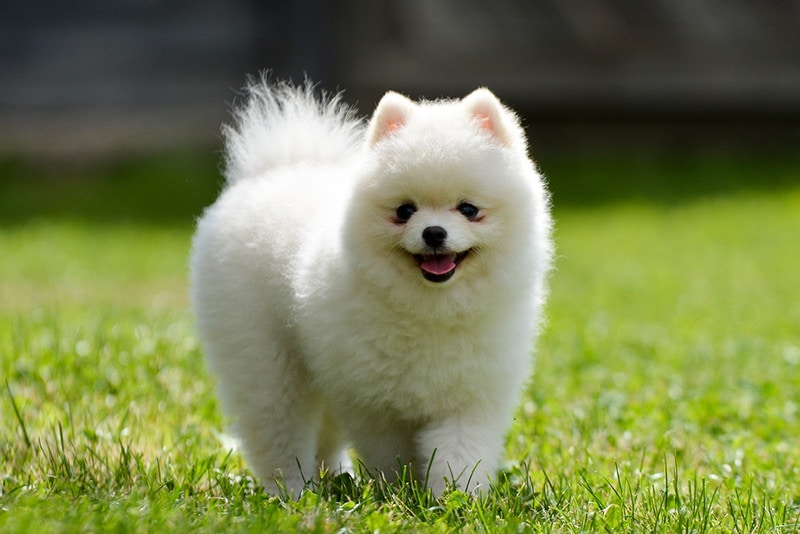
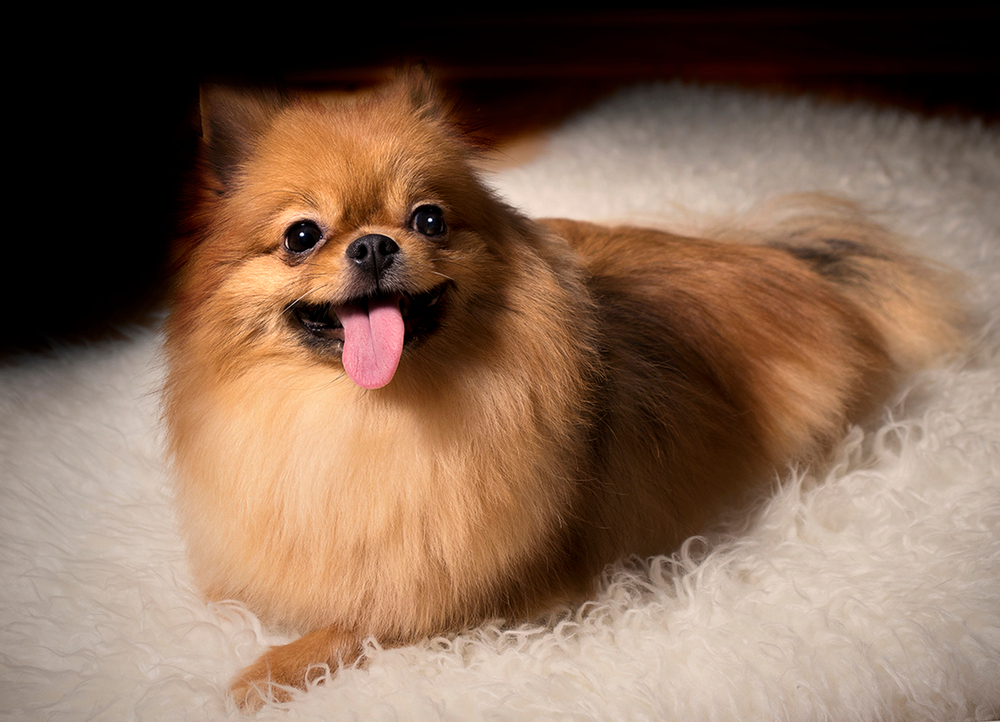
Today’s Pomeranian is a tiny dog breed that is kept primarily as a companion dog. Traditionally, however, the breed weighed as much as 30 pounds and is a relative of sledding dogs. It comes from the Pomerania area, near Germany and Poland, and while it might be small, the breed is known for being confident. Some owners know it for being occasionally bold for its size, and owners need to ensure that this cute-looking dog doesn’t approach much larger dogs when at the park.
The Pom also has many characteristic quirks and behaviors that might seem odd to non-Pom owners. One such quirk is the Pomeranian spin.
Many owners report that their Pomeranians have the propensity to spin in circles and that it can happen at seemingly any time. The activity is generally not dangerous, and in most cases doesn’t typically mean that the dog is ill, and it usually isn’t anything to be worried about. Below, we look at the most common reasons that a Pomeranian would spin in circles, as well as take a look at some other interesting quirks of the breed.

About the Pomeranian
The Pomeranian originally comes from the Pomeranian region, which was split between Poland and Germany. It was first bred from several Spitz sledding dogs and would have originally weighed as much as 30 pounds. The breed has always been popular, and Poms have been owned by the likes of Martin Luther, Michelangelo, and Isaac Newton. Mozart even dedicated an aria to his Pomeranian. It is Queen Victoria, who was known to have bred many different breeds of dog, that is widely credited with having encouraged the breed to be smaller. The original breed weighed as much as 30 pounds, but today’s Pomeranian weighs around 5 pounds—significantly lighter than its ancestors.
The breed is smart, lively, and gets along with most people. It will usually get along with other dogs, but Poms may overestimate their size in some social situations, potentially challenging dogs that are much larger! The breed does have a tendency to be yappy, but this can make it an excellent watchdog that will alert its owner to anything it considers strange or unusual.

Introducing the Pomeranian Spin
As well as being a yappy dog that sometimes forgets its tiny size, the Pomeranian is also known for its spinning antics. With seemingly little notice, the dog will start spinning in circles on the spot. The activity can alarm some owners, especially those who have little experience with the breed. But aside from potentially banging its head or feet on nearby objects, the motion is not considered a sign of illness in most healthy dogs. However, persistent, unprovoked, or uncoordinated circling can indicate an underlying medical issue and should be evaluated by a veterinarian.
The 9 Reasons Your Pomeranian Spins in Circles
So, if illness doesn’t cause the Pomeranian spin, what does? Below are nine possible reasons your Pomeranian has started spinning on the spot.
1. Ancient Instinct
Spinning usually refers to a fast action, but it can also be used to refer to a slow rotation, and this is something that a lot of dogs, regardless of their breed, do. It is especially common just before they lie down to sleep, and although there haven’t been any controlled studies into why dogs do this, it is widely believed that it harks back to when dogs were wild animals. They would have circled before lying down to flatten the grass and other surfaces to make them more comfortable. It could just be instinctive.
This slow circling behavior is considered normal and is not associated with discomfort unless your Pom shows stiffness, difficulty lying down, or repeated circling without settling.
2. Excitement
If the spinning motion is faster and more erratic than the slow circling of pre-rest behavior, it may be caused by excitement. Your Pom could be excited about going for a walk, the possibility of being given a treat, or just because you’ve entered the room. Essentially, your dog has got so excited that it just can’t contain it anymore, and spinning is a harmless way to let that excitement out. This energetic spinning is normal in many lively toy breeds and typically stops once the exciting trigger has passed.
3. Attention Seeking
If your Pom knows that you find it amusing when it spins in circles, then it could be doing it just to get your attention. It’s a quick and easy way to have you look over and interact. It may be doing this because it needs to be let out, wants to go for a walk, thinks it’s dinnertime, or just because it wants you to give it some attention.
Because Pomeranians are highly people-oriented and responsive to reinforcement, even brief eye contact, praise, or laughter can unintentionally reward the behavior and increase how often it happens.
This attention-seeking spinning is not harmful, but consistent routines and calm reinforcement can help keep the behavior from escalating.

4. Playtime
Poms love to play, and while they prefer to play with their humans, they are quite good at playing independently, too. Spinning in circles might be part of their independent play routine. This is generally normal behavior, and the longer you own a Pomeranian, the more normal it will start to feel.
Play-related spinning is typically brief, occurs in a relaxed and coordinated manner, and does not interfere with the dog’s ability to engage in other activities.
As long as your Pom is responsive, balanced, and able to stop easily, this form of spinning is considered within normal behavioral limits.
 When Spinning Might Mean Something More
While most of the time a Pom’s spinning is nothing more than excitement, play, or an attention-seeking tactic, there are a few situations where the behavior can be linked to a medical issue. These causes are much less common, but it’s still helpful for Pom parents to know what to watch for. The key difference is that medical spinning usually looks less coordinated, lasts longer, or happens without any obvious reason.
If you need to speak with a vet but can't get to one, head over to PangoVet. It's our online service where you can talk to a vet online and get the advice you need for your pet — all at an affordable price!

5. Vestibular Problems
The vestibular system helps your Pom keep their balance. If something affects it, like a deep ear infection, inflammation, or a neurologic condition, your Pom may spin or circle toward one side instead of spinning with purpose. Dogs with vestibular issues may also show a head tilt, stumble, or have unusual eye movements.
6. Neurologic Conditions
Certain neurologic problems, such as inflammation in the brain, growths, or age-related cognitive changes, can cause a Pom to circle repeatedly. In these cases, the circling often feels “off”; it may be harder to interrupt, happen in the same direction every time, or come with other signs like confusion, behavior changes, or even seizures. Some Pomeranians can also be predisposed to autoimmune brain inflammation, so it’s something to keep in mind, especially in younger adults.
7. Pain or Discomfort
Sometimes a dog circles because they’re having trouble getting comfortable. Pain in the back, hips, or knees can make a Pom circle more than usual before they lie down. If the spinning is accompanied by stiffness, limping, slowing down on walks, or hesitation to jump, discomfort may be part of the picture.
8. Compulsive Behavior
Although it’s rare, some Poms may develop a compulsive spinning habit. This type of circling usually goes beyond normal excitement or play. It tends to look repetitive, happens without a clear trigger, and can be hard to interrupt. If spinning starts interfering with daily life, it’s worth checking in with a veterinarian.
9. Age-Related Changes
Senior Poms sometimes spin because they’re feeling disoriented or anxious. Dogs experiencing cognitive decline may wander, pace, vocalize more, or get stuck in corners. If your older Pom has started spinning more often or seems confused, these changes may be part of a bigger picture.
When to Check With Your Veterinarian
Most spinning Poms are doing something perfectly normal and endearing. However, it’s a good idea to talk to your veterinarian if the spinning becomes:
- Hard to interrupt
- Unbalanced or clumsy
- More frequent than usual
- Completely unrelated to excitement or play
- Accompanied by head tilt, stumbling, confusion, or behavior changes
When spinning stays coordinated, brief, and tied to things your Pom enjoys, it’s generally nothing to worry about. But if something feels “off,” a quick check-in can help rule out anything medical and give you peace of mind.
In Summary
The Pomeranian is a fun, quirky, energetic little dog. Surprisingly, it is actually related to sledding dogs and Spitz dogs, although it is more likely to be seen spotted in a park or on its owner’s lap than pulling any kind of sled today. Spinning, along with alert vocalizing and occasionally overconfident interactions with bigger dogs, is one activity that Pom owners report. Fortunately, it is not considered a negative action when the spinning is brief, coordinated, and triggered by excitement or play. It is likely a sign of excitement at your return, or your Pom could just be playing or seeking attention from you. Because it isn’t a negative activity, there is usually not really any reason to stop it.
However, any spinning that is repetitive, difficult to interrupt, unbalanced, or appears to occur without a clear trigger should be evaluated by a veterinarian to rule out medical or neurologic causes.
Related Read:
- Throwback Pomeranian: Facts, Origin & History (With Pictures)
- When Does a Pomeranian Go Into Heat? Vet-Approved Facts & FAQ
Featured Image Credit: Wirestock Creators, Shutterstock
 About the Pomeranian