What Were Rottweilers Bred For? History & Origin Explained


In this article
Rottweilers are extraordinary creatures. They’re loyal and protective of their families but also playful and humorous. The intelligent canines rank in the top 10 for the most popular breeds in the United States, but their roles as lovable pets contrast the dogs’ early history.
So, what were Rottweilers bred for? Although few official records of Rottweilers existed before the 19th century, the Rottweiler’s ancestors are thought to have assisted Roman legions as cattle drovers when the massive armies drove across Europe. Several centuries later, the progeny of the Roman dogs herded and guarded livestock in Germany.

Ancient History of the Rottweiler
Roman armies depended on cattle to feed their soldiers and used mastiff-like canines to protect and herd the animals. Although relics from ancient Rome depict muscular working dogs that resemble Rottweilers, the breed’s early history is challenging to prove without a continuous pedigree. However, the most accepted hypothesis is that the Romans bred Asian mastiffs to develop a strong and loyal herding canine.
The armies needed dogs to protect the herd and repel attackers, but the animals could not be so aggressive that the soldiers could not handle them. Like the present-day Rottweiler, the early ancestors focused their aggression on strangers rather than their caretakers. After barbarian tribes forced the Romans to retreat in 200 A.D., the dogs left behind were eventually crossed with local breeds in Germany.
The refined versions of the Roman cattle dogs herded livestock in a former Roman encampment on the Neckar River called Rottweil. The dogs earned the respect of German butchers for protecting their livestock and became known as Rottweiler Metzgerhund, which means the butcher’s dog of Rottweil. After the butcher’s stocks were slaughtered, they used Rottweilers to pull carts loaded with beef to deliver meat to customers. They favored the dogs with muscular legs and large heads to pull the heavy carts.
When the butchers were paid, they supposedly kept the money in satchels carried by the dogs to prevent theft from bandits on the way home. Rottweilers were essential to cattle drivers until industrialization and railroad construction changed the landscape in the late 1800s. Although the breed’s numbers declined, the dog’s extinction was prevented by dedicated German breeders.

The 19th Century Decline and 20th Century Revival
Railroad commerce minimized the Rottweiler’s importance in the cattle industry in Germany, and other breeds like the German Shepherd and Doberman Pinscher became more common in the country. However, the Rottweilers found new work as police dogs in the early years of the 20th century. When a Rottweiler and Leonberger Club was formed in 1901, the first breed standard was developed for the Rottweiler.
According to the American Kennel Club, the dog’s temperament and body structure have only changed slightly from the original standard. The first Rottweiler-only club was the Deutscher Rottweiler Klub, and in 1924, a group of German clubs established a stud book for the breed. Before that date, Rottweilers displayed more coat colors and patterns, and some even had white spots.
Rottweilers assisted the German military in World War I, but in the 1930s, the wardens responsible for overseeing Rottweiler breeding were replaced by National Association for Canine Matters that the Nazis managed. The Nazi government wanted the Rottweilers to have lighter bodies to travel faster with the troops, but Southern German breeders resisted the changes and continued to breed Rottweilers with broad shoulders, large heads, and muscular legs.
The AKC recognized the breed in 1931, and the United Kennel Club recognized it in 1950. The Rottweiler was not a popular breed in the United States until the 1980s. Although they’re considered excellent pets, the dogs still retain their working dog heritage and continue to assist humans in invaluable ways. They serve as guide dogs for the blind, customs inspectors, service dogs, obedience competitors, and therapy animals. In 2015, a Rottweiler won the AKC’s ACE award for therapy.
Therapy dogs must be calm, friendly, patient around strangers, and capable of remaining confident in crowded settings. Owners and their Rottweilers receive extensive training to earn an AKC Therapy Title, and the dogs typically visit nursing homes, hospitals, prisons, and reading programs for children.

Rottweilers as Pets
Male Rottweilers can weigh 135 pounds, and the smaller females can weigh around 120 pounds. The dog’s imposing frame, forceful barking, and intimidating stance are advantages for guard dogs, but how are Rottweilers as family pets? The dogs are not suitable for pet parents who are unwilling to play active roles in training and socializing their pets.
Rottweilers are loyal to their human families, but they’re hesitant around strangers, and their protective nature must be controlled when owners have guests or visit public areas. They’re one of the world’s most intelligent canines; they learn quickly and are not easily distracted during training sessions. Unlike other breeds, they’re able to learn from watching other dogs.
When training a Rottweiler, you must stay confident and ensure the animal knows that you’re in charge. If you’re uneasy during a training session, the clever dog will not respond as well since they may not consider you the alpha animal. Physical and verbal abuse are not humane or ethical tactics to use with any dog during training—especially the Rottweiler. Exposing the dog when they’re young to car rides, dog parks, children, and other stimuli will help them develop into a loving and loyal pet.
Rottweilers are compatible with most families when they’re well-trained, but owners with small children must never leave the dog around the children unsupervised. Even a trained dog poses a risk to a young human because of the breed’s size and strength.

Rottweiler Crossbreeds
The three coats accepted by the AKC for the Rottweiler breed standard are black and tan, black and mahogany, and black and rust. Purebred Rottweilers are not suitable for every home, but breeders have created several crossbreeds with physical and mental characteristics that differ from the original breeds. Some of the most prevalent Rott hybrids include:
- Rottsky: Rottweiler and Siberian Husky
- German Rottie: Rottweiler and German Shepherd
- French Bullweiler: Rottweiler and French Bulldog
- Saint Weiler: Rottweiler and Saint Bernard
- Borderweiler: Rottweiler and Border Collie
- Labrottie: Rottweiler and Labrador Retriever
- Rotterman: Rottweiler and Doberman Pinscher
- Weimarott: Rottweiler and Weimaraner
- Rotthound: Rottweiler and Basset Hound
- Weiler Dane: Rottweiler and Great Dane
- Rottle: Rottweiler and Poodle
- Boxweiler: Rottweiler and Boxer
- Golden Rottie: Rottweiler and Golden Retriever
- Mastweiler: Rottweiler and Mastiff
- Pitweiler: Rottweiler and Pitbull
- Rotthuahua: Rottweiler and Chihuahua
- Rottgi: Rottweiler and Corgi
- Aussierottie: Rottweiler and Australian Shepherd
- Pugweiler: Rottweiler and Pug
- Cockweiler: Rottweiler and Cocker Spaniel

Conclusion
From herding to cheering up the residents of a retirement community, Rottweilers were bred for a multitude of reasons and are multi-talented dogs with a rich history of helping humans. Well-trained Rotts are calm and friendly and enjoy running and playing with their owners. Although their body structure is designed for work, the dog also excels as a reliable companion that’s thoroughly committed to their family’s safety.
Sources
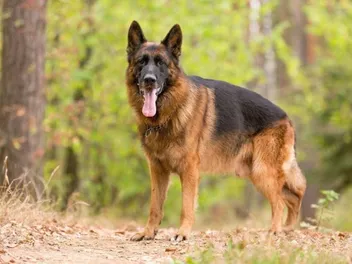
Featured Image Credit: Rebecca Scholz, Pixabay
Expert dog care, straight to your inbox
News, insights, expert advice, and everything dog.

No spam — unsubscribe anytime.
By signing up, you agree to our Terms & Conditions and Privacy & Cookies Policy.
How useful was this post?
Click a star to rate. You can leave written feedback afterwards. (We read all feedback.)
Nicole has loved animals of all sizes her whole life so it's no wonder she has dedicated her career to helping them through what she loves best: learning, writing, and sharing knowledge with others. She’s the proud mom of two dogs, a cat, and a human. With a degree in Education and 15+ years of writing experience, Nicole wants to help pet parents and pets around the planet to live happy, safe, and healthy lives.