Vizsla vs Weimaraner: Key Differences (With Pictures)

In this article
If you're looking at a physically impressive, highly energetic dog that can accompany you for work and play, the Vizsla and Weimaraner breeds should certainly be top contenders. Each one is highly active, incredibly intelligent, and capable of advanced training.
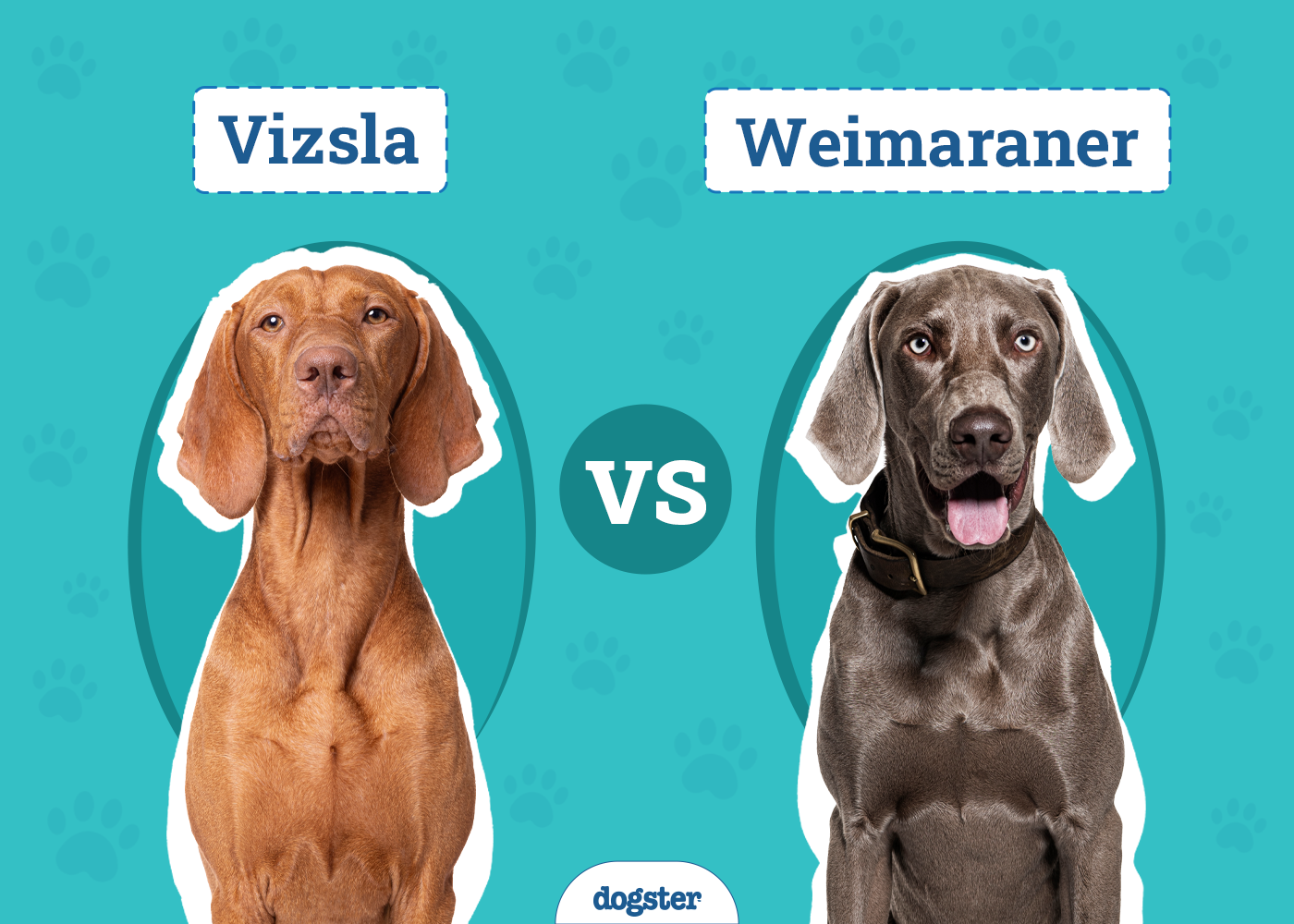
Both of these dogs have very distinct looks. The Vizsla is a copper-colored beauty, while the Weimaraner is a silver-blue beauty. Each has an undeniable charm and excellent potential. However, these breeds are for advanced canine owners with the resources to care for them.

Visual Differences

At a Glance

Vizsla Overview
The word “Vizsla” is Hungarian for “pointer.” It is one of the oldest hunting dogs known to man. The Vizsla was the 115th breed recognized by the American Kennel Club in 1960—but the breed is far older than that—dating back to over a thousand years ago.
Like many breeds, the Vizsla nearly faced extinction due to the World Wars. However, these pups were fully recovered thanks to the efforts of a portrait artist named Elizabeth Mihalyi.

Personality/Character
Vizslas have outstanding personalities. They tend to be rather quiet, not barking unless they feel the need to alert their owners of odd goings-on around the home. These dogs are very bonded to their people and don't do well for long periods away from their families.
Even though this breed is incredibly active, they make fantastic family companions. They have the energy to keep up with younger children, learning to run and play with them anytime. These dogs are generally very happy-go-lucky and ready to engage and play with any household member, favorites aside.
Now, you need to make sure you are doing your part in entertaining this breed. They need lots of toys—both self-play and interactive. They also need firm but affectionate owners who provide proper housing and training.
Exercise 🐕
The structurally impressive Vizsla will require a ton of exercise! These dogs were built for athleticism. They were bred for sport, designed to be swift, agile, and alert. Because they have such an intense drive to work, they must have appropriate daily time to burn off their instinctual desire to run.
You will need to set aside time every day to ensure that your Vizsla is getting the required exercise. They need to be able to explore, catering to their mental as well as physical outlets. Fenced-in yards or homes with large land spaces are ideal for this breed.

Training 🎾
Not only do Vizslas enjoy training, they absolutely require it. Training is a must for a well-rounded, mannerly dog that listens to commands and responds appropriately. These pups are incredibly receptive to basic training, picking up concepts like simple commands and potty training with ease.
Vizslas were designed to be both a pointer and a retriever breed, so they are multi-purpose hunting dogs. You can train your dog to perform all sorts of actions involving hunting, among other tasks, such as agility.
If you are a very experienced person training canines in advanced tasks, your possibilities are endless. Even if you're not the most experienced trainer, you can get a professional's help to enhance your dog's overall performance. Often, owners choose to put their Vizslas in competitions because they are so efficient at their job.
Health & Care
Vizslas are physically impressive, and they will always be on the go. They are much more prone to exercise-related injury than some other breeds.
It is imperative to get your Vizsla vaccinated very early. These dogs are incredibly susceptible to viral infections that most modern medicines can take care of. If you don't vaccinate your Vizsla, you leave them even more vulnerable than other puppies to issues like parvo.
Vizslas may have health issues:

Suitable For:
These dogs work best for active families with lots of time to spend outdoors. This is your breed if you love camping, hiking, jogging, or hunting!

Weimaraner Overview
The stunning Weimaraner is instantly recognizable because of their stunning silver-gray coats. The Weimaraner was accepted by the AKC in 1943. Originally, they were bred to hunt bear, boar, and other large game.
Today, the Weimaraner is still instinctually driven, having an inept desire to track and hunt. But they also have acclimated into home life beautifully.

Personality/Character
Weimaraners are often described as brave, amiable dogs with much exuberance. They love to be on the go—and always prefer to be around their human counterparts. These dogs are incredibly loyal and attached to their families, but they don’t mesh with just any household.
They are very hyper as puppies and don't always make the perfect additions to homes with babies or small kiddos. However, they can be highly fabulous playmates for older children. They are notorious for “standing hugs” and being real bed hogs—so look out.
Weimaraners without proper early socialization can display nervous, neurotic, or destructive tendencies. You have to make sure you give them the appropriate amount of stimulation in a day. Otherwise, you're sure to run into problems. These dogs are definitely not for novice dog owners.
Exercise 🐕
Weimaraners require an extensive amount of exercise to keep them happy. They get bored quite easily, so they benefit greatly from various activities that challenge their physical stamina. Because they need such high-intensity workouts, these dogs do better with fenced-in yards or large land areas.
You can encourage your Weimaraner to exercise by taking them on adventures, such as dog parks, hiking trails, or just a brisk walk or run. You can break your Weimaraner exercise up in increments throughout the day. You don't have to fit the whole 2 hours into one timeline.

Training 🎾
Training your Weimaraner might be challenging, but the rewards will pay off. These dogs are not naturally eager to please, and most of them are highly food-motivated. These dogs naturally desire to learn new tasks, so keeping their attention won't be hard.
Since they're so intelligent, most can pick up on basic commands quickly and take a shorter than average time learning bigger ideas. It would be best if you never used physical force or negative tactics to handle your Weimaraner during the training period. Doing so can result in a fear-based relationship that can be challenging to remedy.
However, you do need to assert yourself as the pack leader. Otherwise, a Weimaraner might try to test your authority. Often, these dogs benefit from professional training so you can get your toes wet and they can get the training they require.
Health & Care
Since Weimaraners are such an active breed, one aspect of health that can't be overlooked is the ability to get injured. Since they constantly challenge their bodies, they can encounter sprains, wounds, abrasions, and injuries.
Regular vetting is significant with this breed. Routine checkups are a must, along with preventative treatments and general monitoring.
Weimaraners can run into health issues such as:

Suitable For:
Active families that spend a lot of time outdoors. If you give this dog places to explore and challenge their mind, you'll have a perfect pet!

The Responsibility of Buying an Athletic Breed
Many dogs are rehomed due to a lack of compatibility. It doesn't get talked about a lot, but it's one of the main reasons they end up in shelters and on shady sites like Craigslist. Breed education is incredibly crucial, causing you to look at your own lifestyle and situation to ensure you are compatible.
Each dog breed was particularly developed to fulfill specific tasks. Some were bred to be companions; others were made for sport, and so on. Buying a sporting breed and expecting them to snuggle up with you on the couch or be completely calm all the time is unrealistic.
Here are the aspects of owning both a Vizsla and a Weimaraner that are deal breakers for some folks.

Exercise Is Non-Negotiable
All dogs need exercise, but some need a lot! With both of these breeds, exercise is not an optional thing. They are both incredibly physically high maintenance and rely on you to give them a proper outlet. You cannot buy this dog to keep it locked in a kennel for 10 hours at a time. It simply will not work.
If you leave these dogs unattended with nothing to do, they will likely start to develop anxious behaviors, destructive tendencies, and a whirlwind of other behavioral problems. They will also seem more neurotic and hyper than they would if they had a proper release.
If you are a very busy person who doesn't have the time to give your dog a lot of one-on-one attention, consider looking for a more relaxed and easy-to-manage breed. Both of these dogs thrive on adventure and need time outdoors.
Neither of these dogs is compatible with the following:
To wrap that up, these dogs are incompatible with any family that cannot provide them with the required exercise. If you even have to question whether or not you will give the Vizsla or Weimaraner the attention they deserve, you might not even want to try it.
Proper Breeding Is Crucial
With highly athletic breeds, reputable breeding is absolutely crucial. Breeders take lots of pride in perfecting the bloodlines of their offspring. They always work diligently towards producing physically and mentally sound dogs that carry the breed standard.
If some breeders lack vet care or choose the incorrect parents, you risk health issues or behavioral problems in your puppy's lifetime. Because the Vizsla and Weimaraner are both sturdy, large dog breeds, poor breeding can result in health issues like hip and elbow dysplasia.
These problems can typically be avoided with specific vetting and proper breeding to eliminate these issues in the bloodline. Poor breeding practices can produce lower-quality pups, resulting in larger vet bills.

These Dog Breeds Are High Maintenance
We want to be clear that these dogs are not just satisfied with one jog in the park a day. They require an extensive amount of exercise that will take time for you as well. Sometimes, we only want a jogging buddy, not realizing the extensive physical requirements you must meet to keep a certain breed happy.
On top of allowing them to burn steam, you also have to ensure they're getting the right mental stimulation. A bored Vizsla or Weimaraner is a recipe for disaster. Once certain behavioral issues start, it is challenging to get them under control. A poorly socialized, poorly exercised dog of either breed can lead to much more trouble than not.
As long as you are an experienced enough dog owner and an active enough person to take on either breed, they will be incredibly rewarding pets and impress you with their stamina and mental capacity daily. But we want to be clear that these dogs are work, work, work.
Which Breed Is Right for You?

The Weimaraner and Vizsla are extremely high-energy breeds with very strict looks and size requirements. If you are looking for an exercise buddy, you have certainly found that in both of these lovely dogs.
However, the Vizslas are a little bit more family-oriented, while Weimaraners might take to just one person. Weimaraners are velcro dogs, while Vizslas tend to like just about anyone. Sometimes, Weimaraners can have issues getting along with other dogs and have very high prey drives. Those lives are super amiable with other dogs.
Related Reads:
Sources
Featured Image Credit: Top - Vizslafotozas, Pixabay | Bottom - Karolina Grabowska, Pexels
Expert dog care, straight to your inbox
Vet-reviewed advice, training tips, and the best of Dogster. Free, and you can unsubscribe anytime.
By signing up, you agree to our Terms & Conditions and Privacy & Cookies Policy.
Ashley Bates is a freelance dog writer and pet enthusiast who is currently studying the art of animal therapy. A mother to four human children— and 23 furry and feathery kids, too – Ashley volunteers at local shelters, advocates for animal well-being, and rescues every creature in need. Her mission is to create awareness, education, and entertainment about pets to prevent homelessness. Her specialties are dogs and cats.
Join the conversation
Ask a question, share your story, or send private feedback.