

In this article
Australian Shepherds and Miniature Australian Shepherds are undeniably similar, but a few key differences set them apart, despite their shared history. The Australian Shepherd is smart, agile, and full of energy. The Mini Australian Shepherd is all of the above but in a pint-sized body (which makes a big difference when owning one).
We will compare these two popular breeds to show which is most suitable for your family, which one can incorporate seamlessly into your home, and any other must-know information about the two stunning breeds.

Mini Australian Shepherd vs. Australian Shepherd: Visual Differences

At a Glance
- Average height (adult): 14–18 inches
- Average weight (adult): 20–40 pounds
- Lifespan: 14–16 years
- Exercise: 1+ hours a day
- Grooming needs: Moderate
- Family-friendly: Yes
- Other pet-friendly: Sometimes
- Trainability: Intelligent, loyal, doesn’t easily forget
- Average height (adult): 18–23 inches
- Average weight (adult): 40–65 pounds
- Lifespan: 12–15 years
- Exercise: 5+ hours a day
- Grooming needs: Moderate
- Family-friendly: Yes
- Other pet-friendly: Sometimes
- Trainability: Smart, work-focused

Miniature Australian Shepherd Pet Breed Overview

The Miniature Australian Shepherd is one of a kind when it comes to scaled-down dog breeds. The beautiful, swirled-merle coat is one of this breed’s most distinctive features, as are the piercing blue eyes. However, apart from that one or both eyes may be brown, blue, hazel, amber or any color combination thereof, including flecks and marbling. But looks aren’t all that this plucky little puppy has to offer. Despite being smaller, this intelligent herder still loves nothing more than a job well done.
Personality / Character
The Mini Aussie has a strong, intelligent, and quick-witted character that’s always high-energy and ready for any challenge they have to face. This is only one of the incredible traits they inherit from the (full-size) Australian Shepherd, as these mini versions retain the herding instinct and drive to work.
They are good with children and families and are often gentle and not as intimidating as their bigger counterparts, but they are still known to herd children and other pets on occasion.
Exercise
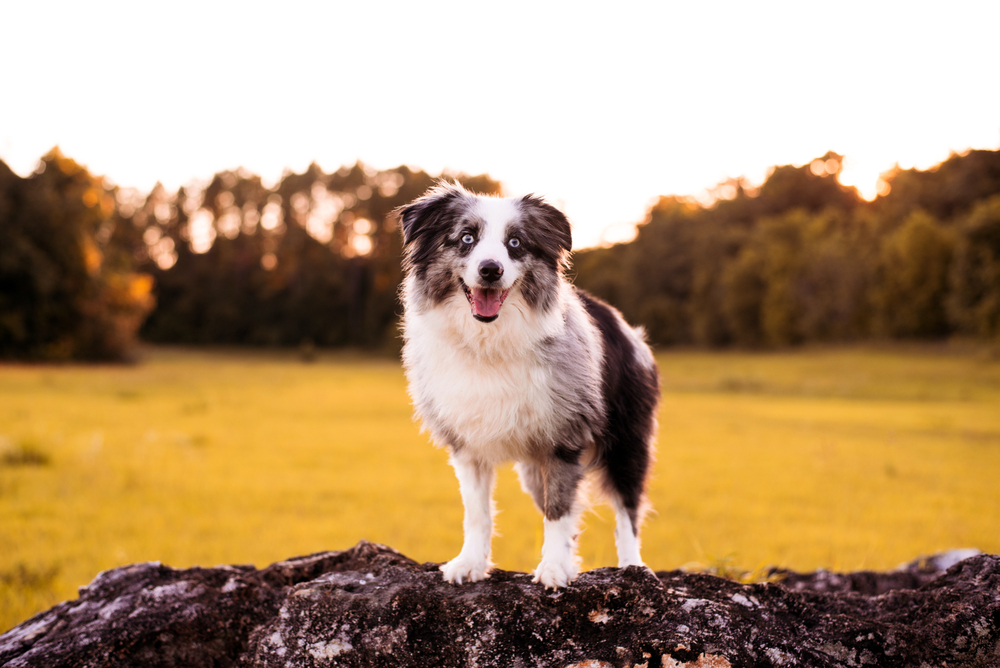
The Miniature Australian Shepherd needs regular exercise to remain happy and healthy, which is something to consider before adopting one. They require less exercise than their larger cousins, but it must be of the same quality. These dogs need the chance to stretch their legs and run around, or they may give in to destructive behaviors to burn some excess energy off.
Training
Intelligence is the name of the game with Mini Aussies. They love to engage with their owners and learn new tricks; they excel in agility and obedience competitions for this reason. In addition, they are still working dogs, so they can be trained quickly and follow instructions closely and accurately.
Early obedience training is incredibly beneficial for these dogs. Because they’re smaller, they’re more likely to be kept in places that don’t offer as much stimulation as large spaces would, e.g., in an apartment.
Health & Care
The Mini Australian Shepherd is by no means a toy breed, and they don’t suffer from some of the common problems plaguing the tiny dogs. They sometimes have dwarfism, however, which is how some of them are bred to be much smaller than the original Aussies.
Because many Mini Aussies are merle-colored, being mindful of the deafness and blindness that can occur with this color is essential. They also share the possibility of carrying the MDR1 gene (that causes sensitivity to some drugs) with their larger namesakes, the Australian Shepherds.

Grooming
Mini Australian Shepherds have a beautiful double coat that’s coarse on the outside and has a fluffy and thick underlayer beneath. They are also known to shed a lot throughout the year, so regular grooming (with a thorough brushing out at least twice a week) will help to reduce any tangling and prevent painful matting of the coat. Nail clipping and ear cleaning are also recommended; however, because the Mini Aussie is such an active breed, their nails are often worn down on their own, so a check every now and again may be all that’s needed.
Suitable For:
The Miniature Australian Shepherd is suitable for families wishing for an Australian shepherd’s intelligence, friendliness, and energy without worrying about the size. This pint-sized pup delivers, with its need for exercise slightly reduced due to its smaller size.
This makes them suitable for families or singles living in smaller accommodations such as apartments. However, ensuring they get the exercise outside they need is important, as destructive behavior and separation anxiety can occur if they’re not stimulated enough.
- Friendly
- Very intelligent
- Full of energy
- Smaller, so suitable for larger apartments
- Needs plenty of attention
- Can sometimes suffer from health problems due to coat color
- Requires a lot of exercise
Australian Shepherd Pet Breed Overview

The Australian Shepherd is one of America’s most beloved dog breeds for a good reason. They’re loyal and intelligent and skilled at agility and obedience trials. These dogs were bred in America, with their name hailing from the shepherd dog stock used to form the breed.
Personality / Character
Aussies are protective and no-nonsense, and have penetrating stares that are used in their working lives as cattle dogs. These are the favorites of ranchers across the country, partly due to their intellect. Australian Shepherds are bright and full of boundless energy, which is amazing when channeled correctly, but it can become destructive if given to boredom.
This breed also has a strong herding instinct and will often herd people, other pets, and children. Socialization is vital for Aussies, as they can sometimes be wary of strangers.
Exercise
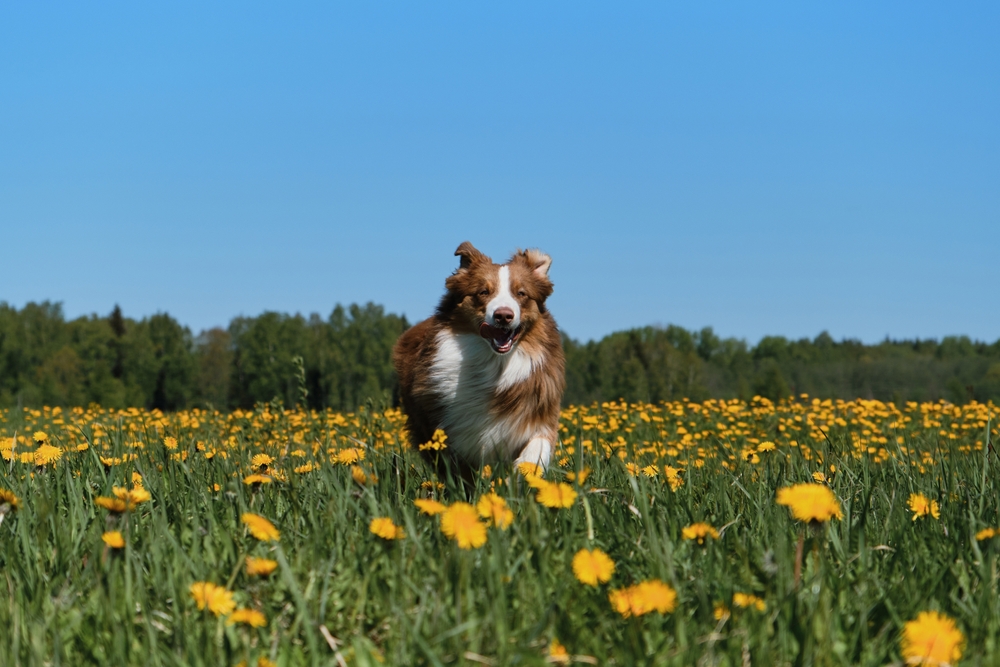
The Aussie shepherd is a very active canine that needs 2 hours of daily exercise. This will ideally be spread into several good walks and running sessions in a large yard. For this reason, the Aussie Shepherd won’t fare well in an apartment or home without a backyard.
However, they do well in agility classes and competitions and are talented at flyball, so consider this if you need extra exercise for your bounding shepherd.
Training
Aussies are ranked as one of the most intelligent breeds in the world, and training comes easily to them. Aussie shepherds are highly focused dogs that learn tasks and commands quickly and will remember them. This serves them well in obedience classes.
Finding your Aussie’s motivator (food, for example) can make training this breed a breeze, and it’ll undoubtedly be enjoyable for you and your pet.
Health & Care
The Australian Shepherd has relatively few health problems they’re genetically predisposed to. As they’re very active, problems such as obesity shouldn’t be an issue if they are fed an adequate amount.
Aussie shepherds share the same tendency to inherit the MDR1 gene, which can cause sensitivity to certain medications (like the common anti-parasite medication Ivermectin), which they share with other Shepherd breeds.
They have beautiful coat combinations which often express the merle coloring, but Aussie Shepherds that show merle coloring may be either totally or partially blind or deaf due to genetic defects.

Grooming
The Australian Shepherd has an insulating double coat consisting of a soft, downy undercoat topped with a harsh, protective overlayer. Owners should brush out this coat twice weekly to prevent matting, and because these layers shed, thorough grooming once a month can ensure no excess hair causes problems for your Aussie (or a mess on your floor). Nail clips and ear cleaning are also essential for the active breed.
Suitable For:
The Australian Shepherd is suitable for active families with the time and space to give to a loyal, hard-working, and family-oriented dog. People living in apartments may struggle to provide the exercise they need to stay happy and healthy, so it’s recommended that they have a home with outdoor space that they can explore, such as a yard.
- Active and energetic
- Loyal
- Friendly and great with children
- Needs large amounts of exercise
- Can be wary of strangers
- Can be disruptive if not exercised enough
Mini Aussie vs. Aussie: Which Breed Is Right For You?
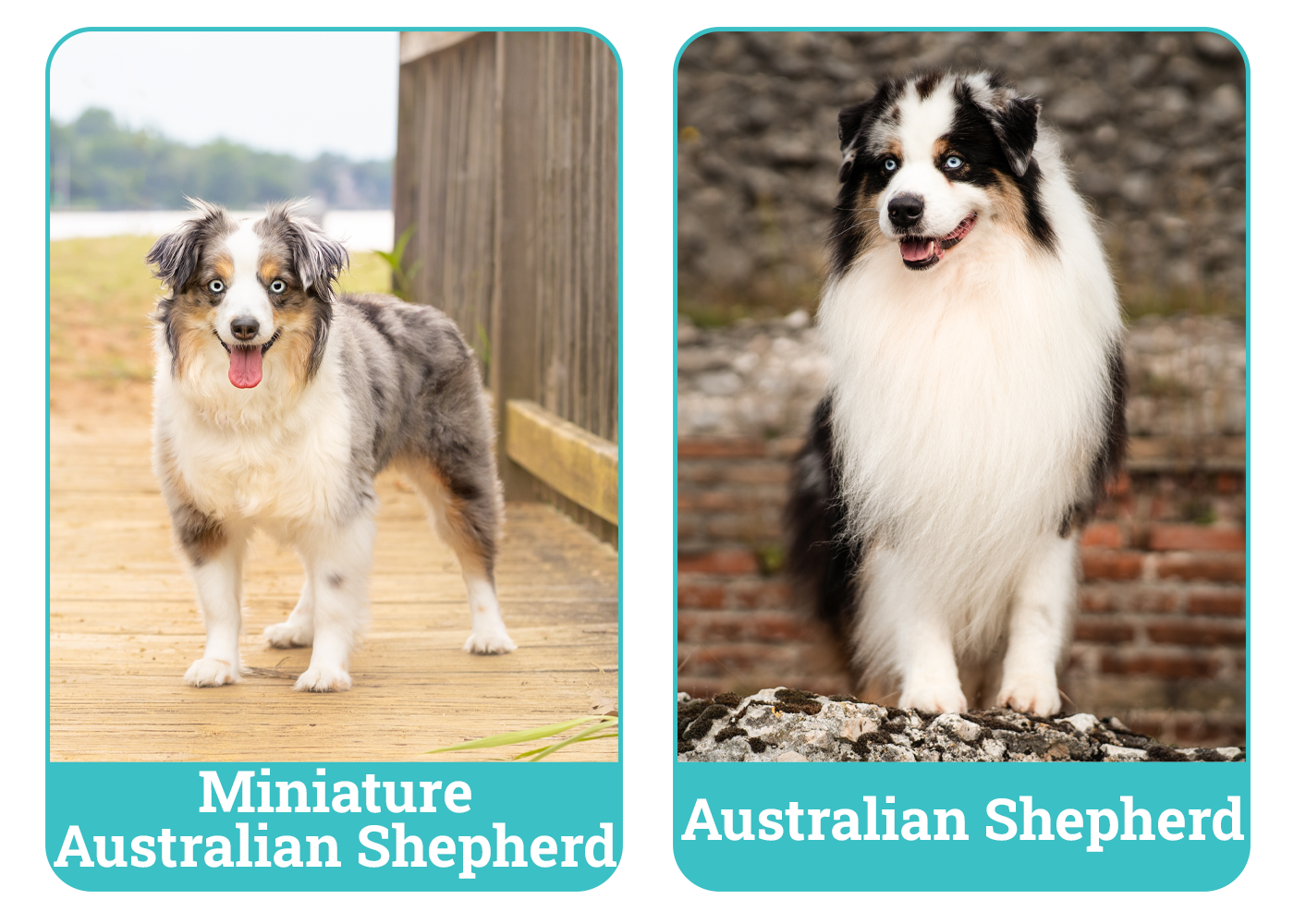
These two breeds answer the question many potential Aussie Shepherd owners ask: Do I have room for an Australian Shepherd? The Miniature Aussie is everything the standard size is, just in a smaller package, so it is ideal for families with more limited space. Full-size Aussies are more suitable for owners with large backyards. Both varieties need the same levels of mental stimulation, as both have a high herding instinct and high intelligence that can become destructive if not channeled correctly.
Featured Image Credit: Miniature Australian Shepherd (Danielle W Press, Shutterstock) | Australian Shepherd (VKarlov, Shutterstock)


























2 Responses
I have a mini aussie,best dog i ever had
That's awesome to hear, Daniel! They are great dogs.