Mini Corgi vs. Corgi: Vet-Reviewed Breed Comparison


In this article
The Pembroke Welsh Corgi and the Cardigan Welsh Corgi are affectionate, intelligent, and lovable, and make excellent watchdogs. But what about the smaller, mini Corgi? Do these smaller versions of the Corgi have the same appealing traits that make the larger versions so popular? Are they just as lovable and playful, for example, and do they live as long as their larger peers? We'll answer those questions and compare the Mini Corgi and Corgi so that you can determine which dog is right for your home.

Visual Differences

At a Glance
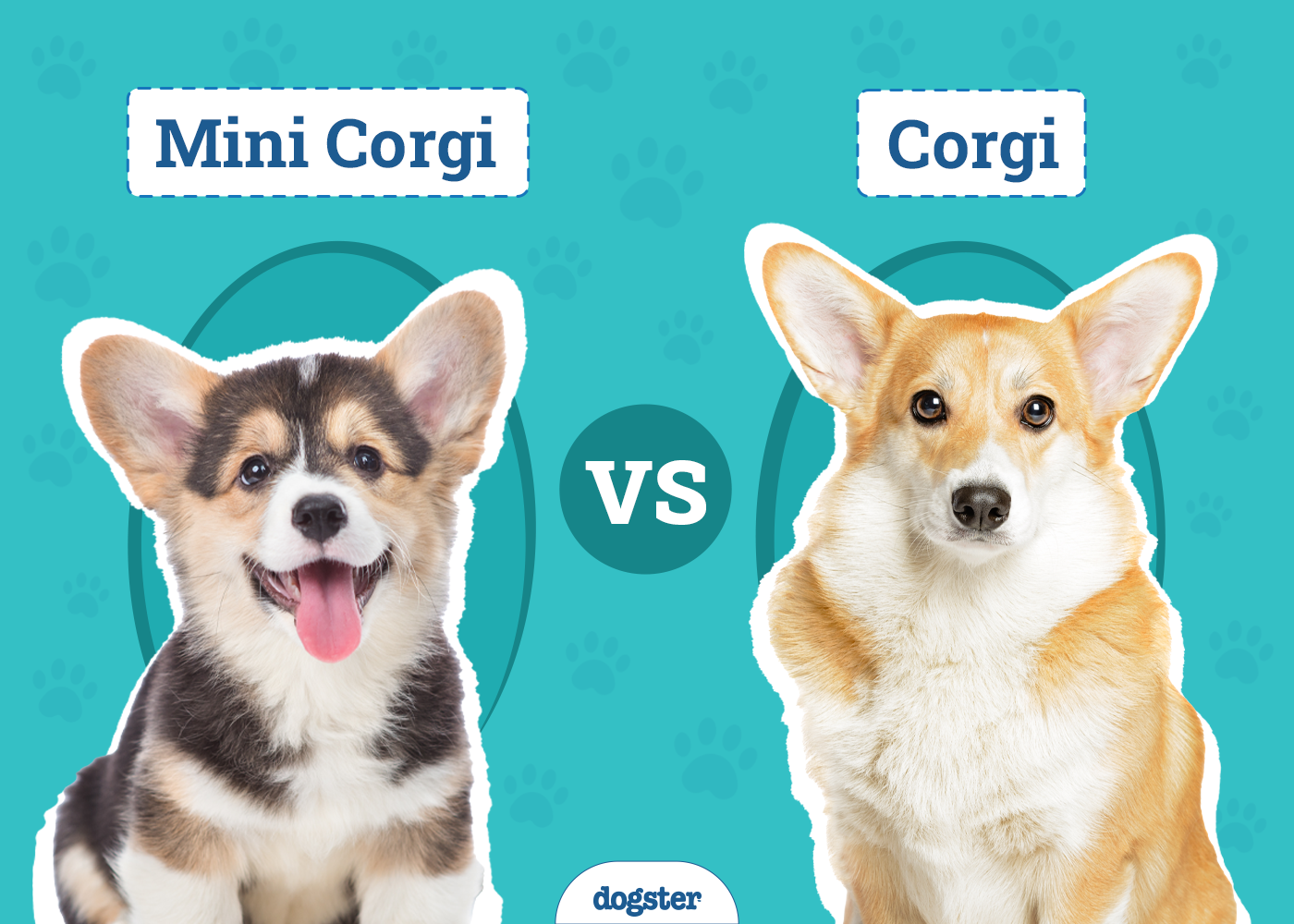
Much like “Teacup Chihuahuas”, the miniature or “Mini” Corgi is not recognized as a separate breed by major kennel clubs and does not have an official breed standard. Dogs marketed as Mini Corgis may be the result of selectively breeding smaller Corgis, other small breeds, or dogs with dwarfism. As a result, characteristics such as size, weight, lifespan, temperament, trainability, exercise needs, and health can vary significantly between individual dogs, and some ‘mini’ Corgis grow to sizes close to those of the standard Corgi! Any traits described for Mini Corgis should be viewed as a general guide rather than a specific standard.

Mini Corgi Overview

Mini Corgis are generally their full-sized counterparts, but their appearance and temperament can vary depending on how they were bred. You see, to get them to be smaller, Corgis are often bred with other breeds that are smaller than they are, like miniature Poodles and other small dogs. The resulting Mini Corgi often looks more like the other non-Corgi parent, which means you’ll have a Mini Corgi that looks more like a Poodle, Dachshund, Bichon Frise, or another small dog.
Personality / Character
Like their larger cousins, the Mini Corgi is often friendly, affectionate, good with kids when properly socialised and supervised, and loves to play, although temperament can vary depending on their breeding. Many adapt well to family life and may make alert watchdogs, depending on their individual temperament and ancestry. Trainability and energy levels vary, but many Mini Corgi-type dogs benefit from regular exercise and mental stimulation. Some may inherit the vocal tendencies towards barking commonly seen in Corgis.
Training 🎾
Like Corgis, Mini Corgis may be eager to please, which makes training them much easier. However, some dogs can have a stubborn streak, depending on ancestry, personality, and training, so a good bit of patience and dedication is needed. Brief training sessions are ideal since Mini Corgis can lose focus if the training drags on.

Health Issues
The long bodies and short legs of the standard Corgi breeds are the result of Chondrodysplasia, a genetic mutation causing dwarfism, which, apart from creating a cute appearance, has numerous potential health implications, particularly on the health of their spine and joints. Because Mini Corgis are not a standardized breed, their health risks vary depending on their genetics and breeding background. Dogs with Corgi ancestry may be at risk for conditions such as hip dysplasia, progressive retinal atrophy, epilepsy, and degenerative myelopathy, although risks vary between individuals.
The inclusion of other breeds when creating a ‘mini’ Corgi could potentially improve the overall health by increasing genetic diversity, but it could also make things much worse if breeds with significant genetic mutations are used.
Grooming Needs
Grooming requirements depend on the coat type inherited from the parent breeds, but regular brushing is often beneficial. Many dogs with Corgi-type double coats experience increased seasonal shedding. Brushing their coats every day removes loose hair and keeps their hair healthy. You also need to brush their teeth a few times a week, trim their nails monthly, and check their ears when you're brushing their coat.
Suitable for:
Mini Corgis may appeal to people looking for a smaller companion dog, although temperament and care requirements can vary considerably. If you are considering a smaller Corgi-type dog, be sure to research its specific breeding background, temperament, and care needs before making a decision.
Pros & Cons
Below are the Pros and Cons of owning a Mini Corgi to help you decide which is best for you.
Pros
- More suitable for smaller living spaces than the larger standard Corgi, provided their exercise needs are met
- Affectionate and lovable
- Often require less food than a standard Corgi
- May benefit from increased genetic diversity
- Can make great watchdogs and companions
Cons
- Lifespan can vary depending on genetics and breeding background
- Can be quite vocal
- Tend to shed heavily in warmer seasons
- Health concerns vary depending on the breeds involved and breeding practices
- May have significant health issues if the result of crossing with other breeds with high rates of genetic mutation
Corgi Overview

Many of the traits people admire in Corgis are also often sought in dogs marketed as Mini Corgis, although those dogs can vary considerably depending on their breeding. Corgis are affectionate, intelligent, and energetic dogs that love their owners. They’re small dogs devoted to their human family, but they bark a lot, which can be problematic for some homes. Corgis are often good with small children and other dogs when properly socialised and trained, hardly drool, and are easy to train. However, they need a lot of mental and physical activity to stay healthy and happy.
Personality / Character
Corgis are typically alert and vocal dogs that often bark to announce visitors or unfamiliar activity. They are playful, energetic dogs that enjoy regular activity and interaction with their families.
Training 🎾
Corgis are one of the easier breeds to train because they are so eager to please their pet parents. They can have a stubborn streak, but it’s relatively easy to overcome with patience and diligence.

Health Issues
Corgis can be prone to certain inherited health conditions, and their lifespan typically ranges from about 12–15 years. They need to be regularly evaluated for hip dysplasia and should have their eyes checked annually to prevent eye degeneration issues.
Grooming Needs
While Corgis don’t need extensive grooming, they shed a considerable amount of fur twice a year like their smaller cousins. Daily brushing helps manage shedding and can reduce the amount of loose hair and dander in the home. Like the mini Corgi, Corgis must also have their teeth brushed, nails trimmed, and ears inspected.
Suitable for:
Large families with children living in a large home are the perfect fit for a Corgi, but they will do just as well in an apartment with a single owner. After all, most adult Corgis weigh roughly 25–38 pounds, depending on breed and sex. A Corgi can make a perfect pet if you live in an RV or tiny home since they can adapt to smaller living spaces when provided with sufficient exercise, training, and companionship.
Pros & Cons
Here are the advantages and disadvantages of owning a Corgi.
Pros
- Small dogs that can live in small spaces
- Affectionate, playful, and lovable
- Make great watchdogs and companions
- Have an average lifespan of around 12–15 years
- Get along with kids and other pets
- Make excellent watchdogs
Cons
- Shed a lot twice a year
- Likes to bark
- Need a lot of mental stimulation
- Health issues associated with Chondrodysplasia

What Is the Difference in Cost Between a Corgi and a Mini Corgi?
One thing you need to remember when adopting your next dog is the price difference between standard Corgis and dogs marketed as Mini Corgis. Despite not being an official breed, the price you’ll pay for a Mini Corgi is often higher than that of the standard breed. This is largely due to their popularity. Corgi puppies can vary widely in price depending on breeder quality, location, and pedigree, while dogs marketed as Mini Corgis can sometimes be priced higher due to breeding methods and demand.
Which Breed Is Right for You?

Health and lifespan between the two dogs can vary widely depending on genetics and breeding background. There are very few other differences between these dogs, alongside the fact that Mini Corgis aren’t recognized as a breed by the American Kennel Club (AKC). At the end of the day, the Mini Corgi and Corgi may share some similar traits, but can differ significantly depending on breeding, meaning they will both often make fantastic pets, comforting companions, and excellent watchdogs. The only choice you need to make is whether you want a small dog or a tiny dog. The decision should also consider temperament, health background, exercise needs, and the specific type of breeding involved.
Related Reads:
Sources
Featured Image Credit: Top - Mini Corgi (ABCDstock, Shutterstock) | Bottom - Corgi (MolnarSzabolcsErdely, Pixabay)
Expert dog care, straight to your inbox
News, insights, expert advice, and everything dog.

No spam — unsubscribe anytime.
By signing up, you agree to our Terms & Conditions and Privacy & Cookies Policy.
How useful was this post?
Click a star to rate. You can leave written feedback afterwards. (We read all feedback.)
Greg Iacono is a self-taught writer and former chiropractor who, ironically, retired early due to back problems. He spends his time writing scintillating content on a wide variety of subjects. Greg is also an accomplished video script writer known for his ability to take a complex subject and make it accessible for the layperson.
Before retiring from chiropractic, Greg had clinics in 3 different countries, including the U.S., Belgium, and Peru. When not writing, Greg spends his time traveling, riding his motorcycle, and doting on his 7-year-old daughter, Valery. He also has a massive Lego city he built with his son, Alex, and is very proud of his daughter, Catherine, an accomplished graphic artist.