Male vs. Female Labradoodle: Differences Explained (With Pictures)

In this article
When choosing a dog, every small trait suddenly seems like a big deal. After you decide to get a Labradoodle, your next step is to pick the sex. Of course, you don’t have to be set on one or the other. (In fact, it may be easier to find the right pup if you aren’t completely committed to having a male or a female.)
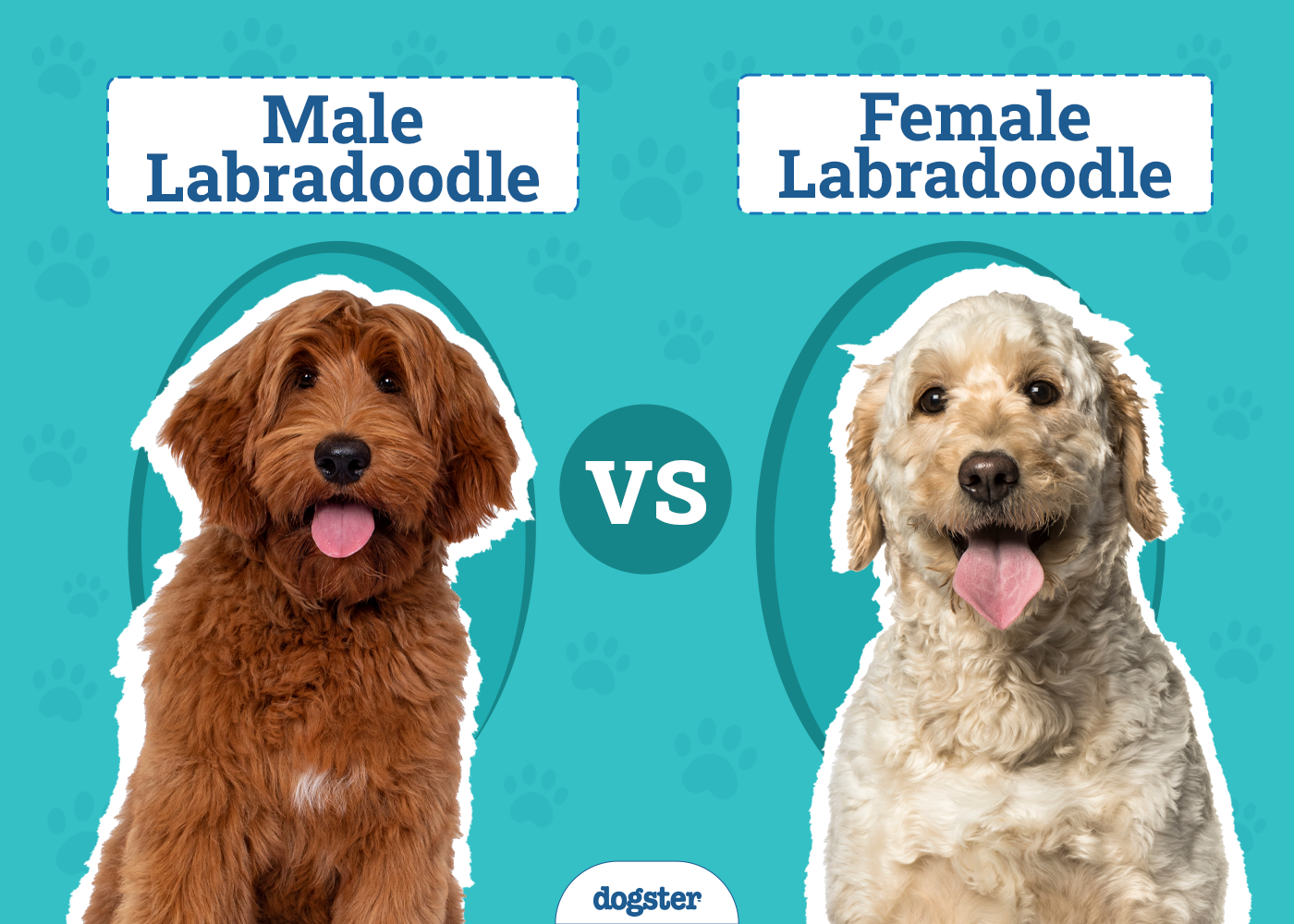
However, there are specific differences between male and female Labradoodles, so it can be a good idea to at least have an idea of the one that you want. Here, we’ll help you figure out which sex is best for you.

Visual Differences

At a Glance
Male Labradoodle Overview

Personality/Character
Male Labradoodles are often intelligent, friendly, and affectionate. These dogs love people and prefer to be around their families as much as possible. They’re often rather easygoing but can be energetic too. Therefore, they do best in active families that can keep up with them.
Temperament is heavily influenced by training and socialization. Therefore, it’s vital to get your Labradoodle socialized from a young age to ensure they’re well-behaved.
Some breeders and owners claim that male Labradoodles tend to be more affectionate. However, others say the opposite. There is no clear difference between male and female Labradoodles when it comes to their personality. Male Labradoodles may have higher testosterone levels than females, sometimes making them rowdier and more energetic, but this tends to fade once they reach adulthood or when they’re neutered.
Training 🎾
Labradoodles are often easy to train. They’re intelligent and eager to please. Therefore, they pick up on commands quickly and are likely to follow those commands in real-world situations. They can even learn complex tasks when trained properly.
Since these dogs are so intelligent, they do need lots of mental stimulation. Otherwise, they can become bored and destructive.
Males may be a bit more stubborn than females. However, the individual differences within this mixed breed are so strong that it’s hard to say for sure. Males may be more prone to marking and humping behaviors if not neutered.

Health and Care
Labradoodles are generally healthy dogs that can live up to 15 years with proper care. However, they may inherit some health issues from their parent breeds, such as hip dysplasia, eye problems, ear infections, allergies, and skin conditions.
They also need regular grooming to keep their coats clean and healthy. Depending on their coat type, they may need brushing every day or every few days to prevent matting and tangles. They also need trimming every 6–8 weeks to maintain their appearance and hygiene.
Male and female Labradoodles have similar health and care needs, but sex may affect certain aspects of their well-being. For example, male Labradoodles may be more prone to prostate problems or testicular cancer if not neutered. Neutering your Labradoodle can prevent these issues and reduce unwanted behaviors like roaming, aggression, or marking.
Males are not particularly less healthy than females, though.
Breeding
Breeding Labradoodles involves crossing a Labrador Retriever and Poodle, so these dogs aren’t purebred. However, you can also get a Labradoodle by crossing two Labradoodles. When you do this, you’re more likely to get more predictable traits.
Male Labradoodles do not carry the largest burden of breeding. The male’s only job is to fertilize the female, which may be done in the traditional manner or through artificial insemination. Either way, the male should be in tip-top condition, even though he won’t actually have much to do with the puppies.
Female Labradoodle Overview

Personality/Character
The female Labradoodle is similar to the male in terms of personality. They aren’t aggressive and tend to be welcoming of strangers. They’re known for their friendly nature, which may be the biggest reason they’re so popular.
However, not all female Labradoodles are the same. There are significant personality differences from individual to individual.
Some say that female Labradoodles are more likely to be mature, attentive, and obedient. However, others say the same thing about males. There aren’t any specific personality differences that are set in stone.
Training 🎾
Females may be slightly easier to train than males, as they seem to mature faster. They may be less energetic, which makes them easier to control. However, this varies a lot from individual to individual.
A female may have hormonal swings if she is not spayed. Therefore, you may see differences in training performance. Females are less likely to mark or hump. However, that doesn’t mean they never do it, especially if there is a male in the house.

Health & Care
Female Labradoodles are just as healthy as males in most cases. However, they are prone to specific types of cancers that males cannot get. Furthermore, they may be more prone to uterine infections. Health associated with the female reproductive organs will obviously only be a concern for female dogs.
However, if you spay your female, the differences are small.
Breeding
Females must carry the litter of puppies when bred, which puts significantly more strain on their bodies than the males'. Therefore, it’s particularly important for the female to be healthy and in good condition before becoming pregnant. If she isn’t healthy, the litter of puppies probably won’t be either.
Females must also get plenty of special veterinary care before and after they become pregnant. Males won’t need this care.
Which Sex Is Right for You?
In the end, there isn’t much difference between female and male Labradoodles. Both sexes have the same personality traits and health—for the most part.
The only significant differences are due to reproduction differences. For instance, males don’t carry puppies and don’t have many hormonal shifts throughout the year, and females can get uterine cancer.
However, if you spay or neuter your dog, these differences practically disappear.
Related Reads:
Sources
Featured Image Credit: Top - Boys in Bristol Photography, Pexels | Bottom - Janosch Diggelmann, Unsplash
Expert dog care, straight to your inbox
Vet-reviewed advice, training tips, and the best of Dogster. Free, and you can unsubscribe anytime.
By signing up, you agree to our Terms & Conditions and Privacy & Cookies Policy.
Kristin loves to help pet parents create a fulfilling life for their pets by informing them on the latest scientific discoveries and helping them choose the best products for their pets. She currently resides in Tennessee with three cats, four dogs, two fish, and a lizard, though she has dreams of owning chickens one day!
Join the conversation
Ask a question, share your story, or send private feedback.