Large Munsterlander Dog Breed: Info, Pictures, Facts & Traits
In this article
The Large Munsterlander is a gentle-natured dog with origins in Münster, Germany. Originally bred as a gundog, they've long been distinguished by their versatility, eagerness to please, and dependability, traits that were carried through the generations and that are still in evidence in today's Large Munsterlanders. It is for these reasons that this breed is often considered to be a wonderful family dog.
In this guide, we explore all things Large Munsterlander, including their distinguishing traits, temperament, care requirements, fun facts, and origins.
Breed Overview
Height:
Weight:
Lifespan:
Colors:
Suitable for:
Temperament:
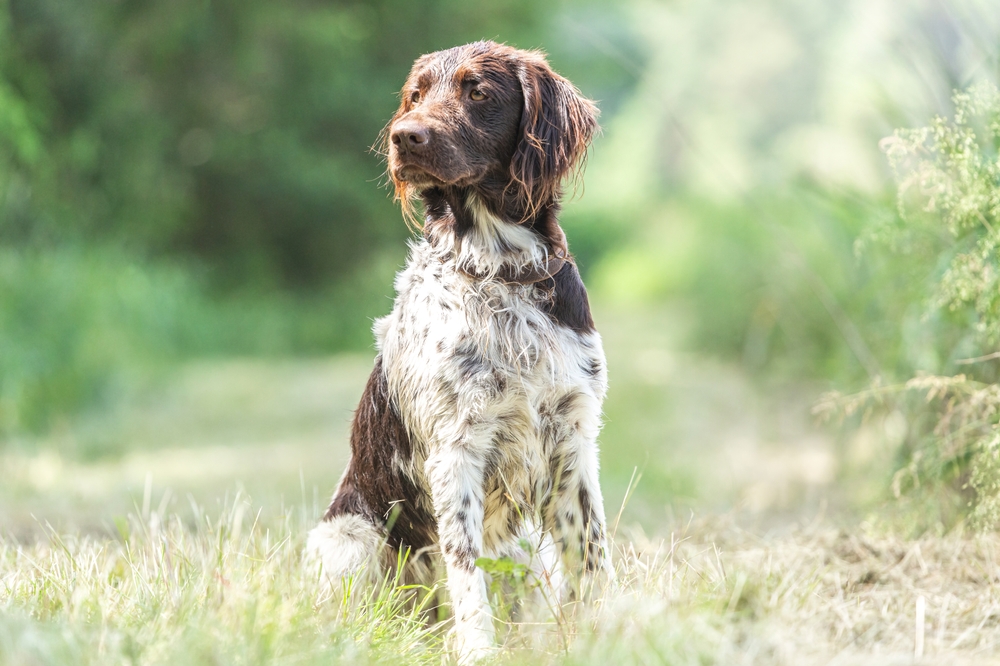
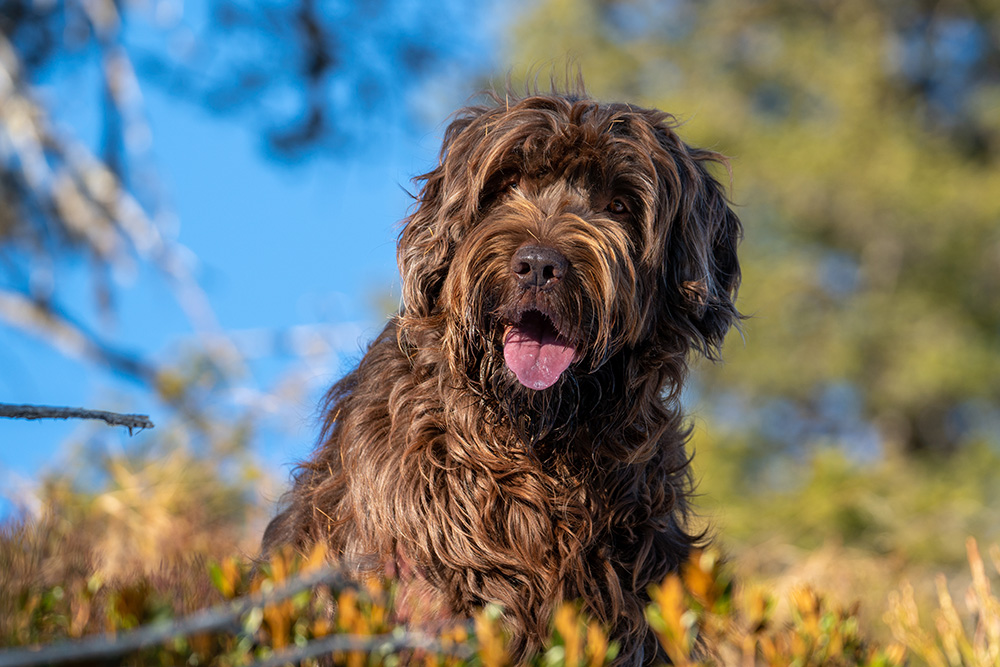
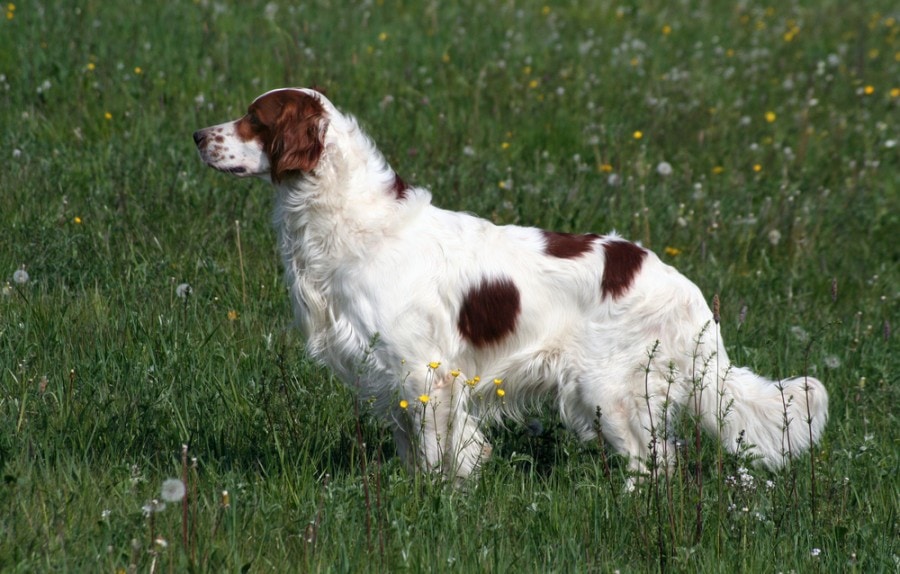
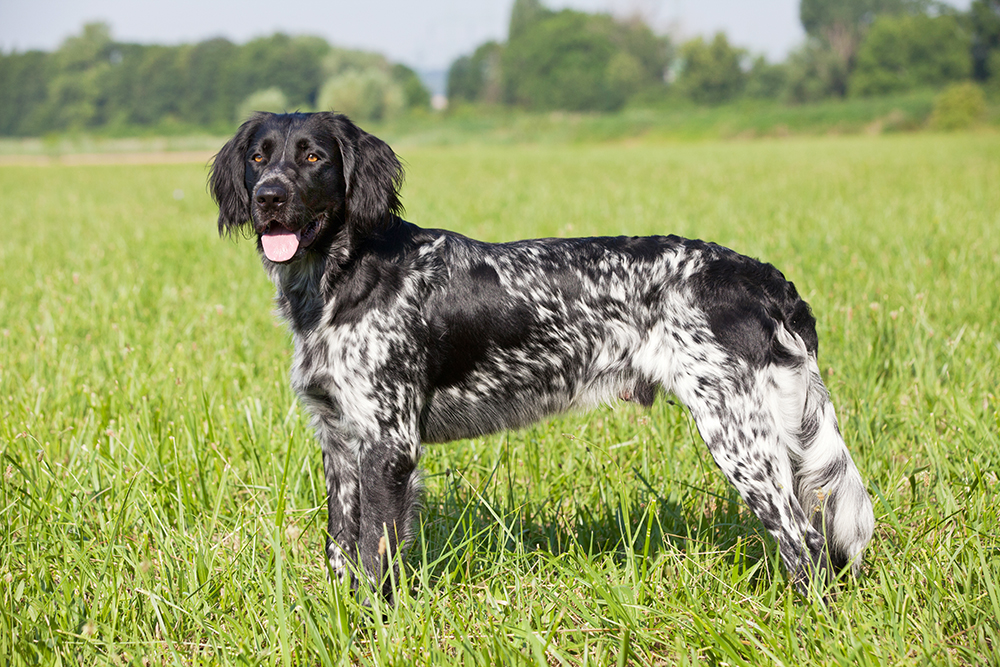
The Large Munsterlander's black and white coat is an emblem of the breed. Some of these dogs have blue roan coloring, which adds a bluish tint to the coat, but they are all still black and white, though the ratio of black to white can vary from dog to dog.
A variety of markings are also possible: plated, ticked, patched, or a combination of patched and ticked.
Large Munsterlander Characteristics

Large Munsterlander Puppies
Large Munsterlander puppies are sweet, curious, and playful. If you are considering seeking out a Large Munsterlander breeder, we recommend conducting thorough research as to the breeder's reputability and welfare standards.
A reputable breeder will allow you to visit their home to meet the puppies and their parents and match you with the puppy they think would be the best fit for both you and the dog. They'll also provide early socialization, ask lots of questions to make sure it's a good match, provide proof of health screenings, and will be on hand to support you even after you've taken the puppy home.
Alternatively, you can look to adopt a dog by checking out rescue organizations. Although there will likely be an adoption fee to help support the shelter and the care it provides, it won't be as high as breeder fees. Even if you don't find any Large Munsterlanders specifically, your new best friend could come in the form of a similar breed or mix.
Large Munsterlander Origin & History
The Large Munsterlander's progenitors were bird and hawking dogs from the Middle Ages. Later, the Wachtelhund and Stöberhund, as well as 19th-century pointers—all fellow hunters—joined the breed's line of ancestry. Large Munsterlanders were developed as gun dogs capable of navigating all kinds of terrain, whether that be on land or in water.
Large Munsterlanders spent their days searching, pointing (pointing with the nose and paw toward prey), and retrieving birds and game. In 1919, a club was founded to breed black and white Münsterlander Pointers and added native longhaired dogs to the mix, leading to the development of the Large Munsterlander as we know them today.

Temperament & Intelligence of the Large Munsterlander 🧠
The Large Munsterlander is a devoted and affectionate companion with a "can-do" attitude and a love of high-energy activities. It is for this reason that the Large Munsterlander thrives in a home with loving, attentive people who can dedicate a good portion of time each day to this energetic dog's exercise needs.
As dogs with a hunting history, Large Munsterlanders have been developed to be keenly intelligent and enthusiastic about pleasing their caregivers (ideal for training). All that said, despite the Large Munsterlander having energy levels that could tear up a field, in the house, they are typically a calm, sensitive, and intuitive family member.
In addition, these dogs are often open and friendly toward strangers, a fact that may work against you if you're hoping for a guard dog, as well as a companion.
Are These Dogs Good for Families? 👪
The Large Munsterlander is renowned for family friendliness, though it's up to the family to make sure consistent socialization and training are continued after the puppy/dog leaves the breeder or shelter. If this happens and the Large Munsterlander is interacted with kindly and respectfully by the whole family, they'll give back an abundance of love and fun times.

Does This Breed Get Along with Other Pets? 🐶 😽
Whether the Large Munsterlander gets along with other dogs and cats in this household is a matter of how they and the other animals are socialized. It's essential to welcome your new dog to your home in a way that doesn't trigger a strong territorial response from your other furry companions.
For example, introducing the dog on a leash in neutral territory is wise, and some breeders and shelters may request that you do this first to ensure it's a good match.
If you have cats, you may want to keep your new dog separate from them for a few days as they get used to each other's scent without physically seeing one another. Then, you can progress to introducing them through a pet gate or something similar, and finally, introducing the dog (while leashed) to the cats without any barriers.
Things to Know When Owning a Large Munsterlander
Food & Diet Requirements 🦴
The Large Munsterlander is a high-energy breed that needs proper nutrition to thrive and stay active. You can pick any quality formula that adheres to your dog's weight and age, though if a health condition is present, your vet may recommend a special diet.
Avoid exercising your Large Munsterlander right after they eat a meal because large breeds are more susceptible to bloat, which can cause life-threatening complications. It's also a good idea to split the daily food ration into two or more meals, as this prevents your dog from eating too much too quickly—a factor that can also contribute to bloat.

Exercise 🐕
As a highly active breed, your Large Munsterlander could require up to 2 hours of exercise per day, though individual dogs' needs can be slightly different depending on factors like personal boundaries and health. In addition to being walked a few times every day, the Large Munsterlander benefits from a secure area in which they can roam and run freely.
Training 🎾
The Large Munsterlander's responsiveness and versatility mean they take to positive, consistent training like a charm. Avoid being harsh with your Large Munsterlander, though—these dogs are sensitive, and their feelings are easily hurt. Keep things positive, consistent, and fun, and you'll reap the rewards. It's ideal to make training sessions short (around 10–15 minutes) apiece to keep your Large Munsterlander's interest.

Grooming ✂️
Large Munsterlanders need to be brushed at least once per week (though more often is ideal) with a particular focus on the long tail hairs and feathers on the legs, belly, and ears, as the longer areas are more prone to tangling and matting. A de-shedding tool will help keep things under control during shedding seasons, as these dogs lose a fair bit of hair during these periods.
Coat maintenance will need to be carried out more often during times of heavy shedding. Other essential aspects of grooming are:
- Regular ear checks for the buildup of dirt
- Cleaning the ears occasionally with a dog-safe solution if they look too dirty
- Nail trimming when necessary
- Daily tooth brushing
Health and Conditions 🏥
Any breeder you go to should be able to produce a health guarantee and proof that they perform genetic health testing on their dogs. Irresponsible breeding contributes to health problems that can make life miserable for both you and your dog. Nevertheless, the risk of a dog getting sick is never entirely eliminated, no matter how well-bred a dog is.
In the case of the Large Munsterlander, bloat (GDV) is one risk factor. Though it's nothing unusual for humans to experience a bit of bloat now and then, in dogs, this is very serious. If the air pressure in the stomach builds too much, the blood supply to the heart can be cut off. Without treatment, this condition can be fatal. Other conditions to watch out for include:
Male vs. Female
Most male dogs are a little bit larger than females. Due to sexual hormones, they're also more prone to territorial behaviors and urine marking if you don't have them neutered. Females that have not been spayed go into heat, which can trigger uncharacteristic behaviors like irritability, clinginess, and urinating more. Female dogs in heat also bleed from the vulva.
If behavioral quirks are hormone-related, spaying or neutering may help minimize them, so ask your vet for advice. Otherwise, there aren't any specific personality differences—all dogs are unique, no matter whether they're male or female.
3 Little-Known Facts About the Large Munsterlander
1. Munsterlanders Come in Two Sizes
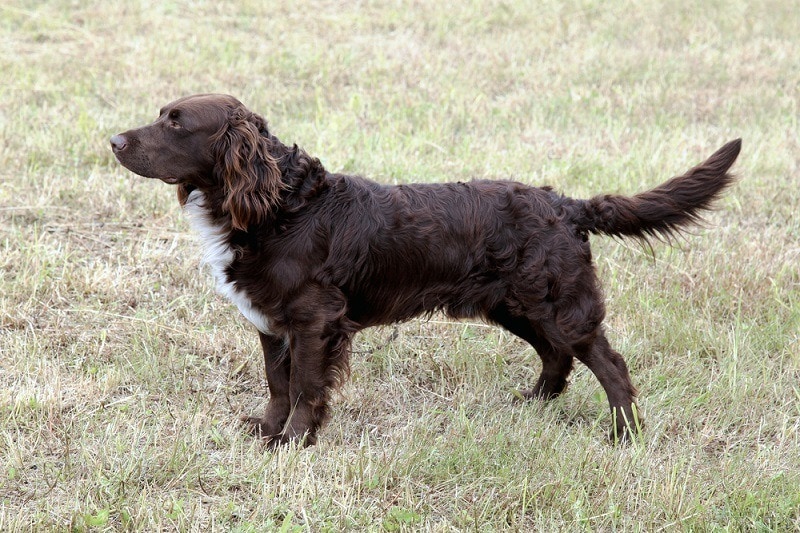
In addition to the Large Munsterlander, there's the Small Munsterlander, which stands at around 20.5–21 inches compared to the Large Munsterlander's 23–26.5 inches. The Small Munsterlander also comes in different colors to the large variety: brown and white and brown roan.
2. The Munsterlander Was Once Considered a Variety of Another Breed
The Large Munsterlander wasn't considered a breed in their own right until 1922. Before this point, the Large Munsterlander was registered as a German Longhaired Pointer variety.
3. The Large Munsterlander Came to the U.S. in the Mid-20th Century
The first Large Munsterlanders set paw on U.S. soil in 1966, but the United Kennel Club did not recognize the breed until 2006. The Kennel Club (Britain) recognized the Large Munsterlander much earlier in 1971.
Final Thoughts
If you're looking for a dog that will keep you on your toes while out and about but that's a gentle, devoted companion at home, look no further than the Large Munsterlander. However, these dogs aren't for everyone because their high energy levels can be a challenge to those who aren't prepared for such an active, on-the-go dog.
Please consider carefully whether you can commit to just how much exercise these dogs need.
Sources
Featured Image Credit: Lenkadan, Shutterstock
Expert dog care, straight to your inbox
Vet-reviewed advice, training tips, and the best of Dogster. Free, and you can unsubscribe anytime.
By signing up, you agree to our Terms & Conditions and Privacy & Cookies Policy.
Kit Copson is a freelance writer and lifelong animal lover with a strong interest in animal welfare. She has parented many furry beings over the years and is currently a proud cat mom of two—one very chilled (unless hungry) Siamese and a skittish but adorable Domestic Shorthair—and dog mom of one—an adopted Bichon Poodle cross. When not writing about or spending time with pets, Kit can be found drawing in her sketchpad, reading, or more often than not, drinking tea.
Join the conversation
Ask a question, share your story, or send private feedback.