In this article
View 3 More +The decision to add another fur child to the family is an exciting one. Sometimes, you know exactly what breed it’s going to be, but other times, there may be some indecision. If a large fur baby of the canine variety is the order of the day, you can’t go wrong with either a Giant Schnauzer or a Great Dane. Both these dogs have endearing qualities and will warm their way right into your heart.
Because of their all-around appeal, it can be difficult to choose between the two. Fortunately, their distinct qualities set them apart from one another. Read on to discover which of these two breeds would be the perfect fit for your family and your home.

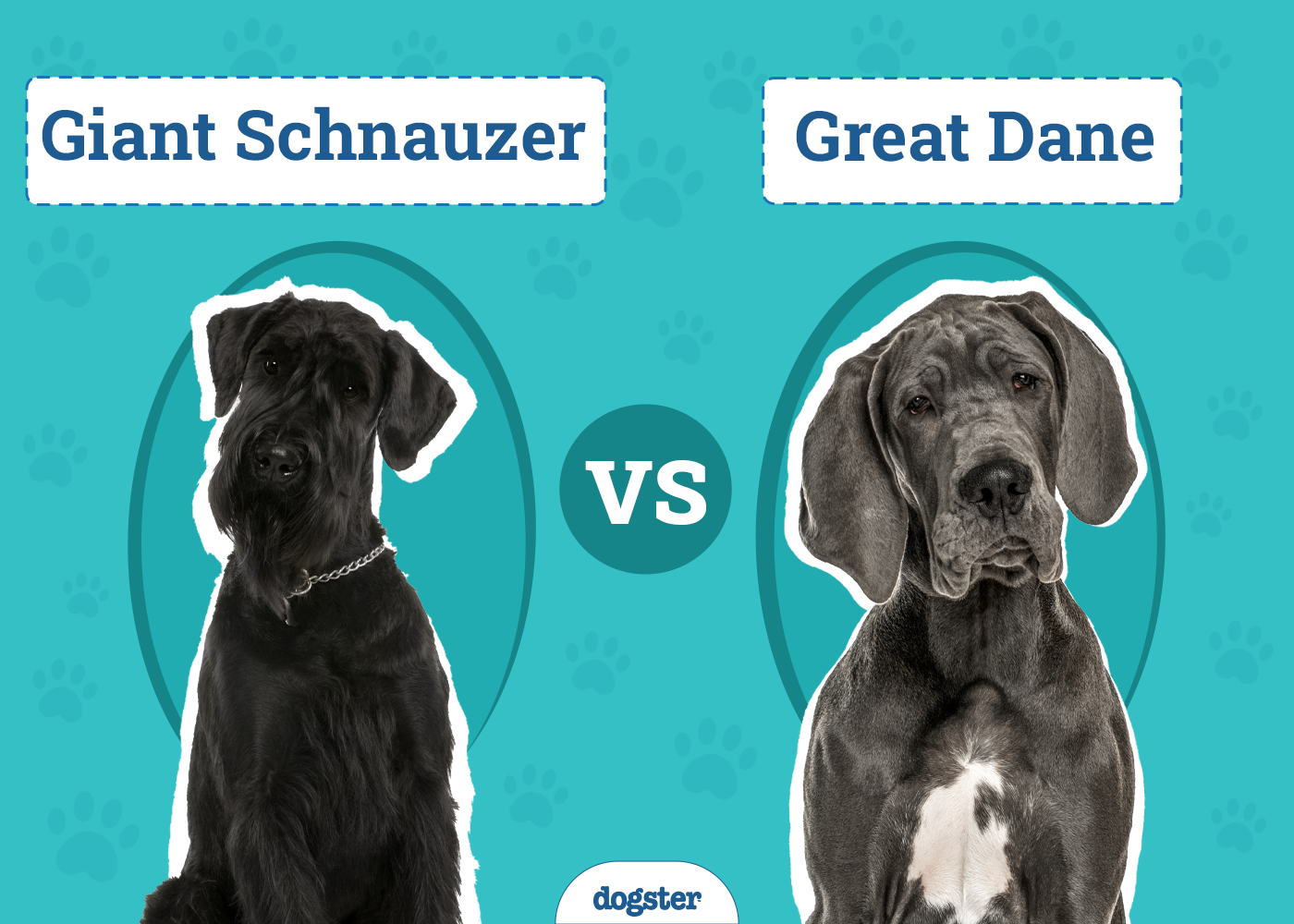
Visual Differences
At a Glance
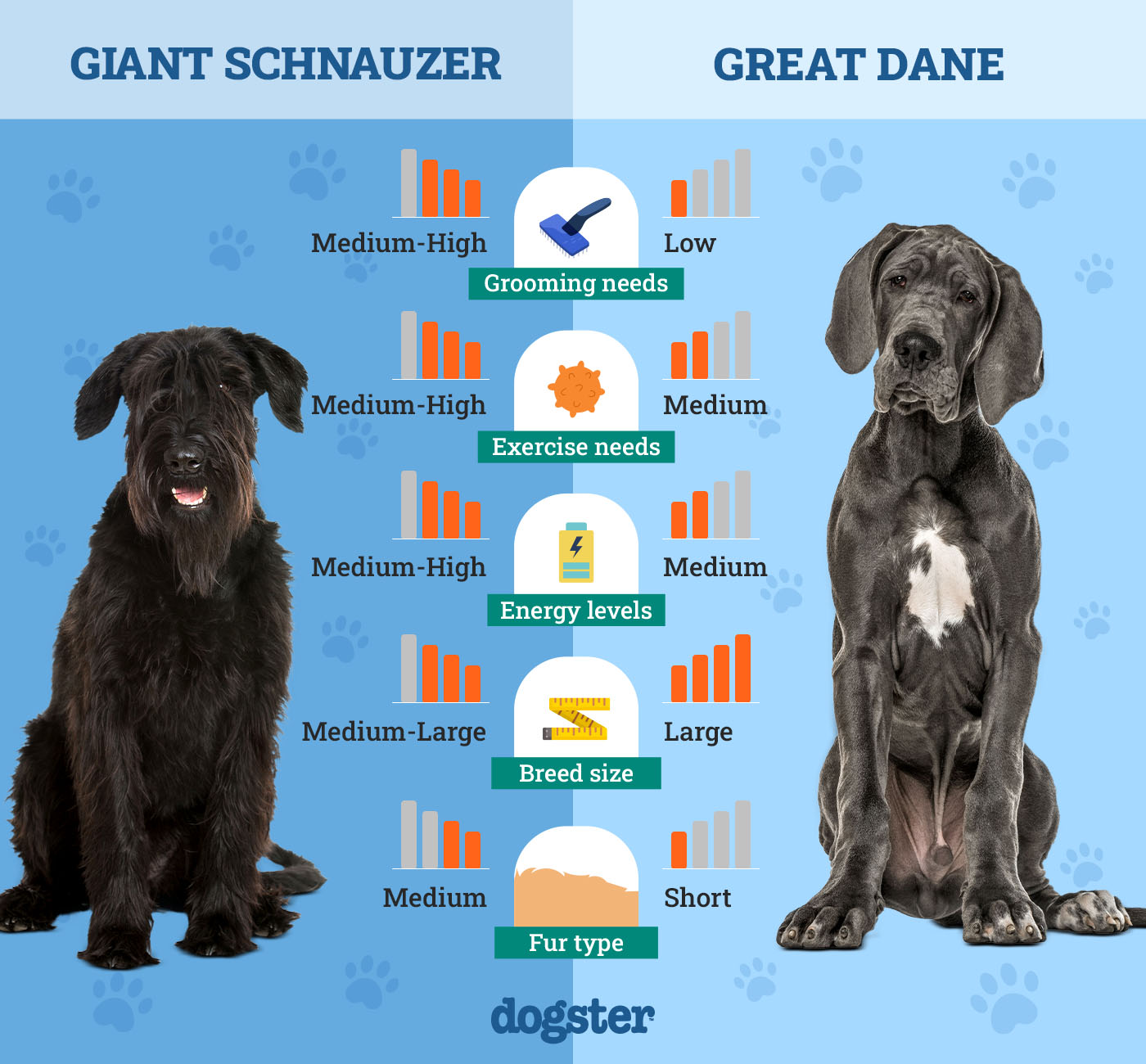
- Average height (adult): 23–28 inches
- Average weight (adult): 60–100 pounds
- Lifespan: 10–12 years
- Exercise: 90+ minutes a day
- Grooming needs: Moderate to high
- Family-friendly: Usually
- Other pet-friendly: Can be
- Trainability: High
- Average height (adult): 28–34 inches
- Average weight (adult): 110–200 pounds
- Lifespan: 8–11 years
- Exercise: 60 minutes a day
- Grooming needs: Low
- Family-friendly: Yes
- Other pet-friendly: Yes
- Trainability: Good
Giant Schnauzer Overview

The word “giant” can be a bit misleading. Although they don’t compare with other true giant breeds, like Great Danes and Mastiffs, they are still large, imposing, and powerful hounds. More accurately, they are giant compared to their counterparts, namely the standard Schnauzer and Miniature Schnauzer. They were derived from these two other types in the 17th century by cross breeding them with various other large dog breeds, such as Great Danes and Bouvier des Flandres.
The Giant Schnauzer is a true working dog breed originally developed in Germany for all-purpose farm work like guarding livestock, herding animals to market, and eliminating vermin. Their thick, wooly coats protected them from both the elements and nips from vermin. Later on, the breed became popular in towns and cities as factory and business premises’ guard dogs.
They gained international attention during the World Wars, when they were used as military dogs, making their American debut in the 1930s. It wasn’t until the 1960s that this lovable breed started to become popular as a pet and show dog. As well as being a well-loved addition to many families, the Giant Schnauzer is used for police work, search and rescue missions, and carting.
Personality / Character
The AKC perfectly describes the Giant Schnauzer as “alert, loyal and trainable”. They have retained much of their guard dog character and are very protective of their family, children included. Coupled with that is an inherent initial suspicion of newcomers and strangers, of both the human and animal variety. This is usually overcome following introductions. Their natural wariness toward individuals outside of their family can lead to aggression towards strangers, but this is easily managed with suitable attention and training.
They are intelligent and energetic dogs that can become bored if not adequately exercised and entertained. A bored Giant Schnauzer can become a bit of a destructive handful!
Training
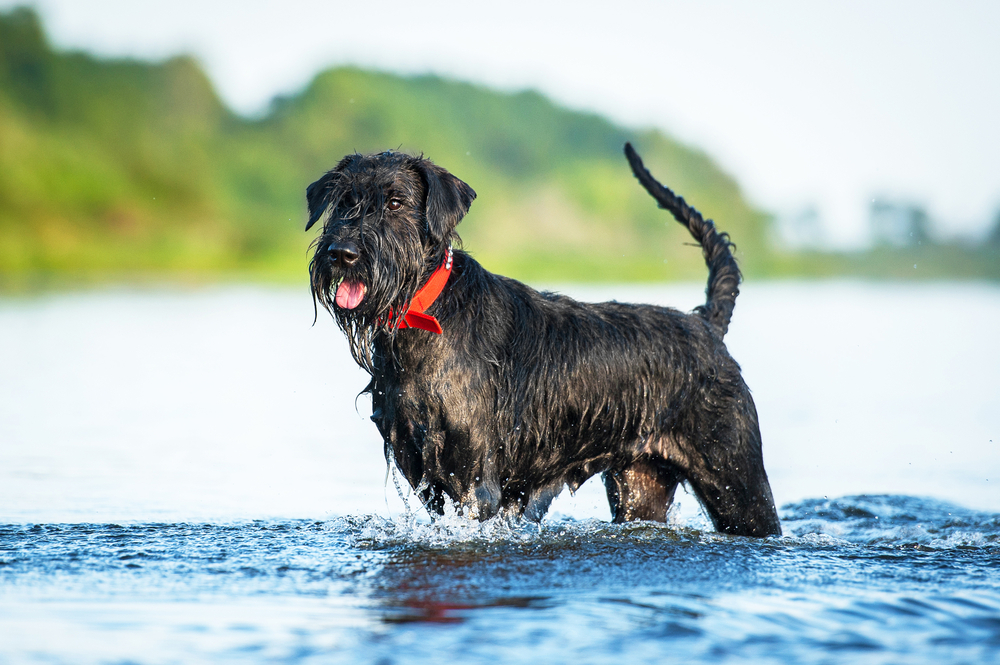
Their alert disposition and high intelligence make these dogs very easy to train and work with. After all, that is what they were bred for. Giant Schnauzers benefit enormously from some daily dedicated obedience training, which will also help curb any bad habits that might otherwise develop. It is also wise to socialize your Giant Schnauzer from when it is a puppy, so that its territorial instincts don’t transition into bad behavior.
They are a popular choice for (and very successful in) dog agility classes. The Giant Schnauzer is so useful that in many parts of Europe, the breed continues to be used as a general-purpose farm dog.
Health & Care
Giant Schnauzers have a two-layered coat, which is great at keeping the elements at bay but is going to need a bit of attention from time to time, either from yourself or the dog groomer. They are one of the few breeds to sport a beard and bushy eyebrows, and these may need to be trimmed from time to time for hygiene and comfort.
It is very important to ensure that this high-energy breed receives adequate daily exercise and mental stimulation. Neglecting this could cause the pup to become anxious or depressed, resulting in the development of undesirable, even destructive, behaviors.
In general, Giant Schnauzers are a healthy breed, but like many purebred dogs, they are predisposed to certain health conditions. They may be at risk of developing hyperthyroidism, hip dysplasia, Osteochondrosis Dissecans, Progressive Retinal Atrophy, and gastric torsion. It’s a good idea to include the occasional veterinary check-up in your big dog’s care regime, where these conditions can be screened for.

Breeding, Availability & Price
This purebred dog, although not yet high up in the popularity ranks, is relatively easy to obtain. If you are getting your Giant Schnauzer from a breeder, ensure that you choose one that is reputable. They should be able to screen and provide evaluations for the medical conditions to which they are predisposed.
You can expect to pay between $1,000 and $1,500 for your Giant Schnauzer pup.
Suitable for:
Giant Schnauzers are well suited to active households. If you’re looking for a jogging or hiking partner, look no further. They make great guard dogs due to their alert and protective nature.
They are good with kids that are part of the family, particularly those that are a bit older. However, some dogs could be less tolerant of the lack of physical boundaries that young children exhibit. It’s advisable to supervise initial exchanges between your new Giant Schnauzer and young kids until the kids learn to respect the new doggie’s boundaries.
Their status as a low-shedding and “hypoallergenic” dog makes them ideal for families where one or more members suffer from allergies.
Their happy, loyal, and obedient disposition makes them a welcomed addition to any home.
Great Dane Overview

One of the true giants of the canine world, the Great Dane is widely accepted as one of, if not the tallest dog breed in the world. It is not only tall, but also powerful as it shares ancestry and characteristics with the Mastiff.
As with the Giant Schnauzer, Great Danes originated in Germany. They are descended from the hunting dogs of the Middle Ages, with the Great Dane that we know today dating back to 17th century German nobility. The breed was developed to hunt boar and deer, as well as to protect the nobility.
Great Danes are adoringly referred to as the “Apollo of Dogs”.
Personality / Character
The Great Dane is the epitome of the gentle giant. Once you have owned or known a Dane, you inevitably become a loyal follower. They are affectionate to the point of devotion, calm, and generally obedient. They are surprisingly gentle with children and other pets, and accepting of the comings and goings of people unknown to them. They may exhibit aggressive behavior towards other dogs if they sense there is a need to be protective of their territory or their humans.
They are not always aware of their enormity, and small humans and other household fur members may unwittingly become collateral damage during a joyful energy burst!
Exercise
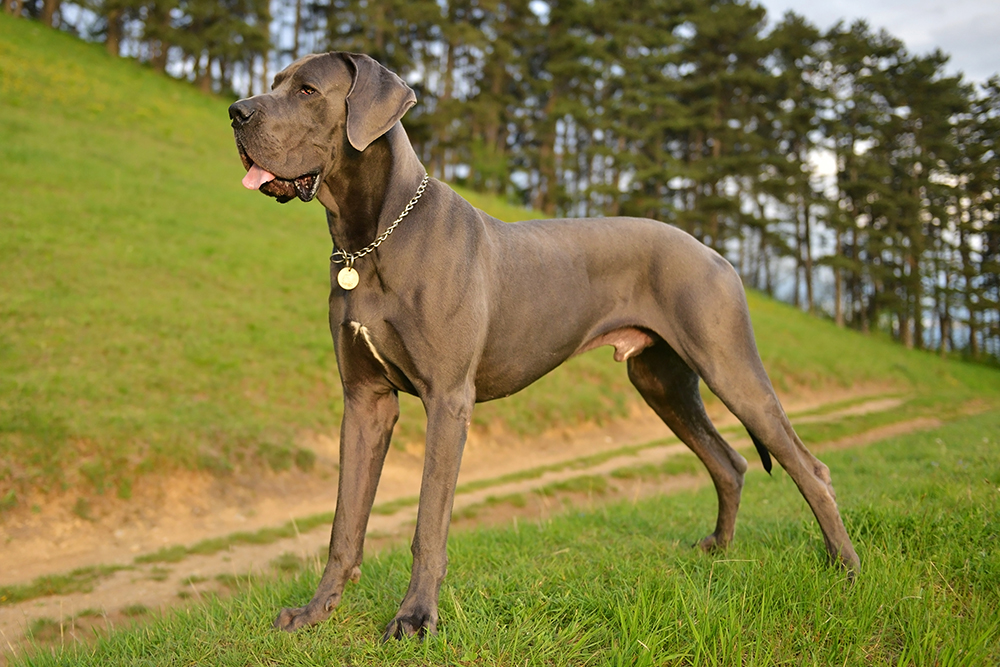
Because of their working dog bloodlines, the Great Dane is not a breed that can go without regular exercise. During their prolonged two-year puppy phase and adolescence, they exhibit youthful exuberance and will require at least 90 minutes of age-appropriate exercise a day. Be mindful not to overtax that large and still-growing frame.
Once they are fully grown, they generally calm down and will happily get by with 60 minutes of exercise a day. Typically, this can comprise a leisurely walk with a few “zooms” thrown in for good measure.
Training
Great Danes are reasonably easy to work with and train, though they may exhibit a stubborn streak. Although they are generally eager to please, they are not quite as obliging as their Giant Schnauzer counterparts, and are likely to be selective about when they choose to please! Their high intelligence means that they require, and will benefit from, appropriate mental stimulation from time to time.
Health & Care
The Great Dane’s short coat makes it low maintenance from a grooming point of view, however, they do still enjoy the odd brushing and require the occasional bath. Unlike the Giant Schnauzer, they do not have the low shedding status associated with these so-called “hypoallergenic” breeds.
As a giant purebred hound, the Great Dane is predisposed to several genetic conditions, some of which overlap with the Giant Schnauzer, namely hip dysplasia and gastric torsion. They are also prone to cardiomyopathy.
One thing to bear in mind is that you may want to keep a colossal cloth on hand for your Dane. They have a reputation for being fantastic slobberers!
Breeding & Availability
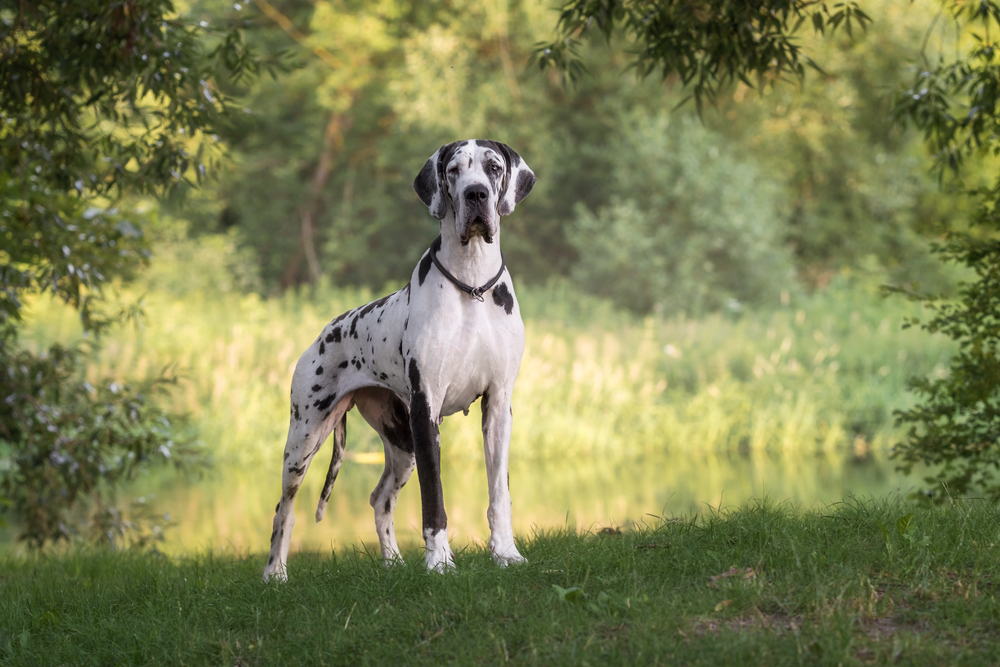
These gentle giants are ever popular and readily available. You might expect to pay anywhere between $600 and $1,500 for a new Great Dane pup depending on the source. For a well-bred hound, you could even be handing over upwards of $2,000.
The same guidelines apply as when sourcing a Giant Schnauzer pup. Ensure that you choose a reputable breeder who screens for the conditions that the breed is predisposed to, and can provide some kind of guarantee or certification regarding their bloodlines.
Suitable for:
Believe it or not, this massive breed makes a very good house dog and they are even known to settle into apartment living. This is, of course, provided that they receive regular walks and outings. Also, bear in mind that they are going to take up a lot of space in your home, so make sure you have that space available to share with them.
Compared to most other dogs, a Great Dane is going to cost significantly more to feed too, so they’re not a great choice if you’re a doting pet owner on a budget.
They make great family dogs, becoming attached to human family members of all ages. It is advisable to keep an eye on the smallest family members around your Dane—not because of worrisome behavior on the dog’s part, but rather for instances of inadvertent bowling over. For this same reason, they would probably not make the best pets for frail or elderly folk.
They are just as likely to become fond of other furry family members, so they are well-suited to multi-species homes. However, it may be advisable to watch out for the hunting instinct around pets that would be its natural prey, such as rabbits.
Which Breed Is Right for You?
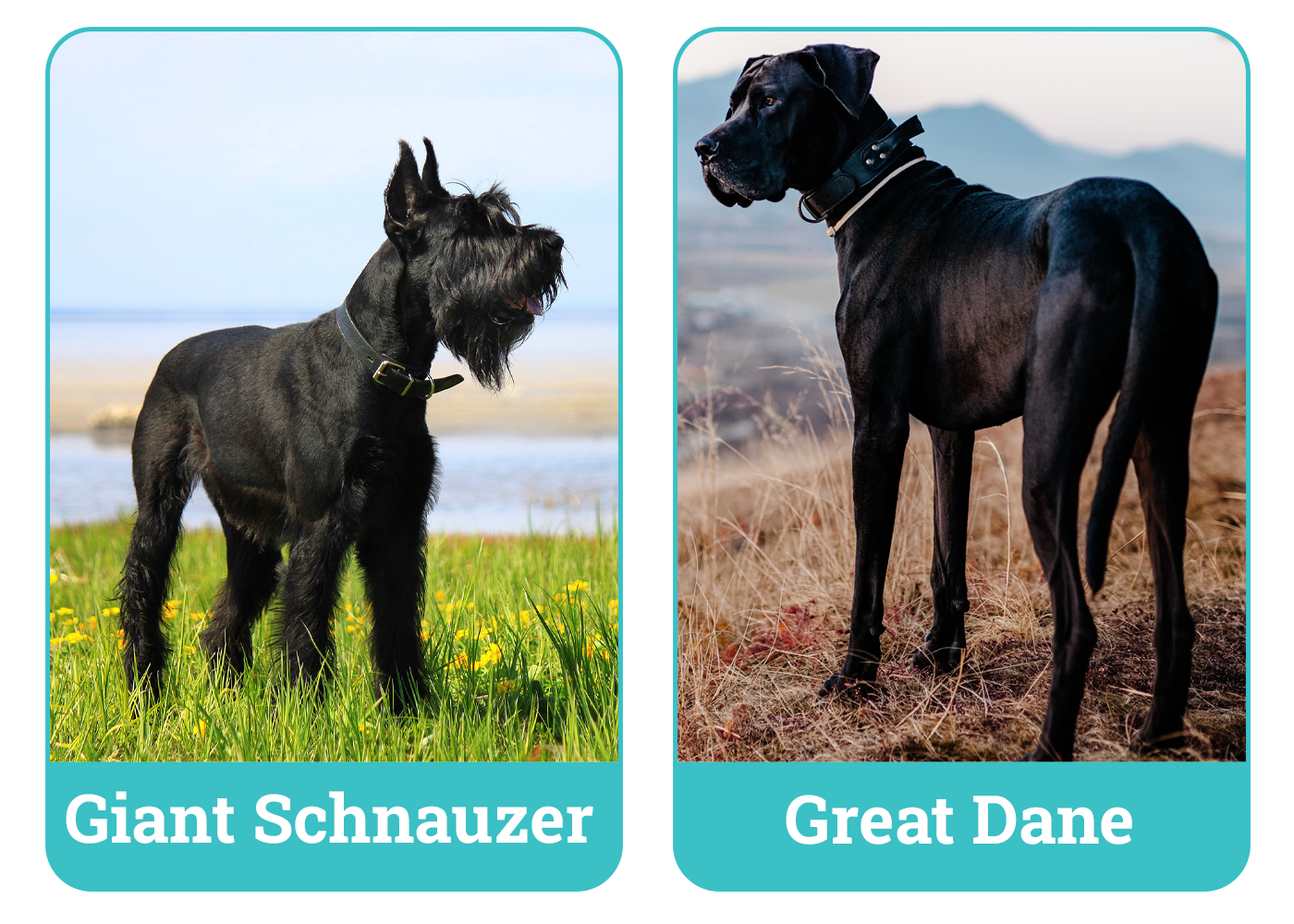
There are a few obvious differences between these two breeds that stand out.
The first is size—the Great Dane is significantly taller and heavier than the Giant Schnauzer. It’s going to take up more space and cost more to feed. On the other hand, the Giant Schnauzer is more active and energetic than the Great Dane. Although it doesn’t take up as much space, it will require plenty to run around in.
Great Danes are also slightly more amiable than Giant Schnauzers, particularly regarding strange people and animals. A bustling household with plenty of comings and goings might be better suited to a Great Dane. Similarly, if you’re looking for a gentle and imposing companion to cuddle you and the kids in front of the fire on cold winter nights, then a Great Dane is just the dog for you. But if you’re an active person or family looking for an athletic canine to hit the trails with you, then you can’t go wrong with a Giant Schnauzer pup.
Either way, hopefully this article has gotten you one step closer to making that decision!
Related Read: