English Mastiff vs. American Mastiff: The Key Differences (With Pictures)

In this article
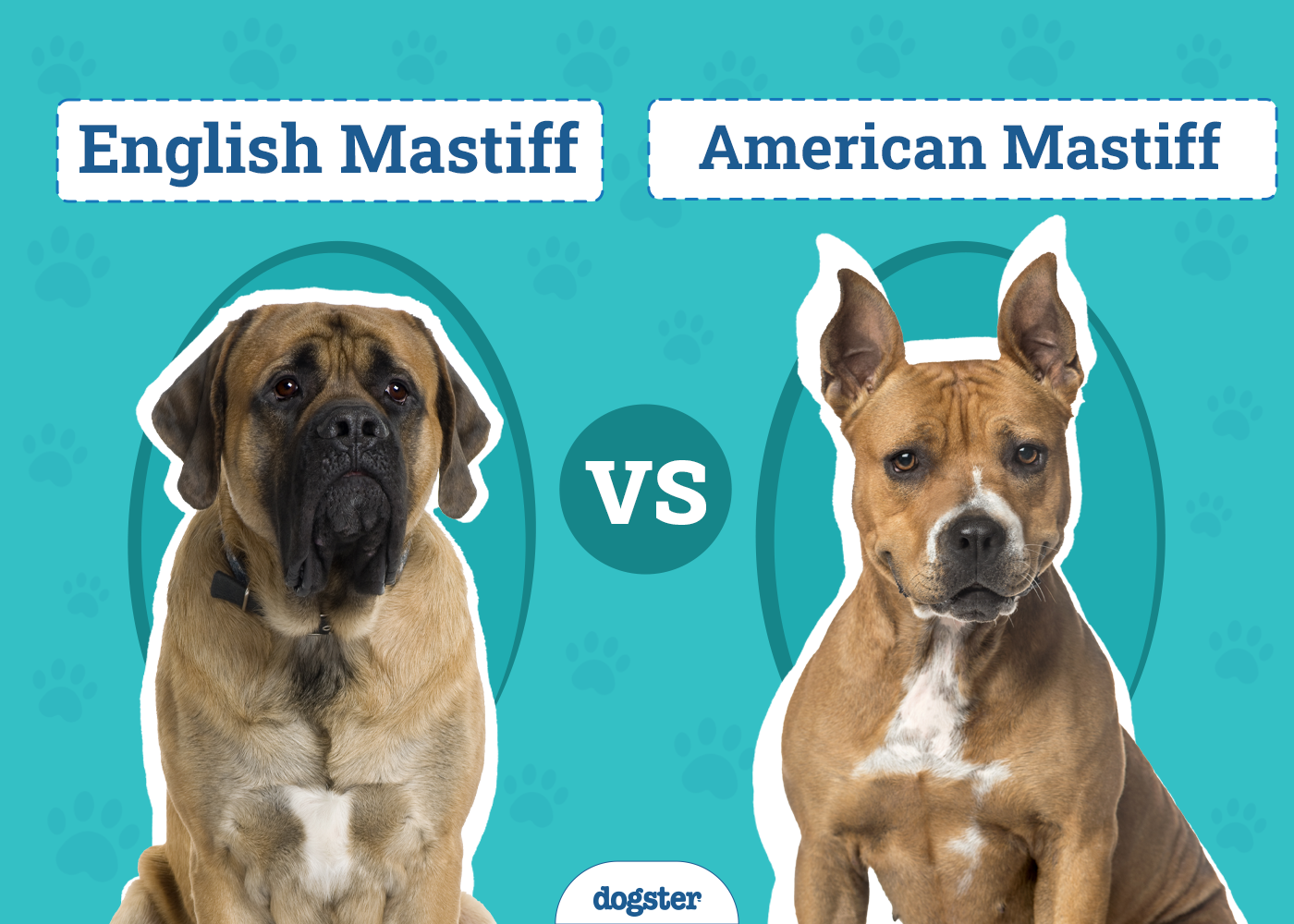
If you’re looking to adopt a massive dog, a Mastiff might be the right option for you. Both the English and American Mastiff are huge dogs that can weigh 200 pounds or more when fully grown! These are powerful canines that happen to be good with kids and affectionate with human companions. However, the slight differences between these two breeds should be considered before deciding which to adopt as a new family member. We’re here to help you decipher those differences so you can more easily determine whether the English Mastiff or American Mastiff is the right breed for your family.

Visual Differences

At a Glance
English Mastiff Overview
The English Mastiff experienced a great deal of suffering around the 1100s, when King Henry the 2nd required that they be “lawed” to restrict their ability to hunt game. This meant that a few of the toes on their front paws would be cut off so they would have to hobble to get around. They couldn’t use their athletic ability to run after prey. Thankfully, the practice of “lawing” them is long gone, and English Mastiffs are regarded as loving companions around the world today.

Personality / Character
This giant dog breed is gentle and good-natured overall. Affectionate toward their human companions and patient with children, the English Mastiff makes a great family pet. They can be sociable if exposed to people and other animals from a young age, but they tend to naturally be wary of strangers at first. The average English Mastiff can also serve as a watchdog while at home.
It’s important to keep in mind that these are powerful animals, so they do require a firm hand and proper obedience training to maintain order in the household and public settings. They should be supervised when around small children simply because their size can be a source of accidental injuries if playtime becomes too rambunctious.
Training 🎾
Every English Mastiff requires obedience training to maintain a happy and healthy life. Training is also important to ensure good and safe behavior throughout their life. Fortunately, this breed is highly intelligent and tends to take well to training if consistency is made a priority. They learn new commands and tricks quickly, and since they are eager to please, they readily respond to commands that they’ve been taught.
Training should be done in a quiet place with few distractions to optimize effectiveness. If you don’t have experience training dogs, it’s a good idea to utilize a training book, video series, or professional services to establish proper training practices. Due to this breed’s massive size, it’s best not to indulge in agility training, as it can put too much pressure on their joints.

Exercise 🐕
Like all dogs, the English Mastiff requires daily exercise for a long and healthy life. These aren’t extremely active dogs, though, so they don’t need more than about 30 minutes of exercise each day. This exercise should come in the form of leisurely walks and light play sessions in the yard; if the exercise is too intense, it can put unnecessary strain on their bodies and joints.
You’ll need to leash train your English Mastiff while they are still a puppy, as their massive size can make it tough to control them once they are fully grown. These dogs do enjoy trips to the dog park, visits to the beach, and hide-and-seek as supplemental or occasional forms of exercise.
Grooming✂️
The English Mastiff has a short, dense coat that sheds, so regular grooming is necessary throughout the year. They should be groomed with a slicker brush a couple of times a week and get bathed once a month or so to get rid of excess fur embedded in the coat. Check their eyes, ears, and nose weekly for gunk buildup, and use a damp cloth to clean these places if necessary. Nails can be trimmed monthly if daily walks don’t keep them naturally short.

Health Conditions 🏥
Unfortunately, the English Mastiff is genetically predisposed to various health conditions that owners should be aware of. These include:
Bloat: This ailment is most prevalent in dogs with deep chests, like the English Mastiff. Bloating is when the stomach fills with gas and twists up. This cuts off the blood supply, which can become fatal.
Neurological Disease: The Mastiff is prone to developing a disease that affects their ability to balance, making them wobbly when they walk. This happens because the vertebrae in the neck narrow.
Bone Cancer: Middle-aged Mastiffs are prone to developing a common kind of bone cancer called osteosarcoma. Clinical signs include leg lameness and evident pain.
Heart Disease: This giant breed is sadly predisposed to multiple types of heart disease, both at younger and older ages. Heart murmurs are usually an early sign of heart disease.
Suitable For:
The English Mastiff does well in family situations, especially those that include older children. They can also be happy in households with singles. They don’t require much outdoor time, so apartments and houses are typically acceptable. They can also cohabit with other cats and dogs if they are socialized as soon as they come home for the first time.
Pros
- Great with kids
- Gentle and patient
- Intelligent and eager to please
Cons
- Their large size can cause accidental damage to the house
- Prone to various health conditions
American Mastiff Overview
The American Mastiff is a version of the English Mastiff. They were developed by Flying W Farms through selective breeding to weed out a few of the genetic health problems that they would have over their lifetime. Both the English Mastiff and the Anatolian Mastiff were used to develop this Mastiff early in the initial breeding process. American Mastiffs were also bred to have dryer mouths, so they don’t drool as much as the English version.

Personality / Character
The average American Mastiff is lovable and fun-loving. These dogs enjoy goofing around with kids and adults alike. They don’t take things too seriously, but they are incredibly loyal to their family members. American Mastiffs must be socialized while young to prevent the development of shyness and/or aggression around strangers as adults.
They have a bit of a stubborn side, but it’s not so bad that it’s uncontrollable. When it comes to hanging out on the couch, this dog will be the first to join you for a cuddle. They enjoy spending time outdoors, but they prefer the luxuries of indoor living throughout the day, so you likely will not find your Mastiff scratching at the door to get out.
Training 🎾
Like the English Mastiff, the American Mastiff should start obedience training while still young. Without training, their sheer size can overwhelm situations and make it tough to maintain control over them for safety reasons. Their stubborn side can make training a bit frustrating, but a few smarts on their part and a bit of patience on yours should help ensure success.
These dogs are eager to please, so positive reinforcement can go a long way during training sessions. Treats and/or a clicker can be used to make training more effective as time goes on. Another thing that the American Mastiff has in common with the English Mastiff is their giant size, so agility training may be too straining on these dogs.

Exercise 🐕
A steady walk of at least 30 minutes a day should be enough exercise to keep your American Mastiff in good shape throughout their life. These adventurous dogs enjoy spending time outdoors, especially when leisurely walking through the park or casually visiting an outdoor café. They can get exercise indoors when it’s raining or snowing by playing with puzzle toys and learning tricks.
Grooming✂️
Grooming requirements are the same for American and English Mastiffs, as these dogs have the same coat types. Weekly brushing, monthly bathing, and occasional nail trimming should be on your grooming schedule. Since loose fur tends to get stuck in their thick coat, it's a good idea to brush your American Mastiff outdoors so the fur won't get loose in your home.
Health Conditions 🏥
The American Mastiff was bred to have the same basic body type and temperament as the English Mastiff but with the benefit of being genetically prone to fewer health conditions. That said, they are not immune to various problems. The main health conditions that owners should know about include:
Dysplasia: Both hip and elbow dysplasia are common among American Mastiffs due to their large size. This disease develops when the balls and sockets in the hip and/or elbow rub against each other because they aren’t connecting properly.
Hyperthyroidism: American Mastiffs are prone to this disease, which develops when the thyroid gland does not function properly and elevates metabolism levels to an unhealthy range.
Eye Problems: There are several types of eye problems that this breed can develop, including corneal damage, glaucoma, and cataracts. These issues are most prevalent in older dogs.
Forelimb Lameness: This type of health condition may develop due to soft tissue or bone injury, which is why American Mastiffs should not participate in intense activities that exert their bodies and put stress on their limbs.

Suitable For:
The American Mastiff is a great pet option for families and singles alike. These dogs love their human companions no matter their age and can bond just as well with a first grader as they can with an adult. These dogs don't need to spend much time outdoors unless they're going on an adventure, so apartment living tends to be fine with them. However, they won't turn down the opportunity to have a nice fenced yard to sunbathe in.
Pros
- Their fun-loving and adventurous attitude makes playtime fun
- Can learn to work as a watchdog while spending time at home
- Can live in apartment and house settings
Cons
- Can be clumsy, especially when excited
- Stubbornness can get in the way of training
Which Breed Is Right for You?

The truth is that American and English Mastiffs are extremely similar dogs and share the same lineage. There are a few small differences to take note of, though, which might help you decide whether one type would be a better fit for your family than the other. If possible, take the time to meet both types of Mastiffs in person to get a better feel for what they are all about.
Sources
Featured Image Credit: (T) tamara321, Shutterstock | (B) PJW31189, Shutterstock
Expert dog care, straight to your inbox
Vet-reviewed advice, training tips, and the best of Dogster. Free, and you can unsubscribe anytime.
By signing up, you agree to our Terms & Conditions and Privacy & Cookies Policy.
Rachael has been a freelance writer since 2000. In this time she has had an opportunity to research and write about many different topics while working to master the art of fusing high-quality content with effective content marketing strategies. She is an artist at heart and loves to read, paint, and make jewelry. As a vegan, Rachael is obsessed with helping animals in need, both in her community and anywhere in the world where she feels she can make a difference. Animals also happen to be her favorite topic to write about! She lives off the grid in Hawaii with her husband, her garden, and her rescue animals including 5 dogs, a cat, a goat, and flock of chickens.
Join the conversation
Ask a question, share your story, or send private feedback.