
Corgi vs Chihuahua: The Key Differences (With Pictures)

In this article
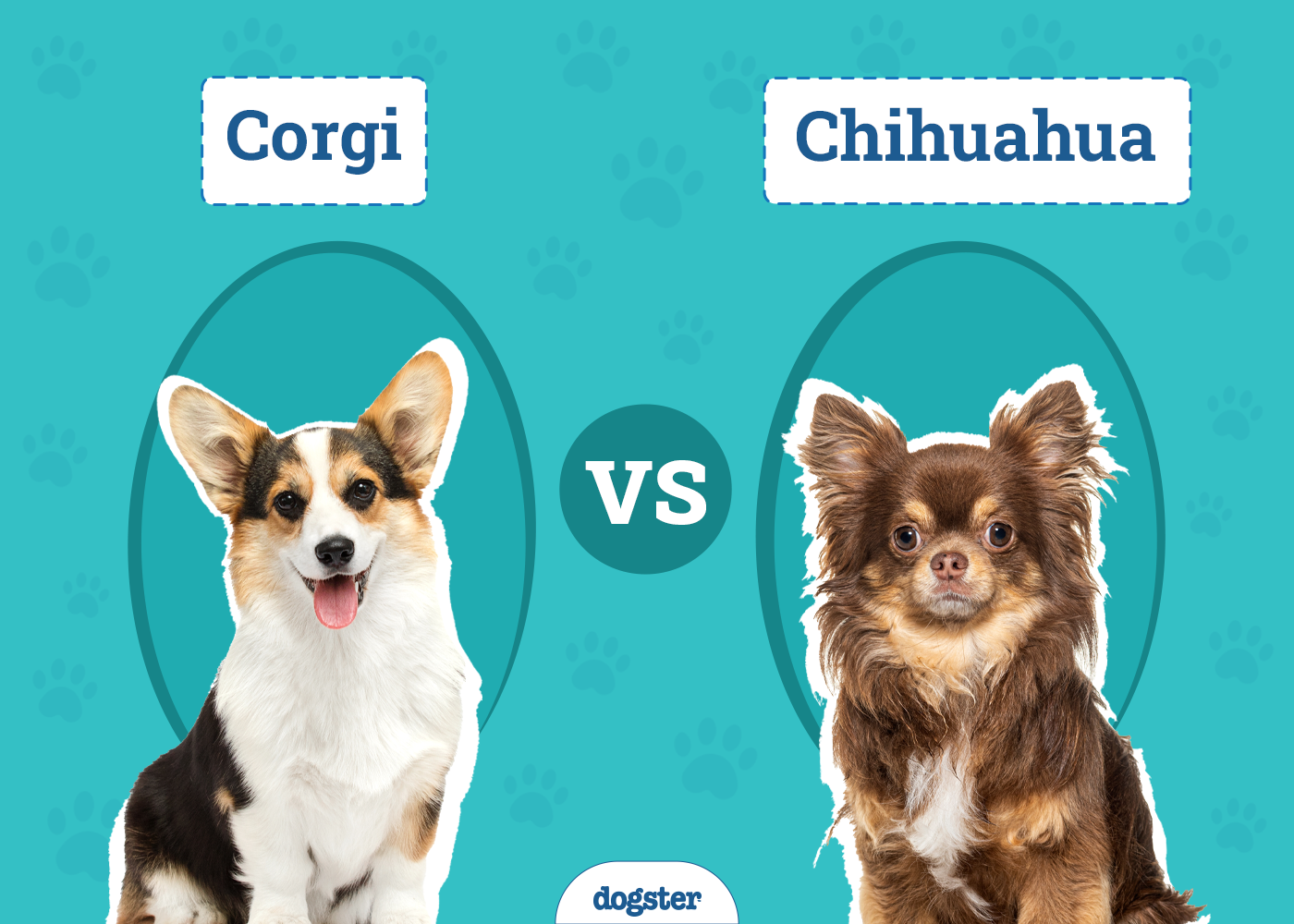
View 3 More +Chihuahuas and Corgis originate from opposite sides of the world, and their differences don’t end there. Tiny Chihuahuas hail from Mexico, where they have been human companions for hundreds of years. The two Corgi breeds—Pembroke and Cardigan—were developed in medieval Britain, where they’ve served as cattle herders for almost 1,000 years.
In size, skill, and origin story, these two breeds couldn’t be more different, but both make excellent pets for the right person or family. To help you decide which of these breeds is right for you, we’ve created this handy comparison guide.
Keep reading to learn whether you should choose a Corgi or Chihuahua as your next pet.

Visual Differences

At a Glance

Corgi Overview
Personality ❤️
Cardigan and Pembroke Welsh Corgis are affectionate, loyal, and social dogs. They are athletic and strong for their size. Pembrokes are more energetic and lively than Cardigans. While they enjoy exercise, they also don’t mind the occasional day on the couch.
Neither dog likes being left alone, and they tend to bark a lot. They are surprisingly good watchdogs, although they’re not particularly protective or wary of strangers.

Exercise 🐕
Corgis need at least 1 hour of exercise each day. Activities they enjoy include walking, jogging, hiking, and playing fetch. They also love sports like herding, agility, and flyball. However, Corgis are at higher risk of back injuries because of their body type.
Because of this, you should be careful about allowing them to perform activities that involve a lot of jumping and twisting.
Training 🎾
Since they’re bred to work with humans as herding dogs, both Corgis are smart and typically eager to please. Pembroke Welsh Corgis can sometimes be a bit more stubborn, although they generally respond well to positive reinforcement training techniques.
Corgis are sensitive dogs that won’t tolerate harsh treatment. Early socialization is vital for both Corgi breeds since they can become reactive and loud without it.
Health & Care
Because of their short legs and long bodies, both Corgi breeds are vulnerable to spinal injuries. They should avoid jumping on and off stairs or furniture to protect their backs.
Corgis are also prone to the following inherited medical issues:
When choosing a Corgi breeder, ask whether their breeding dogs have received all recommended screening tests.

Grooming ✂️
Corgis have a double coat and shed year-round, with seasonally heavy hair loss. Daily brushing is recommended to keep the shedding under control. Corgis should also have regular nail trims, which you’ll need to teach your dog to accept from a young age.
In addition, they should have their ears checked and cleaned as needed. Brush their teeth several times per week or use other dental care products recommended by your veterinarian.
Suitability
Both Corgis are suitable for a wide variety of families and living situations as long as they can receive plenty of attention and physical and mental stimulation. They are small enough to live in an apartment, but you’ll need to be aware of their tendency to bark.
Corgis don’t necessarily need a yard to play in as long as they can receive at least an hour of exercise each day. When properly socialized, they typically do well with kids and other pets.

Chihuahua Overview
Personality ❤️
Chihuahuas are the definition of the phrase “big dog in a small body.” These tiny dogs pack a lot of attitude and often don’t seem to know their own size. If not given boundaries, socialization, and training, Chihuahuas can be sassy and will try to dominate the household.
Playful and charming with their families, Chihuahuas are typically suspicious of strangers and won’t hesitate to bark at them. They might be the smallest watchdogs in the canine world, but they’ll take their duties as seriously as a German Shepherd.

Exercise 🐕
Chihuahuas are energetic, but because of their size, it doesn’t take much exercise to wear them out. The breed only needs about 30 minutes of exercise a day, and they often don’t even need to leave the house to get it.
However, a daily walk where they encounter other pets and people is an excellent option to help socialize a Chihuahua.
Training 🎾
Most Chihuahuas are smart, but they’re also prone to be strong-willed. Once bonded with their owners, they generally want to please, but it may take some patience to get there. Because of their size, many Chihuahua owners don’t bother giving them the training and socialization they would with a larger dog.
Unfortunately, this lack of training often results in Chihuahuas with severe behavioral issues. They may be sweet to their owners, but their attitude towards the staff at the veterinarian’s office is anything but!
Health & Care
Standard Chihuahuas are a reasonably healthy breed overall, but “Teacup” Chihuahuas are a different story.
Some of the inherited conditions you’ll find in Chihuahuas include:
Teacup Chihuahuas are produced by deliberately breeding already abnormally small dogs together. Often, these dogs are tiny due to health problems, and the resulting puppies are prone to multiple health conditions, such as liver shunts, low blood sugar, and a brain condition called hydrocephalus.

Grooming ✂️
Chihuahuas come in long and short-haired varieties, so their grooming needs will vary. Neither coat type sheds heavily, and short-haired Chihuahuas don’t need to be brushed often. Long-haired Chihuahuas should be brushed at least once a week to keep their coats tangle-free.
Like many small and toy dog breeds, Chihuahuas are prone to dental disease. Brushing their teeth effectively can be tricky because of their tiny mouths, so ask your vet for recommendations for at-home dental care. Chihuahuas rarely get enough wear on their nails to keep them short, and they may need more frequent nail trims.
Suitability
Chihuahuas are especially well-suited for small space living and people unable to meet a bigger dog’s exercise needs. This breed is the perfect lap dog. Unfortunately, their size makes them a poor choice for families with young children.
While Chihuahuas can learn to get along with other pets, you’ll need to be careful about letting them interact with bigger dogs or cats. Chihuahuas are notorious for starting trouble and being the ones who end up hurt.
Frequently Asked Questions
Who's Bigger?
Corgis and Chihuahuas have a significant size difference, which impacts many aspects of what it’s like to live with one. You’ll need to be much more cautious of a Chihuahua getting dropped, stepped on, or falling than you would a Corgi.
Smaller dogs typically have lower overall costs for necessities like food and veterinary care. Plus, Chihuahuas are much more portable, given their reputation as “purse dogs.” Both dogs can live in small spaces, but you’ll need to devote more time to exercising a Corgi than you would a Chihuahua in the same situation.

Who’s More Kid-friendly?
If you have kids, especially those younger than 7 years old, a Corgi is a better pick. Young children who don’t know better can easily injure a tiny Chihuahua. Chihuahuas aren’t fans of the noise and fast movements of young kids.
Well-socialized Corgis usually love kids, and their playful nature makes them an excellent fit to serve as companions for children.
Who’s Easier to Train?
Although both breeds can be stubborn, Corgis tend to be more willing to learn than Chihuahuas. Chihuahuas weren’t bred to have a specific job other than being companions, and their personalities resemble that of many terriers, who are among the most independent and tough-to-train breeds.
Corgis were bred as working dogs, so they are more interested in following directions from humans.
Which Breed Is Right for You?

Chihuahuas and Corgis are pretty different in most respects and were bred for distinctly different purposes. As we mentioned, Chihuahuas are probably not the right breed for you if your family includes young children. If not, your choice may come down to what you’re looking for in a pet.
Do you want a dog who’ll join you on hikes? The Corgi is probably a better option unless you’re okay with carrying your Chihuahua most of the way and keeping a sharp eye out for hawks. The Chihuahua is small enough to fly in the cabin of a plane and fit under every hotel’s weight restriction.
Whichever breed you select, consider adopting your new pet from a rescue group or shelter. If you opt to buy, choose your breeder carefully, especially if you’re getting a Chihuahua. Toy breeds like Chihuahuas are popular choices for puppy mills and other irresponsible breeding operations. A little research ahead of time can save you from a lot of heartache and potentially expensive medical bills in the future.
Featured Image Credit: Top - fatty corgi, Unsplash | Bottom - Africa Studio, Shutterstock
Expert dog care, straight to your inbox
News, insights, expert advice, and everything dog.

No spam — unsubscribe anytime.
By signing up, you agree to our Terms & Conditions and Privacy & Cookies Policy.
How useful was this post?
Click a star to rate. You can leave written feedback afterwards. (We read all feedback.)

Elizabeth Gray is a lifelong lover of all animals great and small. She got her first cat at 5 years old and at 14, she started working for her local veterinarian. Elizabeth spent more than 20 years working as a veterinary nurse before stepping away to become a stay-at-home parent to her daughter. Now, she is excited to share her hard-earned knowledge (literally--she has scars) with the readers. Elizabeth lives in Iowa with her family, including her two furry kids, Linnard, a husky mix and Algernon, the worldʻs most patient cat. When not writing, she enjoys reading, watching all sports but especially soccer, and spending time outdoors with her family.