In this article
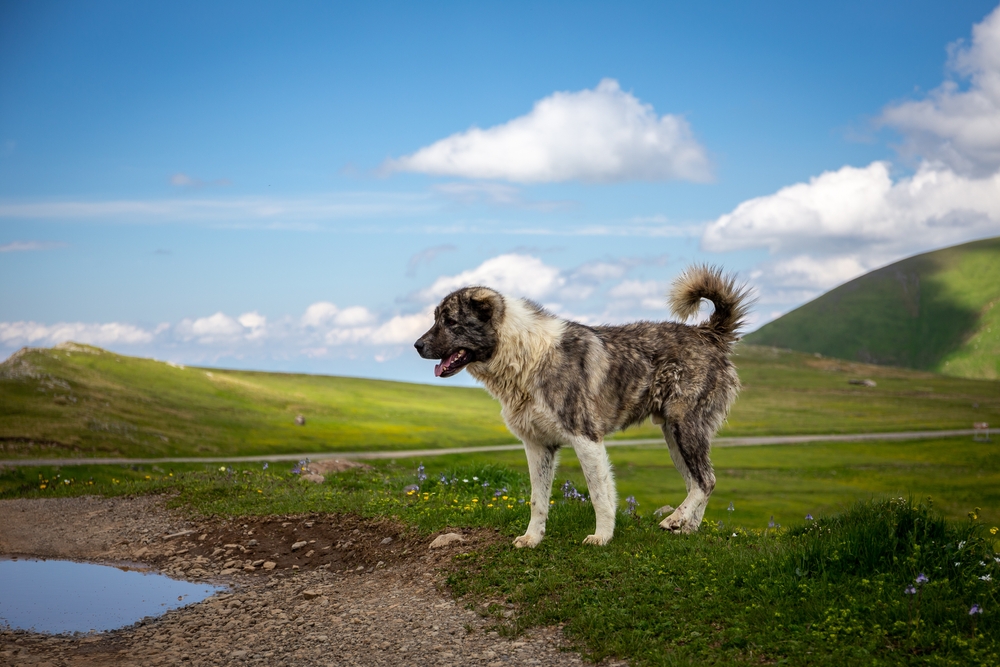
View 8 More +Caucasian Mountain Dogs are a powerful, strong, and giant working dog breed initially developed to protect livestock from predators like wolves and bears. There’s no denying the beauty of these fearless guardians, but owning a Caucasian Mountain Dog is not for the faint of heart.
Breed Overview
Height:
23–30 inches
Weight:
100–170 pounds
Lifespan:
10–12 years
Colors:
Cream, fawn, gray, red, white, rust, black & gray, agouti & white, grizzle, sable
Suitable for:
Experienced dog owners, people with large yards
Temperament:
Brave, loyal, protective, territorial
The Caucasian Mountain Dog was originally bred to protect livestock, so they’re strongly built and have finely honed senses. They’re quick to fight to protect what and who they love most. They can make fantastic guard dogs, but they’re very independent and slightly stubborn, so training them to be anything but protectors can be challenging. If training and socialization begin at a young age, these dogs can be very playful and affectionate.
Caucasian Mountain Dog Characteristics

Caucasian Mountain Dog Puppies

Finding a Caucasian Mountain Dog breeder shouldn’t be too much of a challenge. There are American Kennel Club-affiliated breeders in Ohio, Missouri, and Michigan. A Google search also brings up numerous breeders in other states and throughout Canada.
Potential owners must do their due diligence before adopting a Caucasian Mountain Dog from a breeder. Responsible breeders focus primarily on producing healthy puppies and should be able to provide adopters with health certificates and proof of genetic testing.
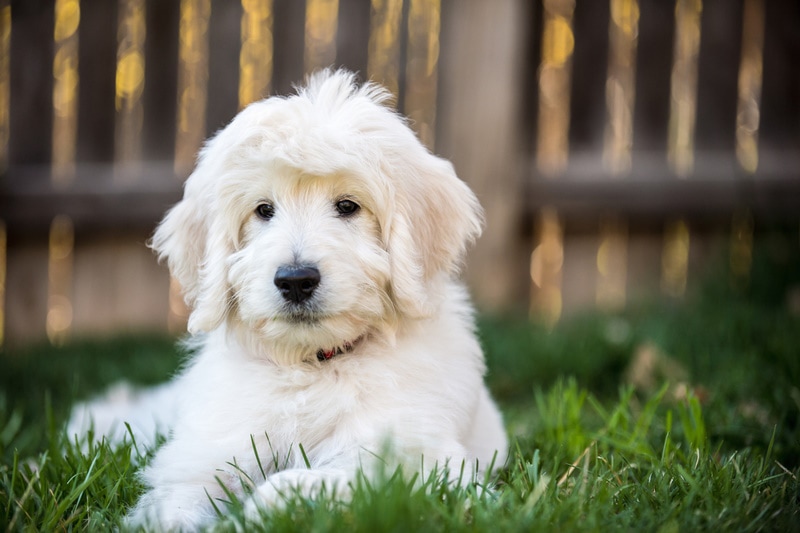
Don’t let these small and adorable balls of fluff trick you into thinking these puppies will grow to be a manageable size. These dogs will be a minimum of 100 pounds, fully grown, and extremely powerful and muscular. They need a lot of space and are not apartment-friendly.
Caucasian Mountain Dog Origin & History
The Caucasian Mountain Dog is native to the Caucasus region in Eastern Europe between the Black and Caspian seas. However, dogs similar to this breed have been serving shepherds in the Caucasus Mountains for centuries. They were initially bred to protect livestock and the home.
Breeding of the Caucasian Shepherd Dog took off in the Soviet Union during the 1920s. This was when the breed became popular due to their fearless temperament and physically imposing appearance.
The breed didn’t reach Western Europe until the 1930s, and it didn’t become part of the American Kennel Club’s Foundation Stock Service until 1996.

Temperament & Intelligence of the Caucasian Mountain Dog
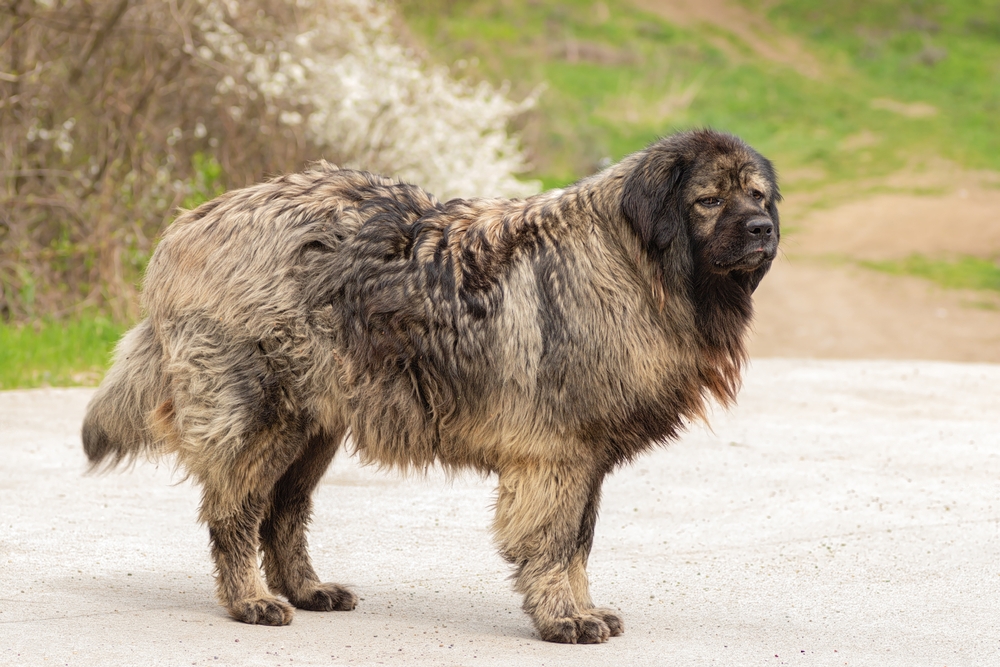
The Caucasian Mountain Dog’s breeding as a guardian dog has a significant impact on their temperament. This is a highly loyal breed that has historically been protective of family members and suspicious of strangers. They’re very confident, brave, fearless, and independent. These dogs aren’t afraid to defend what’s theirs.
However, they can be very soft, devoted, kind, and affectionate toward their family members. While their extreme loyalty can be a big “selling point,” it is essential that potential owners realize this isn’t always positive. These dogs require a very experienced handler, one who is unafraid to take on the alpha role.
Are These Dogs Good for Families? 👪
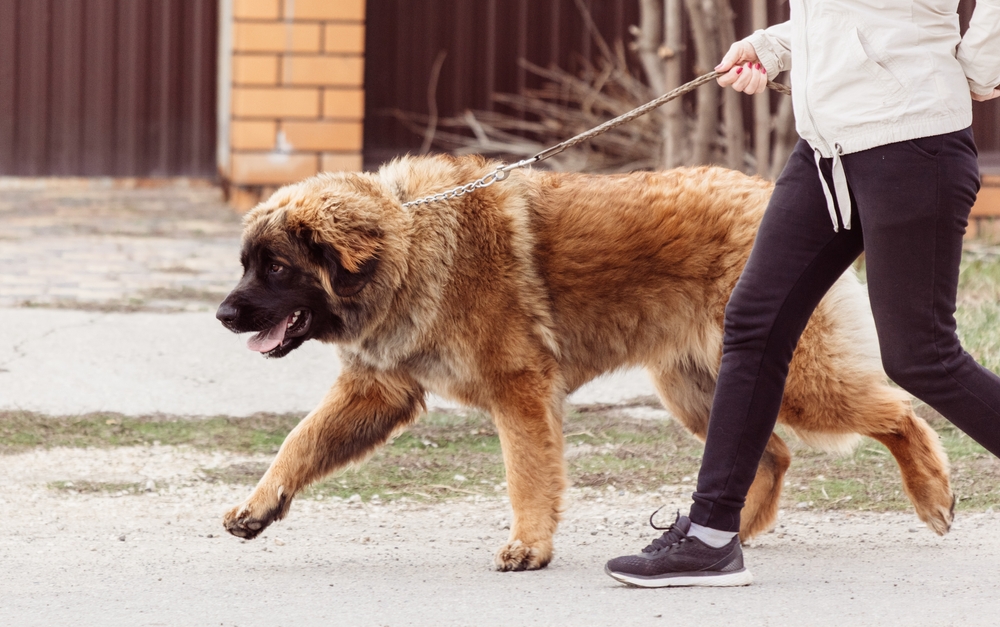
The Caucasian Mountain Dog is a serious guardian dog breed that shouldn’t ever be taken lightly. These dogs can be fierce and aggressive, especially if they haven’t been socialized or trained.
That said, they may be a good fit for some families. However, this isn’t a breed you’ll want around the house if you have small children. Remember, these dogs will weigh, at minimum, 100 pounds, so they can cause severe injuries to younger kids.
Does This Breed Get Along With Other Pets? 🐶 😽
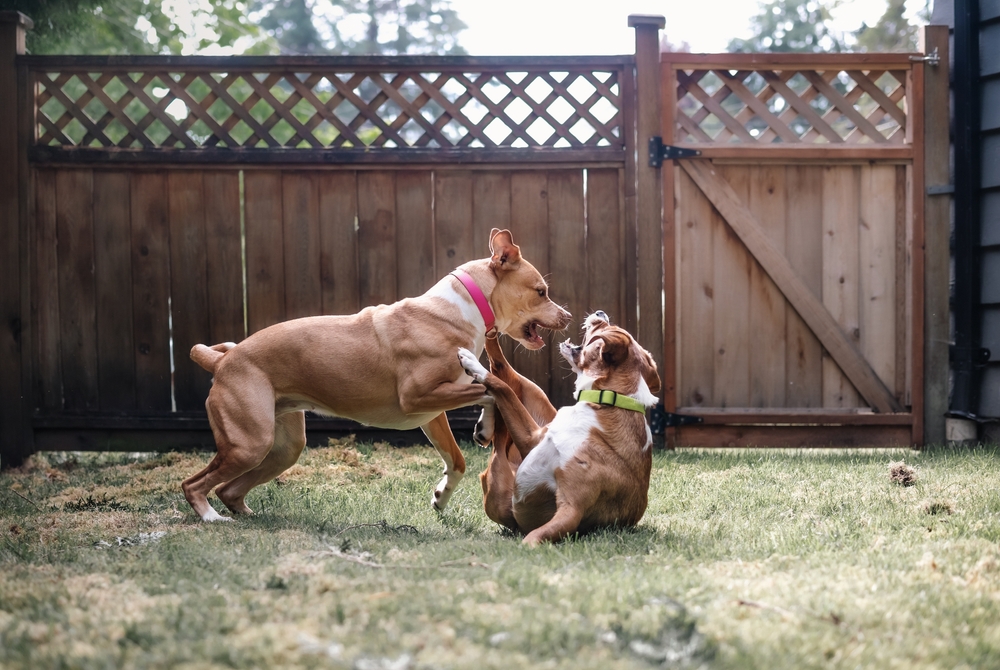
It can be challenging to have a multi-pet household when you have a Caucasian Mountain Dog because these dogs are so territorial and independent. Additionally, they’re very assertive, strong-willed, and can be prone to aggression, all traits that don’t lend themselves well to multi-pet homes.
Because of their enormous size, they’re also not suitable for homes with smaller pets like cats as they may inadvertently hurt them just by existing.
While this breed doesn’t like strange dogs, they may be able to do well with other, similarly-sized pups they’ve been socialized with.
Things to Know When Owning a Caucasian Mountain Dog
Food & Diet Requirements 🦴
Because the Caucasian Mountain Dog is an extra-large breed, they need a well-balanced and highly nutritious diet to support their unique needs. Owners should also choose food appropriate for their life stage, as puppies, adults, and seniors all have differing nutritional requirements.
As for feeding frequency, it’s best to feed this breed three to four small meals daily when they’re puppies. Once they’re adults, you can cut back to twice-daily feedings.
Since this breed is prone to developing orthopedic conditions like hip and elbow dysplasia, they mustn’t be allowed to gain too much extra weight. A veterinarian will be a great person to talk to about how much to feed as they’ll take into account each dog’s life stage, activity level, and health status.
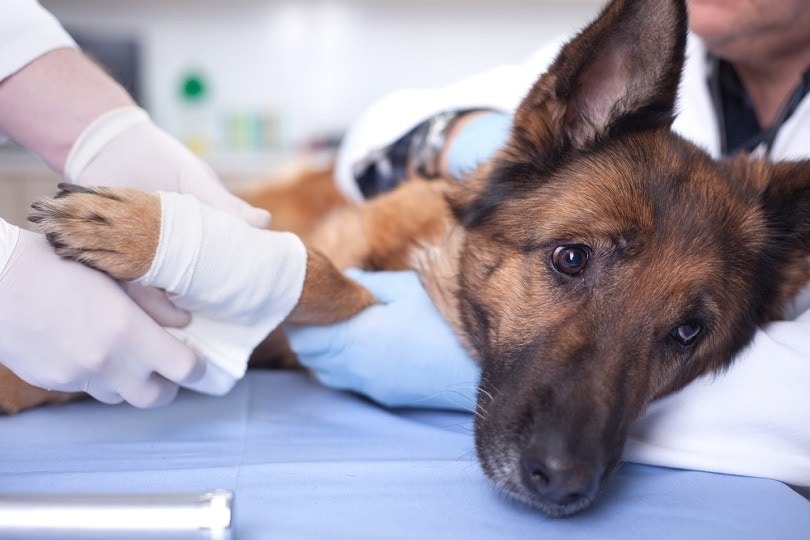
If you need to speak with a vet but can't get to one, head over to PangoVet. It's our online service where you can talk to a vet online and get the personalized advice you need for your pet — all at an affordable price!
Exercise 🐕
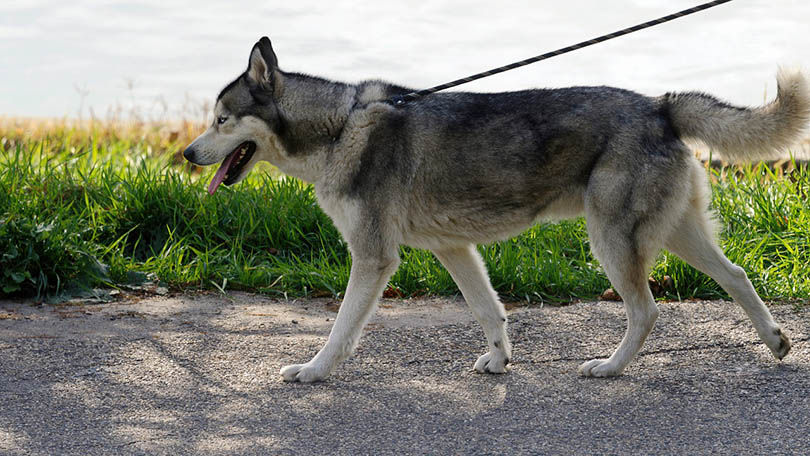
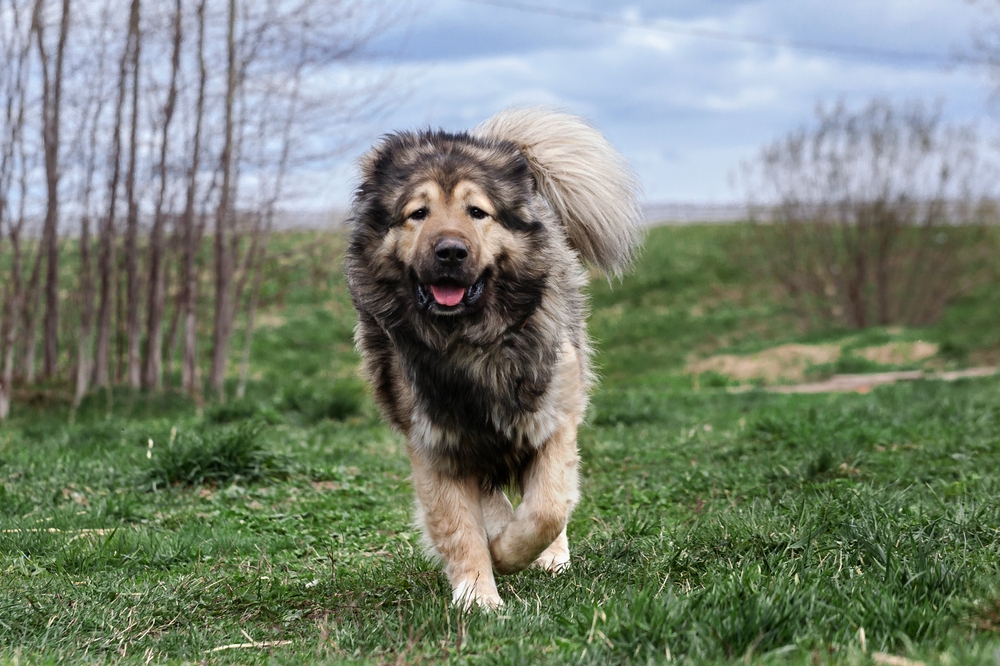
While Caucasian Mountain Dogs aren’t as energetic or active as other working dogs, they still require daily exercise to keep them happy, healthy, and mentally and physically stimulated. Walks are a great way to meet their exercise requirements, though they’ll also enjoy a good play session or two spread throughout the day.
Training 🦮
Despite their relatively friendly and affectionate temperament, the Caucasian Mountain Dog still requires socialization and training to prevent them from becoming aggressive and unruly. Remember, these dogs were initially used as guardians, so even if yours doesn’t have a flock to watch over, the instinct to guard remains. These pups can be highly possessive and protective of their property and family, but these issues can be addressed with training and socialization.
Unfortunately, these dogs can be pretty stubborn and independent, which can make training them a true challenge. This is why we don’t recommend first-time dog owners opt for a Caucasian Mountain Dog. These pups require an experienced owner with patience and skills in dog training.
Grooming ✂️
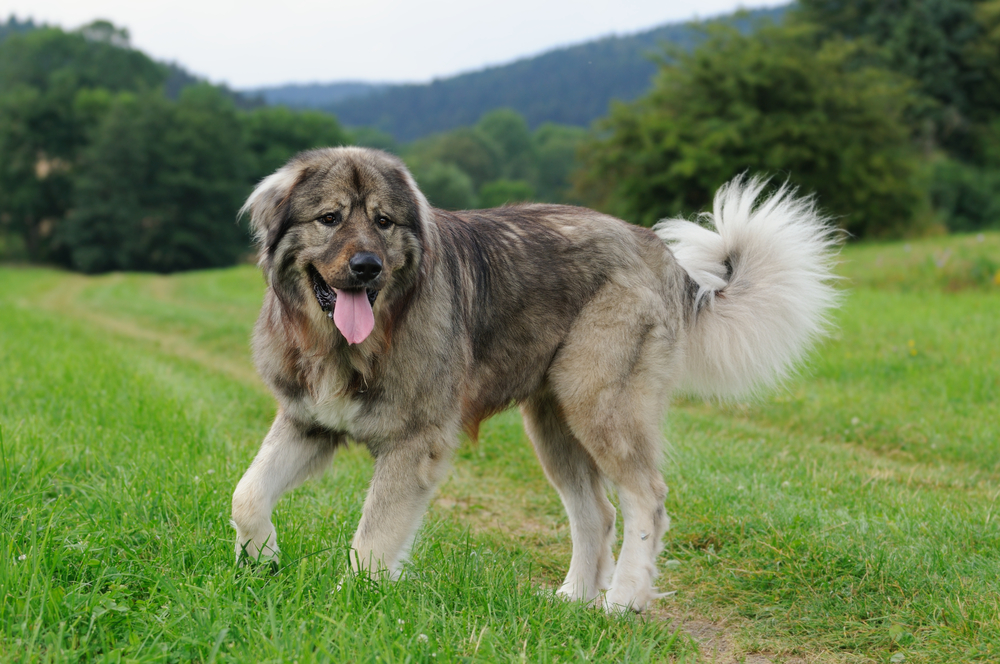
Caucasian Mountain Dogs have several different coat types, and how involved the grooming process is will depend on which type the pup has. Regardless of coat length, they will have double coats. When you combine their sheer size with their double coat, you’re left with a dog that has a lot of fur to deal with.
Long-coated pups will need daily brushing to keep their coats tangle-free and look their best. Those with shorter coats will only need a once or twice weekly brushing.
Owners should expect seasonal periods of heavier shedding, most often in the spring and autumn, during which grooming sessions should be increased to account for the extra fur.
Health and Conditions ❤️
Caucasian Mountain Dogs are relatively healthy, but they may be prone to several health conditions.
Hip and elbow dysplasia are orthopedic conditions common in large and extra-large breeds. These conditions result in loose joints, which can impact mobility and cause pain.
These pups can also develop entropion, an inherited condition resulting in an inward-growing eyelid.
They’re also at risk of obesity and the conditions that can occur due to having excess weight. Any extra pounds the Caucasian Mountain Dog carries can worsen their joint problems, promote back pain, and even cause heart disease. Thankfully, this is an entirely preventable health condition.
- Entropion (abnormality of the eyelid)
- Hip dysplasia
- Elbow dysplasia
- Obesity
Male vs Female
Male and female Caucasian Mountain Dogs differ primarily in size and appearance. Males are much taller and heavier. The minimum weight for a male is 110 pounds, and they’re generally between 28 and 30 inches. The minimum weight for females is 100 pounds, and they’re around two inches shorter.
Additionally, males have bigger heads and more muscles and are often shorter in body than their female counterparts.

3 Little-Known Facts About the Caucasian Mountain Dog
1. The Caucasian Mountain Dog is banned in some countries.
Caucasian Mountain Dogs are banned or restricted in countries like Denmark, Italy, Russia, and Belarus. There are many potential reasons countries decide to place bans or restrictions on specific breeds, including dog bite statistics, a tendency toward aggression, and a poor history.
2. The Caucasian Mountain Dog has a serious bite force.
While no research-based study has been done on the bite force of Caucasian Mountain Dogs, we can speculate that this breed will have a strong bite force due to its size and head shape.
3. Caucasian Mountain Dogs work in Russian prisons.
There’s no denying the sheer size, power, and strength of the Caucasian Mountain Dog. These facts have not gone unnoticed by Russian prison staff, either. These intimidating dogs are said to have the stopping power of a .45 caliber gun, making it clear why they’d find work in some of Russia’s most brutal prisons.
Final Thoughts
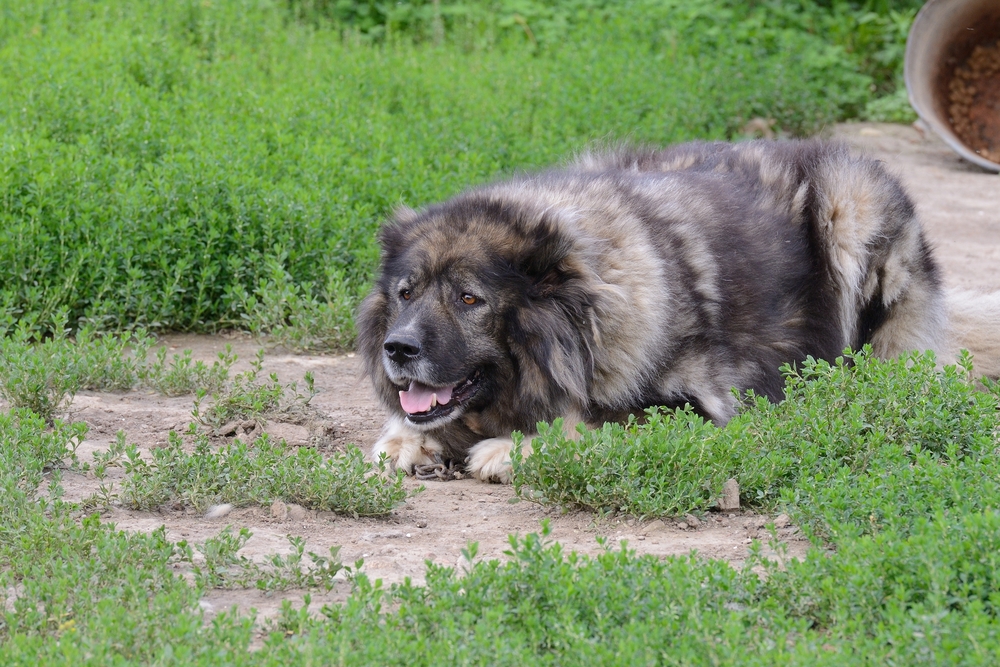
There’s no denying that the Caucasian Mountain Dog is a gorgeous breed, but these powerful and strong dogs are not for everyone. Their history working as guardians has made them very vigilant and territorial but highly loyal toward their humans. However, these qualities do come at a price, as they can be aggressive and fiercely protective.
As beautiful as these dogs are and as great as their temperament can be, this breed is only for a very hardy few. If you’re searching for a big, fluffy dog, opt for a Saint Bernard or Newfoundland. We do not recommend the Caucasian Mountain Dog for first-time dog owners or families with young children or other pets. They need a firm, attentive, patient, and experienced owner who’s not afraid of stepping into the alpha role.
Featured Image Credit: Aleksandra Tokarz, Shutterstock