Get

In Your Inbox

Dogster is reader-supported. When you buy via links on our site, we may earn an affiliate commission at no cost to you. Learn more.

Blue Great Dane: Info, Pictures, Origin & History

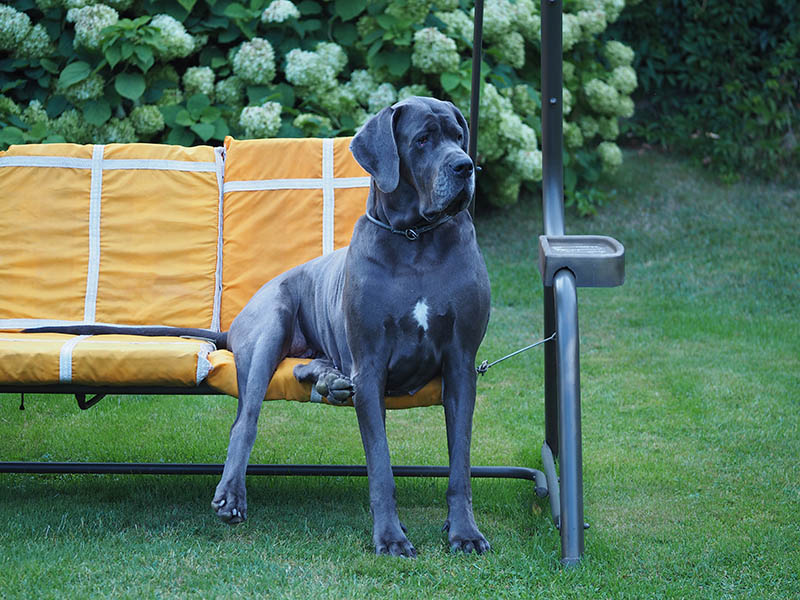
A large beautiful Blue Great Dane dog

The Blue Great Dane might look intimidating, but they’re gentle and friendly when properly trained. They make excellent pets for singles, families, and multi-pet households. But where did they come from, and what makes this breed such a good family pet? We have the answers to all of those questions and more below.

Breed Overview

Height:

28–32 inches

Weight:

110–175 pounds

Lifespan:

7–12 years

Colors:

Black, black & white, blue, brindle, fawn, harlequin, mantle, merle, white

Suitable for:

Families with older children, people looking for a watchdog, active individuals

Temperament:

Loyal, patient, affectionate, protective, adaptable

Blue Great Dane Characteristics

Energy
+
High-energy dogs will need a lot of mental and physical stimulation to stay happy and healthy, while low-energy dogs require minimal physical activity. It’s important when choosing a dog to make sure their energy levels match your lifestyle or vice versa.
Trainability
+
Easy-to-train dogs are more skilled at learning prompts and actions quickly with minimal training. Dogs that are harder to train will require a bit more patience and practice.
Health
+
Some breeds, due to their size or their breeds potential genetic health issues, have shorter lifespans than others. Proper exercise, nutrition, and hygiene also play an important role in the lifespan of your pet.
Lifespan
+
Some dog breeds are prone to certain genetic health problems, and some more than others. This doesn’t mean that every dog will have these issues, but they have an increased risk, so it’s important to understand and prepare for any additional needs they may require.
Sociability
+
Some dog breeds are more social than others, both towards humans and other dogs. More social dogs have a tendency to run up to strangers for pets and scratches, while less social dogs shy away and are more cautious, even potentially aggressive. No matter the breed, it’s important to socialize your dog and expose them to lots of different situations.

divider dog paws 3 oct 2024

The Earliest Records of Blue Great Danes in History

The Great Dane has been around for about 400 years, and they’re descended from mastiff-like dogs. Despite the name, Great Danes originated in Germany and were bred to be boar hunters. German breeders concentrated then on making the breed less aggressive, and it’s thought they wouldn’t be very good at hunting boar now because they’re so gentle.

In the 1700s, the dog was named “Grand Danois,” but in the 1800s, the Germans banned the name and called the breed “Deutsche Dogge,” which means German Mastiff. However, the name “Great Dane” is still used in English-speaking countries.

Great Danes first appeared in the United States in the late 1800s and gradually became more popular, but we don’t have an exact date for their arrival.

blue-great-dane_
Image By: verky01, Shutterstock

How Blue Great Danes Gained Popularity

German nobility once used Great Danes to protect country estates and hunt wild boar. In the 18th century, they were prestigious guardians of carriages and estates, and their ferocious nature was bred out of them.

Great Danes have become gentle giants that get along with families and other animals. In 2024, they were ranked the 19th most popular breed in the United States by the American Kennel Club (AKC).

While Blue Great Danes aren’t rare, they can be challenging to breed. To create a blue puppy, both parents must carry the recessive blue gene that turns the black coat blue. Breeding two blue Great Danes doesn’t necessarily guarantee a litter of blue puppies.

Formal Recognition of Blue Great Danes

The Great Dane was officially recognized by the AKC in 1887, and they recognize 10 color variations, including blue. The United Kennel Club (UKC), the Dog Registry of America (DRA), and the North American Purebred Registry (NAPR) all recognize the Blue Great Dane, too. Any “faults” with the color that would disqualify a Great Dane include white markings on the chest and toes.

divider dog paws 3 oct 2024

Top 3 Unique Facts About Blue Great Danes

1. They Have Big Hearts and Short Lives

The Great Dane is considered a gentle breed. Big dogs notoriously don’t live long lives, which is true for the Great Dane. They live 7–10 years, and they will leave a massive hole in your life when they’re gone, but you’re guaranteed a lot of love in those short few years together.


2. They’re Film Stars

Great Danes have been used to portray the killer hellhound in every film adaptation of Sir Arthur Conan Doyle’s “The Hound of the Baskervilles” despite the author never actually specifying the breed. It just shows how scary they can look. While the Great Dane is gentle, they’re very loyal and won’t hesitate to protect their families.


3. Great Danes Are Tall and Heavy

Females can grow to 30 inches at the shoulder and weigh 140 pounds, while males can reach 32 inches at the shoulder and weigh 175 pounds. If they stand on their hind legs, they tower over most humans.


blue Great Dane out for a walk with its owner
Image By: Guy J. Sagi, Shutterstock

divider single dog paw oct 2024

Does a Blue Great Dane Make a Good Pet?

Great Danes need room to exercise and move around, and you need a house big enough to accommodate them. They’re not inexpensive to own because of how much they need to eat, so that is also something you will have to factor in if you’re thinking of getting a Great Dane. Everything costs more if you’re getting it in a bigger size, including dog beds and crates.

Plus, Great Danes are hard on their belongings and can chew through toys faster than you can replace them; you might go through a few doggy beds, especially when they’re young and a little unruly. Because of their size, you need to ensure you have the time for obedience training so that they are manageable when they’re fully grown. You cannot physically restrain this dog if they’re trying to get away from you.

They’re a wonderfully loving and tolerant breed and make great family pets if you socialize them early on. They get along with other animals, but you must supervise them around children. Of course, you shouldn’t leave your small children around dogs unattended anyway, but these dogs are so big that they might send a small child flying with a happy leap or a wagging tail. Your Blue Great Dane will also shed a lot, and you’ll need to brush their coat regularly.

divider dog paws 3 oct 2024

Final Thoughts

The Blue Great Dane is large, loyal, and shares a long history with humans. The dog started as a hunter, working alongside humans, but was transformed into a remarkable family dog. They might not be ferocious anymore, but when it comes to their family, they’re reliable protectors. They’re expensive to keep and take up a lot of space, but they’re definitely worth it.

See Also:


Featured Image Credit: ElenVik, Shutterstock

Want content like this delivered to you?

Sign Up For Our Newsletter

News, insights, expert advice, and everything dog

* By submitting, you agree to our Terms & Conditions and Privacy & Cookies Policy.


How useful was this post?

Click on a star to rate (you can leave written feedback after clicking submit)

Help us improve Dogster for pet parents!

Your feedback really matters.

What did you like about this post? Also how can we improve it?

Join the conversation

Leave a Reply

You’re very welcome to leave a comment or question. Please know that all comments must meet our community guidelines, and your email address will NOT be published. Let’s have a positive and constructive conversation.


Talk With A Vet Online

Peace of mind,
anywhere, anytime

Affordable vet advice

How Much Is a Teacup Pomeranian? 2026 Price Guide

Having any dog of any size requires the right finances for sure! However, you might think that having a Teacup Pomeranian would be...

Lab Pointer Mix Dog Breed: Info, Pictures, Care & More

The Lab Pointer mix is known as a loveable, energetic, and fun-loving dog. As a hybrid between the popular Labrador and Pointer breeds,...

How to Stop Your Dog From Barking at Others While Walking: 9 Vet-Approved Tips

Walking our dogs is great for both them and us. Everyone gets exercise, and your dog is less bored and can get out...

How Smart Is a Bloodhound? Vet-Verified Facts, Tips & Comparison

The Bloodhound is known for their droopy ears, soulful eyes, and a nose that’s nothing short of legendary. With an incredible ability to...

More related

How to Become a Police Dog Trainer: Career, Requirements & More

Among the rewarding careers that entail working with animals—veterinarian, dog groomer, zookeeper, etc.—only one requires a unique set of skills, determination, and an...

How to Stop Bad Behavior in Puppies? 11 Vet-Approved Training & Care Tips

When you bring home a new puppy, they don’t come home knowing what they should and shouldn’t do. It’s up to you to...

10 Great Off-Leash Dog Parks in Houston, TX You Can Visit in 2026

Off-leash dog parks are one of the most fun ways you can get outside and let your dog frolic while making some friends...

Beagle Health Issues: 7 Vet-Verified Common Diseases to Look Out For

Beagles are generally considered to be a healthy dog breed that does not have many health issues if they are cared for properly....

Keep reading

Are Pig Ears Good for Dogs? Vet-Verified Facts & Guide

Pig ears have been popular dog treats for quite a while, but it’s always a good idea to investigate whether any treat is suitable for your dog. When it comes to pig ears, the answer is “sort of.” Pig ears...

Pig Ears

10 Best Dog Foods for Pomeranians in 2026 – Reviews & Top Picks

Pomeranians have vastly different nutritional needs than dogs of larger breeds. Small dogs have higher metabolic rates than larger dogs and need to take in a sufficient number of calories to stay healthy. You might be surprised to learn that...

Pomeranian eating dry food from green bowl

11 Best Dog Foods for Dalmatians in 2026 – Reviews & Top Picks

We’re just dotty about Dalmatians! The perfect dog for children, Dalmatians are loyal, playful, and affectionate. As Disney royalty, they stand out among all other breeds with their unique white and black spotted coat. With all the different types of...

Dalmatian dog eating

Can Dogs Eat Hibiscus? Vet Approved Facts & FAQ

When growing plants in our garden, many dog lovers aren’t aware of the possible toxicity our beautiful plants have which can harm our pets. Hibiscus is a type of perennial flowering plant that adds beauty to many gardens and is...

Can Dogs Eat Hibiscus

Can Dogs Eat Paprika? Vet-Reviewed Dangers & Safe Alternatives

It’s hard to resist those puppy dog eyes when your canine companion begs for a bite of whatever you’re eating. In many cases, the food you’re consuming is safe for your dog to eat (though probably not healthy), but in...

Can Dogs Eat Paprika

Can Dogs Eat Lettuce? Vet Approved Facts & FAQs

The good news is that, yes, dogs can eat lettuce. Iceberg lettuce, arugula, and romaine are all varieties of lettuce that your dog can eat. Although lettuce is okay for your dog to eat, it doesn’t provide much nutritional value...

Can Dogs Eat_lettuce

Fromm Puppy Food Review 2026: Recalls, Pros & Cons

Review Summary Fromm Family Pet Food started as a silver fox farming company in the early 20th Century before branching out to make dog food in 1949. In the 1970s, the company started manufacturing a line of foods for working...

Dogster_Fromm Puppy Food Review

Weruva Dog Food Review 2026: Pros, Cons, Recalls, and Guide

Review Summary Weruva may sound like an odd name for a pet food brand, but the name was actually inspired by the creators’ cats: Webster, Rudi, and Vanessa. The first syllables of each name were taken and blended to create...

Dogster_Weruva Dog Food Review