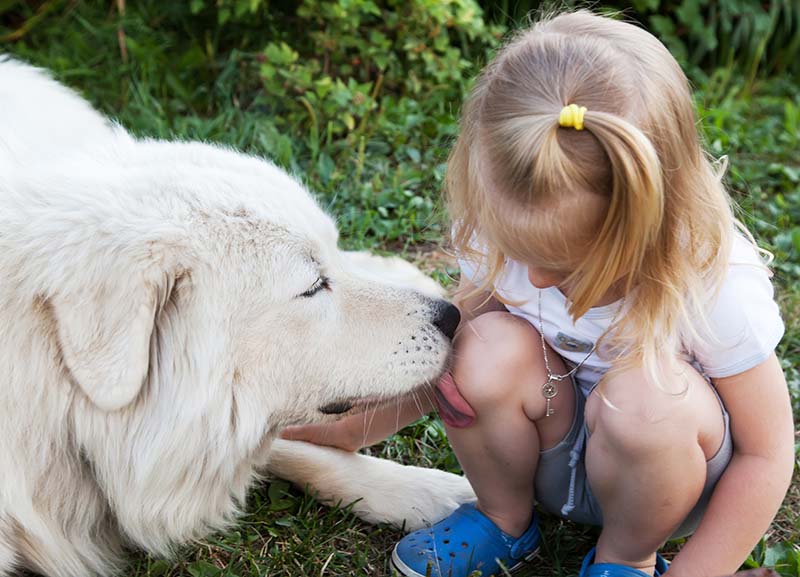
If you hurt yourself and your dog comes over with concern, you might notice that they try to lick your wound, especially if it’s bleeding. Why do dogs do this? Dogs will try to lick their owner’s wounds for various reasons.
They instinctively lick wounds out of in response to scent cues and arousal, as a social and caregiving behavior, and as part of bonding. Read on below to find out more.

The 2 Reasons Dogs Lick Your Wounds:
1. Attraction to Scent and Social Bonding
Dogs have an exceptionally strong sense of smell and taste, and they are naturally drawn to blood, sweat, and other bodily fluids. When a person is injured, these scents become stronger and more noticeable, immediately capturing a dog’s attention..
Licking is also a normal social and affiliative behavior in dogs. It is commonly used during grooming and bonding interactions, especially toward individuals they are closely attached to. When dogs lick a person’s wound, they are not responding to the injury itself or attempting to provide care. Instead, they are reacting to powerful scent cues and engaging in familiar social behavior.

2. Instinctive Licking and Self-Soothing Behavior
Dogs, like many animals, instinctively lick as part of grooming and self-soothing behaviors. Licking can provide temporary sensory distraction and may momentarily reduce discomfort, which is why dogs often lick their own minor wounds.
When directed toward humans, this same instinctive behavior can be triggered by the presence of blood or disrupted skin. However, licking does not promote healing and can increase the risk of infection. For this reason, dogs should not be allowed to lick human wounds or excessively lick their own injuries.
Why You Shouldn’t Let Your Dog Lick Your Wounds
It’s a very bad idea to let your dog lick your wounds. While it can seem well-intentioned, a dog’s mouth contains bacteria that can cause serious infections in people, especially when introduced through broken skin. A dog’s mouth naturally contains a wide variety of bacteria due to normal oral flora, diet, and environmental exposure. In addition, many dogs have some degree of periodontal disease, which further increases the number of bacteria present in the mouth. When these bacteria enter an open wound, they can lead to infection. A dog’s mouth can contain many bacteria capable of causing infection, including:
- Capnocytophaga canimorsus
- Pasturella dagmatis
- Pasturella multocida
Pasteurella species are well-documented causes of skin and soft tissue infections in humans. There have been documented medical cases of these bacteria leading to severe infections, including cellulitis, necrosis, and in rare cases, limb loss.
In very rare but serious instances, infection following exposure to dog saliva has resulted in sepsis (a bloodstream infection) and necrotizing fasciitis, particularly in immunocompromised individuals.
How Can I Stop My Dog From Licking My Wounds?
You can discourage your dog from licking your wounds by simply not allowing them the chance to do it. Cleaning the wound and covering it with a bandage will effectively stop your dog from being able to lick at your wound. If they bother the covering, redirecting their attention with an appropriate distraction or physical separation is the next step.

Can I Let My Dog Lick Its Own Wounds?
It’s not recommended to let your dog lick their wounds, just as it isn’t a good idea to let them lick yours. Not only can your dog introduce oral bacteria into their own wounds and increase the risk of infection, but they can also over-lick.
Dogs often over-lick their wounds and cause a lick granuloma, which is an area of chronically inflamed, thickened, and damaged skin. Excessively licking a wound can also cause wound breakdown and significantly delay healing, worsening tissue damage. In rare but severe cases, dogs can tear up the wound and cause enough damage that they self-amputate digits or tail tissue.
How Can I Stop My Dog From Licking Its Wounds?
Many methods are used to stop a dog from licking its wounds, the most common being an Elizabethan (or ‘E’) collar. Vets often recommend Elizabethan collars after surgeries or procedures, and they are a simple but effective way of preventing dogs from reaching their wounds. Elizabethan collars are protective cones usually made of plastic or soft material that fit over a dog’s head and don’t allow them to reach around or down to their bodies.
Other collars are available, such as inflatable recovery collars that fit around the neck, which act similarly to Elizabethan collars but may provide greater comfort and mobility for some dogs. Pet shirts, baby clothes, and t-shirts can also be used, which cover the dog’s body and prevent them from reaching wounds, but they can be less effective at stopping persistent or anxious lickers!

Are Dog Tongues Antiseptic?
Dog tongues are not antiseptic, and it’s a myth that they are, although dog saliva does contain limited antibacterial properties. As mentioned above, dog mouths have many bacteria that are part of normal oral flora and other pathogens that do no harm when contained in the mouth, but can cause infection if introduced to open wounds.
Conclusion
Dogs are companions in every sense of the word and will often respond to scent cues and social bonding behaviors by licking at wounds. This is largely instinctive, as they will lick their wounds as a self-soothing behavior, but it’s not a good idea to let your dog do the same to you.
Dog’s mouths are full of bacteria that can cause infection if they enter a wound, so it’s best to clean and cover the wound yourself. You can let your dog give you affection and love in a different way while keeping your wound clean and safe.
- Related Read: Why Is My Dog’s Tongue White? 6 Vet Approved Reasons
Featured Image Credit: Fiery Phoenix, Shutterstock
 The 2 Reasons Dogs Lick Your Wounds: