Get

In Your Inbox

Dogster is reader-supported. When you buy via links on our site, we may earn an affiliate commission at no cost to you. Learn more.

My Dog’s Tooth is Discolored, What’s Wrong? Our Vet Discusses 4 Common Causes

Share

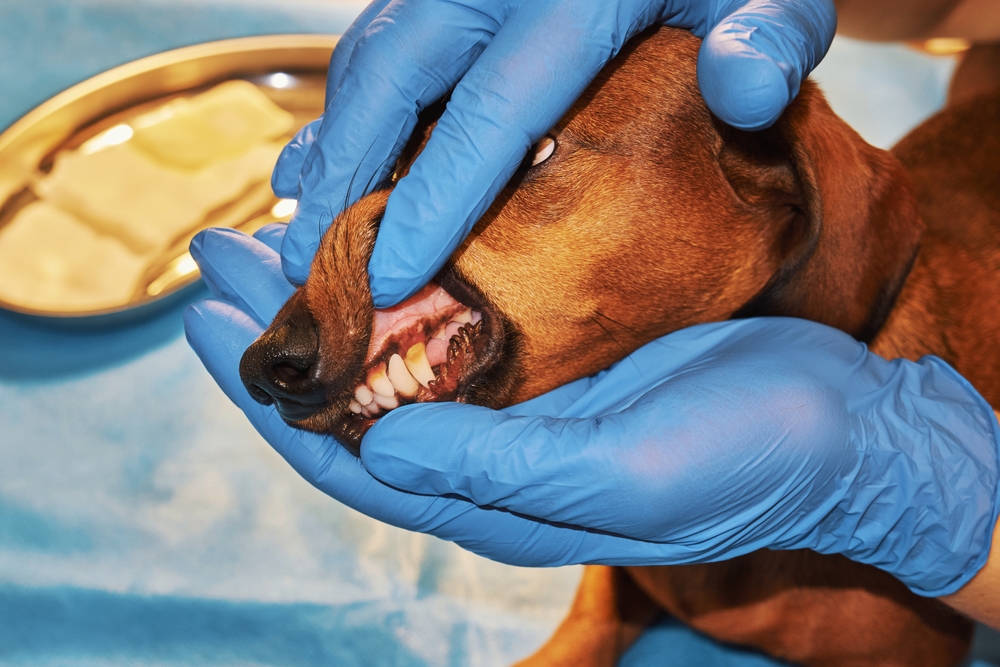
vet checking dog's teeth

We often think of a dog’s teeth as one of their strong suits, evolved over time for powerful and effective chewing. However, dog teeth are just as sensitive as ours; they can develop tartar, experience trauma, and wear down the enamel. All of these issues will cause discoloration of the affected teeth and will predispose these teeth to infection.

Dogs are also very good at hiding their pain; seldom will they show any sign of discomfort or difficulty eating until the problem is very far down the road. So, what’s going on with your dog’s discolored tooth? And what can we do about it?

divider dog paws 3 oct 2024

The 4 Common Causes of Tooth Discoloration

1. Plaque and Tartar

Accumulation of plaque and tartar is far and away the most common cause of tooth discoloration in dogs. This will appear as yellow or brown discoloration of the teeth; usually several teeth are affected, and the material is visible as a film or crust on top of the tooth surface.

This is referred to as periodontal disease, which means inflammation of the tissues surrounding the teeth, such as the gums and jawbones. It is estimated that at least 80% of adult dogs have some degree of periodontal disease, though this staggering statistic does not mean that the problem should be disregarded. Periodontal disease results in discoloration of the teeth, redness of the gum line, and bad breath. Severe cases may cause chewing discomfort, though most dogs will eat despite their periodontal disease.

So, what can be done to fix this? Daily brushing with pet-grade toothpaste and a dog-friendly toothbrush is the key to preventing the accumulation of plaque. Dental chews, which are designed to break off plaque while chewing, are another good option. If these methods are not effective, a thorough inspection and “clean-up” under anesthetic can be performed by a registered veterinarian.
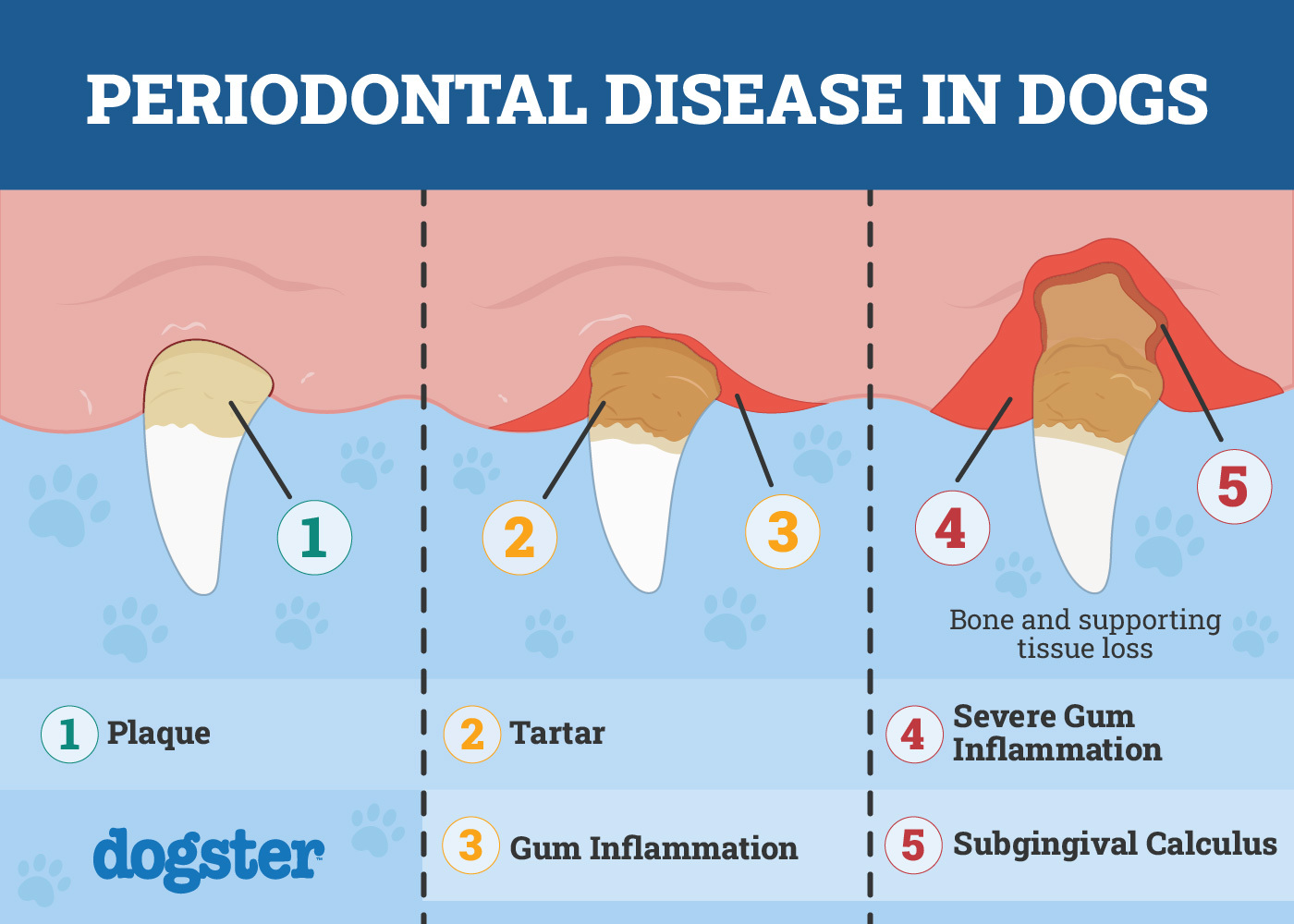
Periodontal Disease
You are free to use this image but we do require you to link back to Dogster.com for credit

2. Trauma

Trauma to a tooth can cause the entire tooth to change color. Teeth affected by severe trauma often appear pink initially, then slowly change to grey. There may or may not be plaque present on top of the tooth (as an unrelated problem). The trauma we are referring to is “blunt” or “concussive trauma”, and it causes something called intrinsic straining. Common causes are catching Frisbees, accidental clashes whilst playing, and biting or catching hard objects like stones, bones, or hard toys.

Intrinsic staining occurs when the pulp cavity of the tooth is affected by trauma. The pulp contains blood vessels, which supply the tooth with all of the nutrients it needs to stay alive. When the pulp is traumatized, hemorrhage occurs (which causes the pink discoloration). This will slow blood flow within the pulp and cause pulpitis, also known as inflammation of the pulp.

If left untreated, pulpitis results in death of the pulp. Remember, bacteria love to find dead tissue in the body, and it can be very hard for antibiotics to reach dead tissue. The end result is a significant infection of the oral cavity.

There are three options for managing these teeth. The first is a ‘watch and wait’ approach, with regular vet checks and annual dental X-rays. However, as we’ve touched upon, it can be hard to determine which intrinsically stained teeth are painful, and which aren’t. We could be missing an ongoing source of pain, or we could detect pain when the infection is severe. The second option is to remove the source of pain and infection.

This involves either extraction of the stained tooth (which is effectively dead), or root canal therapy (generally performed by veterinary dental specialists).

veterinarian examines a dog teeth
Image By: Yavdat, Shutterstock

3. Worn Enamel

Enamel covers the surface of the crown of the tooth (the part we can see above the gum line). It is a hard, glossy substance that protects the tooth; it is incredibly durable and believed to be stronger than bones. Underneath enamel is dentin, which is calcified tissue that makes up the bulk of the tooth structure.

When a dog is given excessively hard objects to chew on, and when they chew on these objects over and over again, the enamel of the tooth becomes worn down. Tennis balls can also cause this to occur. The result of worn enamel is the exposure of the underlying dentin; the tooth senses this change and tries to make more dentin, but this new dentin will often be brown in color.

The only way to avoid rapid or excessive wear of the teeth is by being careful with what you allow your dog to chew. Avoid marrow bones, antlers, rocks, and tennis balls.
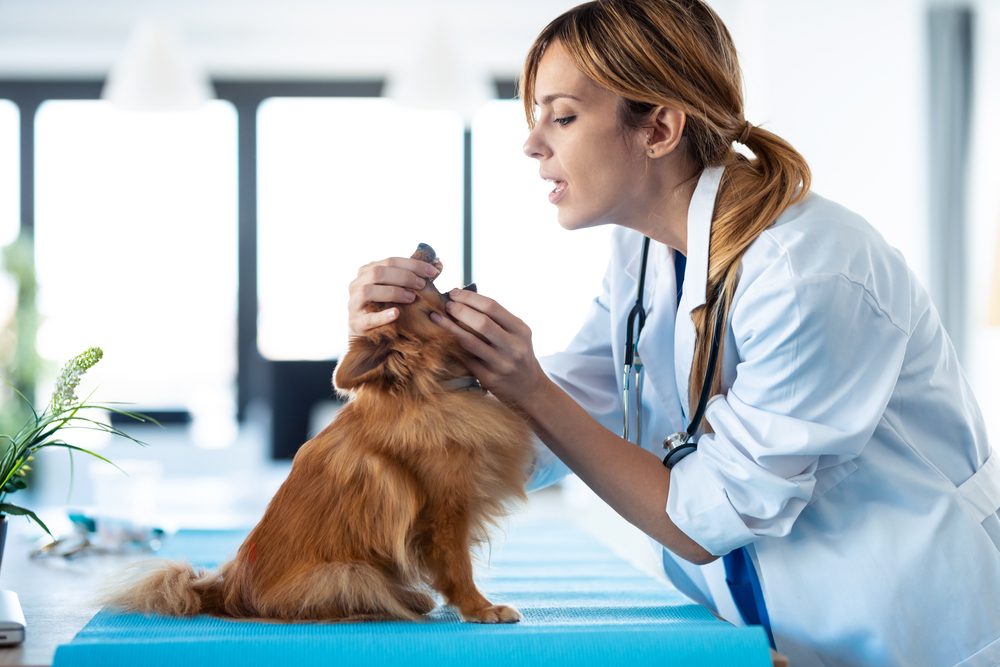
young veterinarian woman examining teeth and mouth of cute lovely pomeranian dog at veterinary clinic
Image Credit: Josep Suria, Shutterstock

4. Medications

Dogs don’t drink tea, coffee, or red wine. However, their teeth can become discolored as a result of other things that have gone into their mouth. Certain medications will cause discoloration of the teeth. Chlorhexidine is sometimes used as an antiseptic mouthwash to keep bacteria at bay. If used over long periods of time, the teeth can change color, but this is no cause for concern.

Similarly, if tetracycline medications (a class of antibiotic) are used while a dog is still a puppy, their adult teeth may take on a permanent yellow-brown staining.
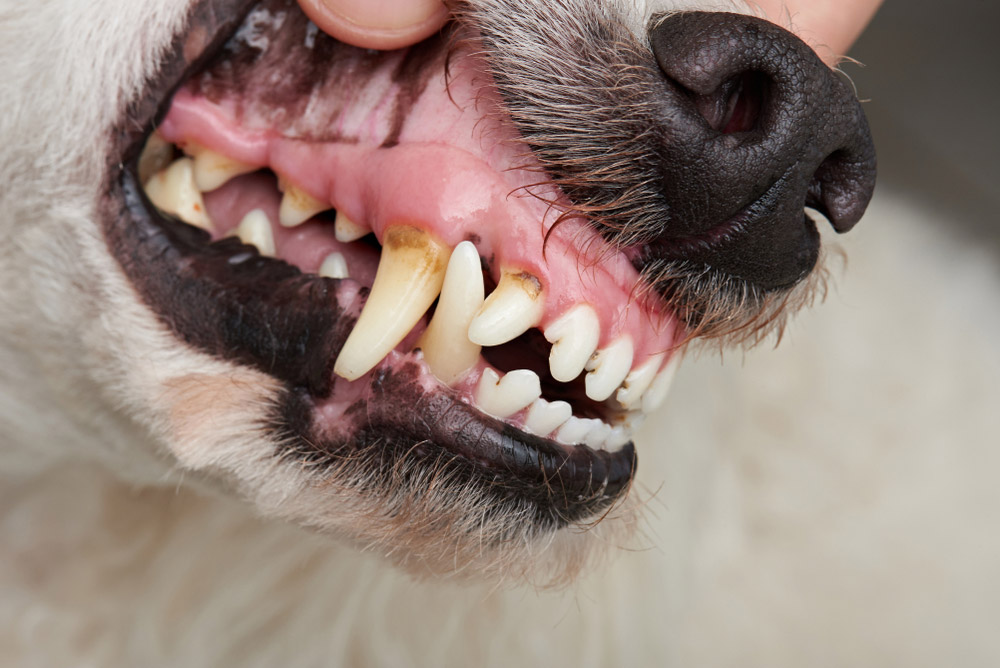
dog with brown teeth
Image Credit: PixieMe, Shutterstock

If you’re concerned about your dog’s health we suggest you speak to a vet.

If you need to speak with a vet but can't get to one, head over to PangoVet. It's our online service where you can talk to a vet online and get the advice you need for your dog — all at an affordable price!

PangoVet_Mention-in-Content Savings V1

divider dog paws 3 oct 2024

Conclusion

Discoloration of one or more of your dog’s teeth warrants a visit to the veterinarian. Whether the cause is plaque, trauma, worn enamel, or medication staining, early intervention will give the best chance of saving the affected teeth before infection sets in.

See Also:


Featured Image Credit: DAndreev, Shutterstock

Want content like this delivered to you?

Sign Up For Our Newsletter

News, insights, expert advice, and everything dog

* By submitting, you agree to our Terms & Conditions and Privacy & Cookies Policy.


How useful was this post?

Click on a star to rate (you can leave written feedback after clicking submit)

Help us improve Dogster for pet parents!

Your feedback really matters.

What did you like about this post? Also how can we improve it?

Join the conversation

Leave a Reply

You’re very welcome to leave a comment or question. Please know that all comments must meet our community guidelines, and your email address will NOT be published. Let’s have a positive and constructive conversation.


Talk With A Vet Online

Peace of mind,
anywhere, anytime

Affordable vet advice

Dogster’s Weekly Photo Contest Winners: Best Easter Photo (April 9, 2026)

Every week our team gets the privilege of sorting through our readers photos to choose what dogs will win this weeks contest! See...

We Didn’t Just Add a Dog to Our Life – We Built a Life With Him

“We didn’t just bring a dog home—we built a life together.” Most people are quietly taught a version of pet ownership that looks...

What Most Airlines Won’t Let You Do With Your Dog (Even If You Pay Extra)

Airline pet policies are notoriously hard to navigate. The information is scattered across different pages, buried in FAQ sections, and often contradicts what...

Designer Breeds: Best of Both? New Study Says No

“I’ll take a highly trainable, low-shedding lapdog, hold the heart disease and anxiety!” Something I always found amusing was when people would point...

More related

Ask Dr. Paola- Death, Fleas & Grooming (March 3, 2025)

Welcome to our “Ask Dr. Paola” series, where every Monday we bring expert advice straight from Dr. Paola Cuevas (MVZ) to help our...

How to Train a Stubborn Dog Who Won’t Listen: 10 Vet-Approved Tips

Since we give them all the food, shelter, and affection they could want, it’s easy to expect our dogs to obey with minimal...

Neurological Disorders in Dogs: 11 Vet-Explained Signs

Neurological disorders in dogs can be alarming for owners to witness and often tricky to diagnose and treat. The nervous system is essentially...

Is a Great Dane a Good Apartment Dog? Factors to Consider

The Great Dane is a very large and elegant breed known for their gentle nature and low energy. As a low-energy dog, many...

Keep reading

8 Best Dog Foods for Pitbull Puppies to Gain Weight in 2026 – Reviews & Top Picks

What we lovingly call a Pitbull is officially known as the American Staffordshire Terrier. Pitbulls are strong and athletic, with a muscular build that is easily recognizable. Contrary to their buff exterior, most Pitbulls are playful and just a little...

pitbull eating

Can Dogs Eat Syrup? Vet-Verified Nutrition Facts & Info

Our canine companions are pros at begging our food off us, and they aren’t picky either. Our pups are more than interested in eating everything we eat. But not all people foods are healthy for dogs; in fact, some foods...

Dogster-Can-Dogs-Eat-Syrup

Why Do Dogs Eat Their Vomit? 4 Vet-Reviewed Reasons & What to Do

Dogs have some really weird habits that disgust us, but we just chalk it up to them being dogs. For example, your dog sniffing other dogs’ butts is normal to dogs but weird to humans. Another disgusting thing they like...

Toy poodle dog vomits yellow substance

When Was Dog Food Invented? History, Facts & FAQ

Do you know when dog food was invented? The answer may surprise you! Dog food has a long and complicated history, and the way we feed our dogs today has changed a lot over the years. In this post, we’ll...

woman buying dog food

How Much Does a Cavalier King Charles Spaniel Eat in a Day? Our Vet Explains

The Cavalier King Charles Spaniel is a toy dog breed that’s among the most popular dog breeds kept as pets today. Ranking at #14 according to the American Kennel Club’s (AKC) popularity ranking for 2023, it’s evident that these charming...

cavalier king charles spaniel eating bone treat

10 Best Dog Foods for Cocker Spaniels in 2026: Reviews & Top Picks 

Dog food can be a little tricky to pick these days since there are so many vast recipes and brand options on the market. If you have a Cocker Spaniel, you are probably looking for the best choice for your...

Cocker Spaniel puppy eating

11 Best Dog Foods for Miniature Schnauzers in 2026 – Reviews & Top Picks

No two dog breeds are exactly the same. That’s why the market is ever-expanding with products that cater more to specific categories of dogs to personalize the diet experience better. As far as Miniature Schnauzers go, it might be hard...

miniature schnauzer dog standing on sofa and eating dog food from bowl

11 Best Foods for a Corgi Puppy in 2026 – Reviews & Top Picks

Congratulations on your new Corgi puppy! These affectionate, medium-sized dogs are an excellent addition to any household. You want the best for your corgi, starting with the right puppy food. If you’re overwhelmed by all of the pet food brands...

Hungry Welsh corgi Pembroke or cardigan puppy eats from ceramic bowl standing on fleecy carpet

Love Dogs? So Do We! Join the Dogster Community

Stay informed with expert pet care insights delivered straight to your inbox! Discover professional guidance on animal behavior, feeding tips, trusted product picks, and much more.


Sign up for the Dogster Email Newsletter