My Dog Ate Sand: Should I Be Worried? Our Vet Explains

In this article
So, you are at the beach and enjoying your day when your beloved dog decides to make a meal out of sand. Should you be worried? The answer is yes, it is an urgent matter depending on the amount consumed. If your dog only ingested a small amount of sand, it is unlikely to be problematic.
If your dog has consumed, whether on purpose or accidentally, a large amount of sand throughout the day, the risk of sand impaction becomes more likely.

How Sand Ingestion Occurs
Sand ingestion doesn’t only happen when sand is intentionally consumed. One way sand can accidentally be consumed is by drinking water that has sand in it. Consumption of beach water should be discouraged, especially if it is saltwater, as it can lead to toxicosis.
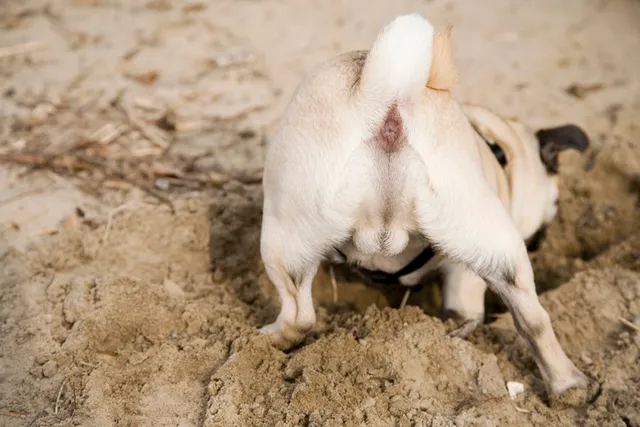
Dogs can also accidentally consume sand while playing with sand-covered toys, or while digging and grooming. These repetitive activities can lead to sand accumulation within the gastrointestinal tract.

What Is the Primary Concern With Sand Ingestion?
The sand itself is not toxic. When large amounts of sand are ingested, the sand accumulates first in the stomach and then may travel to other parts of the gastrointestinal tract. As sand is ingested, the patient’s intestinal tract will begin to feel heavy, and the sand will accumulate.
The accumulation of sand can cause an obstruction, or an impaction, within the gastrointestinal tract preventing the flow of gastrointestinal contents and causing the patient discomfort.
If you’re concerned about your pet’s well-being, we recommend consulting a veterinarian.
Signs of Sand Impaction

Treatment of Sand Impaction
The treatment of sand ingestion varies depending on the amount ingested and the clinical signs the dog is experiencing. For dogs who have eaten only a small amount of sand, interventions are not likely needed if the dog is not experiencing clinical signs. Small amounts of sand are likely to pass through the gastrointestinal tract without problem.
Dogs who have ingested large amounts of sand or dogs experiencing gastrointestinal signs should be evaluated by a veterinarian as soon as possible. Radiographs will likely be recommended to get a closer look at the gastrointestinal tract.
Some dogs will benefit from supportive therapy, including intravenous fluid administration. Some patients may require more medical intervention, and in severe cases, surgery may be necessary to physically remove the sand from the gastrointestinal tract.
Final Thoughts
When allowing your pup to come along to the beach or play in the sandbox, be mindful of the risk of sand ingestion. Intervene if you see your dog ingesting sand or excessively drinking water carrying sand. Try offering your dog a sand-free area to rest and plenty of fresh water.
If your pet becomes lethargic or shows gastrointestinal signs after a visit to the beach, be sure to seek veterinary care.
See also:
Expert dog care, straight to your inbox
News, insights, expert advice, and everything dog.

No spam — unsubscribe anytime.
By signing up, you agree to our Terms & Conditions and Privacy & Cookies Policy.
How useful was this post?
Click a star to rate. You can leave written feedback afterwards. (We read all feedback.)
Dr. Marti Dudley DVM (Veterinarian)
Dr. Marti Dudley is a small animal veterinarian with a strong interest in preventative medicine and pet parent education. She enjoys being a resource for pet owners as she believes that having a team approach leads to the best possible care of pets. Dr. Dudley enjoys writing and has been able to use this skill as another avenue to educate pet owners outside of the traditional office setting.
Dr. Dudley has been practicing veterinary medicine since 2014. She has an interest in preventative care and emphasizes the importance of pet owner education. Dr. Dudley’s experience in veterinary medicine is broad, as she has worked as a general practitioner, which has allowed her to see and treat many different types of conditions.
Dr. Dudley received her bachelor’s degree in biology from Longwood University in Virginia. She earned her Doctor of Veterinary Medicine (DVM) degree from Ross University.