In this article
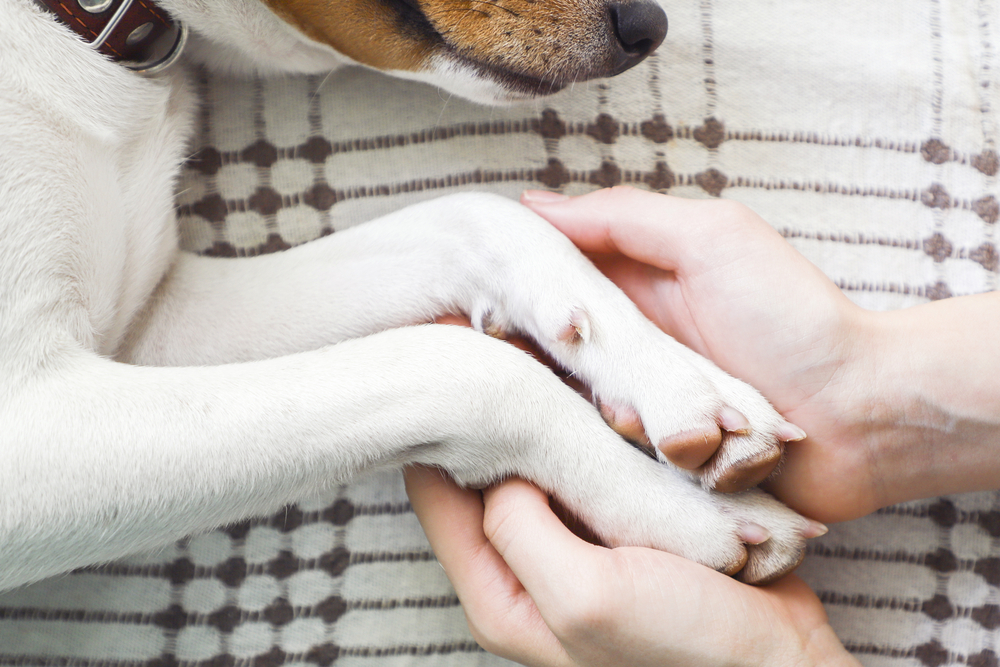
View 4 More +A dog’s paws tolerate multiple stressors all throughout their life. While biomechanically designed to withstand many of these stressors, they are not immune to discomfort and disease. Paws can scale and crack, and they can be subject to the intrusion of foreign bodies and infections and be burnt by heat and ice. Just like our feet, they can also blister.
Read on to learn more about the how, what, and why of doggy blisters and what you should do if your canine friend is suffering from them.

What Are Blisters on Dog Paws?
Blisters are fluid-filled bubbles that form on the surface of the skin. They can technically form anywhere on the body, but they are common on the paws due to their exposure to friction, rubbing, and trauma.
Blisters can sometimes be the result of many specific conditions of the paws, such as “interdigital furunculosis,” “pododermatitis,” and “interdigital cysts.” Each has a different disease process and often different treatment recommendations. So, it is important to always get your dog’s paws assessed by a veterinarian to rule out conditions other than the classic blister that is a result of trauma or friction.
If you need to speak with a vet but can't get to one, head over to PangoVet. It's our online service where you can talk to a vet online and get the advice you need for your dog — all at an affordable price!

What Are the Signs of Blisters on Dogs’ Paws?
Blisters are classically red, raised lesions. They can occur on the interdigital skin between the paws, on the tough tissue of the paw-pads themselves, or on the margin between the paw-pad and the skin. The pocket formed under the blister beneath the top layer of skin usually fills with fluid called serum, which forms as a result of injured tissue. The body will always do its very best to try to heal itself, and that includes filling a pocket of space that shouldn’t be there with fluid!
Signs that something is wrong with a dog’s paw can include their licking their paw more than usual, limping, or simply being reluctant to walk on hard surfaces, such as tarmac or concrete. Sometimes the excessive licking can cause secondary skin infections, and the inciting issue of the pesky blister will be masked by the “red, sore paw.”
What Are the Causes of Blisters on Dog Paws?
1. Trauma
Whether from walking on hot pavement or icy roads, repeated friction from high amounts of exercise, or walking on rough terrain, trauma is certainly the most common cause for the classic blister that we humans can sympathize with. If the pavement is too hot or cold for you to touch, you should be mindful of any injuries to your dog’s paws. While we could argue that their paws are more durable than our own plantigrade feet that offer little protection from the elements, it is always important to remember that your dog isn’t immune to the elements either.
2. Interdigital Cysts
Infection between the toes can result in interdigital cysts or abscesses. It can also be called interdigital furuncles or follicular pododermatitis. This results in pus or blood-filled blisters, like a boil, caused by foreign bodies (such as prickles and grass seeds), allergies, or ingrown hairs.
Some breeds, such as the Labrador Retriever and the Chinese Shar-Pei, are predisposed to these infections, as they have short, sharp hairs on the webbing between their toes. Overweight dogs can also be predisposed to interdigital cysts due to the amount of pressure placed on the space between their toes when walking.

3. Autoimmune Disease
While less common, certain autoimmune diseases can cause blistering on the paws. This is where the immune system mistakes the body’s own tissue as foreign, resulting in an attack on itself. With autoimmune disease, you are more likely to see blisters forming on other parts of the body too, such as the head, face, and ears. We would tend to see multiple blisters over multiple paws rather than trauma, which could—depending on the cause—result in only a single blister.
How to Treat Blisters on a Dog’s Paws?
If your dog is suffering from a blister that isn’t going away, has multiple blisters, or is in an obvious amount of discomfort, it is recommended that you go down to the vet’s office to get your dog checked out. Paws can often be troublesome to treat, as they are prone to repeat trauma from licking and walking.
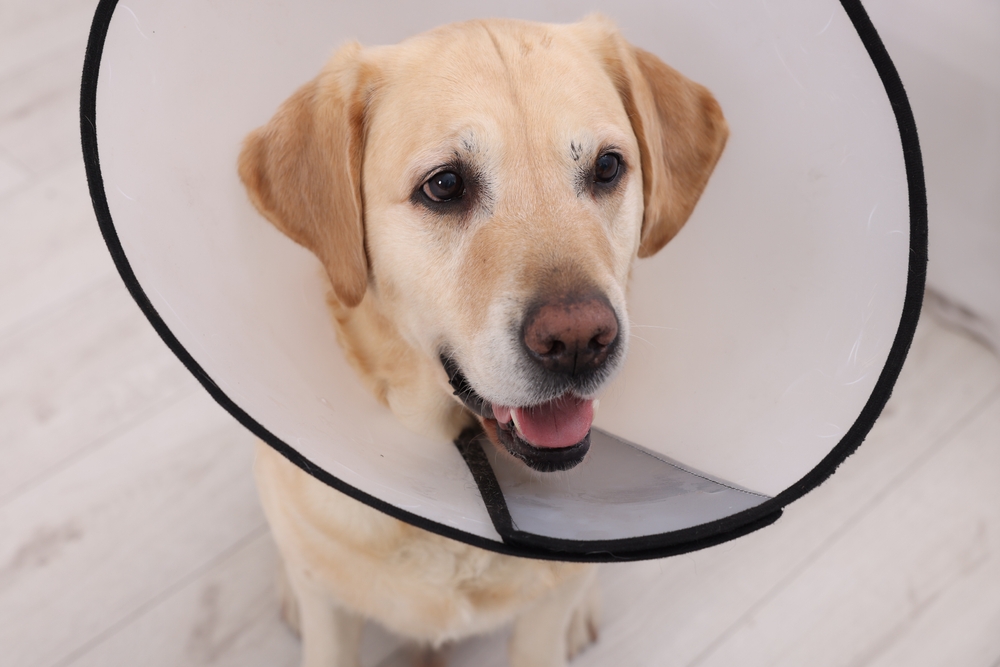
The most important aspect of healing a traumatic blister is keeping it clean and protecting the area from further trauma. This can be achieved by bandaging the paw or using an Elizabethan collar. Your veterinarian may recommend using an antibacterial solution to clean the paw regularly to prevent further infection.
Depending on the cause of the blisters, your veterinarian may also dispense further medication, such as antibiotics or anti-inflammatories. They may also need to do further intensive management if they suspect the blister has been caused by a foreign body (such as a grass seed) or infection. This will usually include anesthesia to explore the paw, flush out the offending lesion, and remove the foreign material from the cyst. Sometimes, interdigital cysts need to be removed in their entirety.
Treating paw-related issues can be time-consuming and challenging, simply because a dog often doesn’t understand that licking the area, ripping off bandages when you’re not looking, and running after a bird in a wet, muddy field is counteracting all the work you are doing to help the blisters heal!
Frequently Asked Questions (FAQ)
How Do I Prevent Blisters on My Dog’s Paws?
Avoiding blisters is part common sense and part luck. Ensure that your dog doesn’t walk on pavement that is too hot or too cold. If your dog is particularly sensitive, you can also get protective boots to put on in more extreme weather. During the summer, don’t take your dog for walks in the middle of the day.
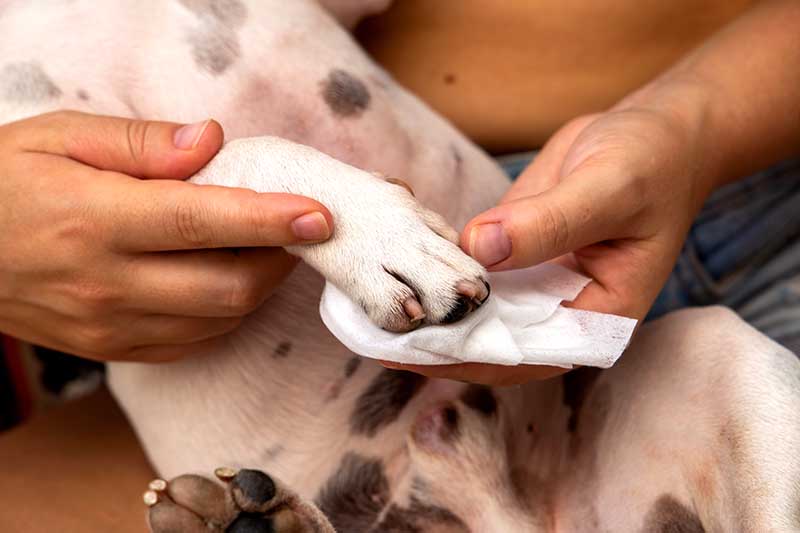
Check their paws regularly, and get into the habit of searching the nooks and crevices between each paw to ensure they don’t have any grass seeds or foreign bodies. In the winter, after walks, get into the routine of wiping their paws down and removing any icy clumps between their paw pads.
It is also important to keep your dog at their recommended weight to prevent pressure on their paws. Keeping your dog in good body condition will have countless other health benefits. Your veterinarian will be able to advise you further on the weight recommendations for your specific breed.
Will a Dog’s Blister Heal on Its Own?
Blisters normally need a bit of time and care to heal. At the very least, keeping the paw clean by using a saltwater wash daily and stopping your dog from licking their paw will help provide it with the appropriate conditions to heal.
Conclusion
We are all aware of the fact that a blister on our feet can ruin the best of days, demanding your time and attention no matter how small and unremarkable it looks. The same is true for our canine friends. If your dog is suffering from a blister (or multiple!) on their paws, and it is bothering them, please follow up with your veterinarian, who can best advise further treatment.
See also:
Featured Image Credit: ADVTP, Shutterstock