Get

In Your Inbox

Dogster is reader-supported. When you buy via links on our site, we may earn an affiliate commission at no cost to you. Learn more.

First Vaccines For Puppies: Our Vet’s Guide on Initial Vaccinations

Cute labrador puppy dog getting a vaccine at the veterinary doctor

Bringing a new puppy into your home can be both exciting and overwhelming. You’ll undoubtedly experience the joy that comes with puppy cuddles, playtime, and watching them grow. There’s also a lot to think about—feeding, exercise, toilet training, and vaccinations. But vaccinations don’t need to be stressful.

This article will discuss what to expect, which vaccinations are most important, the possible side effects of vaccinations, and what will happen with vaccinations in the future.

divider dog paws 3 oct 2024

What Happens at Puppy Vaccinations?

Puppy vaccinations are more than just a vaccination. In fact, they are a consultation with a veterinarian. This comprises a full physical exam, checking every part of your puppy from the nose to tail. It is a chance for your vet to assess your puppy’s overall health and check for any hereditary abnormalities.

It is also a chance to discuss training, parasite prevention, and de-sexing. All of these aspects of canine care will be unique to you and your dog – there is no “one size fits all” approach.

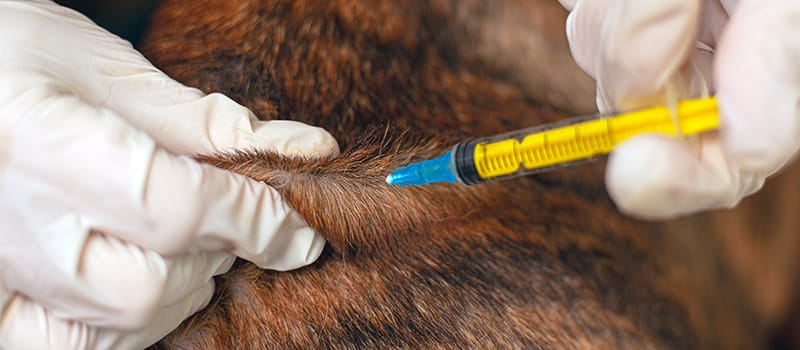
The vaccination itself is an injection given under the skin, generally in the scruff of the neck. Depending on the brand and type of vaccination, more than one injection may be necessary. Some forms of “kennel cough” vaccines (see below) are given orally (into the mouth) or intranasally (into the nostril).
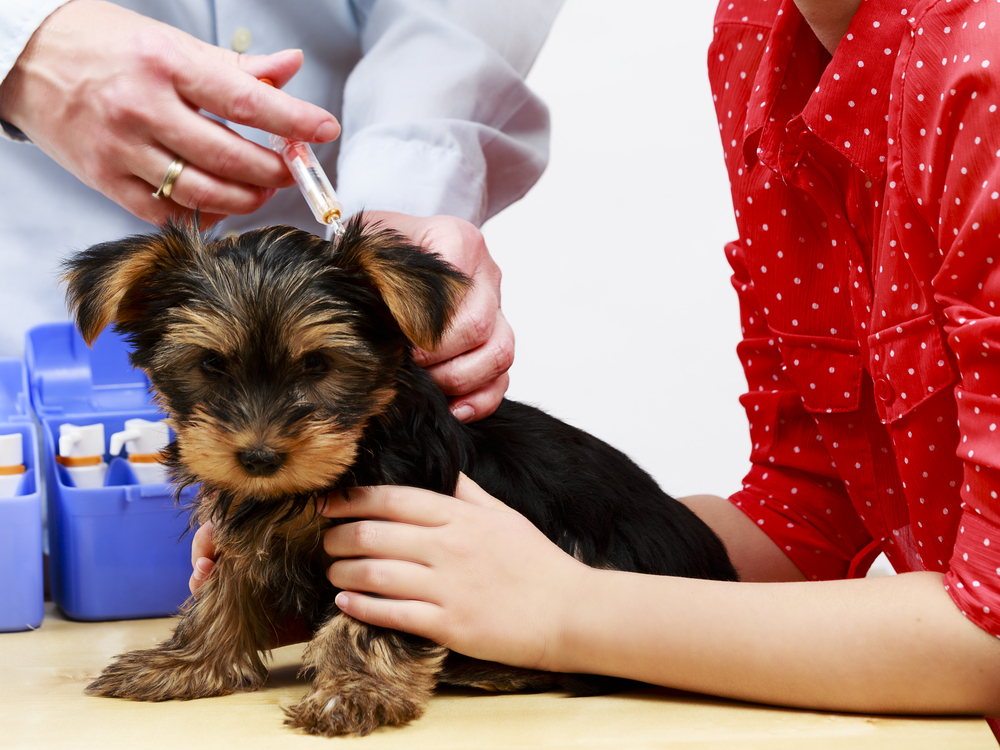
Puppy Vaccine
Image Credit: gorillaimages, Shutterstock

Why Do Puppies Need Vaccinations?

Puppies need vaccinations for the same reasons children and people do: to protect against potentially fatal diseases. For the first few weeks of a puppy’s life, they receive antibodies through their mother’s milk. Antibodies are what the immune system sends out to fight foreign substances like viruses and bacteria.

After a few weeks, the levels of these antibodies diminish, as puppies suckle less milk. This puts them at risk of falling ill if they come into contact with infectious diseases. Vaccinations are then given to “train” the dog’s immune system to fight a disease, preparing the body for an effective immune response.

Which Dog Vaccinations Are Necessary?

The first vaccination is generally given between 6 and 8 weeks of age.

Essential Puppy Vaccinations

  • Parvovirus
  • Adenovirus (viral hepatitis)
  • Distemper virus (These vaccines are usually combined into a single injection, sometimes referred to as a “C3” or “DHP” vaccination)
  • Rabies virus (mandatory in the USA)

Strongly Recommended Vaccinations

Optional Vaccinations

  • Leptospira (different “strains” exist)
  • Lyme Disease
  • Rattlesnake toxoid (These vaccinations may or may not be recommended, depending on where you live and your dog’s level of risk. They are given on a “case-by-case” basis)
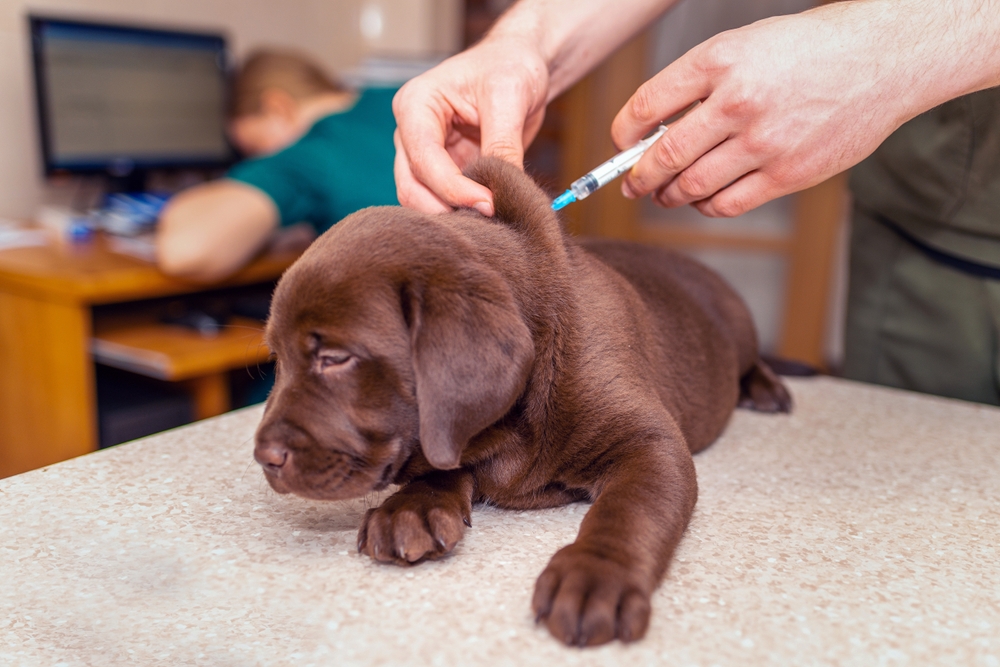
Cute Labrador puppy getting a vaccine
Image Credit: ARVD73, Shutterstock

Are There Any Side Effects with Dog Vaccinations?

Thankfully, dog vaccinations are very safe and side effects are rare. Side effects sometimes encountered include:

  • Lethargy or reduced appetite
  • Vomiting
  • Swelling of the face and neck
  • Hives
  • Swellings or tenderness at the injection site

We recommend contacting a veterinarian if you notice any of these signs at home.

If you need to speak with a vet but can't get to one, head over to PangoVet. It's our online service where you can talk to a vet online and get the advice you need for your dog — all at an affordable price!

PangoVet_Mention-in-Content Savings V1

divider dog paws 3 oct 2024

How Long Before My Dog Is Protected?

Generally, puppies are considered immune 7 days after their second vaccination. Until they have had their final puppy vaccination, it’s best to avoid high-density doggy areas such as dog parks and beaches.

When Is the Next Round of Vaccinations Due?

The second round of vaccinations is given one month after the first. Your vet will discuss with you when the final vaccine is due; this is usually at or just after 16 weeks of age.

black dachshund getting a vaccine
Image Credit: Masarik, Shutterstock

divider dog paws 3 oct 2024

Conclusion

Vaccines are a safe, easy, and affordable way to reduce the risk and incidence of preventable canine diseases. Don’t underestimate the importance of puppy vaccinations. At the same time, don’t let puppy vaccinations stress you out. Remember, your vet will guide you through which vaccinations are best and when vaccinations will be due.


Featured Image Credit: ARVD73, Shutterstock

Want content like this delivered to you?

Sign Up For Our Newsletter

News, insights, expert advice, and everything dog

* By submitting, you agree to our Terms & Conditions and Privacy & Cookies Policy.

How useful was this post?

Click on a star to rate (you can leave written feedback after clicking submit)


Help us improve Dogster for pet parents!

Your feedback really matters.

What did you like about this post? Also how can we improve it?

Join the conversation

Leave a Reply

You’re very welcome to leave a comment or question. Please know that all comments must meet our community guidelines, and your email address will NOT be published. Let’s have a positive and constructive conversation.

Talk With A Vet Online

Peace of mind,
anywhere, anytime

Affordable vet advice

How to Use a Dog Whistle: 8 Tips for Training & FAQ

Training any dog can be challenging, especially if yours never seems to listen to you. While it’s true some dogs are easily distracted,...

62 Dog Breeds That Start With C: Info, Pictures, Facts & History

Many dog breeds begin with the letter C, and you’ll see quite a variety! From small to giant and from curly coats to...

International Blind Dog Day 2025: What It Is & When It’s Celebrated

International Blind Dog Day is an event that happens every year on the 23rd of August. It seeks to assemble the owners of...

Small Dog Syndrome: What Is It & How To Stop It (Vet-Verified)

Small dogs have earned a reputation for being full of personality and charm. However, they can sometimes exhibit less-than-ideal behaviors that seem to...

More related

Vetnique YuMOVE Supplements Review 2025: Powerful Joint Care to Fit Your Dog’s Needs

Are you ready to start supporting your young dog’s joints so they can age more gracefully? Or perhaps you have a senior who...

How to Remove Dog Tear Stains Naturally: Vet-Approved Tips & Tricks

Tear staining is especially common in white-coated dogs like Bichon Frises, Shih Tzus, and Maltese dogs. Though it can happen to darker-colored dogs,...

Victor Dog Food Review 2025: Pros, Cons, Recalls & FAQ

Review Summary Victor dog food is a newer dog food from a US-owned company. The brand touts its commitment to high-quality dog food...

10 Best Brushes for Short Hair Dogs in 2025 – Reviews & Top Picks

The length of hair is often a factor when choosing a dog to have as a pet. Although short-haired canines require less grooming...

Keep reading

Why Is My Dog Throwing Up Undigested Food? 9 Vet-Reviewed Reasons & Advice

Although you might be used to their daily behaviors and social cues, your pup might surprise you with an activity that is not common for them. For example, dogs can throw up undigested food, though this shouldn’t occur regularly. So,...

Can Dogs Have Olive Oil? Vet-Verified Health Facts & FAQ

You’ve undoubtedly heard of the benefits of olive oil on human cardiovascular health. Research has also shown it has anti-inflammatory properties, contains antioxidants, and may help protect against or treat a variety of conditions in people, including rheumatoid arthritis, cancer,...

olive oil

Can Dogs Eat Star Fruit? Vet-Verified Info & Risks

Star fruit or carambola is an appropriately named southeast Asian fruit of the tree of the same name. It’s a global food item grown in the warmer USDA Plant Hardiness Zones of 10 and 11 in the United States.1 Its...

Can Dogs Eat_star fruit

Can Dogs Eat Paprika? Vet-Reviewed Dangers & Safe Alternatives

It’s hard to resist those puppy dog eyes when your canine companion begs for a bite of whatever you’re eating. In many cases, the food you’re consuming is safe for your dog to eat (though probably not healthy), but in...

Can Dogs Eat Paprika

Can Dogs Have Grape Jelly? Vet-Verified Facts & FAQ

Dogs love to sample from the garbage can if it’s within reach. One food they might accidentally get into is grape jelly. But what’s wrong with that, you ask? Can’t dogs eat grape jelly? Grape jelly can be dangerous for...

Can Dogs Have Grape Jelly

Can Dogs Drink Human Breast Milk? Nutrition & Health Facts

Many pet owners consider their dog to be their baby, and there’s nothing wrong with that. However, there are some things that we shouldn’t be sharing with our pets, and breast milk is one of them. In addition to being...

Can Dogs Drink Human Breast Milk

Can Dogs Eat Brie? Vet-Reviewed Facts & FAQ

It can be hard to resist when our canines give us those puppy-dog eyes at the dinner table or while we’re having a snack. Just a small bite of our food won’t hurt them, right? Well, that depends on exactly...

Can Dogs Eat Brie

Can Dogs Eat Purple Sweet Potatoes? Vet-Verified Facts & Alternatives

Purple sweet potatoes are a delicious treat for us, and when we’re chowing down on them, it’s common for our pups to start begging for some. So, Can dogs eat purple sweet potatoes or should this be avoided? The truth...

Can Dogs Eat Purple Sweet Potatoes