In this article
View 3 More +It should be no surprise that Golden Retrievers are one of the most beloved dog breeds in the world. The breed has become an American family staple, and for good reason. With their undeniable personalities and emotional intelligence, Golden Retrievers are a fantastic addition to any family seeking to add a furry friend into their midst.
If you’ve been considering getting a Golden Retriever, you might have discovered that there are two types of Goldens: Field Golden Retrievers and Show Golden Retrievers. Both kinds of Goldens have pros and cons, and the cons depend entirely on your lifestyle. Whichever Golden you choose, both types are amazing family pets.
While both the Field Golden and the Show Golden are the same breed, their specializations, physical appearance, and temperament are what sets them apart.

Visual Differences

At a Glance
- Average height (adult): 20–24 Inches
- Average weight (adult): 55–70 Pounds
- Lifespan: 10–12 Years
- Exercise: Very high levels
- Grooming needs: Daily brushing, weekly teeth brushing, monthly bathing
- Family-friendly: Yes
- Other pet-friendly: Yes
- Trainability: Intelligent, agility training, complex tricks
- Average height (adult): 22–24 Inches
- Average weight (adult): 75–85 Pounds
- Lifespan: 10–12 Years
- Exercise: Low to moderate
- Grooming needs: Daily brushing, weekly teeth brushing, monthly bathing, professional grooming every 8–10 weeks
- Family-friendly: Yes
- Other pet-friendly: Yes
- Trainability: Love simple tasks, are people-pleasers
Field Golden Retrievers
As you may have determined from their name, Field Golden Retrievers were bred to hunt and be outdoors in the field all day. Born and bred during the 19th century in Scotland, the adept hunters were created by mixing the Yellow Retriever, Irish Setter, Tweed Water Spaniel, and Bloodhound.
The result was a Golden Retriever that was naturally more skilled at fishing, hunting, and swimming. The Field Goldens are notably more active than their Show counterparts.

Purpose
Most Field Golden Retrievers are trained to be working dogs while still incredibly young. They aren’t service animals; instead, they perform best outdoors doing athletic tasks like hunting, retrieving hunted waterfowl, swimming, performing agility courses, and working search and rescue.
Because Field Goldens are bred specifically for hunting, their extreme athleticism can cause issues with owners who do not have an active lifestyle or those who are not willing or able to cater to the dog’s needs. Field Goldens make excellent search and rescue dogs and perform incredibly well on agility courses and races. A Field Golden will show a much higher drive to play than your average dog, even higher than the Show Golden. They will also do more retrieving than their Show counterparts.
Personality
Considering their penchant for outdoor work like hunting, Field Goldens were bred to have incredible stamina and energy. They have a terrific drive and strong dedication to running, jumping, and playing.
Field Goldens are just as smart, eager to please, and loyal to their owners as any Golden Retriever would be. Their higher energy level and hunting skills don’t negate the other traits of the breed. Because Field Goldens are highly intelligent, you can easily train them. If you use positive reinforcement and set a training routine, you will see your Field Golden thrive, whether you are training them for inside the home or vigorous work outdoors.
A word of caution, however. While Goldens are well known for being family-friendly and great around children, Field Goldens can be a bit mouthier than expected. You should carefully supervise your Field Golden, especially around very young and small children.
They aren’t mouthy out of aggression, but like any other working dog, they need sufficient exercise, mental stimulation, and activity to keep them busy, happy, and content. You might notice more destructive behavior if they are bored or left with lots of pent-up energy.

Appearance
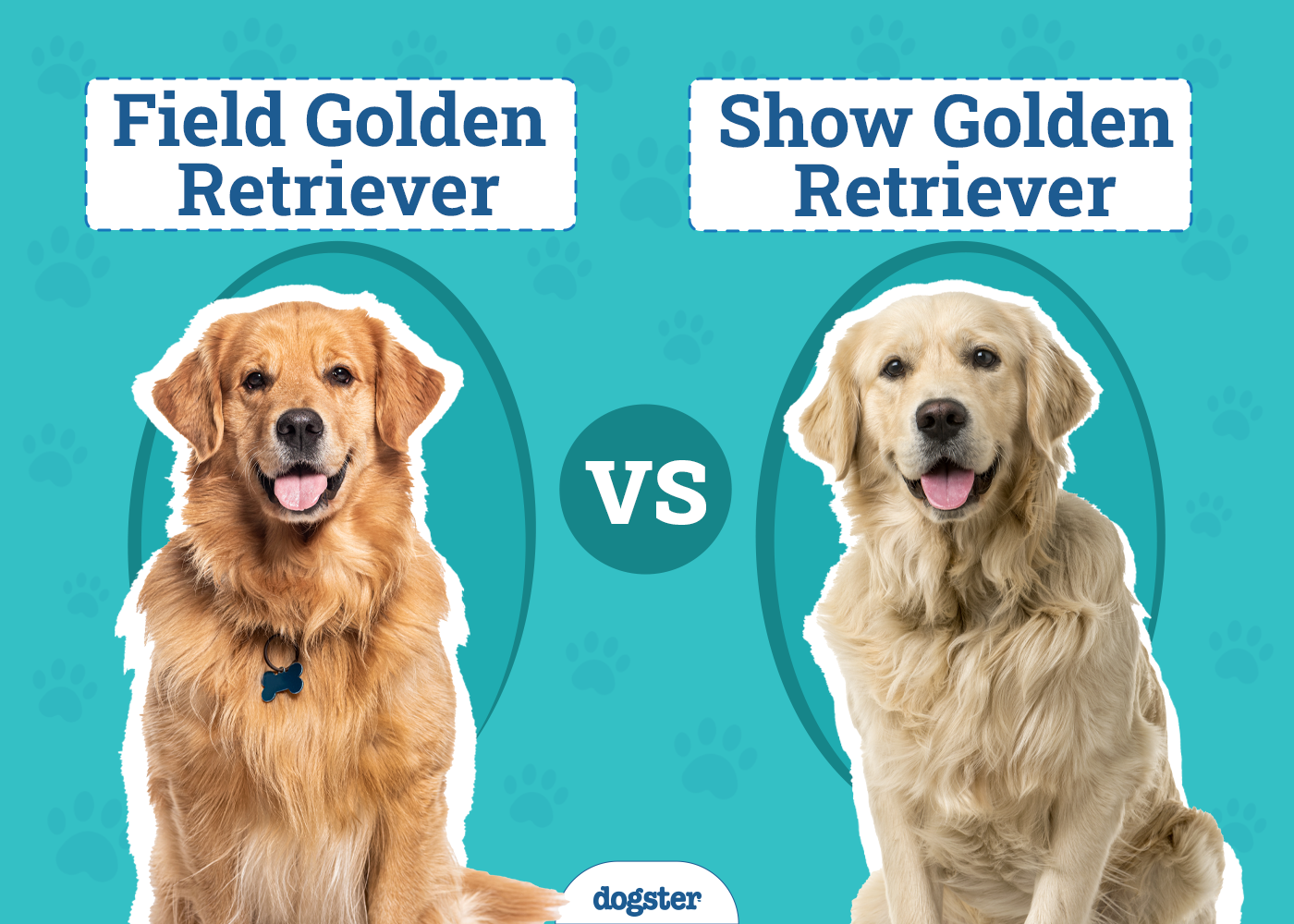
There are noticeable physical differences between Field Goldens and Show Goldens. Field Goldens have a noticeably more athletic physique; they appear smaller and leaner than the Show Golden. They also have a wedge-shaped head with slanted eyes, and their snouts are more elongated, giving them a more hound-like appearance than the square-headed Show Golden.
Another easy way to identify a Field Golden is by their fur coat. Field Goldens don’t look like your stereotypical Golden Retriever. They have darker and shorter coats. The darker color can help them blend in when hunting, and the shorter coat is easier to maintain. Having a shorter coat also makes it more difficult for leaves and other debris to get stuck in the hair.
Suitable For:
Owning a Field Golden Retriever is a big task. Because they require so much exercise and activity, they can be too much to handle if you’re not prepared to engage with them in exercise, training activities, and play. Field Goldens are best suited for owners and families ready to tackle their high energy levels by giving them specific jobs or training them for search and rescue. While this doesn’t mean that a Field Golden won’t thrive domestically, owners still need to be ready to cater to their athletic needs for releasing energy.
If you intend to give a Field Golden an indoor life focused more on lounging, you run the risk of your canine companion developing anxiety problems down the road. You might also have an increased risk of destructive behaviors, such as chewing or digging at carpet and furniture indoors, if your Field Golden doesn’t have an outlet for their energy.

Show Golden Retrievers
Unlike Field Golden Retrievers, Show Goldens were bred to have a specific look rather than overall physical prowess. They were bred to carry the specific traits and physical features judges would look for in the breed at events. Golden Retrievers were first seen in a dog show competition in 1906 and were officially recognized by The Kennel Club in 1911.
While specifically designed to conform to breed standards, Show Goldens are also great family, service, and therapy dogs. After all, to perform well in the dog show ring, dogs must have an amazing temperament.
- You may be interested in: Training a Show Dog: A Beginner’s Guide

Purpose
Show Goldens, unlike Field Goldens, were not bred for a task like hunting. Instead, Show Goldens were designed with a particular appearance in mind rather than a skill set. They are still easily trainable and are incredibly adept at learning commands like standing, walking, and being handled by multiple people.
Show Goldens were designed to show off breed standards and perform in a dog show ring. However, because of their gentle temperaments, eagerness to please, and overall intelligence common in the Golden Retriever breed, Show Goldens also excel at being service or therapy dogs with the proper training.
Personality
Show Goldens are noticeably lower energy than their Field counterparts. They must be able to handle waiting on a leash, posing, being around other dogs, and even extensive travel if necessary. Show Goldens are more suited for a laid-back, sociable lifestyle. The beautiful dogs are still Golden Retrievers and need physical activity and mental stimulation.
Show Goldens are friendly and get along with other animals and people, and they are great in public places like hospitals, schools, and nursing.

Appearance
Unlike the short, dark fur of a Field Golden, Show Golden Retrievers have long and wavy hair. Their fur coats are noticeably lighter in color because dark shades are not considered ideal in show rings. Show Goldens are also bigger, stockier, and heavier than the agile Field Goldens. They have more block-shaped heads and square-shaped muzzles.
The fluffy pups shed more than Field Goldens, and they require more grooming since their longer fur gets tangled and matted more easily.
- Looking for a solution? Best Dog Brushes – Dogster’s Reviews & Top Picks
Suitable For:
Show Goldens are more mellow and less motivated to turn to destructive behaviors when bored. However, they still require moderate exercise, but as long as you take them on walks, you should be okay. The gentle giants are well-suited to a family, even families with small children, as they don’t play too hard and love to interact with babies and toddlers.
Show Goldens are more likely to lounge with you on the couch during your next Netflix binge than they are to destroy your furniture.
Which Breed is Right for You?
While each type has its pros and cons, the Field and Show Goldens are incredibly kind, sweet, loyal, and loving. There is a reason the Golden Retriever is America’s favorite family dog. Both types can be used as service animals, either as a therapy or service dog or something more athletic like being search and rescue members.
If you have an active lifestyle, the Field Golden is the pup for you. Maybe you live on a homestead or ranch, where your Field Golden will have plenty of activities to enjoy. But if you are looking for an indoor pet or service dog, a Show Golden would better suit your overall needs.
See also:
- Why Is the Golden Retriever So Popular? 10 Main Reasons
- How Fast Can a Golden Retriever Run? Breed Characteristics
Featured Image Credit: Pixabay